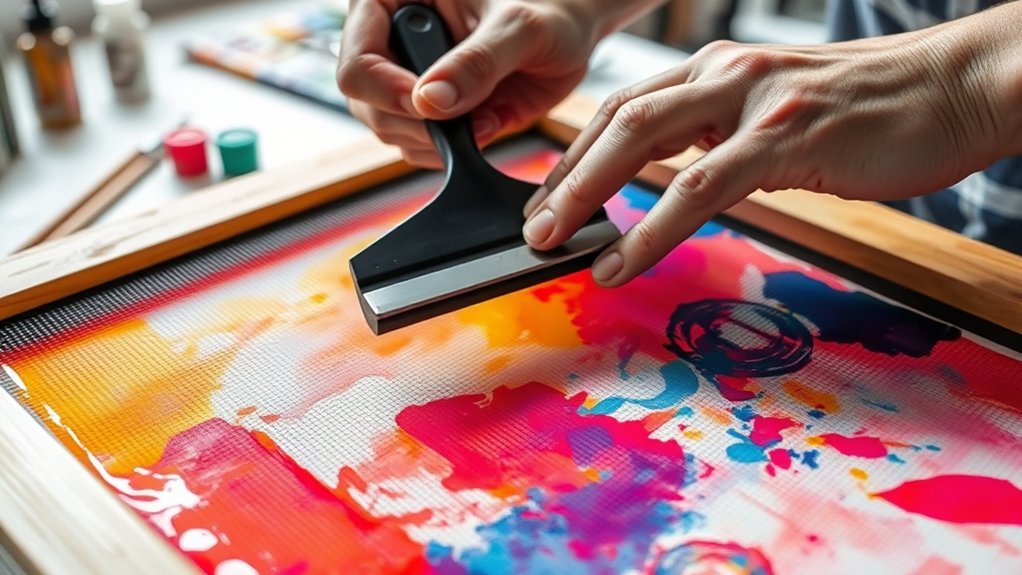

A screenprint in art is a popular printmaking method where ink is pushed through a mesh screen using stencils to create bold, sharp images with vibrant colors. This technique is widely used because it allows for precise control over ink application, resulting in striking, vivid prints.
You control the ink flow using a squeegee, and each color in the design requires a separate stencil and screen. This process enables artists to layer colors effectively, producing visually rich and textured artworks.
Screenprinting can be applied to various surfaces, offering lasting quality and durability. Understanding how artists master this process, along with its materials, steps, and benefits, provides valuable insight into why screenprint remains a favored artistic technique.
Key Takeaways
- Screenprint is a printmaking technique using a mesh screen and stencil to apply ink onto a surface.
- Ink passes through open mesh areas blocked by a stencil to create sharp, vibrant images.
- Each color in a design requires a separate stencil and screen for layered printing.
- It allows printing on various materials like paper, fabric, and wood with durable, vivid results.
- Screenprinting is popular in contemporary art for bold graphics, texture, and multiple reproductions.
What Is Screenprinting and How Does It Work?
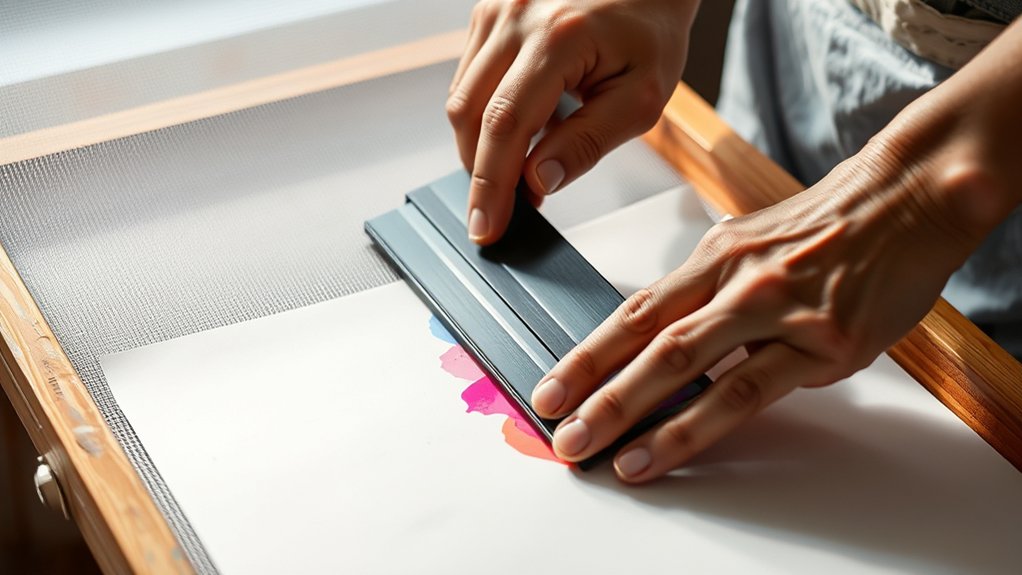
Screenprinting is a versatile printmaking technique that uses a mesh screen to transfer ink onto a surface, except in areas made impermeable by a stencil. When you engage with screenprint techniques, you apply ink through the screen using a squeegee, ensuring controlled deposition on the desired areas.
The stencil defines the image by blocking ink in certain spots, creating sharp contrasts and detailed patterns. Different ink types, such as plastisol, water-based, and solvent-based, affect drying time, texture, and durability, so you must choose based on your project’s needs.
Understanding the interaction between ink viscosity and mesh tension is essential, as it influences the print’s resolution and consistency. By mastering these elements, you can produce precise, repeatable prints that highlight screenprinting’s unique artistic qualities.
Materials and Tools for Screenprinting
Mastering the materials and tools essential for this printmaking technique lets you control every aspect of your final piece. Your choice of screenprinting ink affects vibrancy and drying time, while mesh screens determine detail resolution. Exposure units help you transfer your design accurately onto the screen, and registration marks guarantee proper alignment across multiple layers or colors on various printing substrates.
Master key materials and tools to control vibrancy, detail, and alignment in every screenprinted piece.
- Mesh Screens & Exposure Units: Select mesh counts based on detail; use exposure units to harden the emulsion precisely.
- Screenprinting Ink & Printing Substrates: Match ink type to substrate—paper, fabric, or wood—to optimize adhesion and finish.
- Squeegee Techniques & Registration Marks: Master squeegee angle and pressure for even ink distribution; use registration marks to maintain consistent layering.
Understanding these tools assures precision and repeatability in your screenprints.
How Artists Create Screenprinted Art
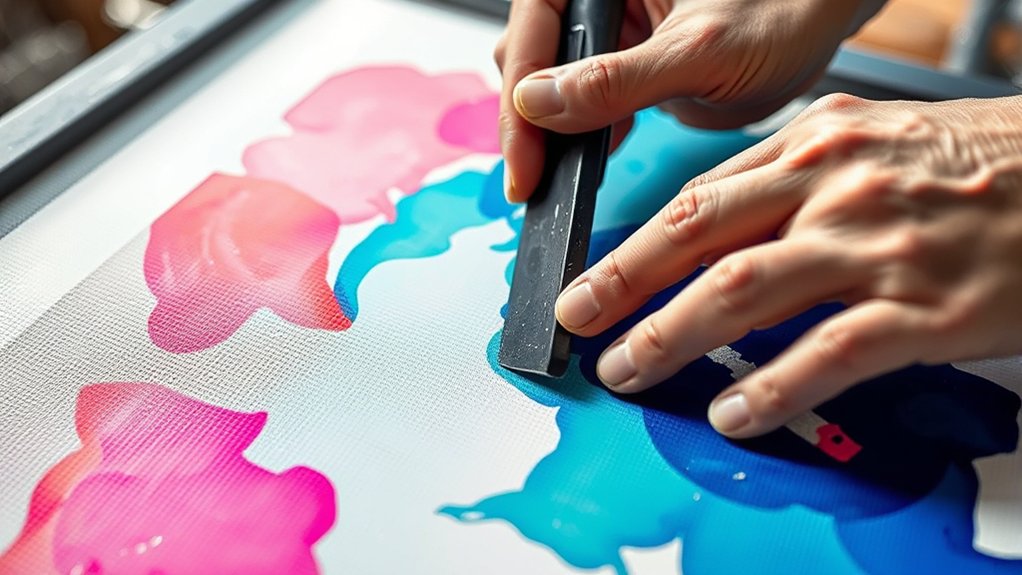
Artists begin creating screenprinted art by carefully preparing their design and selecting appropriate materials to guarantee each layer aligns perfectly. You start by separating your artwork into different color components, as screenprinting relies heavily on precise color layering.
Each color requires its own stencil, created using detailed stencil techniques that block out areas where ink should not pass. You then coat a mesh screen with a light-sensitive emulsion, expose it to your stencil design, and wash away unexposed areas, forming a template.
When printing, you place the screen on your substrate and push ink through the mesh with a squeegee, applying one color at a time. This meticulous process demands patience and accuracy to achieve sharp images and vibrant, multi-layered prints.
Advantages of Screenprinting Compared to Other Methods
Although various printing techniques offer unique benefits, you’ll find screenprinting stands out for its versatility and durability. When comparing methods, screenprinting delivers distinct advantages:
Screenprinting excels with unmatched versatility and durability, making it a top choice among printing techniques.
- Cost efficiency: For larger runs, screenprinting lowers per-unit costs considerably, making it ideal when you need multiple copies without sacrificing quality.
- Color vibrancy: The technique allows thick layers of ink, producing vivid, saturated colors that remain consistent and striking over time.
- Material adaptability: Screenprinting works on diverse surfaces like paper, fabric, and wood, enabling you to experiment across mediums without changing processes.
These factors combine to give screenprinting an edge, especially when you want durable, vibrant prints produced cost-effectively. Its ability to maintain high-quality output across various materials makes it a smart choice compared to other methods that might limit your creative or budgetary options.
Common Contemporary Art Uses of Screenprinting
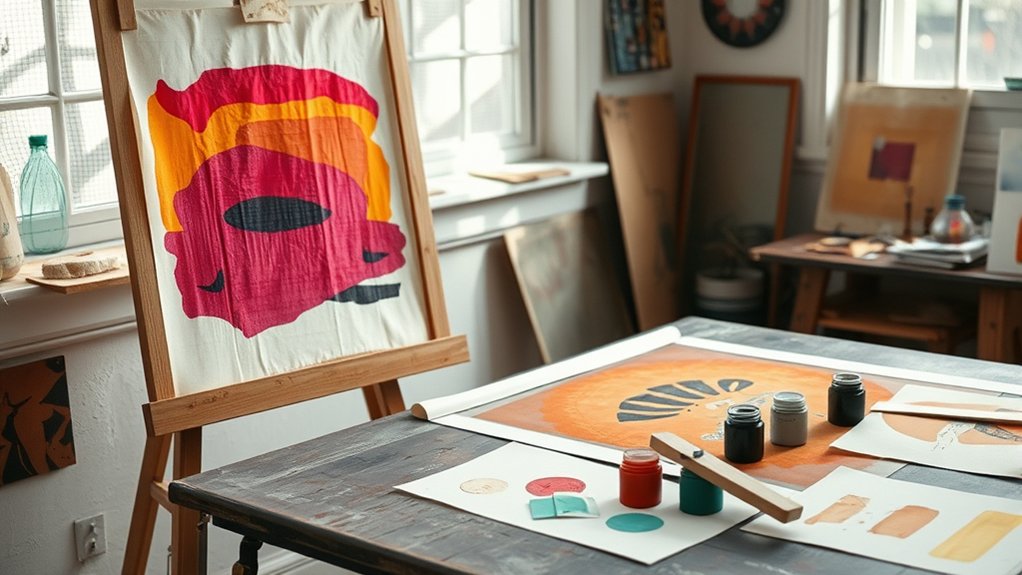
When you explore contemporary art, you’ll notice screenprinting plays an essential role in producing bold, graphic works that emphasize color and texture. Artists leverage this technique to create vivid political statements and compelling imagery that resonate widely.
Additionally, screenprinting efficiently reproduces commercial products, blending art with consumer culture.
| Use Case | Description |
|---|---|
| Political Statements | Express strong, clear messages via layered inks |
| Commercial Products | Mass-produce striking designs on merchandise |
| Fine Art Prints | Create limited editions with rich textures |
| Mixed Media | Combine screenprints with other artistic forms |
Frequently Asked Questions
How Durable Are Screenprinted Artworks Over Time?
You’ll find screenprint longevity depends on ink quality and substrate; with proper care, they resist material degradation well. However, exposure to light and humidity accelerates fading, so controlling environment guarantees your screenprints remain vibrant over time.
Can Screenprinting Be Done on Fabrics Other Than Cotton?
You can absolutely screenprint on fabrics beyond cotton; polyester blends respond well when you select compatible ink types like plastisol or water-based inks. Choosing the right ink guarantees vibrant, durable results tailored to each fabric’s properties.
What Is the Environmental Impact of Screenprinting Processes?
You can reduce the environmental impact of screenprinting by adopting eco friendly practices like using water-based inks and reclaiming screens. These methods minimize chemical waste and promote waste reduction, making your process greener and more sustainable overall.
Are There Famous Artists Known Exclusively for Screenprinting?
You’ll find few artists solely known for screenprinting, yet Warhol’s legacy and Lichtenstein’s influence highlight how they popularized it. They transformed pop culture and fine art through this technique’s unique visual impact and reproducibility.
How Do Screenprinting Costs Compare to Digital Printing?
You’ll find screenprinting costs higher upfront due to setup and materials, but cost factors like volume reduce expenses over time. In pricing comparison, digital printing offers cheaper short runs, while screenprinting’s cost-efficiency grows with larger batches.
Conclusion
Now that you understand screenprinting’s process and materials, consider this: over 60% of contemporary artists use screenprinting to produce limited edition prints. This highlights its unique ability to blend artistic control with reproducibility, making it ideal for both experimentation and commercial work.
By mastering screenprinting, you tap into a versatile technique that balances precision and creativity. This method offers distinct advantages over other processes in producing vibrant, textured, and accessible art.
Ultimately, screenprint in art remains a powerful medium that continues to inspire and innovate within the creative community.