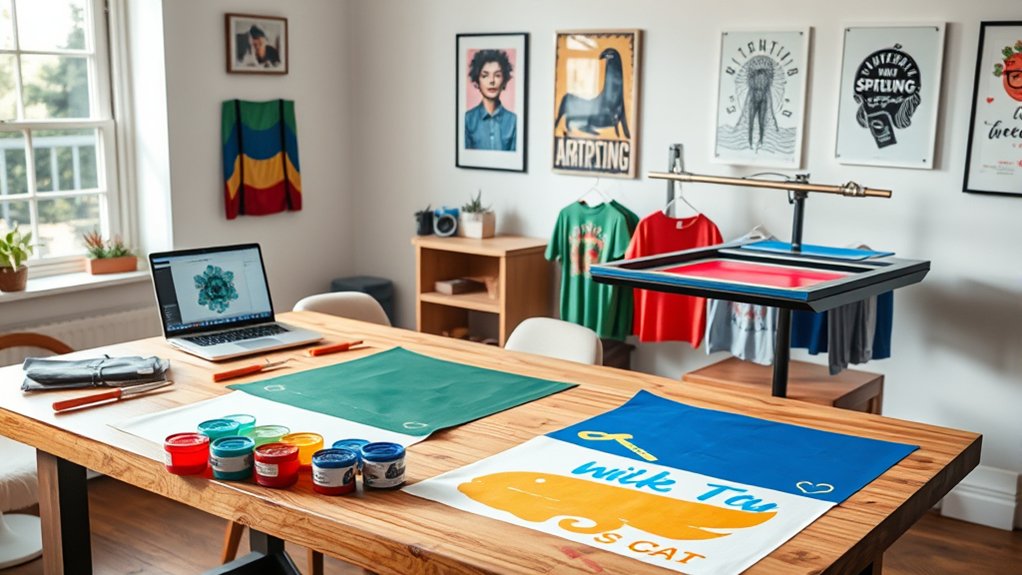

To start a screenprinting business from home, begin by selecting a well-lit and ventilated space that has enough room for your equipment and drying racks.
This foundational step ensures a comfortable and efficient work environment.
Invest in quality screens, squeegees, inks, and an exposure unit to produce professional results.
Master key techniques such as maintaining proper screen tension and conducting test prints to guarantee consistent product quality.
Price your products by carefully analyzing your costs and current market trends.
Create unique designs to distinguish your brand and attract customers.
Combine your marketing efforts with organized order management to grow your business efficiently.
Explore these strategies further to set your screenprinting business up for long-term success.
Key Takeaways
- Choose a well-ventilated, well-lit space with room for equipment, drying racks, and movement to set up your home studio efficiently.
- Invest in durable screens, quality mesh, proper squeegees, and a reliable exposure unit for professional and consistent screenprinting results.
- Calculate all costs including materials, labor, and overhead to price products profitably while considering market trends and customer expectations.
- Develop unique designs and a consistent brand identity, leveraging social media and targeted marketing to attract and retain customers.
- Use clear customer communication, organized order management, and feedback to build trust, ensure satisfaction, and support long-term business growth.
Choose the Best Space for Your Home Screenprinting Studio
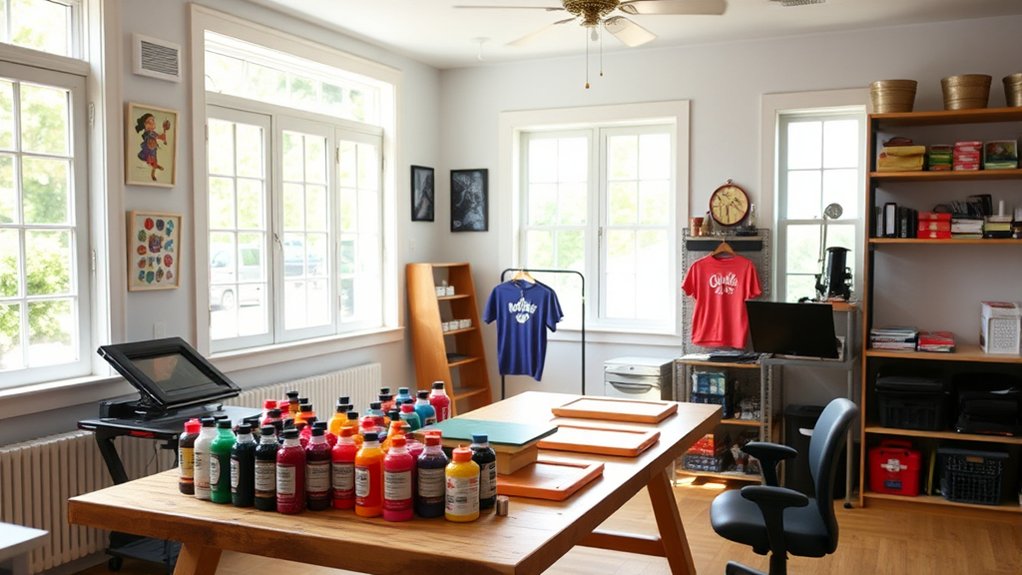
When choosing the best space for your home screenprinting studio, consider factors like ventilation, lighting, and available room to move freely. Meeting your space requirements is essential not just for equipment setup but also for workflow efficiency.
You’ll need enough room to accommodate drying racks, screens, and a printing table without feeling cramped. Lighting considerations are equally important; natural light helps, but consistent, bright artificial lighting guarantees accuracy during color matching and detailed work.
Ascertain the space is well-ventilated to manage fumes from inks and cleaning chemicals safely. Prioritize an area where you can control temperature and humidity, as these affect ink drying times.
Get the Supplies You Need to Start Screenprinting
You’ll need to gather essential screenprinting equipment like screens, squeegees, and a drying rack to set a solid foundation. Choosing high-quality inks tailored to your materials guarantees your prints look professional and last. Prioritize reliable supplies to maintain efficiency and produce consistent results.
Essential Screenprinting Equipment
Although screenprinting offers creative freedom, securing the right equipment is essential to producing high-quality prints and running an efficient operation. You’ll need tools that guarantee precision during screen exposure and consistent ink application.
Focus on these three essentials:
- Screens and Frames Choose durable frames with quality mesh to hold your stencil during screen exposure. Mesh count affects detail and ink flow.
- Squeegee Types Select squeegees with appropriate hardness and size. Different squeegee types influence ink coverage and print sharpness.
- Exposure Unit Invest in a reliable exposure unit to accurately transfer your design onto the screen, ensuring clean, crisp images.
Choosing Quality Ink Options
Selecting the right ink plays a major role in the quality and durability of your prints, complementing the equipment you’ve chosen. When starting your screenprinting business, focus on ink types that match your fabric and design needs, such as plastisol, water-based, or discharge inks.
Plastisol offers excellent ink durability and vibrant colors, making it a popular choice for beginners. Water-based inks provide a softer feel but may require more careful curing. Discharge inks remove dye from the fabric, creating a vintage look.
Test different ink types to identify which delivers the best results with your setup. Prioritize inks with proven durability to guarantee customer satisfaction and repeat business. Quality ink options directly impact your brand reputation, so choose strategically and invest in reliable suppliers.
Master Essential Screenprinting Techniques and Avoid Common Mistakes
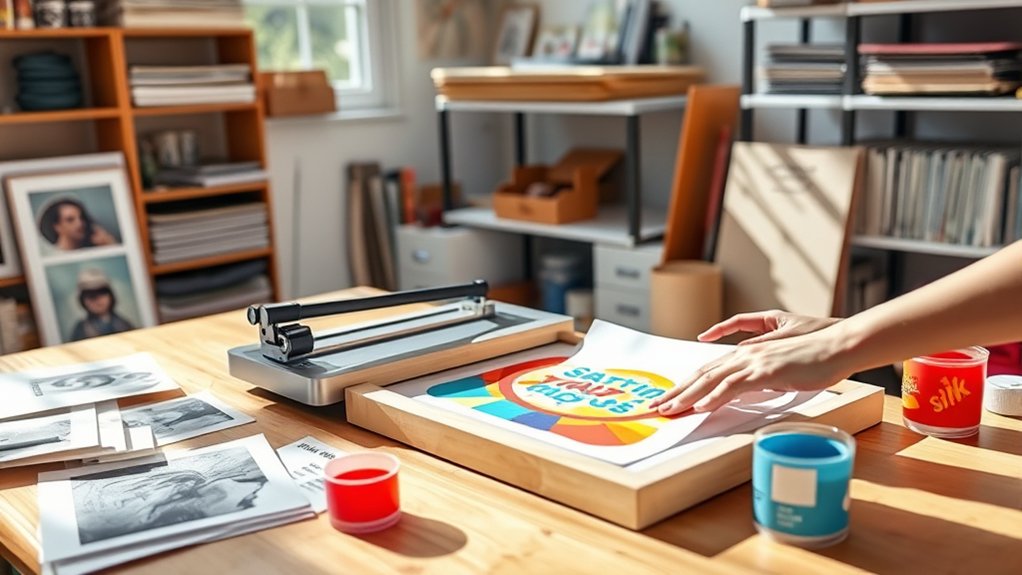
Before diving into production, mastering essential screenprinting techniques guarantees your prints are sharp, durable, and consistent. Focus on proper screen preparation to avoid ink bleeding and achieve clean edges.
Ascertain your screens are tensioned correctly and coated evenly with emulsion for precise image transfer.
To maintain quality, follow these key steps:
- Thoroughly clean and degrease screens before coating to prevent ink adhesion issues.
- Use appropriate ink curing methods, such as heat or UV curing, to ensure durability and washfastness.
- Test print each design to spot alignment or ink density problems early.
Avoid common mistakes like underexposing screens or skipping test prints. Consistent technique and attention to detail during screen preparation and ink curing set your business apart with professional results.
How to Price Your Screenprinting Products for Profit
When you price your screenprinting products effectively, you guarantee your business remains profitable while staying competitive. Begin with a thorough cost analysis. Calculate expenses including materials, labor, overhead, and equipment depreciation.
Knowing your exact costs helps prevent underpricing. Next, explore various pricing strategies such as cost-plus pricing, value-based pricing, or competitive pricing. Choose a strategy that aligns with your market position and customer expectations.
Factor in desired profit margins without alienating customers. Regularly review and adjust prices based on changes in costs or market trends to maintain profitability. Remember, transparent and strategic pricing not only covers your expenses but also supports sustainable growth in your screenprinting business.
Prioritize precision in your pricing to build a financially sound foundation.
Design Your First Screenprinting Products and Build Your Brand
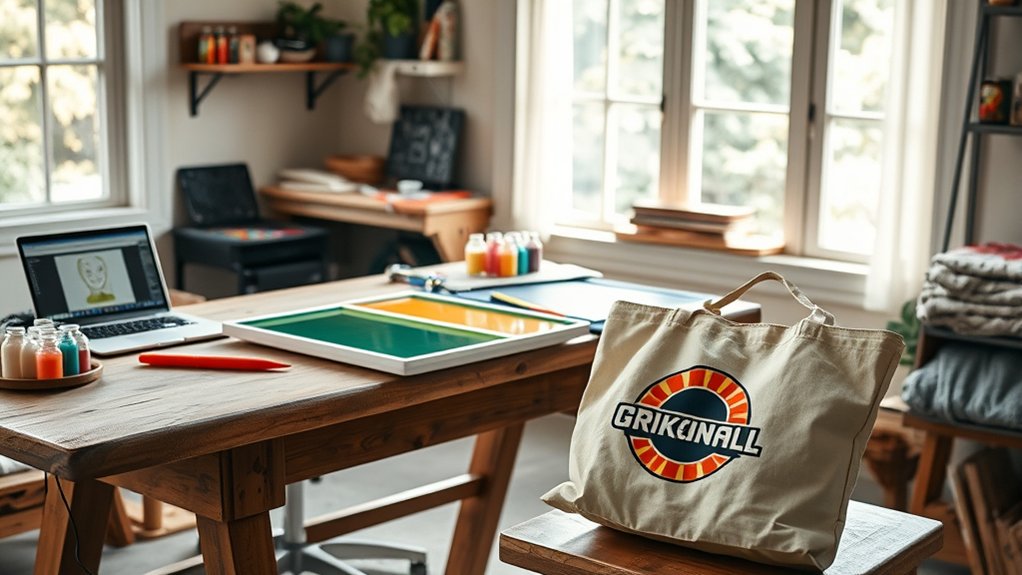
You’ll want to start by choosing unique design concepts that set your products apart in the market. Focus on selecting quality materials to guarantee durability and customer satisfaction.
At the same time, develop a consistent brand identity to create recognition and trust with your audience.
Choose Unique Design Concepts
Although the market is crowded, choosing unique design concepts allows you to capture attention and differentiate your screenprinting products. To develop standout designs, start by gathering creative inspiration from diverse sources such as art, culture, and personal experiences.
Next, conduct thorough trend analysis to understand what’s popular and identify gaps your designs can fill. Finally, focus on creating original visuals that reflect your brand’s identity and resonate with your target audience.
- Gather creative inspiration beyond typical screenprinting themes.
- Use trend analysis to spot opportunities and avoid oversaturated ideas.
- Craft designs that align with your brand and engage customers uniquely.
Select Quality Materials
Unique design concepts set the foundation, but selecting quality materials elevates your screenprinting products and strengthens your brand’s reputation. Prioritize material sourcing by partnering with reliable suppliers who offer durable fabrics and inks suited for your designs.
Evaluate samples carefully, testing for colorfastness, texture, and print adhesion to guarantee longevity. Implementing strict quality assurance processes at every stage, from sourcing to production, helps maintain consistent product standards.
By focusing on premium materials, you’ll not only enhance the customer experience but also reduce returns and complaints. This strategic approach positions your business as trustworthy and professional, laying the groundwork for sustainable growth.
Develop Consistent Brand Identity
When you design your first screenprinting products, establishing a consistent brand identity becomes essential to distinguish your business in a crowded market. Focus on aligning your logo design, color palette, and visual aesthetics to reflect your market positioning and appeal directly to your target audience.
Consistent brand messaging and a unique voice help communicate your brand story clearly, enhancing the overall customer experience.
To develop brand consistency, you should:
- Define your brand story and market positioning to guide all creative decisions.
- Create cohesive logo design and select a color palette that resonates with your target audience.
- Maintain consistent brand messaging and visual aesthetics across all products and marketing materials.
This strategic approach guarantees your screenprinting business stands out and builds trust.
Market Your Screenprinting Business and Manage Orders
To effectively market your screenprinting business and manage orders, you need a clear strategy that targets the right customers while streamlining order processing. Leverage social media platforms to showcase your work, share testimonials, and run targeted ads that boost customer engagement.
Consistently post high-quality content to build brand awareness and attract your ideal clients. Use tools like order management software or spreadsheets to track orders, deadlines, and inventory efficiently. This reduces errors and speeds up fulfillment.
Clear communication with customers about order status builds trust and encourages repeat business. By combining proactive marketing on social media with organized order management, you’ll create a seamless experience that drives growth and satisfies clients, setting your home-based screenprinting business up for long-term success.
Frequently Asked Questions
What Legal Permits Do I Need to Start a Home Screenprinting Business?
You’ll need to obtain the proper business licenses and check local zoning regulations to guarantee your home-based screenprinting business complies with laws.
Don’t forget to register your business and consider any health or safety permits required.
How Do I Handle Taxes for a Home-Based Screenprinting Business?
You should track all expenses meticulously and use bookkeeping tips like digital tools to organize records. Claim tax deductions for your home office and supplies. Consult a tax professional to guarantee compliance and maximize savings efficiently.
Can I Use Eco-Friendly Inks for Screenprinting at Home?
Yes, you can use eco friendly options for screenprinting at home. Choose water-based or soy-based ink types, which reduce environmental impact while maintaining quality. These inks align with sustainable business practices effectively.
What Are the Best Online Platforms for Selling Screenprinted Products?
You should leverage Etsy and Shopify, where 81% of buyers prefer unique products. Combining e-commerce strategies with social media marketing boosts visibility, drives sales, and builds your brand effectively in the competitive screenprinting market.
How Do I Protect My Screenprint Designs From Being Copied?
You should secure design copyright to legally protect your screenprint designs and consider trademark registration for your brand identity. These steps deter copying and strengthen your legal standing if infringement occurs.
Conclusion
Starting your home screenprinting business isn’t just a side hustle—it’s your ticket to creative freedom and financial success!
With the right space, quality supplies, and mastered techniques, you’ll crush common pitfalls and turn designs into profit machines. Nail your pricing, build a standout brand, and market like a pro, and you’ll have orders flooding in faster than you can handle.
This journey will transform your passion into an unstoppable, thriving business! By following these steps, you’ll be well on your way to successfully starting your home screenprinting business.