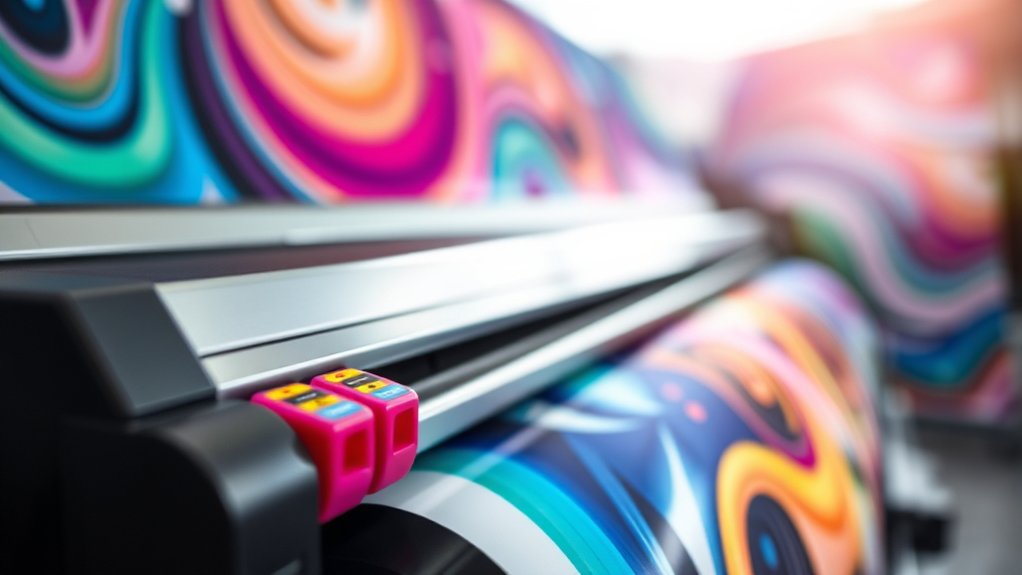

A sublimation printer uses heat to turn solid dye on special paper into gas, which then bonds permanently with polyester or coated surfaces.
This process creates vibrant, durable images that won’t fade, crack, or peel over time.
You’ll find sublimation ideal for polyester fabrics and specially coated items like mugs.
Compared to inkjet or laser printing, it offers superior color quality and longevity.
Understanding these key points will help you find the perfect printer for your needs.
Key Takeaways
- A sublimation printer uses heat to convert solid dye into gas, embedding images into polyester or coated substrates.
- It prints designs on special transfer paper with sublimation inks for vibrant, durable results.
- Sublimation printing produces high-quality, fade-resistant images that bond permanently to materials.
- Ideal for polyester fabrics and coated items like mugs, the printer creates smooth gradients and vivid colors.
- Sublimation printers differ from inkjet and laser by embedding dye, enhancing print longevity and color richness.
How Do Sublimation Printers Actually Work?
Although sublimation printing may seem complex, it operates on a straightforward principle: converting solid dye into gas without passing through a liquid state.
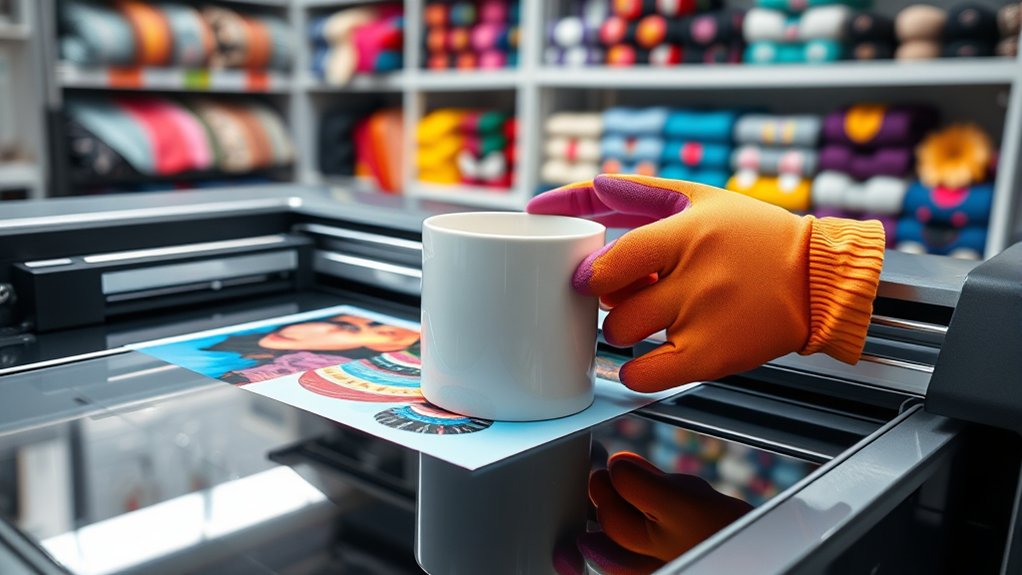
You initiate the sublimation process by printing your design onto special transfer paper using sublimation inks. Next, you place this paper on the substrate you want to decorate, such as polyester fabric or coated ceramics.
Applying heat and pressure with a heat press triggers the heat transfer, causing the solid dye to vaporize. The gaseous dye then penetrates the substrate’s surface fibers or coating. Once cooled, the dye solidifies inside the material, creating a vibrant, durable image that won’t peel or fade.
This precise heat transfer mechanism is what sets sublimation printing apart from traditional printing methods.
Why Choose Sublimation Printing?
Anyone looking for high-quality, long-lasting prints will find sublimation printing an excellent choice. You’ll benefit from vibrant colors that penetrate the substrate, guaranteeing durability without fading.
This method offers superior cost effectiveness by reducing waste and eliminating the need for additional coatings or lamination. Sublimation prints resist cracking and peeling, making them ideal for various applications.
| Advantage | Explanation |
|---|---|
| Vibrant Colors | Produces rich, vivid hues with smooth gradients |
| Cost Effectiveness | Minimizes material waste and operational costs |
| Durability | Guarantees prints resist fading, cracking, and peeling |
Choosing sublimation printing optimizes your output quality and operational efficiency concurrently.
Which Materials Work Best for Sublimation?
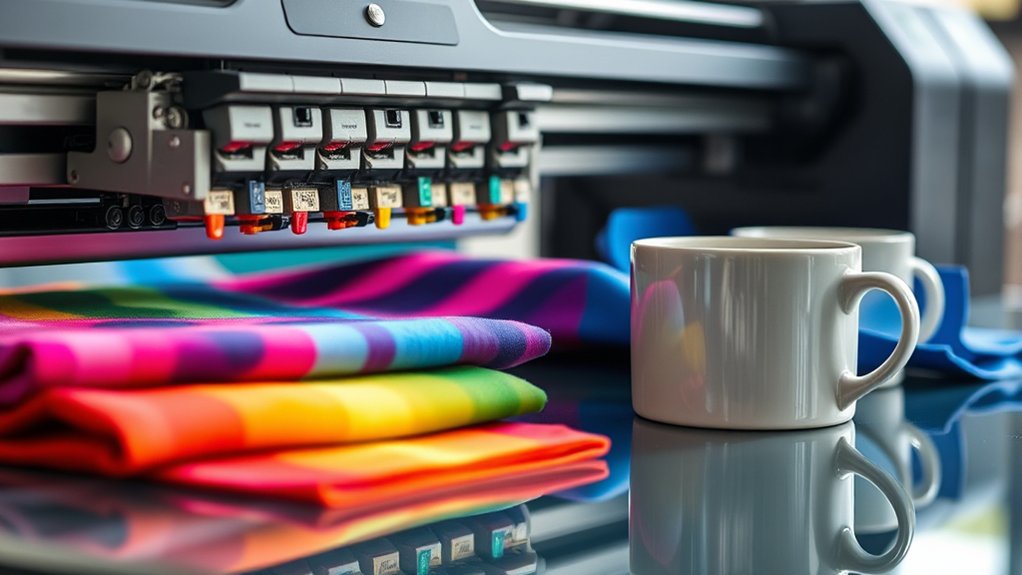
To fully leverage the advantages of sublimation printing, selecting the right materials is key. Sublimation materials must exhibit excellent substrate compatibility to guarantee the dye bonds effectively during heat transfer.
Polyester fabrics dominate this space; their synthetic polymer structure allows sublimation dyes to penetrate and produce vibrant, durable prints. High polyester content, typically above 65%, is essential for ideal results.
Besides textiles, specially coated hard substrates like ceramic mugs, aluminum panels, and polyester-coated plastics also work well. These coatings create a receptive surface, facilitating dye sublimation without compromising image quality.
Avoid natural fibers such as cotton, as they lack the chemical structure necessary for dye bonding, resulting in poor print durability. Understanding substrate compatibility guarantees you pick materials tailored to sublimation’s chemical and thermal process, maximizing print clarity and longevity.
How Does Sublimation Compare to Inkjet and Laser?
When evaluating printing technologies, you’ll notice that sublimation differs fundamentally from inkjet and laser methods in both process and application. Sublimation uses heat to transfer dye into materials, while inkjet sprays liquid ink and laser uses toner fused by heat. Here’s how they compare:
- Sublimation advantages include vibrant, durable prints embedded into substrates, ideal for polyester and coated surfaces. Inkjet limitations arise with color fading and surface-only printing.
- Inkjet excels in versatility on various papers but struggles with water resistance and longevity.
- Laser printers provide fast, sharp text and graphics on plain paper but lack the color depth and substrate compatibility of sublimation.
Understanding these distinctions helps you choose the best printing solution for your specific needs.
How to Pick the Right Sublimation Printer for You
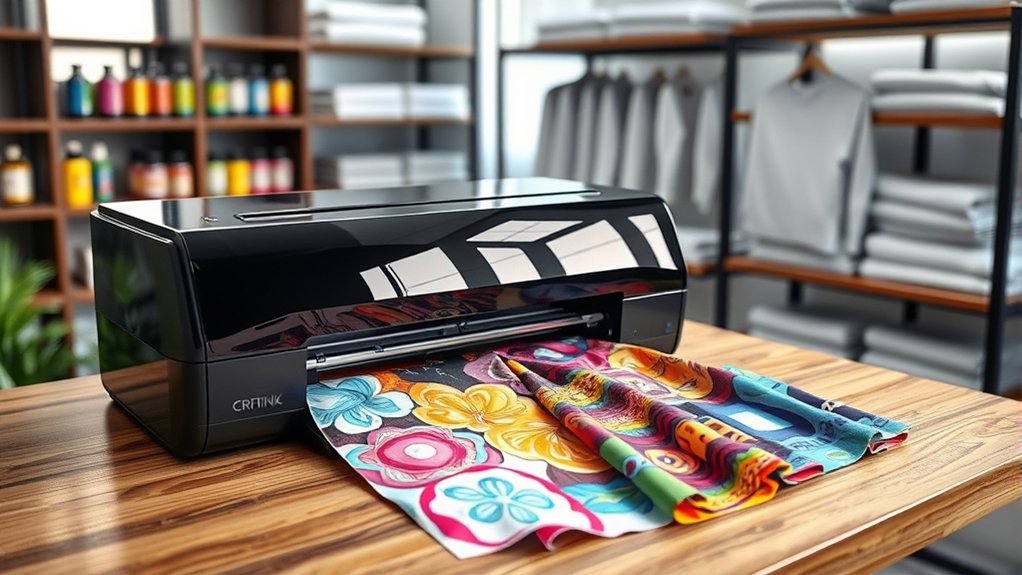
How do you determine which sublimation printer suits your needs best? Start by evaluating sublimation printer types. Desktop models fit small-scale projects, while wide-format printers handle larger volumes and diverse substrates.
Next, factor in budget considerations: balance initial cost against long-term expenses like ink and maintenance. Consider print resolution and speed to match your production demands.
Also, check compatibility with your preferred software and substrate materials. Don’t overlook support and warranty services, which can save costs and downtime.
Frequently Asked Questions
Can Sublimation Printers Print on Dark Fabrics?
You can’t use the sublimation process on dark fabrics because it requires polyester or polymer-coated surfaces, which are typically light-colored for fabric compatibility.
Dark fabrics absorb sublimation dyes, resulting in poor print visibility.
How Long Does Sublimation Ink Last on Printed Items?
You’ll enjoy sublimation ink’s impressive ink longevity, often lasting years without fading. Its printed durability depends on care and exposure, but with proper handling, your designs stay vibrant and resilient on various substrates for the long haul.
Is Sublimation Printing Eco-Friendly?
You’ll find the sublimation process eco-friendly since it uses eco friendly materials and minimizes waste by directly bonding ink to substrates. This reduces chemical runoff and energy use compared to traditional printing methods.
What Maintenance Does a Sublimation Printer Require?
Like clockwork, you must perform ink replacement and print head maintenance to keep your sublimation printer humming smoothly. Regular cleaning prevents clogs, ensuring vibrant prints and prolonging your machine’s life with precise, technical care.
Can Sublimation Printers Be Used at Home Easily?
You can use a sublimation printer at home, but the setup requires precise calibration, proper ventilation, and compatible materials.
With careful sublimation printer setup, home printing becomes efficient and produces high-quality, durable prints on various substrates.
Conclusion
Think of sublimation printing like turning a solid ice cube directly into vapor, skipping the liquid stage—precise and efficient. Just as this phase change transforms water seamlessly, sublimation printers infuse vibrant, durable designs directly into materials, offering unmatched quality.
By understanding how they work and choosing the right printer, you guarantee your projects not only look professional but last longer. Embrace sublimation printing to elevate your printing game with technical finesse and lasting impact.