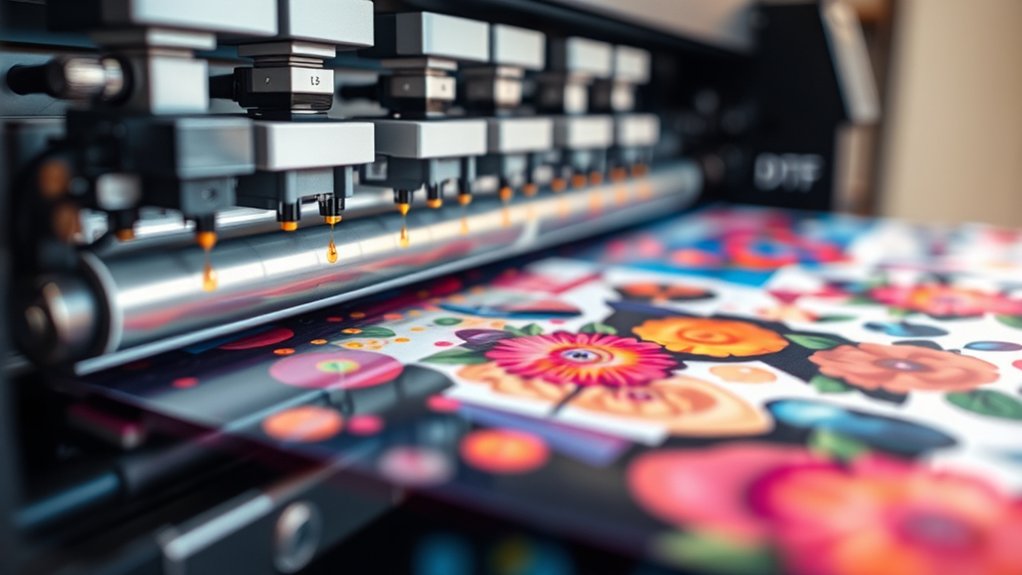

A DTF printer lets you print full-color images onto special PET film, which you then transfer to fabrics like cotton or polyester using adhesive powder and heat.
This printing method uses water-based pigment inks for sharp, vibrant, and durable prints without the need for pre-treatment.
This technology offers flexibility for various fabric types and detailed designs while minimizing setup time.
If you want to understand how DTF stacks up to other printing methods and learn about equipment features, keep exploring further.
Key Takeaways
- A DTF printer prints vibrant, full-color images onto special PET film for fabric transfer.
- It uses water-based pigment inks and adhesive powder for durable, high-quality prints.
- Prints are heat-cured and transferred to fabrics like cotton, polyester, blends, and leather.
- DTF printing requires no pre-treatment, supporting diverse fabric types and colors.
- It offers design flexibility, fast setup, and cost-effective small to medium production runs.
What Is a DTF Printer and How Does It Work?
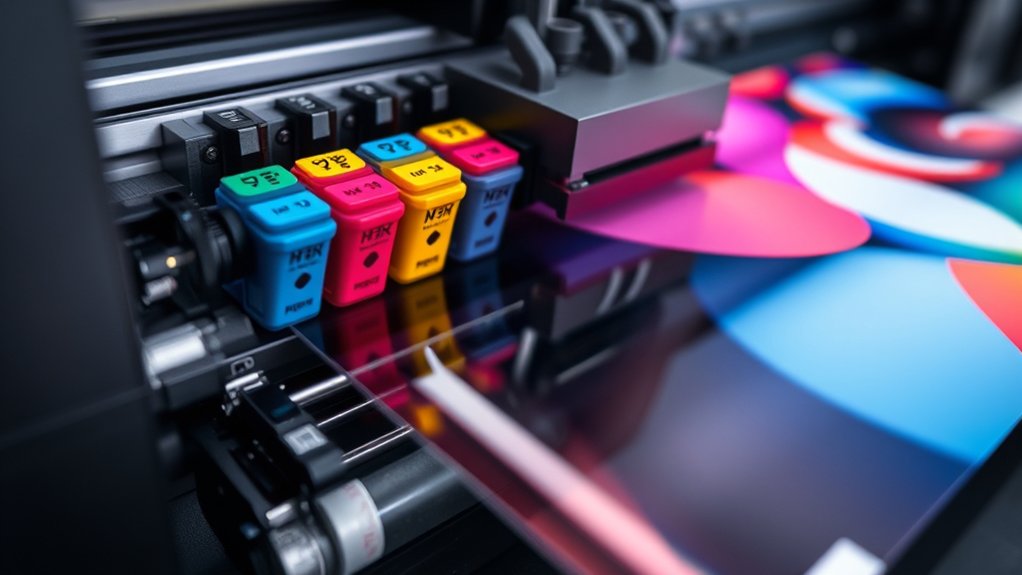
A DTF printer is a specialized device designed to print full-color images onto a special film, which can then be transferred onto various fabrics. You’ll find that DTF technology uses water-based pigment inks, allowing precise color reproduction and durability.
The process involves printing the image onto a PET film, applying a layer of adhesive powder, and curing it with heat. Once prepared, the film is pressed onto fabric, enabling versatile DTF applications across cotton, polyester, and blends.
This method guarantees vibrant, long-lasting prints without the need for pre-treatment. By understanding the mechanics of DTF printing, you can leverage its efficiency for detailed designs and complex color gradients, making it invaluable in textile customization and industrial printing environments.
Why Choose a DTF Printer for Custom Apparel
Understanding how a DTF printer operates sets the stage for recognizing its benefits in custom apparel production. You’ll appreciate its design flexibility, allowing intricate, multi-color graphics without compromising detail or vibrancy.
This technology supports a wide range of fabric types and colors, expanding your creative options considerably. Additionally, DTF printing offers cost efficiency by minimizing setup time and reducing material waste, making small to medium runs economically viable.
You won’t need expensive screens or long curing processes, lowering overhead costs and speeding up turnaround. By choosing a DTF printer, you gain precise control over every print, ensuring consistent, high-quality results.
This combination of versatility and efficiency makes DTF printing an excellent choice for custom apparel businesses seeking scalable, professional-grade output.
DTF Printer vs. Screen and DTG Printers: A Comparison
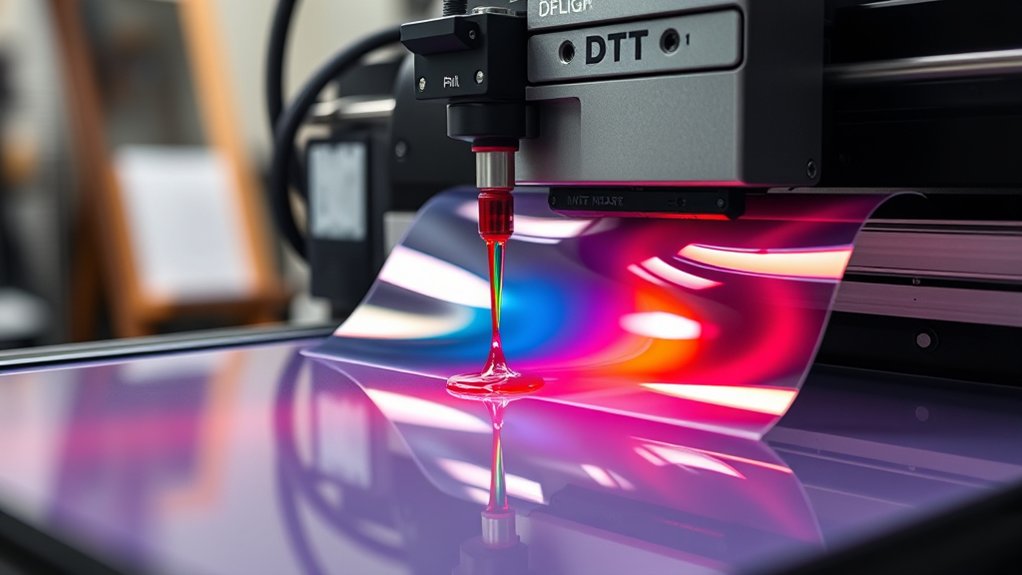
When comparing DTF printers with screen and DTG printers, you’ll notice distinct differences in technology, cost, and application suitability that impact your production workflow. DTF offers versatility and simpler setup, while screen printing advantages include durability and cost-efficiency for bulk runs. DTG printing limitations arise in fabric compatibility and slower speeds.
| Feature | DTF Printer | Screen Printer | DTG Printer |
|---|---|---|---|
| Setup Time | Moderate | Long | Short |
| Fabric Compatibility | Wide Range | Limited | Mostly Cotton |
| Cost Efficiency | Good for Small to Medium Runs | Best for Large Runs | Less Efficient for Bulk |
Choose based on volume, fabric, and workflow needs.
Materials You Can Print on With a DTF Printer
DTF printers excel at transferring detailed images onto a broad spectrum of materials, offering you flexibility unmatched by many other printing methods. You can print on various printing surfaces, including cotton, polyester, blends, nylon, and even leather.
This versatility allows you to handle diverse fabric types without compromising image quality or durability. Because DTF printing uses a specialized adhesive powder and heat pressing, it adheres effectively to both natural and synthetic fibers.
Unlike direct-to-garment printing, DTF doesn’t require pre-treatment, expanding your options for substrates. Whether you’re working with t-shirts, hoodies, or tote bags, DTF printers deliver crisp, vibrant prints.
This adaptability makes DTF a preferred choice when you need reliable results across multiple fabric types and unconventional printing surfaces.
Features That Make a Great DTF Printer
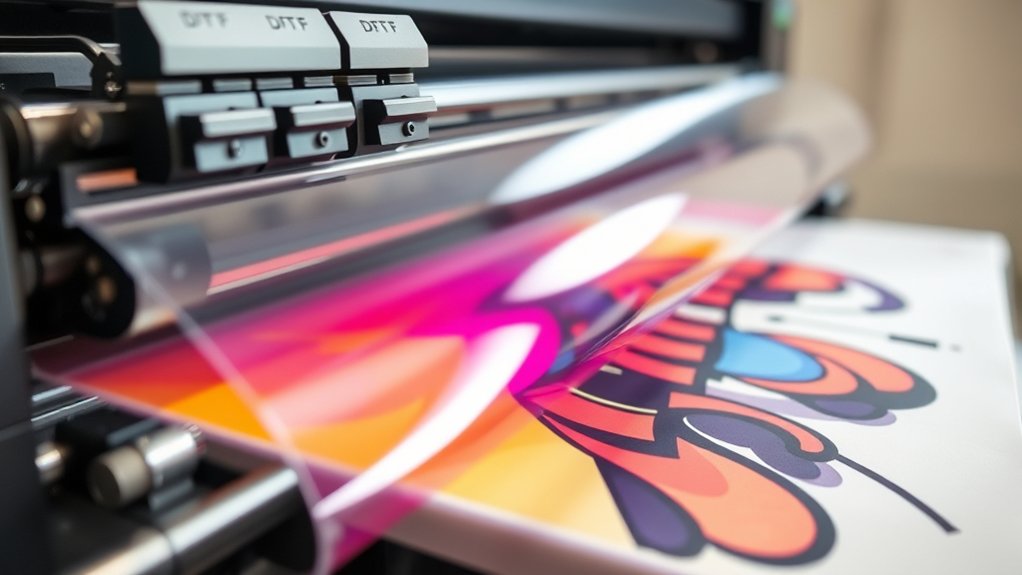
You’ll want to focus on print quality precision to guarantee sharp, vibrant images every time. Consider ink compatibility options to keep your workflow flexible and cost-effective.
Additionally, durability and ease of maintenance play vital roles in long-term performance and reliability.
Print Quality Precision
Although the technology behind direct-to-film printing is complex, achieving precise print quality depends largely on the printer’s ability to accurately deposit ink with consistent resolution and color fidelity. When evaluating print resolution accuracy, you should look for a printer that maintains sharp, clean edges and fine detail reproduction without pixelation or blurring.
Equally important is a thorough color vibrancy assessment. Your printer must produce vivid, true-to-design hues that remain stable after transfer. Precision in droplet placement and layer uniformity directly impacts the final image quality.
Ink Compatibility Options
Since ink compatibility directly affects both print quality and machine longevity, selecting a printer that supports a wide range of ink types is crucial. You want a DTF printer that can handle various formulations to guarantee vibrant, consistent results across different substrates.
Consider these key factors:
- Supported Ink Types: Ascertain compatibility with pigment-based, dye-based, and eco-solvent inks for flexibility.
- Color Profiles: Look for printers that allow custom ICC profile integration to optimize color accuracy.
- White Ink Handling: Check if the printer efficiently circulates white ink to prevent clogging and maintain opacity.
- Ink Cartridge System: Prefer models that support refillable cartridges or bulk ink systems to reduce costs and waste.
Focusing on these options will help you achieve superior print fidelity and extend your printer’s operational lifespan.
Durability And Maintenance
Durability and maintenance play a critical role in selecting a high-performing DTF printer. You need to evaluate durability factors like frame robustness, component lifespan, and printhead protection to guarantee long-term reliability.
Consistent maintenance routines such as cleaning printheads, checking ink lines, and lubricating moving parts prevent downtime and maintain print quality. Below is a concise comparison to help you focus on key durability and maintenance aspects:
| Durability Factors | Maintenance Routines |
|---|---|
| Sturdy metal frame | Daily printhead cleaning |
| High-quality printheads | Weekly ink line inspection |
| Protective casing | Monthly lubrication of gears |
Maintenance Tips for the Best DTF Printing Results
To guarantee consistent DTF printing quality, you need to prioritize regular cleaning and manage your ink levels carefully to prevent clogs and color inconsistencies. Proper storage of both the printer and consumables is essential to maintain ink stability and avoid damage.
Following these maintenance steps will optimize your printer’s performance and extend its lifespan.
Cleaning and Ink Management
Although DTF printers are designed for efficiency, neglecting regular cleaning and ink management can quickly degrade print quality and damage printer components. To maintain peak performance, you must focus on these critical steps:
- Monitor ink viscosity regularly; improper viscosity can clog nozzles and impair color accuracy.
- Perform printhead cleaning frequently to prevent ink buildup and guarantee precise droplet placement.
- Use manufacturer-recommended cleaning solutions to avoid damaging sensitive printer parts.
- Replace ink cartridges before they run completely dry to prevent air bubbles that compromise printhead function.
Proper Storage Techniques
Maintaining your DTF printer’s performance extends beyond cleaning and ink management; how you store the printer and its consumables plays a significant role in preserving print quality. You need to guarantee ideal storage conditions by keeping the printer and DTF films in a dust-free, dry environment.
Temperature control is critical. Store inks and films between 15°C and 25°C to prevent degradation and maintain viscosity. Avoid exposing consumables to direct sunlight or fluctuating temperatures, which can cause premature ink settling or film warping.
When not in use, always seal ink cartridges tightly to minimize air exposure and prevent drying. Additionally, cover the printer to protect it from dust accumulation.
Frequently Asked Questions
How Long Does a DTF Print Typically Last After Washing?
You can expect print durability of a DTF print to last around 30-50 washes if you follow proper washing instructions: cold water, gentle cycle, inside-out garment washing, and avoiding harsh detergents or high heat drying to maintain print quality.
Can DTF Printers Be Used for Bulk Production?
Yes, you can harness DTF efficiency for bulk production, turning speed into your strongest ally. These printers handle large volumes with precision, ensuring consistent quality while optimizing time and resources in your workflow.
What Is the Initial Cost Range for a DTF Printer?
You’re looking at an initial investment ranging from $1,500 to $10,000, depending on printer features like print speed, resolution, and ink system.
Higher-end models cost more but boost productivity and print quality.
Are There Eco-Friendly Inks Available for DTF Printing?
Yes, you’ll find eco-friendly options for DTF printing inks that prioritize ink sustainability. These inks reduce environmental impact by using biodegradable ingredients and low volatile organic compounds.
They align with green production standards without sacrificing print quality.
How Noisy Is a DTF Printer During Operation?
DTF printers produce moderate noise during operation, comparable to typical inkjet printers.
To maintain print quality and reduce noise, you should follow regular maintenance tips, like cleaning print heads and lubricating moving parts consistently.
Conclusion
Now that you understand what a DTF printer is and how it works, you’re well-equipped to make an informed choice for your custom apparel needs. Whether comparing it to screen or DTG printers, DTF offers versatile material compatibility and efficient results.
Keep in mind, proper maintenance is the key to keeping your printer running smoothly. Remember, don’t put all your eggs in one basket—explore features carefully to find the best fit for your projects.
In conclusion, a DTF printer is an excellent investment for those seeking flexibility and quality in custom printing. Its unique capabilities make it a valuable tool in the apparel printing industry.