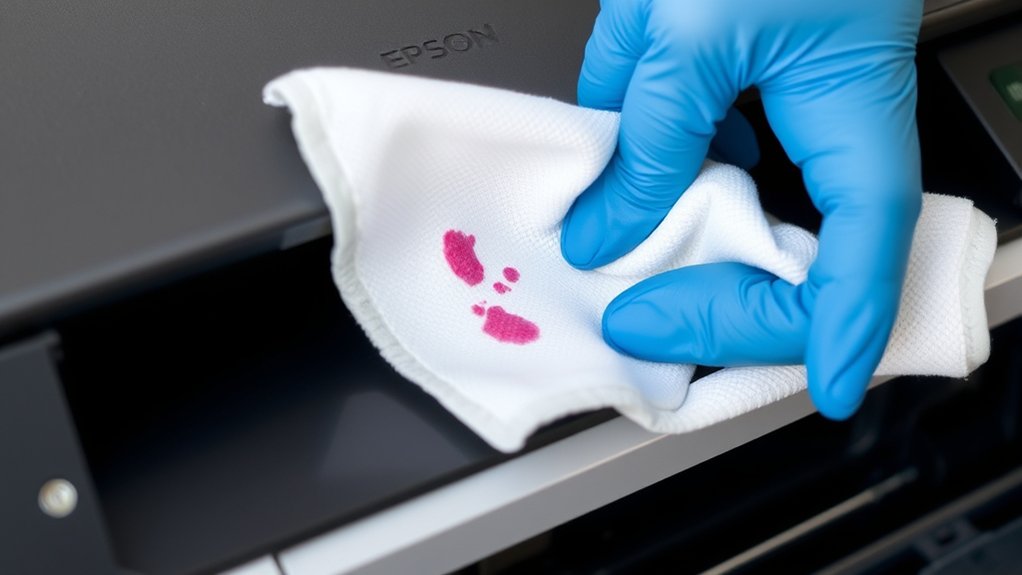

To remove old ink from your Epson ET 4760 printer, start by powering off the device and opening the scanner unit carefully. This initial step allows you access to the ink cartridges and printhead.
Next, gently remove the ink cartridges and check the printhead for any dried or clogged ink. Using a lint-free cloth dampened with distilled water, carefully wipe the printhead nozzles and cartridge contacts to clear away residue.
Once cleaned, reinstall the cartridges securely. Then, run the printer’s head cleaning cycle by navigating to Setup > Maintenance on the printer menu.
If ink clogs persist after this process, try using the power cleaning option for a deeper clean.
Following these steps will help maintain your Epson ET 4760’s peak performance and prevent future ink buildup.
Key Takeaways
- Power off the Epson ET 4760 and open the scanner unit to access the ink cartridges safely.
- Remove ink cartridges carefully and inspect printhead for dried ink buildup using bright light and magnifier.
- Use a lint-free cloth dampened with distilled water to gently wipe printhead nozzles and remove dried ink residue.
- Run the printer’s “Head Cleaning” and “Power Cleaning” cycles from Setup > Maintenance to clear clogged nozzles.
- Reinstall cartridges securely and print a nozzle check pattern to ensure ink flow and print quality restoration.
Identify Old Ink Buildup on Your Epson ET 4760
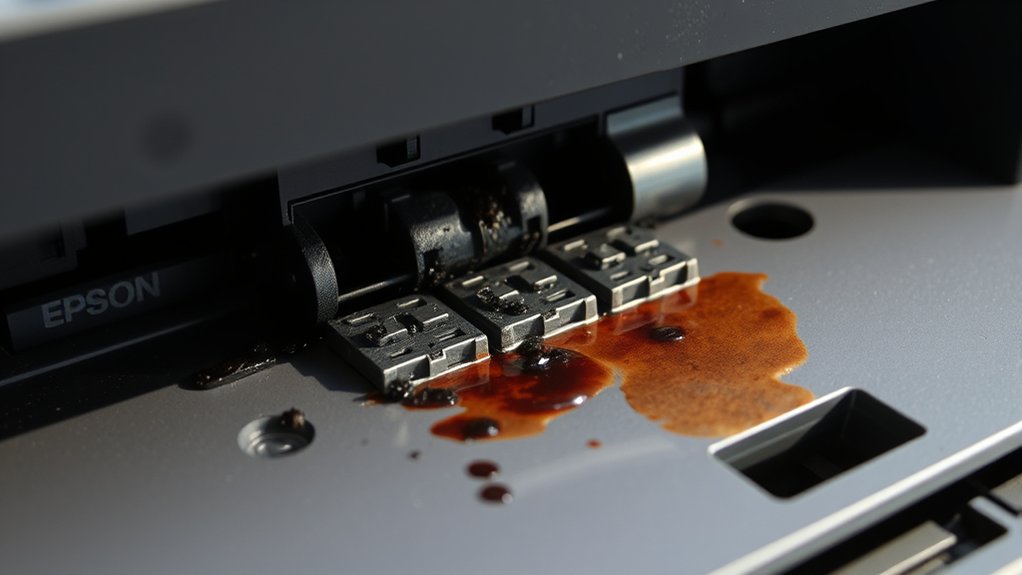
To identify old ink buildup on your Epson ET 4760, start by powering off the printer and opening the scanner unit to access the printhead area. Remove the ink cartridge carefully to avoid damage.
Inspect the printhead and surrounding components for dried or clotted ink deposits, which often appear as dark, crusty patches. These deposits can block ink flow, reducing print quality and causing streaks or missing colors in your prints. Use a bright light and magnifier if necessary to detect subtle buildup.
Check the ink cartridge contacts for residue that might interfere with communication between the cartridge and printer. Note any unusual odors or visible ink smears on the printer’s interior. Completing this inspection helps you determine if cleaning or cartridge replacement is needed to restore ideal print quality.
Remove Old Ink: Step-by-Step Cleaning Guide
Although removing old ink from your Epson ET 4760 requires careful attention, you can follow a systematic process to restore ideal printhead function. First, power off the printer and open the ink cartridge access panel. Carefully remove each ink cartridge to avoid damage.
Next, dampen a lint-free cloth with distilled water and gently wipe the printhead nozzles to remove dried ink residue. Avoid using excessive moisture to prevent electrical damage. After cleaning, reinstall the ink cartridges securely.
Use a distilled water-dampened lint-free cloth to gently clean printhead nozzles, avoiding excess moisture to protect electronics.
Close the panel and power on the printer. Perform a nozzle check to evaluate print quality. If streaks or missing colors persist, repeat the cleaning process.
This method guarantees old ink buildup is cleared, helping maintain consistent print quality without risking cartridge or printhead harm.
Use Epson ET 4760 Maintenance Tools to Clear Ink Clogs
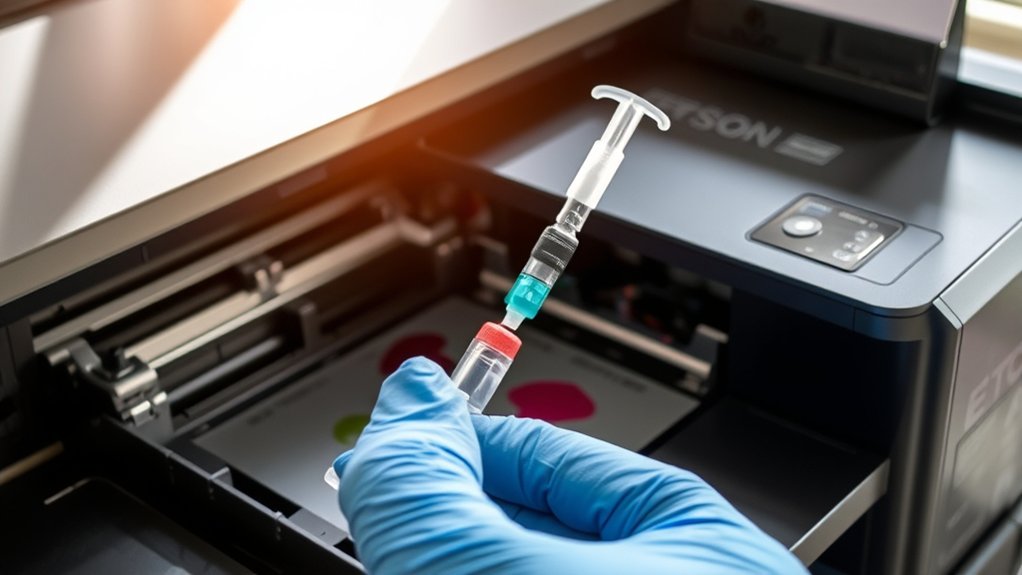
Once you’ve manually cleared old ink from the printhead, you can utilize the Epson ET 4760’s built-in maintenance tools to address persistent ink clogs. Start by accessing the printer’s control panel and proceeding to Setup > Maintenance.
Select “Head Cleaning” to initiate the cleaning cycle, which forces ink through the nozzles, dissolving blockages. After the cycle completes, print a nozzle check pattern to evaluate results. If ink clogs persist, repeat the head cleaning up to three times.
For severe clogs, use the “Power Cleaning” option, which applies more pressure to clear stubborn blockages. Always verify you have sufficient ink levels before running these maintenance tools, as low ink can reduce cleaning effectiveness.
This method efficiently restores print quality by systematically removing ink clogs without manual disassembly.
Prevent Ink Build-Up With Regular Epson ET 4760 Care
Regularly maintaining your Epson ET 4760 prevents ink build-up that can lead to clogs and print quality issues. To guarantee efficient printer operation, follow these steps for regular maintenance:
- Replace Ink Cartridges Promptly: Always install fresh, compatible ink cartridges before the old ones run completely dry to avoid dried ink residue inside the printer.
- Run Cleaning Cycles Weekly: Use the printer’s built-in cleaning function to flush ink nozzles and prevent blockages caused by settled ink.
- Wipe Cartridge Contacts Carefully: Gently clean the electrical contacts on the ink cartridge and printer head with a lint-free cloth dampened with distilled water to maintain proper connectivity.
Troubleshoot Common Epson ET 4760 Issues After Cleaning
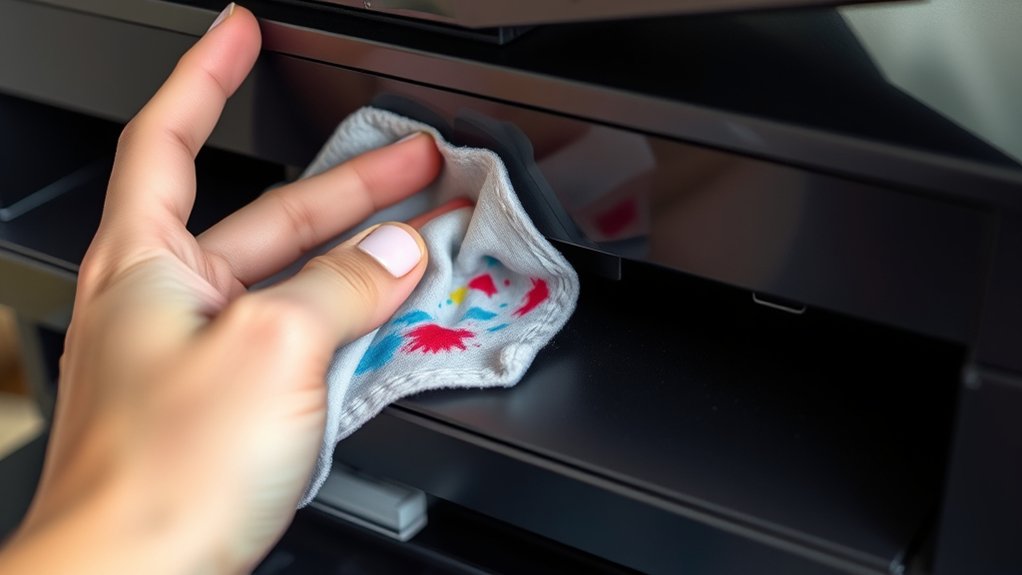
If your Epson ET 4760 exhibits issues after cleaning, you should systematically diagnose common problems to restore peak performance. First, check for print quality issues by printing a nozzle check pattern; streaks or missing lines indicate clogged nozzles. Run the printer’s automatic head cleaning utility to clear blockages.
Next, verify ink cartridge replacements are correctly installed and compatible; improperly seated cartridges can cause errors. Inspect the cartridge contacts for residue or damage and clean gently if needed.
If print quality issues persist, perform a power cycle by turning off the printer, unplugging it for 5 minutes, then restarting. Finally, update the printer firmware via Epson’s support website to resolve software-related glitches. Following these steps guarantees reliable operation after cleaning.
Frequently Asked Questions
Can Old Ink Damage the Epson ET 4760 Printhead Permanently?
Yes, old ink can permanently damage your Epson ET 4760 printhead. To prevent this, prioritize printhead maintenance and replace ink cartridges before their lifespan ends. This ensures consistent ink flow and helps avoid clogs or drying issues.
Is It Safe to Use Third-Party Cleaning Solutions on Epson ET 4760?
Third-party safety isn’t always a green light; you’ll want to test cleaning solution effectiveness carefully. Step one: verify compatibility; step two: apply sparingly; step three: monitor results closely to avoid damaging your Epson ET 4760 printhead.
How Often Should I Replace Ink Cartridges to Avoid Buildup?
You should monitor your ink cartridge lifespan and replace cartridges every 3-6 months, depending on usage. Regular ink replacement frequency prevents buildup, ensuring ideal print quality and avoiding clogging or damage to your Epson ET 4760 printer.
Can Old Ink Stains Be Removed From Printed Paper?
You can remove old ink stains gently using ink removal techniques like blotting with a cotton swab and rubbing alcohol. Always test on a small area first to guarantee paper preservation and prevent damage during cleaning.
Does Epson ET 4760 Support Automatic Ink Cleaning Cycles?
You’ll find the Epson ET 4760 supports automatic ink maintenance cleaning cycles, which run for about 2-5 minutes. These cycles flush clogged nozzles, ensuring ideal print quality through precise, scheduled ink maintenance steps.
Conclusion
Just like a well-tuned engine needs clean oil, your Epson ET 4760 thrives when you remove old ink buildup promptly. By following the step-by-step cleaning guide and utilizing the printer’s maintenance tools, you’ll restore peak performance and avoid common clogs.
Regular care isn’t just maintenance—it’s prevention, ensuring your printer runs smoothly like clockwork. Stay vigilant, and your Epson ET 4760 will remain as reliable as the first time you powered it on.
In conclusion, knowing how to remove old ink from Epson ET 4760 printer is essential to keep it functioning at its best over time.