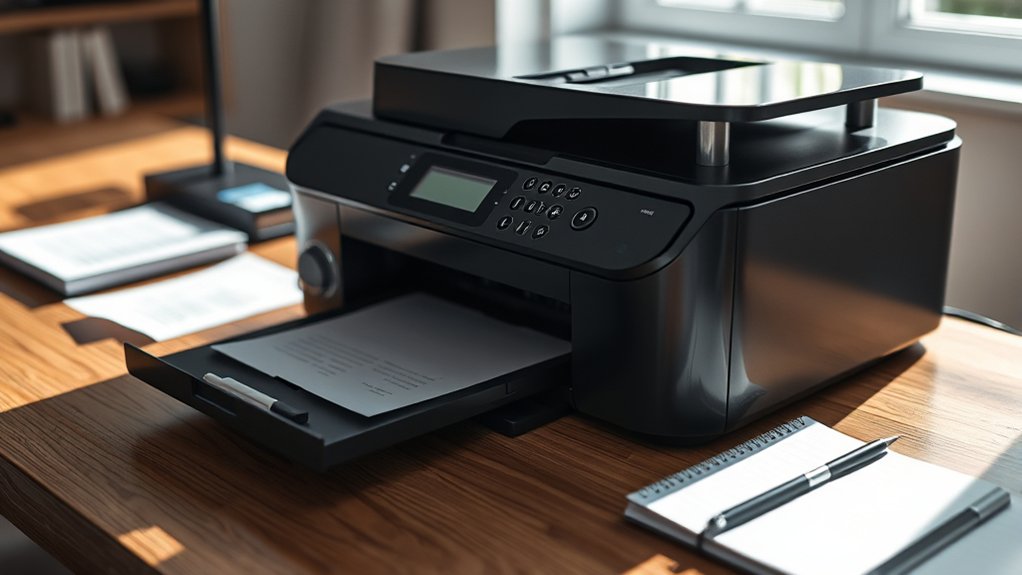

You can expect to pay between $30 and over $400 for a printer, depending on your needs.
Basic inkjet models start around $30-$100, while laser printers begin near $100. Mid-range options up to $500 offer faster speeds and better features.
Keep in mind, ongoing costs like ink or toner and maintenance add to expenses. Brands and connectivity also affect prices.
If you want to make the smartest choice, exploring these factors closely will help.
Key Takeaways
- Basic inkjet printers typically cost between $30 and $100 for occasional home use.
- Laser printers start around $100, with mid-range models priced up to $300.
- Specialized photo printers can exceed $400 due to advanced features and higher resolution.
- Ongoing costs for ink or toner and maintenance significantly impact total printer expenses.
- Brand reputation, connectivity options, and printing speed influence printer prices and value.
Printer Prices at a Glance: What You Can Expect
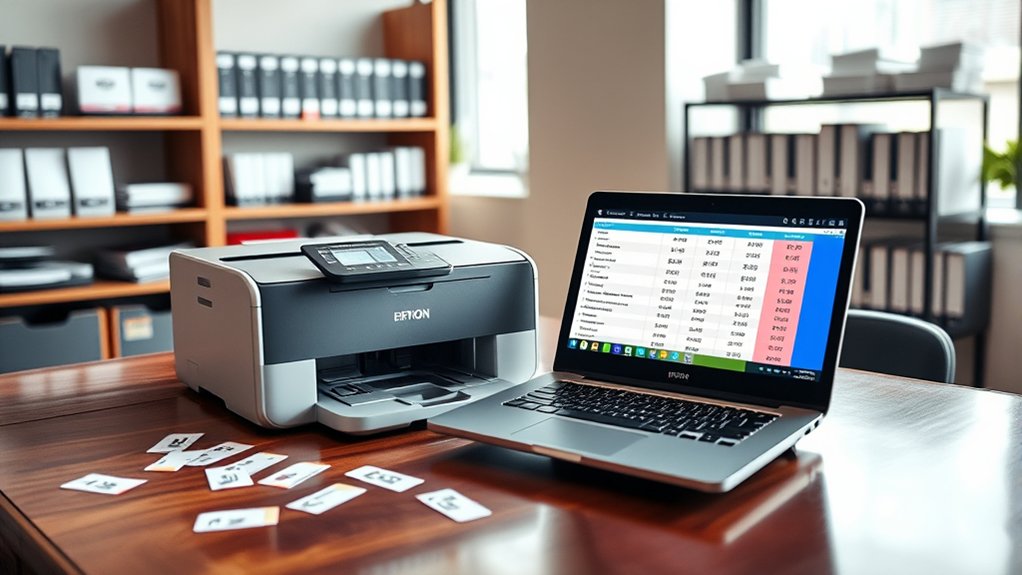
How much should you expect to pay for a printer? It largely depends on the printer types and your budget considerations.
Basic inkjet printers, suitable for occasional home use, typically cost between $30 and $100. If you need more durability or faster printing, laser printers start around $100 and can go up to $300 for mid-range models.
For photo printing or professional tasks, specialized printers can exceed $400. Keep in mind, budget considerations should also factor in ongoing costs like ink or toner.
While upfront prices vary, your total expense includes maintenance, which differs by printer type. Knowing your printing needs helps you allocate funds wisely and avoid overspending on features you don’t require.
Key Features and Brands That Affect Printer Prices
Beyond just the initial cost, the features a printer offers and the brand behind it play significant roles in determining its price. When you look at printer technology, models with advanced inkjet or laser capabilities usually cost more due to higher precision and speed.
You’ll also find that wireless connectivity is a sought-after feature, letting you print from multiple devices without cables, which can add to the overall expense. Brands like HP, Canon, and Epson often price their printers higher, reflecting reliability, customer support, and innovation.
While lesser-known brands might offer lower prices, you could sacrifice durability or print quality. Understanding these factors helps you make an informed choice, ensuring you pay for the features and brand value that best meet your printing needs.
How Much Does a Basic Home Printer Cost?
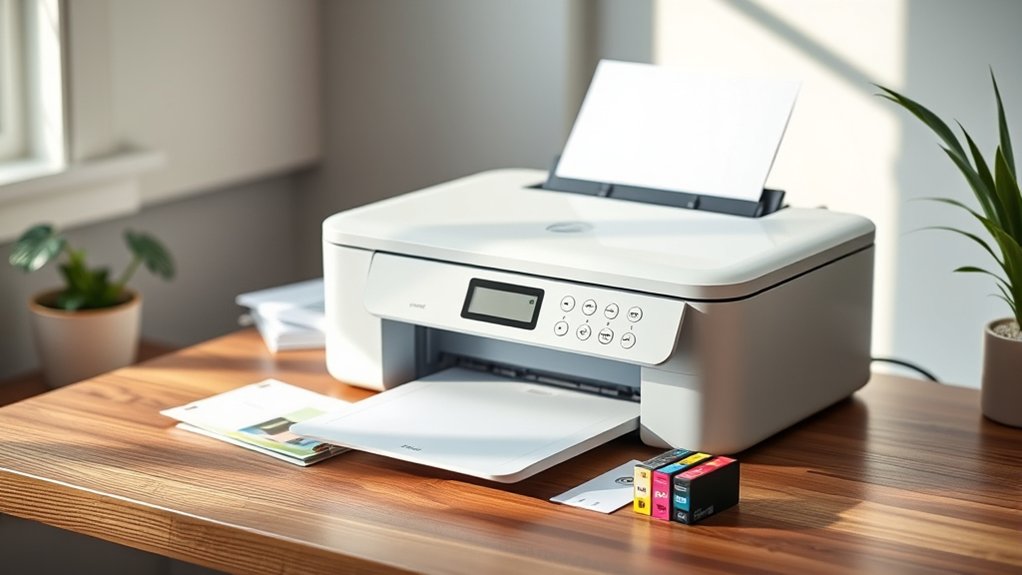
You’ll find entry-level printers usually start around $50 to $100, depending on whether you choose inkjet or laser technology. Inkjet printers tend to cost less upfront but require more frequent ink replacements, while laser printers have higher initial costs but cheaper toner over time.
Don’t forget to factor in additional supplies like paper and replacement cartridges, which can add considerably to your overall expenses.
Entry-Level Printer Prices
Entry-level printers typically cost between $50 and $150, making them accessible for most home users. When you shop within this price range, you’ll find models offering essential features like wireless connectivity, which lets you print from multiple devices without cables.
Printing speed varies but generally meets basic needs, averaging 5 to 10 pages per minute. These printers focus on simplicity and affordability, so you won’t get advanced functions seen in higher-end models.
However, they handle everyday tasks efficiently, ideal for casual printing, homework, or occasional document needs. If you want a budget-friendly option that supports wireless printing and delivers decent speed, entry-level printers provide a balanced choice without breaking the bank.
Make sure to compare specs to find one that fits your specific usage.
Inkjet Vs. Laser Costs
When deciding between inkjet and laser printers, understanding their cost differences is key. Inkjet printers usually have a lower initial price and offer inkjet advantages like better photo printing. However, laser printers boast laser efficiency with faster speeds and lower cost per page, making them cost-effective over time.
| Feature | Inkjet Printer |
|---|---|
| Initial Cost | $50 – $150 |
| Speed | Slower |
| Print Quality | Excellent for photos |
| Cartridge Cost | Higher per page |
| Feature | Laser Printer |
| Initial Cost | $100 – $300 |
| Speed | Faster |
| Print Quality | Sharp text |
| Cartridge Cost | Lower per page |
Choose based on your printing volume and quality needs.
Additional Supplies Expenses
Beyond the printer’s initial price, several additional supplies contribute to the overall cost of owning a basic home printer. You’ll need to factor in ink or toner replacements, which often become the most significant ongoing expense.
While original cartridges guarantee quality and maintain printer warranties, ink alternatives like third-party or refilled cartridges can lower costs but may risk voiding warranties or affecting print quality. You’ll also want to take into account paper types and occasional maintenance kits.
Some printers include warranties covering defects, but they rarely cover consumables, so budgeting for supplies is essential. Understanding these additional expenses helps you gauge the true cost of ownership beyond the upfront purchase, guaranteeing you don’t underestimate what it takes to keep your printer running smoothly.
Mid-Range and Photo Printer Prices and Features
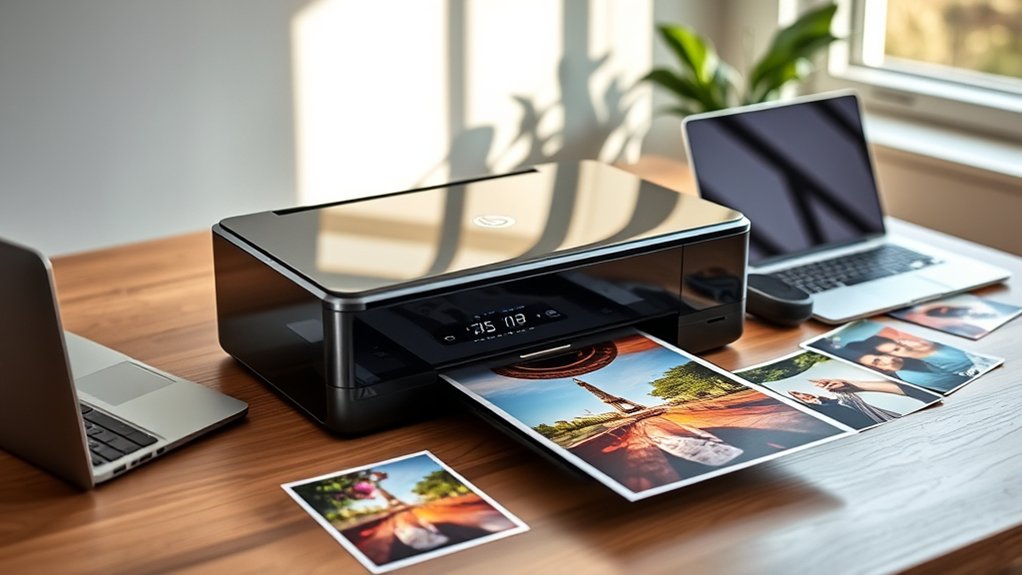
Mid-range and photo printers typically cost between $150 and $500, offering a balance between affordability and advanced features. These mid range models often include enhanced photo printer features like higher resolution and better color accuracy. This makes them ideal if you want quality prints without overspending.
| Feature | Benefit |
|---|---|
| Print Resolution | Sharp, detailed images |
| Color Accuracy | Vibrant, true-to-life hues |
| Connectivity Options | Wireless, USB, and more |
| Speed | Faster printing |
| Paper Handling | Supports various sizes |
When choosing, focus on what photo printer features matter most to you. Mid range models give you solid performance for everyday and photo printing needs without the premium price tag.
Hidden and Ongoing Costs: Ink, Paper & Maintenance
When you buy a printer, the initial price is just the start. You’ll need to factor in the cost of ink cartridges, which can add up quickly depending on your usage.
Plus, don’t forget the ongoing expenses for paper and routine maintenance to keep your printer running smoothly.
Ink Cartridge Expenses
Ink cartridge expenses can quickly add up, often surpassing the initial cost of the printer itself. You’ll find several ink cartridge types, including original manufacturer cartridges, compatible third-party options, and refillable cartridges.
Each type varies in price and quality, affecting your overall expenses. Additionally, ink replacement frequency depends on your printing volume and the printer’s efficiency.
For example, inkjet printers typically require more frequent replacements than laser printers, which use toner instead of liquid ink. To manage costs, you should monitor your ink usage closely and consider cartridges with higher page yields.
Keep in mind, choosing cheaper cartridges might save money upfront but can lead to clogged nozzles or poor print quality, potentially increasing long-term costs. Understanding these factors helps you budget wisely for ongoing ink expenses.
Paper and Maintenance Costs
Although ink costs often grab the spotlight, paper and maintenance expenses can quietly add up over time. You’ll want to take into account the type of paper you use, such as standard, glossy, or specialty, as prices vary considerably. Using higher-quality paper improves print results but increases costs.
Additionally, regular maintenance is vital to keep your printer running smoothly. Following maintenance schedules recommended by the manufacturer helps prevent breakdowns and costly repairs. This includes cleaning print heads, replacing worn parts, and updating firmware.
Neglecting these tasks may lead to frequent malfunctions, wasting both paper and ink. By factoring in paper types and adhering to maintenance schedules, you can better estimate the true cost of owning a printer, avoiding unexpected expenses that sneak past initial purchase prices.
Tips for Choosing a Printer Within Your Budget
Since printers come in various types and price ranges, you should start by identifying your primary needs and how often you’ll use the device. This clarity helps balance printer types against budget considerations effectively. Here are three tips to guide your choice:
Start by defining your printing needs and frequency to choose the right printer within your budget.
- Assess Usage Frequency: If you print occasionally, a basic inkjet may suffice. For heavy use, consider a laser printer for speed and cost-efficiency.
- Factor in Running Costs: Calculate expenses for ink or toner replacements and maintenance to avoid surprises after purchase.
- Match Features to Needs: Prioritize essential functions like wireless connectivity or duplex printing to avoid paying for unnecessary extras.
Frequently Asked Questions
How Long Do Printers Typically Last Before Needing Replacement?
You can expect a printer lifespan of about 3 to 5 years, depending on usage and maintenance. Regular cleaning, timely ink replacement, and avoiding paper jams can extend your printer’s life considerably.
Are There Eco-Friendly Printers Available?
Yes, you can find eco-friendly printers that use sustainable printing methods and green technology. They reduce waste and energy consumption, helping you minimize environmental impact while maintaining quality and efficiency in your printing tasks.
Can Printers Connect Wirelessly to Smartphones and Tablets?
Yes, most modern printers offer wireless connectivity, making smartphone compatibility seamless. You can easily print documents or photos directly from your device without cables, enhancing convenience and efficiency in your daily printing tasks.
What Is the Difference Between Inkjet and Laser Printers?
You’ll find inkjets offer vibrant color and better photo quality, making inkjet advantages ideal for detailed prints.
Laser printers, on the other hand, excel in speed and efficiency, perfect if you need fast, high-volume black-and-white documents.
How Do Printer Warranties and Customer Support Work?
Think of warranty coverage as your printer’s safety net. It protects you from defects for a set time. When issues arise, customer service steps in promptly to guide you, ensuring smooth repairs or replacements without hassle.
Conclusion
When choosing a printer, remember that the initial price is just part of the cost—ink can account for up to 50% of your total expenses over time. By understanding how features and brands affect prices, you can find a model that fits your needs without overspending.
Keep in mind ongoing costs like paper and maintenance, and prioritize what matters most to you. This approach helps you stay within budget while getting the best value for your printer investment.
Considering all these factors will help you determine how much is a printer worth for your specific requirements.