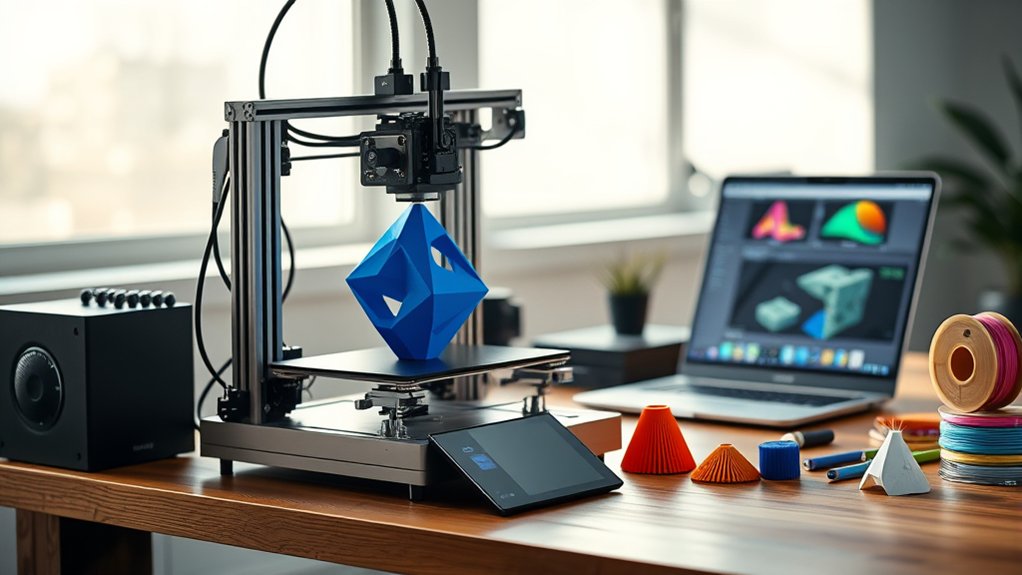

A 3D printer’s cost varies widely based on its technology, build volume, and precision.
How much does a three D printer cost depends largely on the type and features you need. You can find entry-level models for around $150 to $500, ideal for hobbyists.
Mid-range options range from $1,000 to $5,000, offering better materials and resolution.
Industrial-grade printers exceed $10,000 and can reach over $100,000 for advanced manufacturing.
Remember, operating costs and maintenance also add up.
Understanding these factors will help you choose the right printer for your needs.
Key Takeaways
- Entry-level 3D printers cost between $150 and $500, suitable for hobbyists and basic prototyping needs.
- Professional-grade 3D printers range from $10,000 to over $100,000, depending on technology and industrial features.
- Printer technology, build volume, and material compatibility significantly influence the initial purchase price.
- Operating and maintenance costs, including materials, replacement parts, and energy, add to the total ownership expense.
- Consider brand reliability, software licenses, and manufacturer support when evaluating overall 3D printer costs.
How Much Does a 3D Printer Cost? An Overview
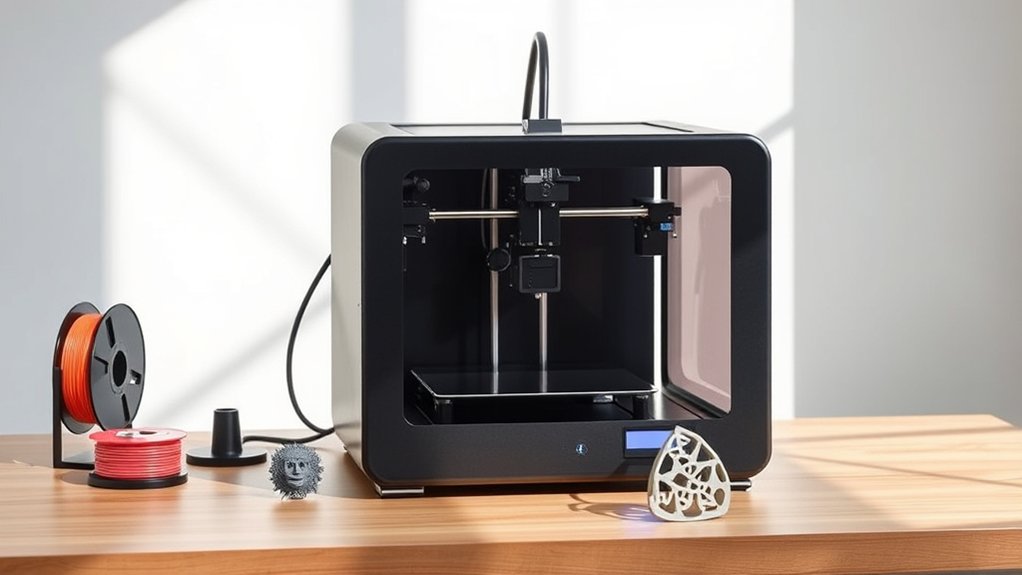
How much does a 3D printer cost depends on several key factors, including the printer’s technology, build volume, and precision. You’ll find prices vary widely due to these technical specifications.
For instance, resin-based printers often cost more than FDM models because of higher resolution capabilities. Build volume directly influences material consumption and machine size, affecting cost.
Staying current with 3D printing trends helps you understand emerging technologies that might impact pricing structures. Budget considerations must also account for maintenance, materials, and software compatibility, not just the upfront purchase price.
Entry-Level 3D Printers: Price and Features
Although entry-level 3D printers come with limited build volumes and lower resolution compared to professional models, they offer sufficient precision for prototyping and hobbyist projects. You’ll find these printers typically priced between $150 and $500, balancing affordability with entry level performance.
Their print heads often support single extruders with layer resolutions around 100-200 microns, which suits most basic applications. Beginner usability is enhanced by features such as touchscreen interfaces, pre-calibrated print beds, and simplified slicing software.
However, you should expect smaller build areas, commonly around 120x120x120 mm, and less robust frame materials, usually acrylic or basic aluminum. These constraints mean entry-level printers excel at learning and experimentation, but may require upgrades or replacements for advanced or large-scale tasks.
Mid-Range 3D Printers: Price and Features
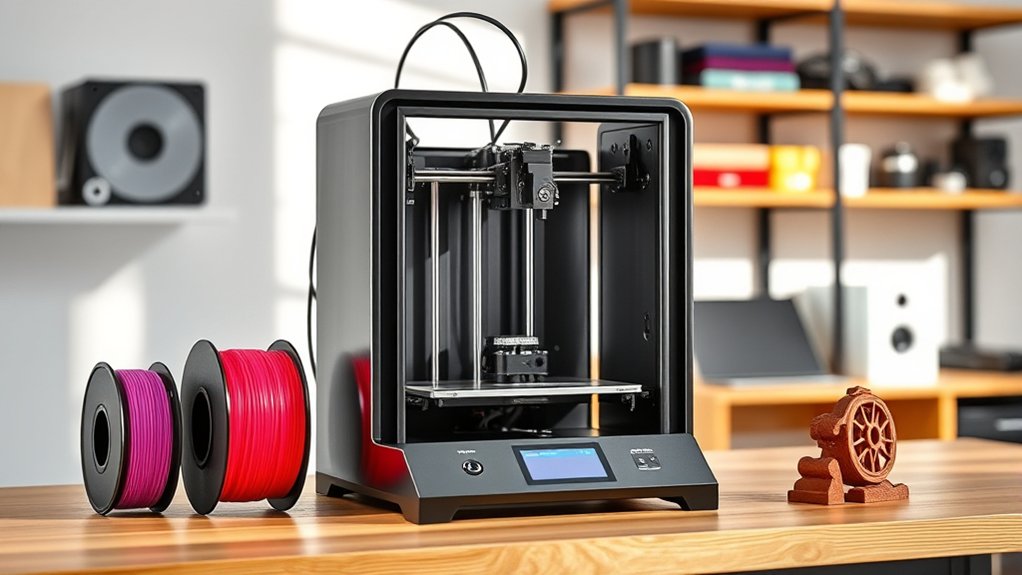
Mid-range 3D printers offer a significant upgrade in build volume, resolution, and material compatibility compared to entry-level models, typically costing between $500 and $2,000. When you invest in mid range features, expect enhanced print precision with layer resolutions often reaching 50 microns or better.
These printers support a wider array of filaments, including PLA, ABS, PETG, and flexible materials, enabling more versatile prototyping. Mid range brands like Prusa, Creality, and Anycubic focus on reliability, improved user interfaces, and advanced calibration options.
You’ll find benefits such as heated build plates, dual extrusion, and enclosed print chambers in this segment. These improvements let you produce more complex, functional parts while maintaining ease of use.
Choosing a mid-range model balances cost with professional-grade capabilities, ideal for hobbyists and small businesses.
High-End 3D Printers: Price and Features
When you invest in a high-end 3D printer, you get compatibility with premium materials like advanced composites and metals. These printers employ cutting-edge technologies such as multi-laser systems and high-resolution resin curing for superior precision.
You’ll also benefit from specialized software integration that optimizes print parameters and streamlines complex workflows.
Premium Material Compatibility
High-end 3D printers typically support a broader range of premium materials, including advanced composites, high-temperature thermoplastics, and specialty resins. When selecting a printer, you’ll want to prioritize material compatibility, guaranteeing it can handle your specific premium materials without compromising print quality or mechanical properties.
These printers feature heated chambers, advanced extrusion systems, and precise temperature controls that enable processing of materials like PEEK, Ultem, and carbon-fiber-reinforced filaments. Such capabilities expand your application range, from aerospace components to medical devices requiring stringent mechanical and thermal performance.
You should also consider the printer’s software and firmware, which must accommodate material-specific parameters for ideal layer adhesion and surface finish. Investing in a printer with extensive premium material compatibility guarantees versatility and future-proofing for specialized manufacturing needs.
Advanced Printing Technologies
Although advanced printing technologies often come with a significant price tag, they deliver unmatched precision, speed, and material versatility that justify the investment. High-end 3D printers incorporate cutting-edge additive manufacturing techniques, such as multi-material jetting and selective laser sintering, enabling you to produce complex geometries with micron-level accuracy.
These printing innovations enhance layer adhesion, reduce post-processing time, and expand the range of compatible materials, including composites and metals. When you select such a system, expect integrated sensors and real-time monitoring to optimize print parameters automatically, ensuring consistent quality.
While the initial cost may range from $10,000 to over $100,000, the resulting improvements in production efficiency and part performance make these printers indispensable for industrial applications and prototyping environments where precision and reliability are paramount.
Specialized Software Integration
Specialized software integration plays an important role in maximizing the capabilities of advanced 3D printers by streamlining workflow and enhancing print accuracy. When you invest in high-end 3D printers, you’ll encounter software licensing requirements that can greatly impact overall costs.
Proprietary software often offers advanced features like real-time error detection and automatic support generation, but licensing fees vary widely. Additionally, integration challenges arise when synchronizing specialized software with existing CAD systems or production pipelines.
You’ll need to guarantee compatibility and may require custom APIs or middleware to facilitate seamless communication between hardware and software components. Addressing these challenges proactively reduces downtime and improves print reliability.
Ultimately, specialized software integration is vital for extracting the full potential of your printer, but it demands careful consideration of licensing constraints and technical interoperability.
What Affects the Cost of a 3D Printer?
Because 3D printers vary widely in design, materials, and capabilities, several key factors influence their cost. You’ll notice that the choice of printing technology, such as FDM, SLA, or SLS, directly affects the price due to differing hardware complexity and material requirements.
Market demand also plays a role; high-demand models often command premium pricing. Other critical influences include:
- Build volume: Larger print areas require more robust components.
- Material compatibility: Printers supporting diverse filaments or resins tend to cost more.
- Precision and resolution: Higher accuracy demands advanced mechanics and sensors.
- Frame and component quality: Durable materials increase manufacturing costs.
- Software integration: Proprietary or specialized software solutions add to the price.
Understanding these factors helps you assess 3D printers’ value relative to their cost and intended application.
Additional Costs and Choosing the Right 3D Printer
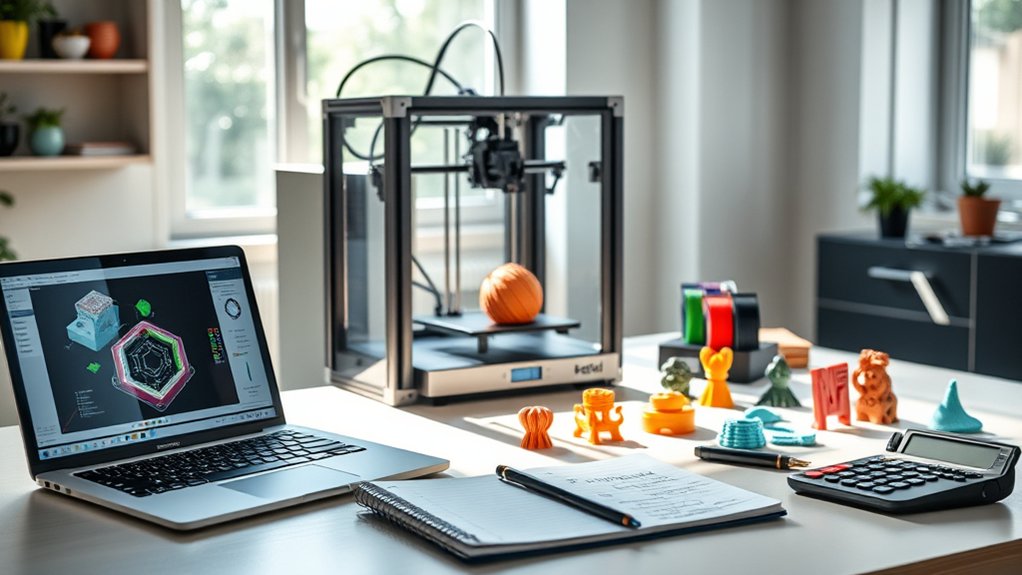
How much should you budget beyond the initial purchase price when investing in a 3D printer? Beyond the base cost, you’ll need to allocate funds for vital 3D printer accessories like build plates, nozzles, and filament spools. These consumables directly impact print quality and operational efficiency.
Additionally, ongoing maintenance is important; expect expenses related to calibration, part replacements, and occasional repairs to guarantee consistent performance. When choosing the right 3D printer, consider your specific application requirements: resolution, build volume, and material compatibility to avoid overspending on unnecessary features.
Prioritize models with accessible parts and strong manufacturer support to minimize downtime. Factoring in these additional costs and maintenance commitments upfront will help you select a 3D printer that aligns with both your technical needs and budget constraints.
Frequently Asked Questions
How Long Does It Take to Print an Object With a 3D Printer?
Your 3D print time depends on printing speed and object complexity; simple items may take minutes, while intricate designs requiring fine layers can take several hours.
Adjusting speed and layer height affects precision and duration considerably.
What Materials Can I Use With a 3D Printer?
You know what they say: “Variety is the spice of life.” You can use filament types like PLA, ABS, PETG, and nylon, each offering distinct material properties like strength, flexibility, or heat resistance for precise printing.
Are 3D Printers Safe to Use at Home?
Yes, 3d printer safety for home usage requires proper ventilation, monitoring high temperatures, and using non-toxic filaments.
You should follow manufacturer guidelines strictly to prevent fumes, burns, and mechanical hazards during operation.
Can I Design My Own 3D Models for Printing?
Of course, you can’t design your own 3D models unless you want to master 3D modeling software and follow detailed design tutorials. Once you do, you’ll precisely create custom prints tailored to your technical needs.
What Maintenance Is Required for a 3D Printer?
You’ll perform printer upkeep by regularly cleaning nozzles, lubricating rails, and calibrating the bed. Use troubleshooting tips like checking filament feed and updating firmware to maintain print quality and prevent mechanical issues effectively.
Conclusion
Choosing the right 3D printer is like maneuvering through a complex maze—each turn impacts cost and capability. Entry-level models offer affordability but limited features, while mid-range and high-end printers provide advanced precision at increasing prices. Don’t forget to factor in additional expenses like materials and maintenance.
By understanding these variables, you can make an informed decision that balances your budget with the technical demands of your projects. This approach ensures you invest wisely in the technology. When considering how much does a three D printer cost, keep all these factors in mind to find the best fit for your needs.