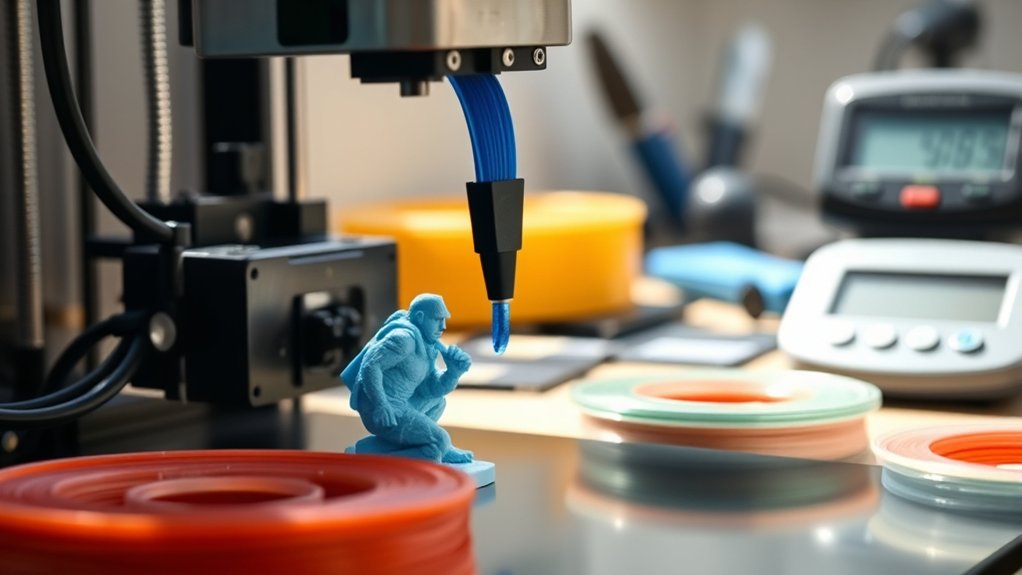

You can expect to pay between $20 and $60 per kilogram for 3D printer plastic, depending on the material.
PLA typically costs $20–30/kg and is great for general use, while ABS and PETG range higher due to durability.
Specialty filaments like TPU or carbon fiber command premium prices because of unique properties.
Brand choice and quantity purchased also impact cost, with bulk orders offering savings.
Understanding these factors helps optimize your purchase decisions; exploring more will uncover detailed pricing insights.
Key Takeaways
- Standard 3D printer plastics like PLA and ABS typically cost between $20 and $35 per kilogram.
- Specialty filaments such as carbon fiber or flexible TPU range from $40 to $60 per kilogram or more.
- Established brands charge premiums for quality, while bulk purchases can significantly reduce per-kilogram costs.
- Online retailers and local suppliers offer variable pricing influenced by discounts, shipping, and quantity.
- Cost-saving strategies include recycling filament, optimizing print settings, and buying in bulk from wholesale suppliers.
How Much Does Common 3D Printer Plastic Cost?
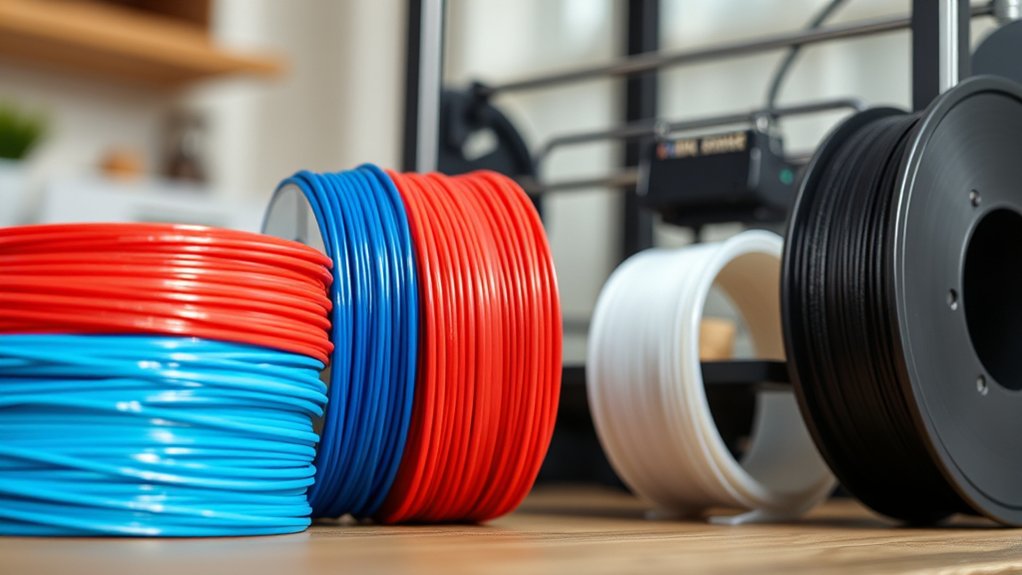
How much does common 3D printer plastic cost? Typically, the 3D printing costs for standard filament types like PLA or ABS range between $20 and $30 per kilogram. This price varies slightly depending on brand, quality, and supplier.
PLA is often the most affordable option, favored for its ease of use and biodegradability, while ABS costs a bit more due to its higher temperature resistance and durability. Specialty filaments, such as those infused with carbon fiber or flexible materials, cost considerably more.
When budgeting for 3D printing costs, consider that filament expenses represent a substantial portion of material costs, so selecting the appropriate filament type based on your project’s requirements can optimize overall expenditures. Understanding these base costs helps you plan your projects efficiently without unexpected material budget overruns.
Types of 3D Printer Plastic and Their Price Differences
Although 3D printer plastics vary widely in composition and performance, their price differences often reflect these material properties. When selecting filament types, you’ll notice costs align with factors like durability, flexibility, and melting point.
Understanding these variations helps you choose the right material for your print and budget.
| Filament Type | Approximate Cost (per kg) |
|---|---|
| PLA | $20 – $30 |
| ABS | $25 – $35 |
| PETG | $30 – $40 |
| TPU (Flexible) | $40 – $60 |
Each type’s material properties impact cost: PLA is affordable and easy to print, while TPU’s flexibility drives a higher price. PETG and ABS balance strength and cost, fitting diverse applications.
Why Specialty Plastics Cost More for 3D Printing
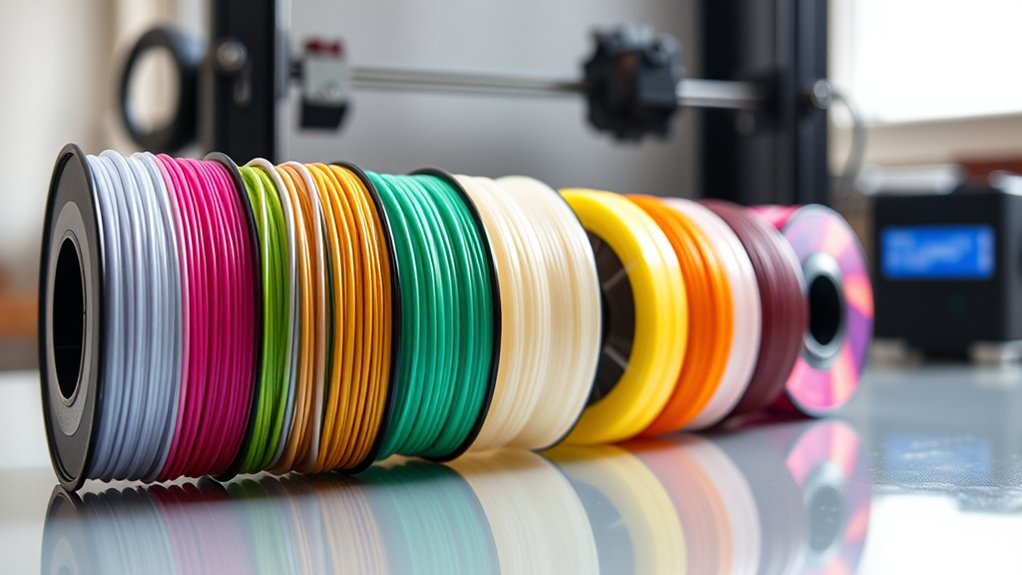
Because specialty plastics possess unique chemical and physical properties tailored for advanced applications, they command higher prices in 3D printing. When you choose specialty materials, you’re investing in polymers engineered for enhanced strength, heat resistance, flexibility, or chemical stability, which require complex synthesis and processing methods.
Price factors include the cost of raw materials, stringent quality control, and specialized manufacturing techniques that guarantee consistent performance. Additionally, lower production volumes and limited suppliers contribute to elevated costs.
Raw material costs, strict quality control, specialized manufacturing, limited suppliers, and low production volumes drive higher specialty plastic prices.
These specialty plastics often undergo rigorous testing to meet industry standards, further increasing expenses. Understanding these price factors helps you appreciate why specialty materials are pricier but necessary for functional prototypes or end-use parts demanding superior mechanical or thermal properties.
Your choice affects not only cost but also the reliability and capabilities of your 3D printed objects.
How Brand and Quantity Affect 3D Printer Plastic Prices
You’ll notice that 3D printer plastic prices vary considerably based on brand reputation and the quantity you purchase. Established brands often charge a premium for consistent quality, while buying in bulk can reduce your per-unit cost.
Balancing quality against price is essential to optimize both performance and budget.
Brand Reputation Impact
When selecting 3D printer plastic, brand reputation plays a critical role in determining price, as established manufacturers often charge premiums for consistent quality and reliability. You’ll notice that brands with strong consumer perceptions command higher prices due to proven material performance and minimized print failures.
This reliability fosters brand loyalty, encouraging repeat purchases despite cost differences. Conversely, lesser-known brands might offer lower-priced filaments but can vary in consistency, affecting your print outcomes. As you evaluate options, consider how brand reputation aligns with your project requirements.
Investing in reputable brands often reduces waste and maintenance costs, ultimately impacting your total expenditure. Understanding the relationship between brand loyalty and pricing helps you make informed decisions, balancing upfront costs with long-term reliability and print quality.
Bulk Purchase Discounts
Although brand reputation influences 3D printer plastic prices, purchasing larger quantities often yields significant cost savings through bulk discounts. When you place a bulk order, suppliers typically reduce unit prices to incentivize higher volume sales.
This price adjustment reflects economies of scale in production and logistics. Engaging in supplier negotiation can further optimize your cost structure, especially if you commit to recurring orders or extended contracts.
Keep in mind that different brands offer varying discount thresholds, so understanding these parameters helps in planning your purchases effectively. By analyzing your consumption patterns and coordinating bulk orders, you minimize per-kilogram costs without compromising supply consistency.
Leveraging bulk purchase discounts strategically enables you to manage your 3D printing budget efficiently while maintaining access to high-quality filament materials.
Quality Versus Price
Since both brand reputation and order quantity directly influence the cost of 3D printer plastics, understanding their interplay is essential for optimizing expenses. When conducting a quality assessment, you’ll find premium brands often offer consistent filament diameter, color vibrancy, and material purity, which justify higher prices.
However, lesser-known brands may provide competitive quality at lower costs, especially when bought in bulk. Performing a thorough price comparison allows you to balance upfront costs against potential print failures or material inconsistencies.
Keep in mind that larger orders typically reduce the per-unit price, but don’t compromise quality for quantity. By analyzing both brand reliability and order size, you can select filament that meets your technical requirements while maintaining budget efficiency.
This strategic approach guarantees you invest wisely in 3D printer plastics.
Where to Find the Best Deals on 3D Printer Plastic
You can find the best deals on 3D printer plastic by comparing discounts from online retailers, which often offer competitive prices and promotions. Buying in bulk typically reduces the cost per kilogram, so consider larger quantities if your print volume justifies it.
Additionally, evaluating local suppliers might reveal opportunities to save on shipping and receive personalized service.
Online Retailer Discounts
When hunting for the best deals on 3D printer plastic, online retailers often offer significant discounts that can substantially reduce your material costs. To capitalize, you should leverage online couponing strategies and monitor seasonal sales events. These approaches guarantee you purchase high-quality filament at prime prices without compromising your print quality.
Key tactics include:
- Subscribing to retailer newsletters for exclusive coupon codes
- Timing purchases around Black Friday, Cyber Monday, and back-to-school sales
- Using price comparison tools to identify the lowest offers
- Following specialized 3D printing forums for flash sales alerts
- Checking manufacturer websites for direct promotions
Bulk Purchase Savings
Although upfront costs may seem higher, buying 3D printer plastic in bulk greatly lowers the price per kilogram, making it a cost-effective strategy for frequent users. Bulk pricing often offers significant discounts compared to purchasing smaller quantities.
To maximize savings, explore wholesale options from manufacturers or specialized distributors who cater to industrial or educational sectors. These suppliers typically provide consistent quality and reliable supply chains, essential for maintaining print consistency.
When evaluating wholesale options, consider minimum order quantities and storage requirements to guarantee you can manage inventory efficiently. Additionally, keep an eye on bulk deals that bundle various filament types or colors, which can further reduce costs.
Local Supplier Comparisons
Since prices and availability vary widely, comparing local suppliers can help you identify the best deals on 3D printer plastic. Evaluating local supplier options allows you to optimize cost-efficiency and guarantee material quality.
When conducting a supplier pricing comparison, consider these factors:
- Material type and grade offered by each supplier
- Price per kilogram or spool, including taxes and fees
- Bulk purchase discounts and return policies
- Proximity and shipping costs to reduce lead times
- Customer reviews and technical support availability
Smart Ways to Save Money on 3D Printer Plastic
To reduce your 3D printing expenses, you can implement several cost-effective strategies focused on optimizing plastic usage. Start by incorporating filament recycling: collect failed prints or support material, shred them, and use a filament extruder to create new filament. This approach minimizes waste and lowers material costs considerably.
Additionally, consider producing DIY filament using raw plastic pellets, which can be more economical than purchasing pre-made filament. Optimize your print settings to use less plastic, such as adjusting infill density and shell thickness without compromising structural integrity.
Finally, store filament properly to prevent moisture absorption, which can degrade print quality and waste material. By combining these techniques, you’ll extend your filament supply, reduce overall expenses, and maintain high-quality prints efficiently.
Frequently Asked Questions
How Long Does 3D Printer Plastic Typically Last in Storage?
You’ll find 3D printer plastic typically lasts 1-2 years in storage. Its shelf life depends on storage conditions. Keep it cool, dry, and airtight to prevent moisture absorption and degradation, ensuring ideal printing quality.
Can 3D Printer Plastic Be Recycled or Reused?
Can you recycle or reuse 3D printer plastic? Yes, but it depends on plastic types like PLA or ABS.
Recycling processes vary, requiring sorting and cleaning to maintain quality for effective reuse in new prints or materials.
What Safety Precautions Are Needed When Handling 3D Printer Plastic?
You should wear safety gear like gloves and masks when handling 3D printer plastic to avoid inhaling fumes or skin irritation.
Always guarantee proper ventilation and follow material handling protocols to maintain a safe environment.
How Does Humidity Affect 3D Printer Plastic Quality?
Humidity causes moisture absorption in 3D printer plastic, leading to poor print adhesion and surface defects.
You should store filament in dry conditions to maintain quality and guarantee reliable, consistent printing results without warping or bubbling.
Are There Eco-Friendly 3D Printer Plastic Options Available?
Yes, you’ll find eco-friendly 3D printer plastics made from biodegradable materials like PLA. These sustainable alternatives reduce environmental impact by decomposing naturally, offering a precise, technical solution for greener additive manufacturing processes.
Conclusion
Now that you know the nuances of 3D printer plastics, you can smartly select supplies that suit your specific needs. Balancing brand, type, and quantity lets you slash spending without sacrificing strength or style.
By scouting sales and seizing specialty options selectively, you’ll save considerably while still securing superior substances. Stay savvy, shop shrewdly, and streamline your 3D printing process with smart strategies.
These approaches will help you maximize material quality and minimize costs, ultimately reducing how much a 3d printer plastic costs.