
What Size Heat Press Do I Need?
You should choose a heat press size that fits your project’s dimensions to guarantee even heat and pressure, preventing transfer damage.
For standard adult t-shirts, a 15″x15″ press works well, while smaller items like youth apparel suit a 12″x10″ size.
Larger or multiple transfers may require a 16″x20″ press.
Also, consider your workspace and budget, as bigger presses need more room and investment.
Keep exploring to find the ideal balance for your specific needs.
Key Takeaways
- Match heat press platen size to your largest project’s dimensions for complete, even transfers without damage.
- Use 15″x15″ for standard adult tees, 12″x10″ for youth apparel, and smaller sizes for mugs or caps.
- Consider your workspace size and budget; larger presses need more room and higher investment.
- Small presses offer portability and save space but limit design size and throughput.
- Scale press size based on production volume: small for low, medium for moderate, and large for high output.
How to Pick the Perfect Heat Press Size for Your Projects
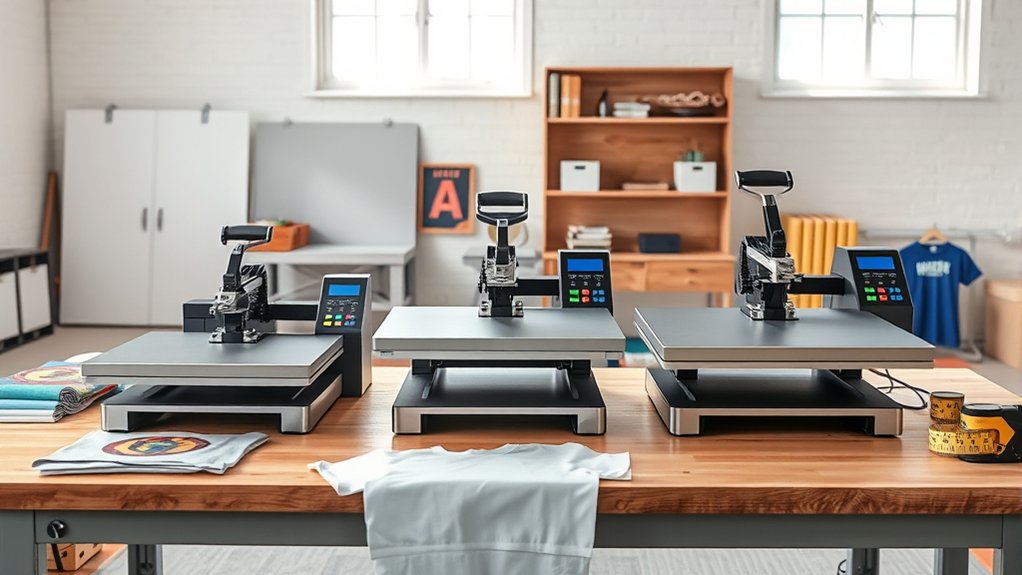
How do you determine the right heat press size for your specific projects? Start by analyzing your project requirements. Consider the maximum dimensions of the items you’ll press.
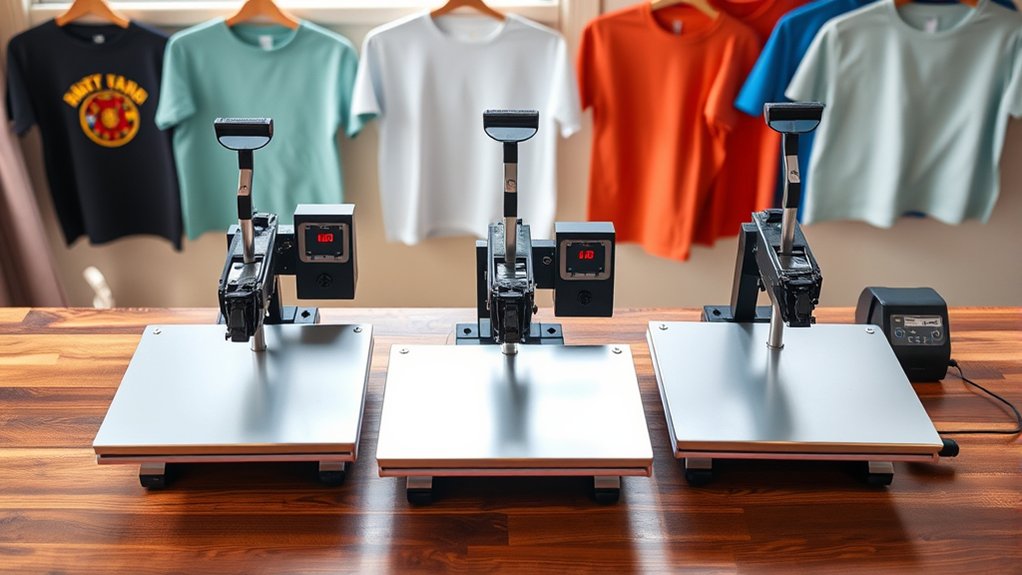
Different heat press types offer varied platen sizes; for instance, clamshell and swing-away models have specific size ranges. Matching your project dimensions to the platen guarantees consistent heat and pressure application, avoiding incomplete transfers or damage.
Clamshell and swing-away heat presses come in various platen sizes, ensuring proper heat and pressure for flawless transfers.
If you work with diverse items, prioritize a size that accommodates your largest projects without sacrificing efficiency. Smaller presses offer faster cycle times, but may limit versatility.
Ultimately, your decision should balance the heat press types available and your project requirements to optimize workflow and quality. This approach guarantees you pick a press size tailored precisely to your production needs.
Which Heat Press Sizes Work Best for Common Materials
When working with common materials like t-shirts, mugs, or hats, selecting a heat press size that matches the typical dimensions of these items guarantees peak transfer quality. For shirt transfers, a 15″x15″ press suits standard adult tees, balancing coverage and ease of use.
Smaller items like hats or mugs require specialized presses sized around 4″x6″ or 5″x7″ to accommodate curved surfaces and fabric thickness variations. Consider these ideal sizes:
- 15″x15″ for standard t-shirts and moderate fabric thickness
- 12″x10″ for youth-sized apparel or smaller shirt transfers
- 5″x7″ for mugs and ceramic items
- 4″x6″ cap presses for hats with thicker fabric
- 16″x20″ for larger or multiple transfers on heavier fabrics
Matching heat press size to material guarantees consistent pressure and temperature distribution.
How Workspace and Budget Limit Your Heat Press Size Options
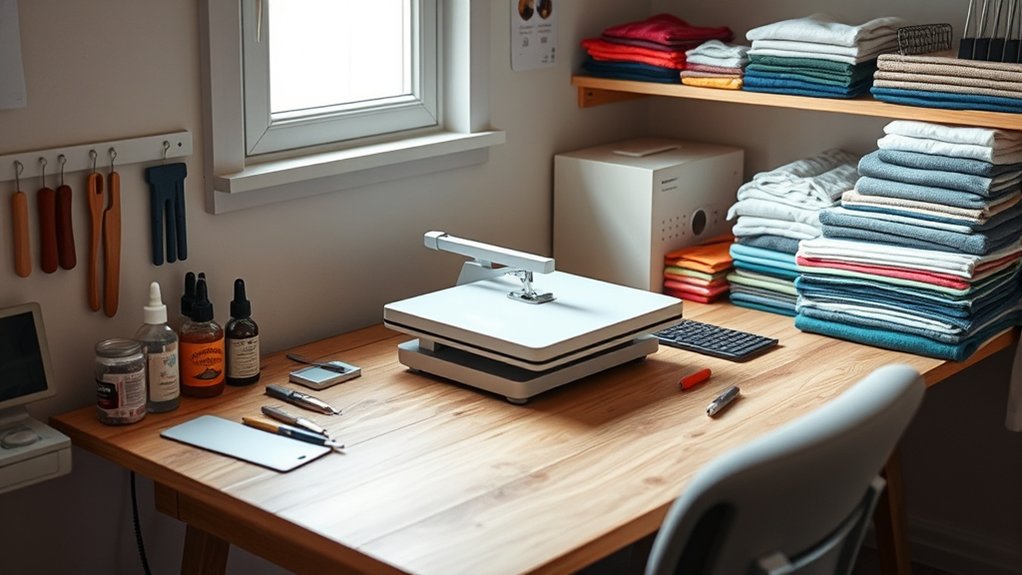
Although larger heat presses offer greater versatility, your available workspace and budget often dictate the maximum size you can realistically accommodate. Workspace constraints such as limited table area, ceiling height, and accessibility impact your ability to install and operate larger units efficiently.
Measure your workspace carefully to guarantee adequate clearance for heat press operation and maintenance. Budget considerations also play an essential role; larger machines typically demand higher upfront costs and may require more energy, increasing operational expenses.
Balancing workspace constraints with budget considerations helps you select a heat press size that optimizes productivity without causing spatial or financial strain. Prioritize models that fit your physical environment and financial plan to maintain workflow efficiency and avoid unnecessary expenditures.
Pros and Cons of Popular Heat Press Sizes
Because choosing the right heat press size directly affects your production capabilities and final output quality, understanding the advantages and drawbacks of popular sizes is essential. Small, medium, and large format presses each serve specific needs, influencing efficiency and material compatibility. Portable options add flexibility but may limit size and power.
Small presses excel in space-saving and portability but restrict large designs. Medium presses balance workspace requirements and versatility for various projects. Large format presses handle oversized garments efficiently but demand substantial workspace and power.
Portable options allow mobility and quick setups but often sacrifice heating consistency. Larger sizes increase throughput but may challenge precision on smaller items.
Evaluate these traits carefully to match your operational demands and production goals.
How to Scale Your Heat Press Setup as Your Business Grows
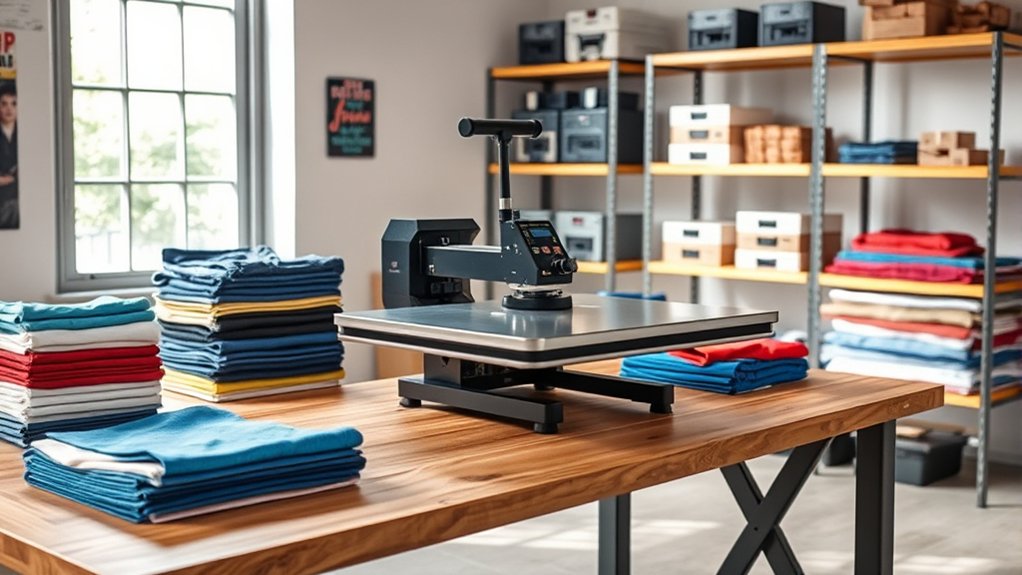
Understanding the strengths and limitations of various heat press sizes sets the foundation for expanding your production capacity effectively. As your business grows, scaling your heat press setup involves strategic equipment upgrades aligned with increased demand.
Start by evaluating current throughput and identifying bottlenecks.
| Heat Press Size | Ideal Production Volume | Upgrade Frequency | Business Expansion Benefit |
|---|---|---|---|
| Small (9″x12″) | Low | Rare | Cost-effective entry point |
| Medium (15″x15″) | Moderate | Moderate | Balanced efficiency |
| Large (16″x20″) | High | Frequent | Maximizes output |
| Industrial | Very High | Regular | Supports rapid scaling |
Invest in larger or multiple presses to reduce cycle time and increase output. Prioritize equipment upgrades that enhance automation and consistency to sustain growth efficiently.
Frequently Asked Questions
Can I Use a Heat Press for Non-Textile Materials?
Yes, you can use a heat press for non-textile applications by adjusting temperature and pressure settings. Heat transfer works well on materials like ceramics, metals, and plastics, but verify compatibility to avoid damage or poor adhesion.
How Do I Maintain and Clean My Heat Press?
Think of your heat press as a well-oiled machine; for proper heat press maintenance, regularly clean the platen with a non-abrasive cloth and mild cleaner. Use recommended cleaning techniques to prevent residue buildup and guarantee consistent pressure and temperature.
What Safety Precautions Should I Take When Using a Heat Press?
You should always follow heat press safety by wearing heat-resistant gloves, ensuring proper ventilation to avoid fumes, keeping the workspace clear, and never touching heated plates directly.
Regularly check electrical connections for safe operation.
Are There Portable Heat Press Options for Mobile Businesses?
Yes, you’ll find portable options designed specifically for business mobility. These compact, lightweight heat presses enable you to operate efficiently on the go, ensuring precise temperature control and consistent pressure for professional-quality transfers anywhere.
How Long Does It Take to Heat up a Typical Heat Press?
Think of your heat press as a kettle: it reaches its heat press temperature in about 5 to 10 minutes. The heating time depends on the model, but precise control guarantees efficient, consistent results for your projects.
Conclusion
Choosing the right heat press size isn’t just about current needs—it’s a strategic move for your craft’s future. Like a skilled watchmaker selecting the perfect gear, you’ll balance workspace, budget, and material demands.
Start with a size that fits your projects and grow as your business scales. By understanding the pros and cons of each size, you’ll optimize efficiency and quality.
Ensuring your heat press setup serves you reliably for years to come is key. When determining what size heat press do I need, consider both your present and future production needs carefully.