
For heat pressing, you’ll use specialized heat transfer paper that acts like a magic bridge, transferring your designs perfectly onto fabric with heat and pressure.
This paper is designed specifically to work with heat press machines, ensuring your artwork comes out sharp and vibrant every time.
Inkjet transfer paper works great for light-colored fabrics, while laser transfer paper is better suited for dark materials.
Sublimation paper is ideal for polyester fabrics, allowing the colors to bond deeply and last longer.
Each type of paper handles colors differently, ensuring vivid, lasting prints without fading.
Picking the right paper and prepping it carefully lets your artwork shine with crisp, vibrant details.
Keep going, and you’ll uncover ways to master every step of the process.
Key Takeaways
- Heat press uses specialized heat transfer paper designed for inkjet, laser, sublimation, or vinyl printing, depending on fabric and printer type.
- Inkjet transfer paper is best for light-colored fabrics, producing vibrant, detailed images using dye-based inks.
- Laser transfer paper suits dark fabrics, featuring an opaque white backing for better contrast and toner compatibility.
- Sublimation transfer paper works exclusively with polyester fabrics, creating permanent, vivid designs through heat and dye sublimation.
- Vinyl transfer paper is used for cutting machine designs, providing durable, textured prints ideal for various fabric types.
Heat Transfer Paper: What It Is and How It Works
Heat transfer paper acts as the magic bridge between your digital design and the fabric you want to transform. When you print your artwork onto this special paper using specific printing techniques, like inkjet or laser printers, you’re preparing it for the heat press process.
Understanding heat transfer basics means knowing that the paper holds a layer of ink or toner designed to release and bond with fabric under heat and pressure. As you press the paper onto your garment, the heat softens the ink, allowing it to transfer smoothly and embed itself into the fibers.
This process creates vibrant, detailed images that stay put through washes. With the right paper and techniques, you control every nuance of your design’s journey from screen to shirt.
Types of Heat Transfer Paper and Their Uses
Choosing the right transfer paper can make all the difference in how your design comes to life on fabric. For inkjet transfer paper, you’ll want to use paper specifically designed to absorb ink without bleeding, ensuring crisp, vibrant images. Adjusting your printer settings to “photo paper” or “best quality” helps achieve sharp details.
For laser transfer paper, the process differs, as it requires heat to bond toner to fabric, creating durable, washable designs. There’s also sublimation paper, perfect for polyester fabrics, which turns ink into gas to fuse with fibers for vivid, long-lasting prints. Each type caters to different materials and results, so understanding their unique uses lets you match your project with the ideal paper, revealing your design’s full potential.
Choosing the Best Heat Transfer Paper for Your Project
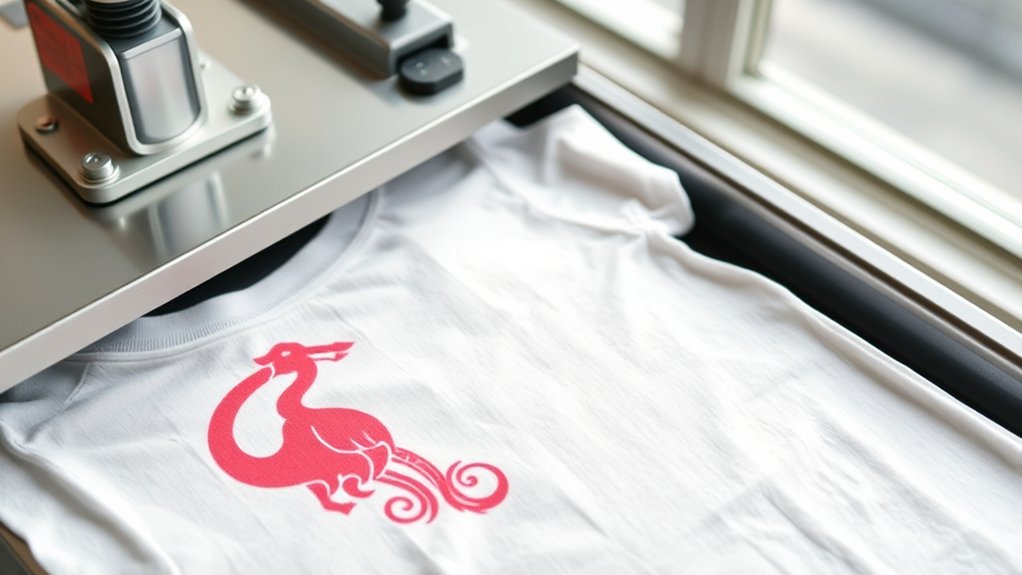
You’ll want to match your heat transfer paper to the fabric and design to get crisp, vibrant results. Consider factors like material type, ink compatibility, and whether you’re working with light or dark garments.
Picking the right paper guarantees your project shines with sharp detail and lasting color.
Types Of Transfer Paper
Several types of transfer paper exist, each tailored to different fabrics and design complexities. To pick the perfect one, you need to understand the transfer paper types and their unique applications.
Here’s a quick guide to help you:
- Inkjet Transfer Paper Ideal for light fabrics; produces vibrant, detailed images.
- Laser Transfer Paper Designed for laser printers; works well on darker fabrics.
- Sublimation Transfer Paper Best for polyester fabrics; creates permanent, vivid designs.
- Vinyl Transfer Paper Used for cutting designs; excellent for durable, textured prints.
Knowing these transfer paper applications helps you match your project’s fabric and desired effect. This way, your heat press results pop with clarity and durability every time.
Paper Compatibility Factors
Understanding the types of transfer paper is just the start; matching the right paper to your specific project guarantees vibrant, lasting results. You need to take into account paper texture. Smooth surfaces work best with detailed, sharp images, while textured papers add unique visual depth but may blur fine lines.
Ink compatibility is equally vital; some papers pair perfectly with dye-based inks, enhancing color vibrancy, whereas others suit pigment inks, ensuring durability and wash resistance. Don’t overlook your fabric type either, as certain papers bond better with cotton, polyester, or blends.
Heat Transfer Paper for Light vs. Dark Fabrics?
You’ll notice that heat transfer paper for light fabrics shines with a translucent finish, letting colors pop naturally, while paper designed for dark fabrics often sports a white backing to make your design stand out boldly.
Choosing the right type guarantees your image doesn’t fade into the fabric’s color or lose vibrancy. Let’s explore how these paper differences affect your final masterpiece.
Paper Types Comparison
Although both light and dark fabric heat transfer papers serve the same purpose, they differ considerably in composition and application. When you explore sublimation paper comparison and inkjet paper options, you’ll notice these distinctions:
- Light fabric papers use a transparent film, letting colors shine through with vibrant clarity.
- Dark fabric papers feature an opaque white backing that blocks fabric color, enhancing contrast.
- Ink absorption varies; light fabric papers require less ink saturation, while dark fabric papers hold more for opacity.
- Heat settings differ. Light fabric papers need lower temperature to protect delicate fibers, while dark fabric papers demand higher heat for proper adhesion.
Understanding these differences guarantees your transfers pop exactly as you envision, whether on a crisp white tee or a deep black hoodie.
Color Impact on Paper
The way colors interact with heat transfer paper changes dramatically depending on whether you’re working with light or dark fabrics. When printing on light fabrics, you can rely on color saturation to shine through naturally, enhancing the vibrancy and tapping into color psychology to evoke brighter, more cheerful emotions.
Dark fabrics, however, demand special paper that includes a white base layer to preserve color integrity and saturation, preventing dull or washed-out results.
| Fabric Type | Paper Type | Color Outcome |
|---|---|---|
| Light | Standard Heat Paper | Bright, vivid colors |
| Dark | Opaque Heat Paper | Bold, true-to-tone colors |
| Light | Matte Finish Paper | Soft, muted saturation |
| Dark | Glossy Finish Paper | Sharp, intense saturation |
Choose wisely to match your design’s psychological impact!
How to Prepare and Use Heat Transfer Paper
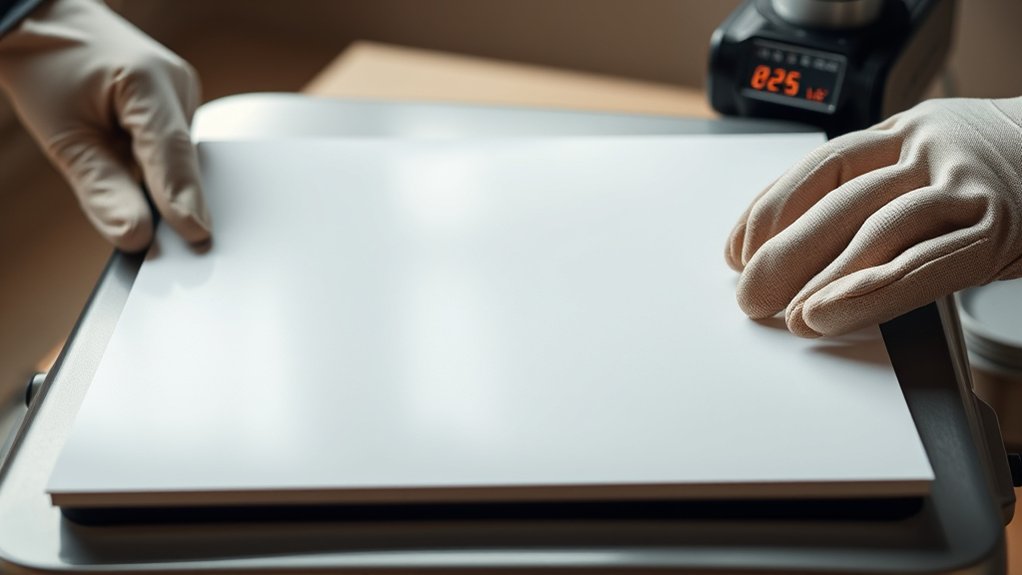
Before pressing your design onto fabric, make certain your heat transfer paper is properly prepared to achieve a crisp, vibrant result. Start by ensuring your printer settings match the type of heat transfer paper. This is vital for sharp, rich colors. Next, trim your design neatly to reduce excess paper that might interfere with heat transfer.
Then, preheat your heat press to the recommended temperature, giving the paper a chance to respond perfectly. Finally, position the paper face down on your fabric, aligning with precision to avoid crooked prints.
Here are four essential preparation tips for flawless heat transfer:
- Use high-quality heat transfer paper compatible with your printer.
- Mirror your design before printing.
- Press on a flat, heat-resistant surface.
- Apply firm, even pressure during transfer.
Avoid These Common Heat Transfer Paper Mistakes
Mastering the preparation steps sets you up for success, but even the smallest slip can blur your design or weaken the bond between fabric and transfer. Avoid common pitfalls like using the wrong heat settings, which can scorch paper edges or cause incomplete transfers.
Don’t overlook aligning your design. Crooked prints distract and reduce professionalism. Skipping the pre-press step leaves moisture trapped, leading to peeling or fading. Be mindful of paper type; using incompatible transfer paper can dull colors or cause cracking.
If your image peels or fades, check your temperature and pressure first. These troubleshooting tips often save your project. Finally, always peel the paper at the right time. Hot or cold peeling varies by paper type and impacts the final look.
Frequently Asked Questions
Can Heat Transfer Paper Be Reused After One Application?
You can’t reuse heat transfer paper after one application because its ink embeds into fabric. Reusability concerns stem from compromised image quality and adhesive strength, so focus on perfecting your application techniques for crisp, vibrant results every time.
Is Heat Transfer Paper Safe for Children’s Clothing?
You’ll find heat transfer paper safe for children’s clothing if it meets safety standards and suits fabric types like cotton or polyester. Imagine vibrant, soft designs that endure playtime without harsh chemicals or irritation.
How Long Does a Heat Transfer Print Typically Last?
You’ll find print durability usually lasts 30 to 50 washes, showcasing impressive heat transfer longevity. Each vibrant design resists fading, peeling, or cracking, keeping your clothes looking fresh and eye-catching through countless adventures and laundry cycles.
Can Heat Transfer Paper Be Used on Non-Fabric Materials?
Yes, you can use heat transfer paper for various heat transfer applications beyond fabrics. Just make certain your paper matches the non fabric compatibility of surfaces like wood, metal, or ceramics for vibrant, durable designs that pop visually.
What Is the Environmental Impact of Heat Transfer Paper?
You’ll find heat transfer paper impacts the environment through waste and chemical use, but by choosing sustainable alternatives and exploring recycling options, you can reduce pollution, protect resources, and keep your creative process eco-friendly and vibrant.
Conclusion
Now that you know the types, the uses, and the tricks, you’re ready to choose the perfect heat transfer paper, prep your fabric with care, and press with confidence. Don’t rush, don’t guess, and don’t skip the steps—because great results come from the right paper, the right fabric, and the right technique.
Keep your design vibrant, your colors sharp, and your project flawless by mastering every detail of the heat press process. Remember, selecting the appropriate paper is crucial; using the right paper for heat press ensures durability and quality in your final product.