
A heat press is your go-to tool for turning designs into vibrant, lasting artwork on fabrics and materials. This essential machine allows you to apply heat and pressure to fuse your design onto a variety of surfaces with precision.
You simply place your design, set the precise temperature and pressure, then let the machine work its magic.
The heat press uses heat and force to create sharp, professional-quality results every time. It’s perfect for everything from t-shirts to tote bags, ensuring colors pop and stay put wash after wash.
Ready to master which machine suits you best and how to make every press perfect?
Key Takeaways
- A heat press is a tool that transfers designs onto materials using controlled heat and pressure.
- It ensures even pressure and temperature for vibrant, long-lasting prints.
- Users can adjust temperature, timing, and pressure for different materials and designs.
- Heat presses are commonly used for custom apparel, bags, and other fabric items.
- They provide consistent results with sharp colors and durable adhesion after washing.
What Is a Heat Press and How Does It Work
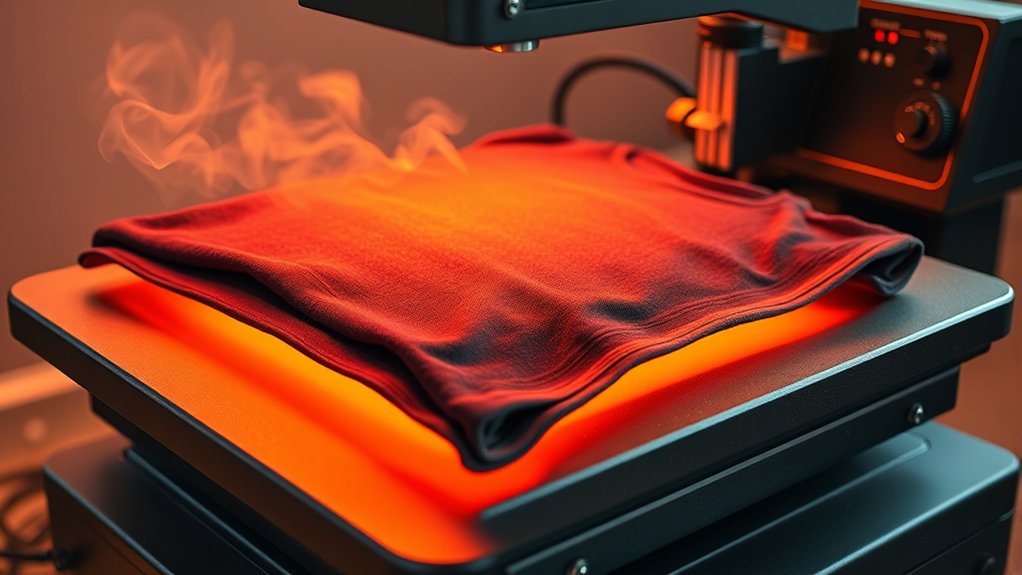
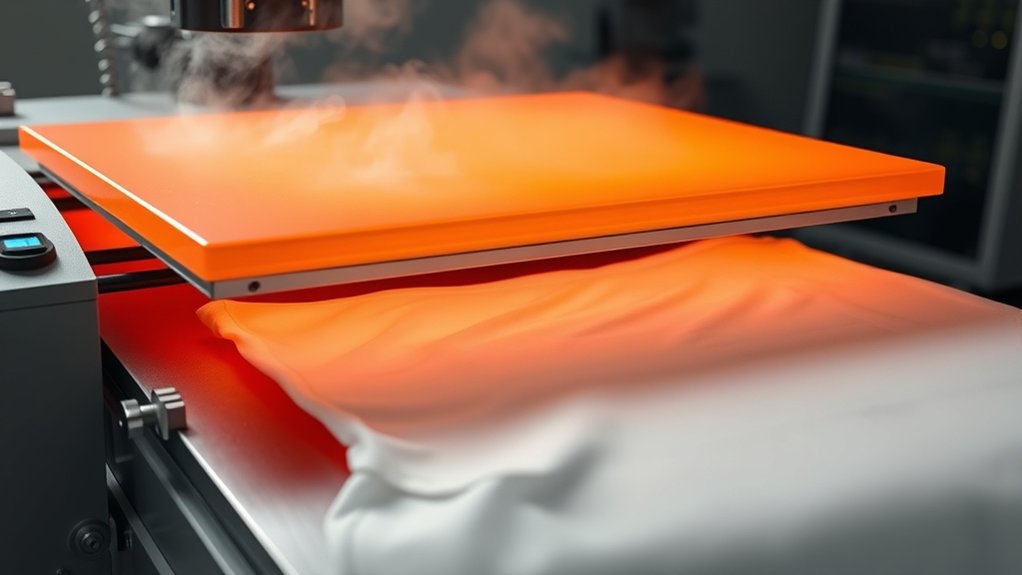
A heat press is a powerful tool that transfers designs onto materials using a combination of heat and pressure. When you place your design, be it vinyl, sublimation paper, or another medium, on the fabric or surface, the heat press applies controlled heat and pressure.
This precise combination triggers the heat transfer process, causing the ink or adhesive to bond permanently. You’ll notice the importance of even pressure; too light, and the design won’t stick well; too heavy, and you risk damaging the material.
With a heat press, you control temperature, timing, and pressure, ensuring vibrant, durable results every time. It’s like an artist’s stamp, imprinting your creativity with precision and consistency.
Top Benefits of Heat Press Printing for Custom Merch
Heat press printing transforms your custom merch into vibrant, standout pieces that capture attention instantly. You can bring your custom designs to life with sharp colors and crisp details that won’t fade or peel.
This method works seamlessly across a wide merchandise variety, from soft cotton tees to sturdy tote bags, letting you explore endless creative possibilities. You’ll appreciate its speed and efficiency, producing consistent quality with every press, perfect for both small batches and bulk orders.
Plus, heat press printing offers durability, ensuring your designs withstand countless washes without losing vibrancy. Whether you’re launching a brand or gifting personalized items, heat press printing empowers you to create professional, eye-catching merch that truly represents your vision.
Types of Heat Press Machines: Which One Is Right for You?
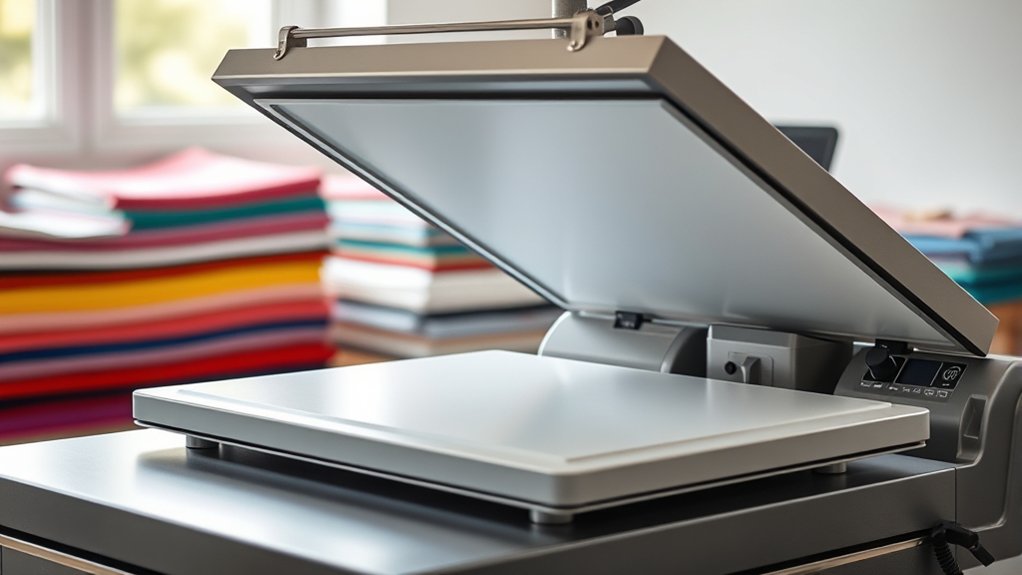
Choosing the right heat press means weighing options like clamshell or swing-away designs, each with its own motion and space needs. You’ll also decide between digital controls for precision or manual knobs for simplicity.
Plus, think about whether a portable model fits your hustle or an industrial machine suits your volume.
Clamshell Vs. Swing-Away
Deciding between clamshell and swing-away heat press machines shapes how you’ll handle your projects every day. Clamshell advantages include a compact, vertical design that saves space and offers quick, straightforward operation—just close the top platen like a clam shell snapping shut. This makes it perfect if you’re working in tight spots or need fast, repetitive pressing.
On the flip side, swing-away features allow you to rotate the upper platen away from the lower one, giving you full access to your garment without risking accidental burns. This extra clearance is ideal when working with thicker materials or intricate designs. Choosing between them depends on your workspace, project complexity, and comfort. Clamshells offer speed and space efficiency, while swing-away models provide versatility and safety.
Digital Vs. Manual Controls
Whether you prefer the swift snap of a clamshell or the roomy freedom of a swing-away, the way you control your heat press can shape your entire workflow. Choosing between digital precision and manual control boils down to your comfort and accuracy needs. Here’s how they differ:
- Digital precision lets you set temperature and time with exact numbers, ensuring consistent results every press.
- Manual control offers tactile feedback—you feel the pressure and adjust on the fly, ideal if you trust your instincts.
- Digital models often display settings clearly, speeding up prep, while manual presses require more hands-on tweaking but can be more durable.
Decide if you want tech’s steady hand or your own nuanced touch guiding each press. Both have their charm and power.
Portable Vs. Industrial Models
Two distinct worlds unfold when you compare portable and industrial heat press machines, each designed to fit different scales and spaces. If you crave flexibility and easy storage, the portable advantages shine. Lightweight frames and compact designs let you set up shop anywhere, perfect for hobbyists or small businesses.
On the flip side, industrial models boast unmatched durability, built to endure relentless daily use with robust components and larger platens that handle high-volume production. When you choose, picture your workspace and workload: Are you crafting on the go or powering through bulk orders?
Portable presses offer convenience and mobility, while industrial presses deliver strength and long-term reliability. Your decision hinges on balancing these traits to match your creative flow and business demands perfectly.
Best Materials to Use With a Heat Press
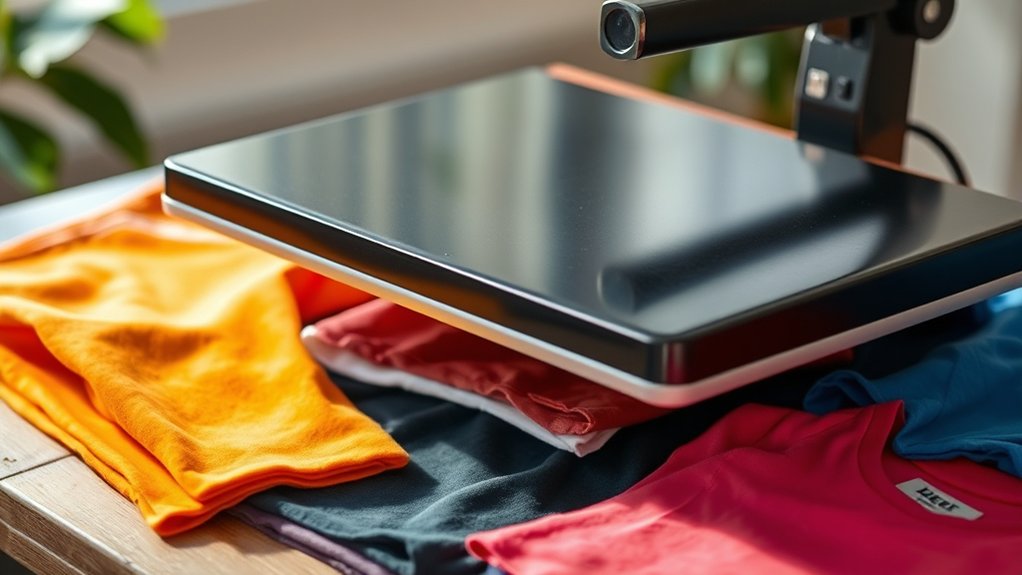
Although heat presses work on a variety of surfaces, you’ll get the best results with materials that can withstand high temperatures and pressure without warping or melting. Choosing the right substrate guarantees your designs pop and last long, especially when using heat transfer vinyl or sublimation printing.
For vibrant, lasting designs, choose materials that endure heat and pressure without damage.
Here are the top three materials to take into account:
1. Cotton and Cotton Blends
Perfect for vibrant heat transfer vinyl applications, these fabrics absorb heat evenly, producing crisp, colorful designs.
2. Polyester
Ideal for sublimation printing, polyester fabrics bond with dye sublimation inks, creating seamless, permanent prints with vivid detail.
3. Canvas and Leather
These sturdy surfaces handle heat well, letting you craft durable, eye-catching creations with heat transfer vinyl or specialty transfers.
Pick your material wisely for stunning, lasting results every time.
How to Use a Heat Press Safely, Step by Step
Choosing the right material sets the stage for a flawless heat press project, but mastering the machine itself keeps you safe and your designs intact. Start by placing your heat press on a stable, heat-resistant surface to avoid accidents.
Always wear heat-resistant gloves to protect your hands from burns. This is essential for heat press safety. Preheat the machine according to your material’s requirements, then adjust the pressure settings with care.
Position your item and transfer paper precisely to avoid misprints. Close the press gently, applying even pressure, and time your press according to guidelines.
When finished, lift the press slowly and use tools to remove your project. Never touch the hot platen directly. Following these operating precautions guarantees a smooth, safe process every time.
Common Mistakes to Avoid When Using a Heat Press
When you rush through setting your heat press, you risk uneven designs and damaged materials. Avoid these common mistakes to guarantee perfect transfer quality every time:
- Ignoring proper heat settings and pressure adjustments: Different materials demand specific temperatures and pressures. Skipping this step leads to poor adhesion or scorching.
- Timing errors: Over- or under-pressing alters the design’s vibrancy. Use a timer and stick to recommended durations for consistent results.
- Neglecting material compatibility and pre press preparation: Not checking fabric type or prepping surfaces can cause peeling or fading. Also, post press care like cooling and peeling at the right moment preserves your design’s lifespan.
Master these application techniques and handle your heat press with care to bring your creations vividly to life.
Frequently Asked Questions
Can a Heat Press Be Used for Ceramic Mug Designs?
Yes, you can use a heat press for mug printing by securely wrapping your design transfer around the ceramic mug. The heat press applies even pressure and warmth, bringing your vibrant design to life with precision and flair.
How Long Does a Heat Press Machine Typically Last?
You can expect a heat press lifespan of 5 to 10 years, depending on machine durability and how often you use it.
Treat it well, and it’ll keep imprinting vibrant designs like a trusty artisan’s brush.
What Maintenance Does a Heat Press Require?
Start by swiftly sweeping off spills for spotless heat press cleaning. Then, regularly recalibrate to retain reliable results. Don’t delay—dedicated maintenance maximizes your machine’s magic, making every press perfect and prolonging its powerful performance.
Are Heat Presses Energy Efficient?
Yes, your heat press can be energy efficient if you optimize heat transfer times and temperatures. By minimizing energy consumption during each press, you save power while creating vibrant, lasting designs with precise heat application.
Can Children Safely Operate a Heat Press?
You shouldn’t let children handle a heat press alone; ensuring child safety means always providing close heat press supervision. The device’s warmth demands respect, so guiding their curiosity carefully keeps little hands safe and learning bright.
Conclusion
Now that you know what a heat press does, imagine this: over 70% of custom apparel businesses swear by heat press printing for its vibrant, long-lasting designs. When you press your creativity onto fabric with precision and care, you’re not just making merch—you’re crafting wearable art.
So, take control, avoid common pitfalls, and let your heat press transform simple materials into eye-catching statements that last wash after wash. Your custom creations deserve that power, and the heat press is the tool to unlock it.