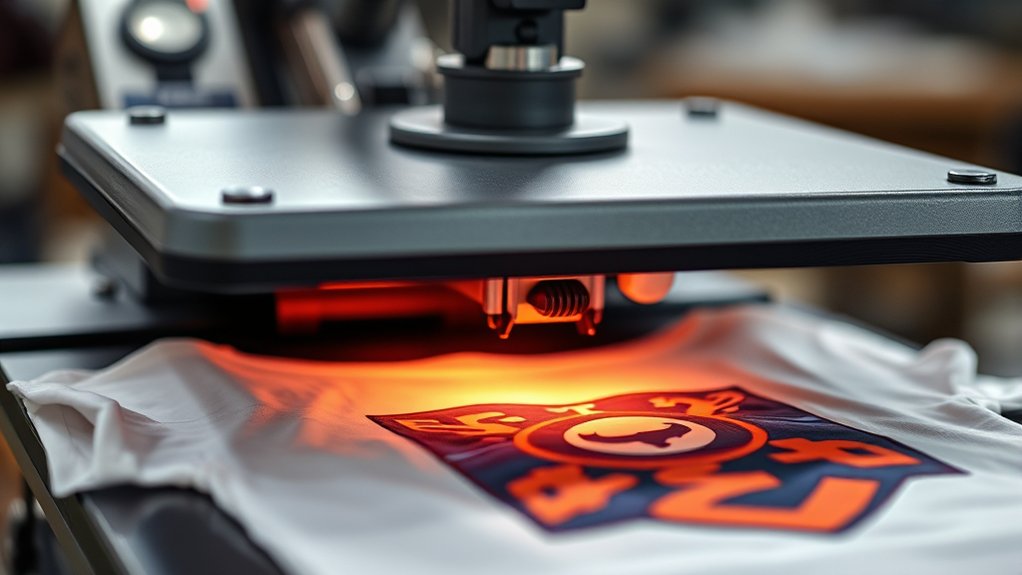

A heat press lets you transform plain materials into vibrant, personalized treasures by applying precise heat and pressure.
This essential tool allows you to place your design between the heated platen and fabric or other surfaces, activating adhesives or dyes that bond ink or vinyl seamlessly and vividly.
This process locks your artwork deep, making it durable and striking.
By mastering temperature, time, and pressure, you can craft lasting, professional-quality creations.
Explore how this tool opens up endless creative possibilities.
Key Takeaways
- A heat press applies heat and pressure to transfer designs onto fabrics and other materials.
- It activates adhesives or sublimation inks to bond designs permanently.
- The machine controls temperature, time, and pressure for precise, vibrant results.
- Suitable for customizing t-shirts, mugs, and various printable surfaces.
- Ensures durable, long-lasting prints that resist fading and wear.
How Does a Heat Press Work?
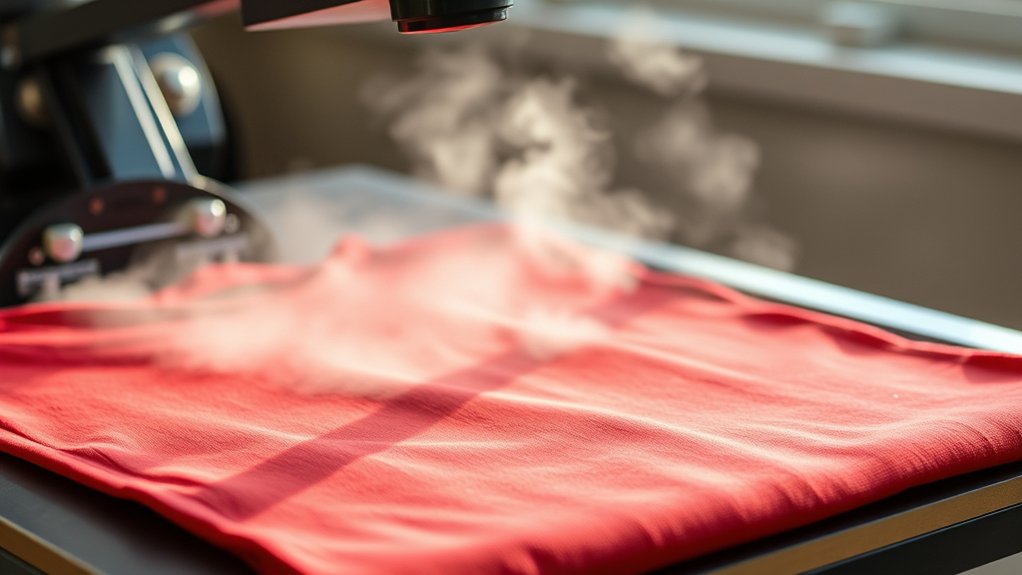
When you press a heat press, it applies intense, even heat and pressure to transfer designs onto materials like fabric or metal. You place your design, often a vinyl or sublimation print, between the heat platen and the material.
The heat transfer process begins as the machine’s temperature and the pressure application work in harmony, ensuring the design bonds seamlessly. This combination activates adhesives or dyes, embedding the image permanently.
You control the timing, temperature, and pressure, customizing each transfer to your project’s needs. The precise pressure application is critical; it pushes the design into the fibers or surface without damaging the material.
The result? A crisp, vibrant design that feels part of the fabric, not just stuck on. This synergy of heat and pressure defines the magic of a heat press.
What Materials Can You Use With a Heat Press?
Although heat presses excel with fabrics, they handle a surprising variety of materials, letting you release your creativity across different surfaces. You’ll find suitable fabrics like cotton, polyester, and blends work beautifully, ensuring vibrant, lasting designs.
But don’t stop there. Heat presses also transform printable surfaces such as ceramic mugs, metal sheets, and even wood panels. Choosing the right material is key; it must withstand heat and pressure without warping or burning.
Printable surfaces designed for sublimation or heat transfer vinyl respond best, giving you sharp, durable images. Whether customizing t-shirts or personalizing home décor, understanding which materials your heat press can handle opens up endless possibilities, making your creative projects both versatile and professional.
Types of Heat Press Machines
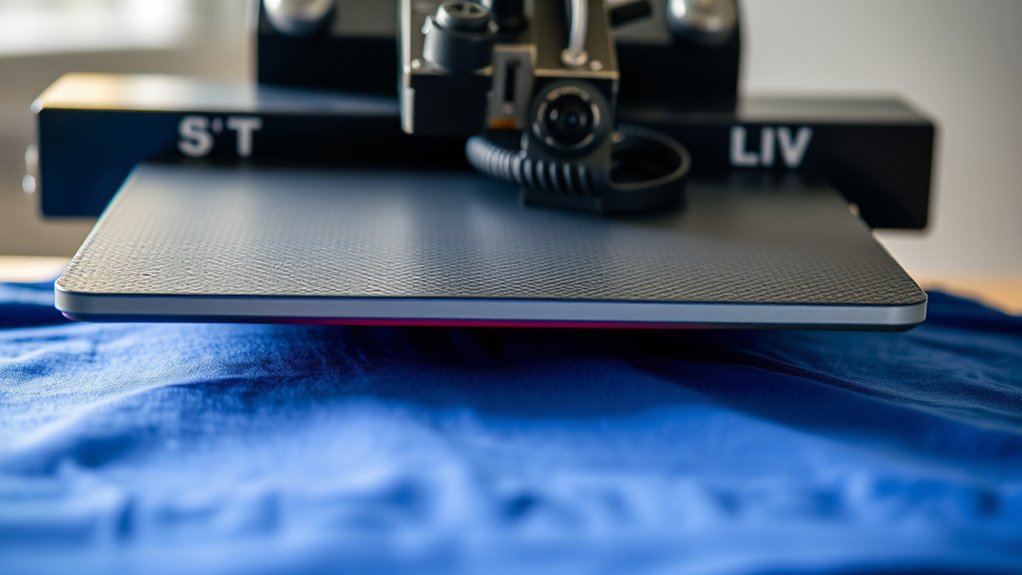
Heat press machines come in various styles, each designed to tackle different projects with ease and precision. You’ll find the clamshell press, which opens like a clam’s shell. Its top platen lifts straight up, saving space and offering quick, simple operation. It’s perfect if you’re working in tight quarters.
On the other hand, the swing away press pivots the upper platen to the side, giving you full access to the lower platen. This design lets you place materials with accuracy and prevents accidental contact with the heated surface. Both types offer reliable heat and pressure, but your choice depends on workspace, safety needs, and the kinds of items you press.
Knowing these differences guarantees you pick the right machine for flawless, creative transfers every time.
Setting Temperature, Time & Pressure for Best Results
You’ll want to dial in the perfect temperature to melt inks without scorching fabric, set the timer just right to avoid fading, and apply firm pressure that bonds designs seamlessly.
Each material calls for its own sweet spot, so watch your settings like a hawk. Mastering these three controls turns your heat press into a precision tool for flawless results every time.
Optimal Temperature Settings
When you fine-tune the temperature, time, and pressure on your heat press, you reveal the secret to vibrant, lasting transfers. The ideal temperature is essential. It activates the adhesive without scorching your fabric, ensuring a flawless heat transfer.
Too low, and the design won’t bond; too high, and colors fade or materials warp. Visualize the perfect balance as a dance of heat and pressure, syncing to lock in detail and durability.
To master this balance, remember:
- Different materials demand unique temperature settings.
- Consistent heat distribution avoids patchy prints.
- Adjust pressure to complement temperature, preventing damage.
Ideal Pressing Duration
How long should you press to achieve flawless transfers? Mastering pressing techniques means understanding timing considerations down to the second. Too brief, and your design won’t fully bond; too long, and you risk scorching or warping your material.
Generally, pressing durations range from 10 to 30 seconds, depending on your substrate and transfer type. Visualize a countdown timer; each second builds adhesion, melding ink and fabric into one seamless masterpiece.
Trust manufacturer guidelines, but always test on scraps to fine-tune your timing. Keep your eye on the clock; consistent pressing duration guarantees vibrant, durable results every time.
Appropriate Pressure Levels
Although temperature and time play starring roles in heat pressing, applying the right pressure completes the trio for flawless transfers. You need to master pressure calibration to guarantee even pressure application, avoiding patchy or faded designs. Too little pressure leaves transfers weak; too much can damage materials or blur details. Visualize the heat press as a sculptor’s hand, firm yet gentle.
To nail the perfect pressure, consider these essentials:
- Adjust pressure based on fabric thickness and transfer type
- Use a pressure gauge or test prints for precise calibration
- Maintain consistent pressure throughout the pressing cycle
Fun Projects You Can Make With a Heat Press
You can create dozens of eye-catching items with a heat press, transforming plain materials into vibrant, personalized works of art. Imagine pressing your favorite design onto custom t shirts that pop with color and detail, turning ordinary fabric into wearable statements.
You can also craft personalized mugs, imprinting names or quirky graphics that make every sip special. Beyond apparel and drinkware, you can embellish tote bags, create unique cushions, or design eye-catching wall art.
With precise temperature and pressure control, your creations come out crisp and professional every time. Whether you’re making gifts, selling products, or just expressing creativity, a heat press lets you bring bold, lasting designs to life with ease and flair. Your imagination is the only limit.
Why Heat Press Prints Are Durable and High Quality
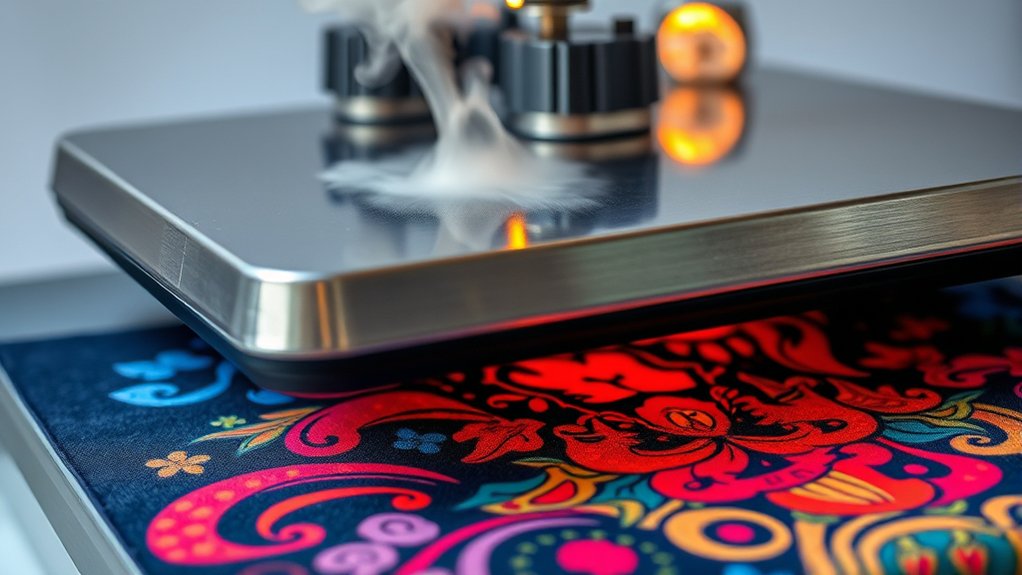
When you use a heat press, the consistent heat penetrates every fiber evenly, locking ink deep into the fabric. You’ll see how precise temperature control guarantees vibrant colors that don’t fade or crack over time.
This perfect bond between ink and material is what makes your prints last and look sharp wash after wash.
Heat Penetration Consistency
Because a heat press applies even pressure and consistent temperature across the entire surface, your designs bond deeply with the fabric fibers. This uniform heat penetration guarantees vibrant, long-lasting prints that resist cracking or peeling.
Unlike irregular heat transfer techniques, the precise pressure application of a heat press assures every inch of your design receives equal treatment, locking in color and detail flawlessly.
- Maintains consistent temperature to avoid weak spots
- Applies balanced pressure for uniform design adhesion
- Enhances durability by fully activating adhesive layers
When you rely on a heat press, you’re investing in the perfect marriage of heat and pressure, creating a print that’s not just seen but felt: smooth, vivid, and built to endure countless washes without losing its brilliance.
Ink and Fabric Bonding
The even heat and pressure from the press do more than just sit on the surface; they drive ink deep into the fabric’s fibers, creating a bond that’s both strong and flexible. This ink transfer isn’t merely superficial; it embeds the pigment within, ensuring vibrant colors that resist fading.
As you apply the press, fabric adhesion becomes seamless, locking ink molecules tightly to each thread. You’ll notice your prints withstand stretching, washing, and daily wear without cracking or peeling. This durability comes from how the heat press fuses ink and fabric at a microscopic level, creating a synergy that screen printing or ironing on simply can’t match.
When you use a heat press, you’re guaranteeing your designs won’t just look good—they’ll last, maintaining their brilliance and texture over time.
Precision Temperature Control
Although it might seem simple, controlling the exact temperature during a heat press session makes all the difference between a dull, short-lived print and a vibrant, long-lasting masterpiece. When you master temperature calibration, you guarantee heat accuracy that activates inks perfectly without scorching fabric fibers.
This precision locks colors in place, boosting durability and vibrancy. Imagine your designs sealed flawlessly, resisting fading and cracking over time.
Here’s why precision temperature control matters:
- Consistent heat distribution prevents uneven fading and patchy prints.
- Accurate temperature settings optimize ink bonding, enhancing color sharpness.
- Proper calibration extends the lifespan of both your heat press and printed garment.
Maintaining and Troubleshooting Your Heat Press
Regular care breathes life into your heat press, guaranteeing it runs smoothly and delivers flawless transfers every time. Start with heat press maintenance by cleaning the platen regularly. Wipe away adhesive residue and dust to prevent uneven heat distribution.
Consistent platen cleaning prevents residue buildup, ensuring even heat and perfect transfers every time.
Check electrical connections and replace worn-out parts promptly to avoid sudden failures. When troubleshooting, if your press isn’t reaching the right temperature, recalibrate the thermostat or inspect the heating element for damage.
Sticky or uneven pressure? Adjust the pressure knobs and verify the platen is level. Keep a maintenance log to track issues and solutions, helping you spot patterns before they escalate.
With thoughtful heat press maintenance and troubleshooting tips, you’ll extend your machine’s lifespan and keep your designs crisp, vibrant, and professional every time.
Choosing the Right Heat Press for You
Keeping your heat press in top shape is just one part of the equation; choosing the right machine sets the foundation for your creative projects. When selecting a heat press, focus on the heat press features that align with your needs, like adjustable temperature controls, platen size, and pressure settings.
You’ll find various heat press brands offering different strengths, from user-friendly home models to professional-grade machines.
Consider these factors to make an informed choice:
- Heat press features: Look for consistent heat distribution and easy-to-use controls.
- Brand reputation: Choose brands known for durability and support.
- Your project scale: Match platen size and machine type to your typical designs.
Picking the perfect heat press guarantees smooth, vibrant transfers every time, bringing your vision to life effortlessly.
Frequently Asked Questions
Can a Heat Press Be Used for Commercial Production?
You can definitely use a heat press for commercial production; its heat press advantages include fast, consistent transfers and vibrant designs.
You’ll boost efficiency while creating professional-quality products that stand out in any market.
Are Heat Press Transfers Safe for Skin Contact?
You’ll find heat press transfers safe for skin contact if you choose quality materials and follow heat press safety guidelines. They rarely cause skin irritation, but always test new fabrics and inks to keep your skin happy and healthy.
How Much Electricity Does a Heat Press Consume?
Electricity consumption of a heat press is like a small flame, usually between 600-1200 watts per hour. You’ll want to optimize heat press efficiency by adjusting temperature and time to keep energy use in check.
Can Children Safely Operate a Heat Press?
You shouldn’t let children operate a heat press unsupervised due to age restrictions and safety precautions. The intense heat and pressure can cause burns, so always guarantee adult guidance and protective gear for safe use.
What Is the Lifespan of a Heat Press Machine?
You can expect a heat press machine’s lifespan to stretch 5-10 years, depending on heat press maintenance and heat press durability. Keep it clean, avoid overheating, and you’ll press vibrant designs for years to come.
Conclusion
You might think a heat press is just for pros or big businesses, but it’s actually perfect for anyone ready to release creativity. With simple steps and adjustable settings, you can transform plain items into vibrant masterpieces right at home.
Don’t worry about complicated machines—once you get the hang of it, you’ll see how easy and fun customizing shirts, mugs, and more can be. Your imagination is the only limit!
In the end, a heat press is a versatile tool that opens up endless possibilities for personalizing everyday items.