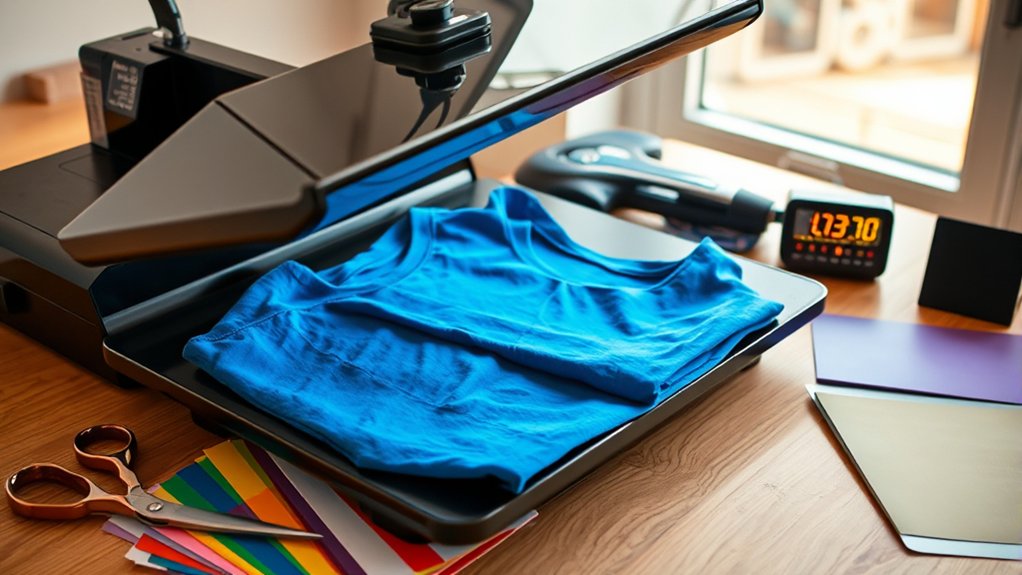

To heat press shirts, you’ll need a quality heat press machine with adjustable temperature, time, and pressure controls for precise application.
Selecting the right transfer material, such as Heat Transfer Vinyl or sublimation paper, is essential and depends on your fabric and design.
Prepare your shirts by ensuring they’re clean, wrinkle-free, and compatible with your chosen transfer method.
Position your design accurately on the shirt to achieve the best results.
Regular maintenance of your heat press machine keeps it performing effectively and extends its lifespan.
Understanding these basics sets a solid foundation for achieving professional and durable prints.
Key Takeaways
- A heat press machine with temperature control and adjustable pressure is essential for precise heat application on shirts.
- Choose suitable transfer materials like Heat Transfer Vinyl, sublimation paper, or printable heat transfer paper based on fabric and design.
- Prepare shirts by ensuring they are clean, wrinkle-free, and pre-pressed to remove moisture before applying transfers.
- Set the correct temperature, time, and pressure according to the transfer material and fabric type for optimal results.
- Maintain the heat press regularly by cleaning, calibrating pressure, and inspecting electrical components for consistent performance.
What Equipment Do You Need to Heat Press Shirts?
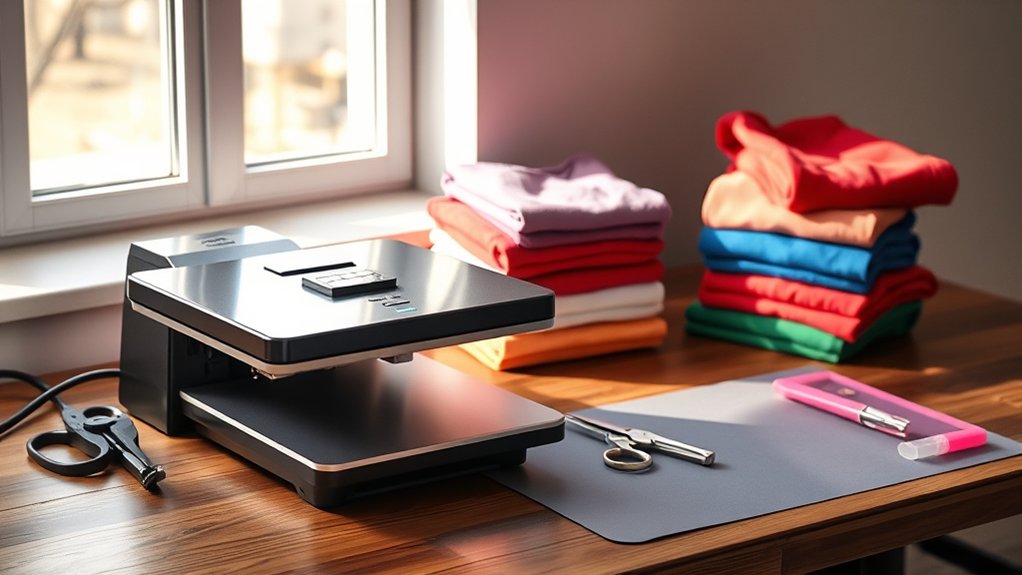
To heat press shirts effectively, you’ll need specific equipment designed for precise temperature and pressure control. Among the essential tools, selecting the right heat press type is critical.
Effective shirt heat pressing requires equipment with precise temperature and pressure control, starting with choosing the right heat press type.
You can choose from clamshell, swing-away, or draw-style presses, each offering unique advantages in accessibility and pressure application. A digital temperature controller guarantees consistent heat, while an adjustable pressure knob allows you to fine-tune the force applied to your shirt and transfer material.
Additionally, a heat-resistant silicone pad provides uniform pressure distribution, preventing scorching. Don’t overlook a reliable timer integrated into the heat press to maintain accurate pressing durations.
Together, these essential tools and heat press types form the foundation for producing durable, high-quality shirt prints with repeatable precision.
Best Transfer Materials for Heat Press Shirts
Choosing the right heat press equipment sets the stage, but selecting the appropriate transfer material directly influences the quality and durability of your shirt designs. You’ll want to understand the properties of different vinyl types and transfer paper options to guarantee ideal results.
- Heat Transfer Vinyl (HTV) Offers excellent durability and vibrant colors; ideal for intricate designs.
- Printable Heat Transfer Paper Great for full-color images; requires a compatible printer and precise heat settings.
- Sublimation Transfer Paper Best for polyester fabrics; provides permanent, high-resolution prints.
- Plastisol Transfer Paper Mimics screen printing; suitable for bulk runs with consistent, professional finishes.
Choose materials based on fabric type, design complexity, and production scale for the best outcome.
How to Prepare Shirts and Designs for Heat Pressing
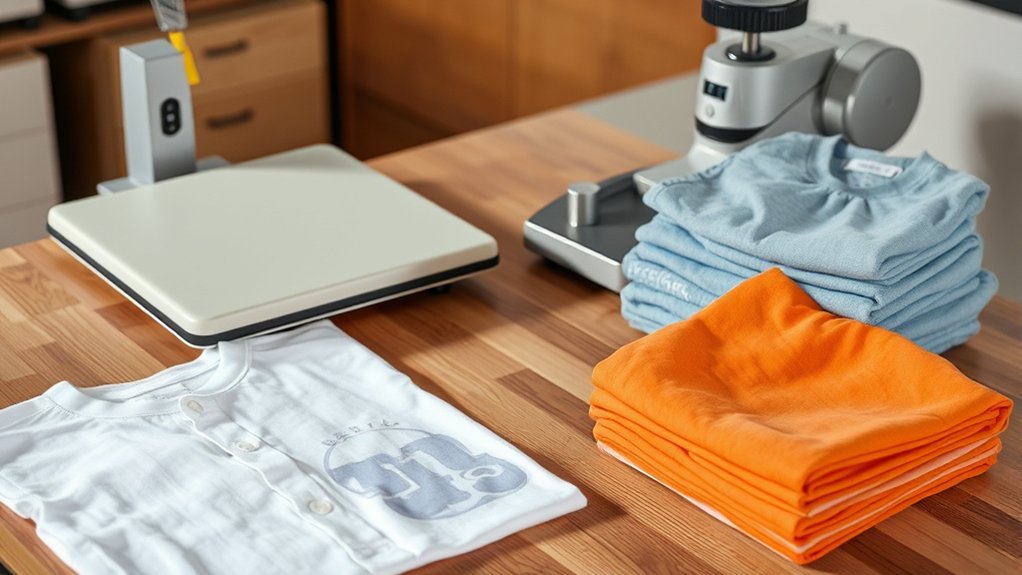
Before you start heat pressing, verify your shirts are clean, wrinkle-free, and made from compatible fabrics to achieve the best adhesion and print quality. Shirt preparation includes pre-pressing the garment for 3-5 seconds to remove moisture and wrinkles, guaranteeing a smooth surface.
For design selection, choose high-resolution images with sharp edges, preferably vector files or high-quality PNGs with transparent backgrounds. Mirror your design if using heat transfer vinyl or sublimation paper, as this prevents reversed prints.
Position the design precisely on the shirt, using heat-resistant tape if necessary to avoid shifting during pressing. Proper alignment and tension-free placement are critical in shirt preparation to maintain image integrity and avoid distortion.
Following these steps guarantees consistent, professional results with each heat press application.
Setting Temperature, Time, and Pressure for Heat Press Shirts
Three key factors determine the success of your heat press application: temperature, time, and pressure. Accurate temperature calibration secures the heat plate reaches and maintains the ideal heat level for your specific transfer material. Time settings control how long the heat is applied, preventing under or overexposure.
Pressure adjustment assures even contact between the heat plate and shirt, essential for a clean transfer.
Follow these steps:
- Calibrate temperature according to transfer material guidelines.
- Set time based on fabric type and design complexity.
- Adjust pressure for firm, uniform contact without crushing the fabric.
- Test on a sample shirt to confirm settings before full production.
Mastering these controls maximizes transfer quality and garment durability.
Maintaining Your Heat Press Machine for Long-Lasting Use
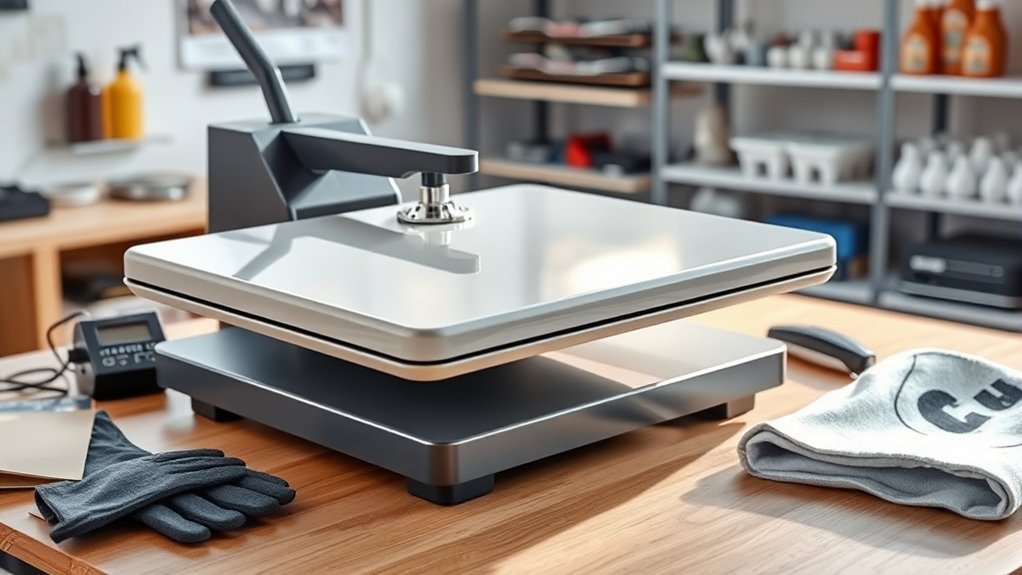
Regularly cleaning and inspecting your heat press machine guarantees consistent performance and extends its lifespan. Implement preventive maintenance by following specific cleaning techniques and routine checks.
Wipe the heat platen with a non-abrasive cloth to remove residue and apply heat-resistant spray if necessary. Inspect electrical connections and pressure settings to prevent malfunctions.
| Maintenance Task | Frequency | Recommended Technique |
|---|---|---|
| Heat platen cleaning | After every use | Use lint-free cloth, mild solvent |
| Pressure calibration | Monthly | Adjust using manufacturer guide |
| Electrical inspection | Quarterly | Check wiring and connectors |
| Lubrication | Biannually | Apply machine-specific lubricant |
Frequently Asked Questions
Can I Heat Press on Materials Other Than Cotton?
You can heat press on materials beyond cotton, but fabric compatibility matters. Sublimation printing works best on polyester or polymer-coated fabrics, so verify your material suits your transfer type to achieve ideal adhesion and vibrant results.
How Do I Remove Heat Press Transfer Mistakes?
Mistakes happen, like shadows fading at dawn. For removing transfers, gently reheat the area using a heat press at low temperature, then peel off the transfer slowly. Use adhesive remover or lint roller for fixing mistakes precisely.
Is It Safe to Heat Press at Home?
Yes, it’s safe to heat press at home if you follow safety precautions like using heat-resistant gloves and ensuring proper ventilation. Operate home equipment on a stable surface to prevent accidents and reduce overheating risks.
Can I Use a Heat Press for Hats or Mugs?
Like Da Vinci mastering varied crafts, you can use specialized hat pressing and mug pressing attachments on your heat press. Guarantee you select the right platen for precise, even heat distribution to achieve flawless, durable transfers.
What Are Common Heat Press Troubleshooting Tips?
You should regularly perform heat press maintenance, check and calibrate heat press temperature, guarantee even pressure, and clean the platen. These steps help avoid inconsistent transfers, scorching, and mechanical failures during your heat press operations.
Conclusion
Now that you know the essential equipment, transfer materials, and settings, you’re ready to heat press shirts efficiently. For example, Sarah, a small business owner, improved her production speed by mastering temperature and pressure adjustments, reducing errors.
By preparing your designs correctly and maintaining your heat press machine regularly, you’ll guarantee consistent, high-quality results every time.
With these technical steps, you can confidently produce professional-grade heat-pressed shirts. Remember, understanding what do I need to heat press shirts is key to achieving great results.