
Permanent press is not low heat; it actually uses medium heat to protect your clothes.
This setting balances effective drying with fabric care, preventing damage while reducing wrinkles.
It controls temperature and uses a cool-down phase to stabilize fibers, especially synthetic blends.
By avoiding high heat, it minimizes shrinkage and fabric stress.
If you want to understand how this setting optimizes wrinkle reduction and when to use it, keep exploring the details.
Key Takeaways
- Permanent Press uses medium heat, not low heat, to balance effective drying and fabric care.
- It applies moderate temperature to reduce wrinkles without exposing fabrics to high heat.
- The setting includes a cool-down period to prevent fabric damage from sudden temperature changes.
- Permanent Press minimizes fabric stress by using controlled heat and reduced tumbling speed.
- It is ideal for synthetic blends and wrinkle-resistant fabrics that require gentle drying.
What Is the Permanent Press Dryer Setting?
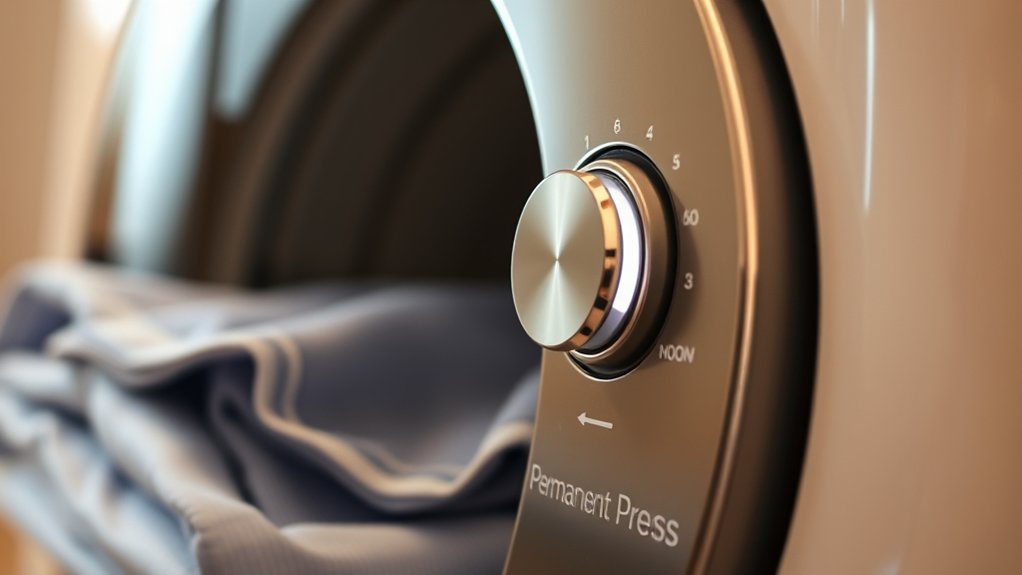
How does the permanent press dryer setting work to protect your clothes? This dryer setting optimizes fabric care by balancing temperature and drying time to reduce wrinkles and prevent damage.
It uses a moderate heat level combined with a cool-down period, which helps stabilize synthetic fibers and cotton blends commonly labeled as permanent press. By cycling through these phases, the setting minimizes fabric stress and heat exposure, preserving garment integrity.
When you select permanent press on your dryer settings, you activate a program designed specifically for wrinkle prevention and fabric longevity. This setting is technically calibrated to avoid overdrying, which often leads to shrinkage and fiber weakening.
Understanding this precise control helps you maintain your clothes’ appearance and extend their usable life effectively.
Does Permanent Press Use Low or Medium Heat?
When selecting the permanent press setting, you might wonder whether it uses low or medium heat. Technically, permanent press employs medium heat as its primary drying technique, balancing effective moisture removal with fabric care. This setting prevents excessive heat exposure that can damage synthetic fibers or cause shrinkage.
Unlike the high heat used in regular cycles, medium heat in permanent press minimizes thermal stress, preserving garment integrity. If you want to maintain fabric texture and reduce wear, this heat level is ideal. The medium heat also helps in reducing wrinkles by allowing slower drying, which is gentler on the fabric.
How Does Permanent Press Help Reduce Wrinkles?
Although wrinkle reduction depends on multiple factors, permanent press cycles use controlled heat and timed cool-down periods to relax fabric fibers and prevent creasing. When you select permanent press, the dryer applies moderate heat to soften synthetic and blended fabrics without damaging them.
Then, a cool-down phase helps set the fabric’s shape, reducing wrinkle formation. This cycle balances effective drying with fabric care, minimizing stress on fibers.
Key mechanisms include:
- Moderate temperature limits fiber shrinkage and damage
- Timed cool-down prevents sudden temperature changes that cause wrinkles
- Reduced tumbling speed minimizes mechanical strain on fabrics
- Optimized moisture removal preserves fabric flexibility
How to Choose Between Permanent Press and Other Dryer Settings
Why choose permanent press over other dryer settings? You should select permanent press when your priority is wrinkle prevention combined with controlled heat to protect fabric integrity.
Unlike high heat or regular cycles, permanent press uses medium heat and a cool-down phase, reducing thermal stress and minimizing creasing. When deciding between settings, analyze the fabric type and care label instructions; delicate fabrics require low heat for ideal fabric care, while cottons may tolerate higher heat but risk excessive wrinkles.
Permanent press strikes a balance, preserving fabric strength and appearance. If wrinkle prevention and maintaining fabric quality are essential, permanent press outperforms high heat cycles that can cause shrinkage or damage.
Evaluate your garments’ needs precisely to enhance drying performance and prolong textile lifespan effectively.
When Should You Use Permanent Press?
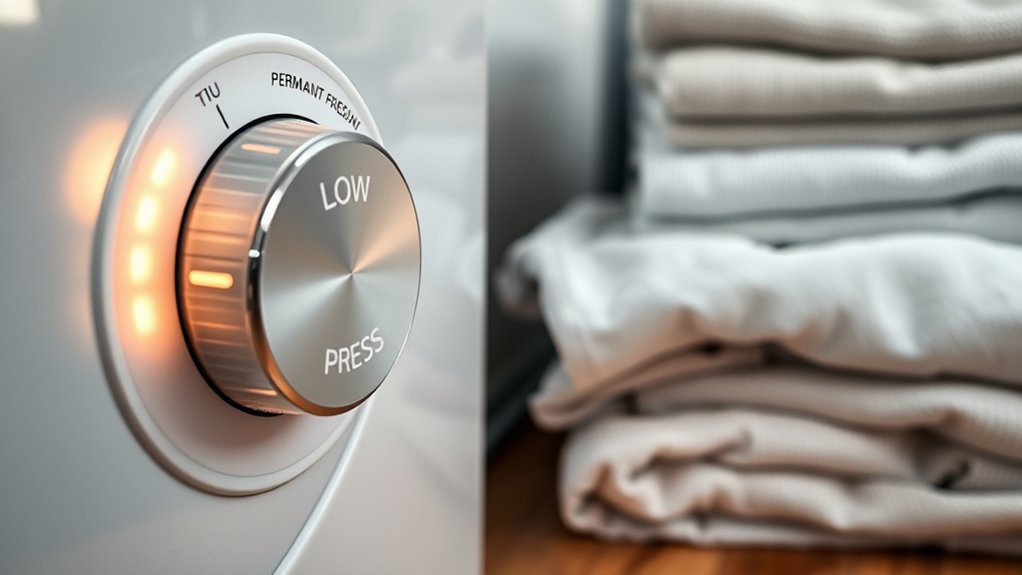
If you want to reduce wrinkles and protect the fabric structure during drying, permanent press is your best choice for synthetic blends, cotton blends, and lightly soiled garments. This setting uses medium heat and a cool-down period to minimize fabric stress, making it ideal for specific clothing care situations.
Use permanent press when:
- Drying dress shirts, blouses, or slacks that require wrinkle control
- Handling mixed-fiber garments prone to shrinkage or damage under high heat
- Managing lightly soiled items that don’t need intense drying
- Maintaining fabric integrity for items labeled “permanent press” or “wrinkle-resistant”
Incorporating these laundry tips helps extend clothing life and optimizes drying efficiency while preventing over-drying or heat damage.
Frequently Asked Questions
Can Permanent Press Damage Delicate Fabrics?
Yes, permanent press heat settings can damage delicate fabrics if you’re not careful. You should always check fabric care labels and use the lowest heat setting possible to prevent weakening fibers or causing unwanted wrinkles.
Is Permanent Press Suitable for All Types of Clothing?
Think of permanent press fabrics as a tailored suit; they suit many but not all. You shouldn’t use permanent press for delicate or heat-sensitive clothing.
Precise clothing care means matching fabric types with appropriate settings to avoid damage.
How Long Does a Permanent Press Drying Cycle Usually Take?
A permanent press drying cycle usually takes around 40 to 50 minutes. You’ll want to monitor drying times carefully to optimize fabric care, preventing wrinkles and minimizing heat damage to synthetic and blended fabrics.
Can Permanent Press Setting Help Save Energy?
Yes, you can save energy with the permanent press setting by optimizing energy efficiency. Using steam settings reduces drying time, lowering power consumption while minimizing fabric wrinkles, making your laundry routine both effective and eco-friendly.
What Is the Difference Between Permanent Press and Wrinkle-Free Fabrics?
Permanent press fabrics are treated to resist wrinkles during washing, requiring specific fabric care and moderate ironing techniques.
Wrinkle-free fabrics undergo chemical finishing, minimizing the need for ironing altogether, enhancing convenience and efficiency in fabric maintenance.
Conclusion
So, you might think permanent press is just another low-heat setting, but it actually uses medium heat to carefully balance drying and wrinkle reduction. Ironically, it’s not the gentlest, yet it’s designed to protect your clothes better than high heat.
Next time you pick a dryer setting, remember: permanent press isn’t about being soft—it’s about smart heat control to keep your fabrics looking sharp without the hassle of ironing. When wondering if permanent press is low heat, keep in mind it’s a medium heat option optimized for wrinkle prevention and fabric care.