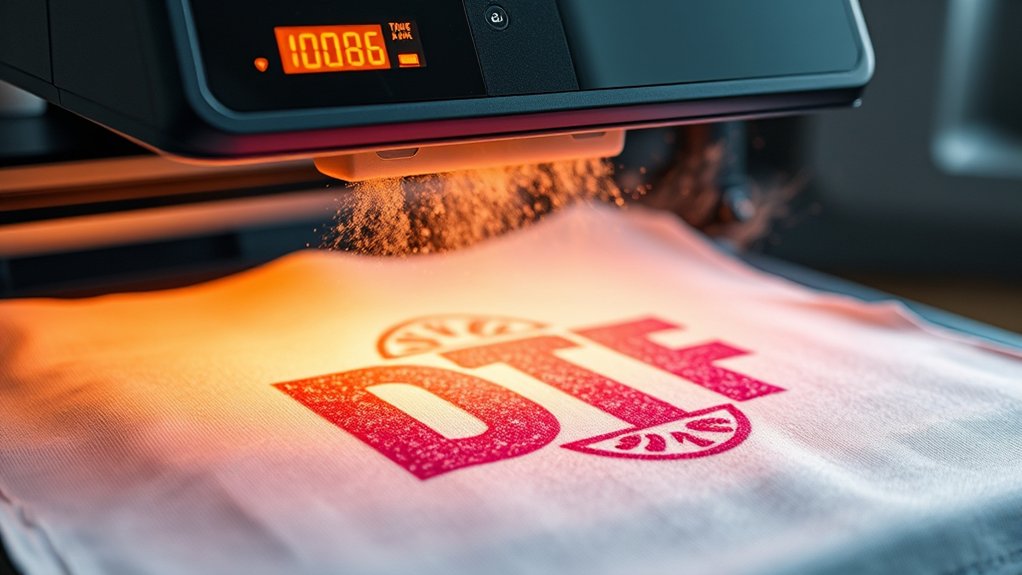

To cure DTF powder with a heat press, first preheat the press to 160°C–170°C. This temperature range is crucial for properly activating the adhesive properties of the powder.
Next, apply your printed transfer evenly coated with DTF powder onto the fabric. Position it carefully to avoid any shifting during the pressing process.
Press the transfer using firm, consistent pressure for 10 to 15 seconds. Ensure the powder melts uniformly, which is essential for creating a strong bond with the fabric.
After pressing, let the transfer cool gradually on a flat surface to solidify the bond. Avoid moving the fabric during cooling to prevent distortion.
Additionally, proper cleaning and calibration of your heat press are important for consistent results.
Follow these essential steps to achieve flawless, durable transfers every time.
Key Takeaways
- Preheat the heat press to 160°C–170°C for optimal curing of DTF powder adhesive.
- Evenly apply DTF powder over the wet printed ink before pressing for strong adhesion.
- Press the transfer with consistent pressure for 10–15 seconds, following manufacturer guidelines.
- Allow the substrate to cool gradually after pressing to solidify the bond effectively.
- Clean and calibrate the heat press surface regularly to ensure uniform temperature and pressure.
What’s DTF Powder: And Why You Need to Cure It Right
DTF powder, or Direct-to-Film powder, is a specialized adhesive used in the heat transfer printing process to bond printed designs onto fabrics. You’ll find that the dtf powder benefits include enhanced durability, vibrant color retention, and a soft hand feel after transfer.
To achieve these advantages, you must apply correct curing techniques. Proper curing activates the adhesive properties of the powder, ensuring strong fabric adhesion and preventing peeling or cracking over time. If you skip or poorly execute curing, the design’s longevity and appearance suffer.
Step-by-Step Guide to Curing DTF Powder With a Heat Press
Curing powder with a heat press requires careful control of temperature, pressure, and timing to activate the adhesive properly. To guarantee ideal results, follow these precise steps tailored to different powder types and cure methods:
| Step | Action |
|---|---|
| 1 | Preheat heat press to recommended temperature |
| 2 | Place printed transfer on substrate |
| 3 | Apply powder evenly over the wet ink |
| 4 | Press with consistent pressure for set time |
| 5 | Allow cooled substrate to complete curing |
Different powder types may require adjustments in these parameters. Always refer to manufacturer guidelines to match the cure methods effectively. This methodical approach ensures the adhesive activates correctly, resulting in durable, high-quality prints.
Ideal Heat Press Temperature and Time Settings for DTF Powder
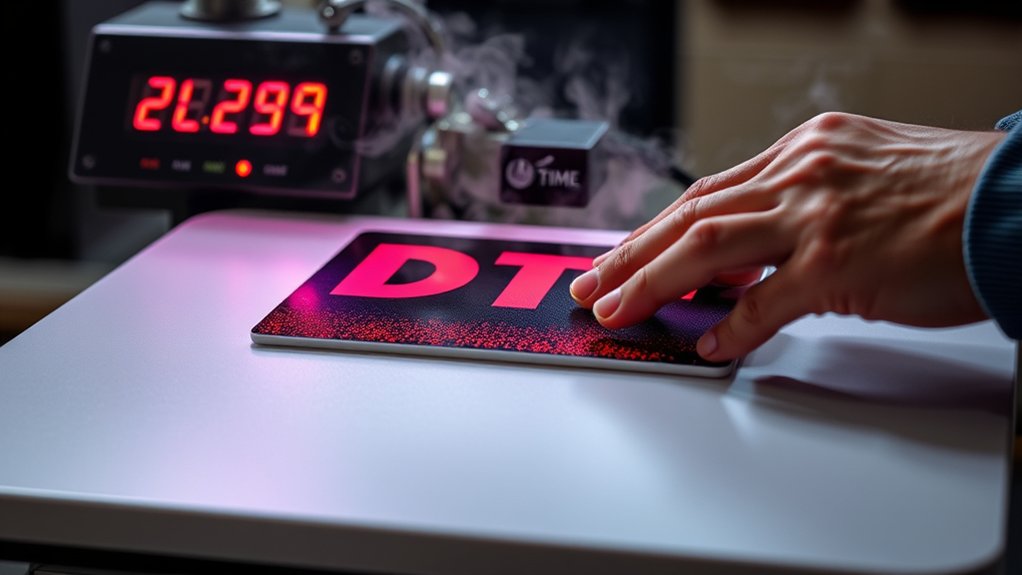
When you set the heat press temperature and time correctly, you guarantee the powder melts evenly and bonds securely to the substrate. The ideal temperature settings for curing DTF powder typically range between 160°C and 170°C (320°F to 338°F).
Precise control within this range guarantees maximum melting without degrading the print quality. Curing time adjustments depend on the powder type and fabric; standard durations fall between 10 to 15 seconds. Shorter times might leave powder under-cured, while excessive heat or duration risks scorching.
Always start with manufacturer-recommended settings and fine-tune based on test prints. Consistent temperature and timing guarantee uniform curing, enhancing durability and vibrancy. Monitor your heat press closely to maintain these parameters and achieve professional-grade results when curing DTF powder.
Preparing Your Heat Press: Cleaning, Calibration & Pressure
Before starting, you need to clean your heat press surfaces thoroughly to remove any residue that could affect adhesion. Next, calibrate the temperature settings to verify they match the required curing parameters for DTF powder.
Finally, adjust the pressure evenly across the platen to guarantee consistent transfer results.
Cleaning Heat Press Surfaces
Although it may seem straightforward, cleaning your heat press surfaces is essential to guarantee consistent transfer quality and prevent contamination. Begin by powering off and unplugging the heat press to confirm safety.
Use a lint-free cloth slightly dampened with isopropyl alcohol or a specialized heat press cleaner. Apply gentle pressure, wiping evenly to remove residue from previous transfers, including DTF powder build-up. Avoid abrasive materials that could scratch the platen.
Regular cleaning techniques like this prevent ink smudging and improve adhesion. For surface maintenance, inspect the platen for any damage or unevenness, addressing issues promptly to maintain uniform heat distribution.
Perform this cleaning routine before every curing session to confirm ideal results and prolong your heat press’s lifespan.
Adjusting Pressure And Temperature
Since ideal pressure and temperature directly affect the quality of your DTF powder cure, you need to calibrate your heat press carefully. Begin by verifying the temperature settings using a calibrated surface thermometer to verify accuracy. Adjust the heat press to the manufacturer’s recommended cure temperature, typically around 160-170°C.
For pressure calibration, use a pressure gauge or test paper evenly across the platen to confirm uniform contact. Set the pressure to medium firmness, avoiding excessive force that can distort prints or insufficient pressure that hampers adhesion.
Recheck settings after adjustments to maintain consistency. Regularly calibrate both pressure and temperature settings before each curing session to guarantee repeatable, high-quality results. Precise control of these parameters prevents undercure or overcure, assuring ideal bonding and vibrant finishes on your DTF prints.
How to Test If Your DTF Powder Is Properly Cured
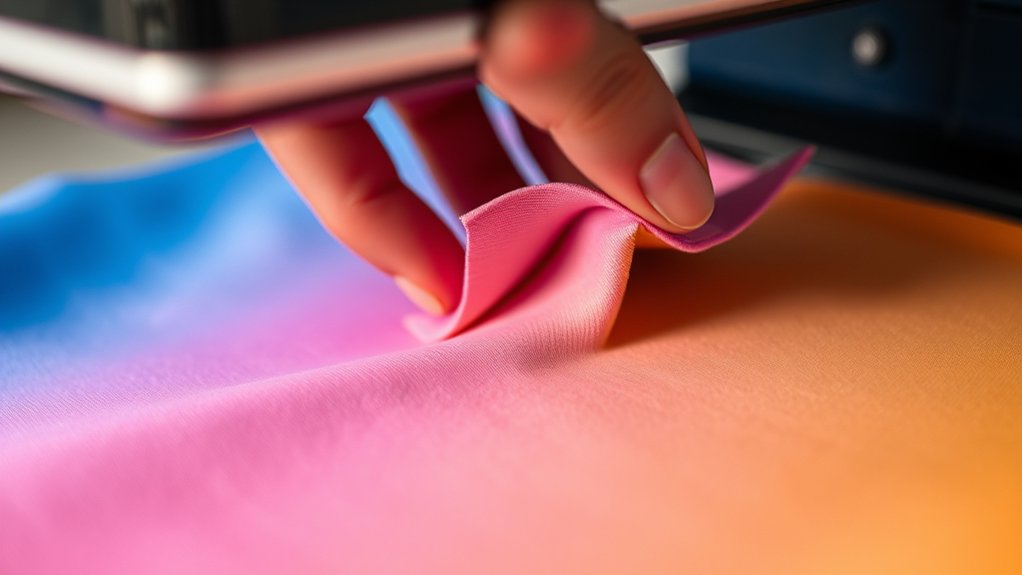
To test if your DTF powder is properly cured, start with a detailed visual inspection, looking for even melting and no residue clumps. Next, perform an adhesion strength test by applying and peeling the transfer to evaluate durability. These steps guarantee your curing process meets quality standards before moving forward.
Visual Inspection Techniques
A reliable visual inspection is essential to determine if your DTF powder has cured correctly. Begin by examining the visual quality of the print surface under consistent lighting. Look for uniform powder distribution without clumps, uneven patches, or residual glossiness that indicates incomplete curing.
Use inspection methods such as magnification tools to detect minute inconsistencies or uncured spots that might affect durability. Confirm the powder has fully melted and bonded, appearing as a smooth, matte layer rather than granular or powdery.
A precise visual inspection helps you identify curing deficiencies early, preventing adhesion failures later. By systematically applying these inspection methods, you can confidently verify that your DTF powder has reached ideal curing, guaranteeing consistency and quality in your heat-pressed designs.
Adhesion Strength Testing
Three key tests can help you accurately assess the adhesion strength of your cured DTF powder. First, perform a peel test by applying a standard force to lift the transfer film from the substrate; consistent resistance indicates proper curing.
Next, conduct a shear test by applying lateral force to the film, measuring the strength before detachment occurs. Finally, use a tape test where you firmly press adhesive tape onto the cured powder and peel it off sharply; minimal powder removal signifies strong adhesion.
Record and analyze these adhesion testing results to quantify strength measurement precisely. These methods guarantee your heat press parameters yield ideal curing, preventing delamination or weak bonds.
Regular adhesion strength testing is essential for maintaining quality control and guaranteeing long-term durability of your DTF prints.
How to Fix Common Problems When Curing DTF Powder
Although curing DTF powder might seem straightforward, you’ll encounter specific issues that require targeted adjustments. Common issues include uneven powder melting, excessive powder residue, and weak adhesion.
To address uneven melting, confirm your heat press temperature is consistently set between 160-180°C and maintain firm pressure for 15-20 seconds. Troubleshooting techniques for excessive residue involve reducing the powder application or increasing curing time incrementally by 5 seconds.
If adhesion is weak, verify that the transfer film is fully dried before pressing and consider slightly raising the temperature or pressure. Always calibrate your heat press regularly and perform test prints to identify best settings.
Tips to Make Your Heat Pressed DTF Transfers Last Longer
Mastering the curing process sets the foundation for durable DTF transfers, but ensuring their longevity requires additional care. To maximize lifespan, focus on key durability factors such as proper temperature, pressure, and dwell time during heat transfer techniques.
Use a calibrated heat press to maintain consistent heat between 160–170°C (320–338°F) and apply firm pressure for 15–20 seconds. Avoid excessive heat that can degrade the adhesive or fabric. After pressing, allow transfers to cool gradually to solidify bonding.
Additionally, pre-treat your fabric to eliminate moisture and contaminants, which can weaken adhesion. Finally, wash garments inside out with mild detergents and avoid high-temperature drying.
Frequently Asked Questions
Can I Cure DTF Powder Without a Heat Press?
You can’t properly cure DTF powder without a heat press, but alternative techniques like using a convection oven or heat gun exist. However, these curing methods lack consistency and precision compared to a heat press’s controlled pressure and temperature.
What Types of Fabrics Work Best With DTF Powder Transfers?
You’ll find cotton blends and polyester fabrics work best with DTF powder transfers because they offer ideal adhesion and durability. These materials handle heat pressing well, ensuring vibrant, long-lasting prints without compromising fabric integrity.
Is DTF Powder Safe for Washing and Daily Wear?
You’ll find DTF powder is safe for washing and daily wear after rigorous durability testing. Follow precise washing methods, such as cold water and gentle cycle, to preserve prints. Proper care guarantees longevity, maintaining vibrant designs without compromising fabric integrity.
How Does Humidity Affect the Curing Process of DTF Powder?
You should monitor humidity levels closely, as high humidity can interfere with the curing temperature’s effectiveness, causing incomplete powder adhesion.
Maintaining ideal humidity guarantees consistent curing temperature results, improving the DTF powder’s durability and finish quality.
Can I Reuse Leftover DTF Powder for Future Projects?
You can reuse leftover DTF powder by ensuring proper leftover storage in airtight containers to prevent moisture exposure.
Effective powder recycling requires thorough drying and sifting before applying in future projects to maintain adhesion quality and consistency.
Conclusion
So, now that you’ve mastered curing DTF powder with a heat press—because who doesn’t want perfectly melted powder instead of a science experiment—remember: precision is your best friend.
Skip the guesswork, stick to the right temperature and time, and avoid turning your transfer into a crispy mess.
Follow these steps methodically, or prepare for your powder to rebel.
After all, curing DTF powder with a heat press isn’t rocket science—just exact heat, pressure, and patience.
Easy, right?