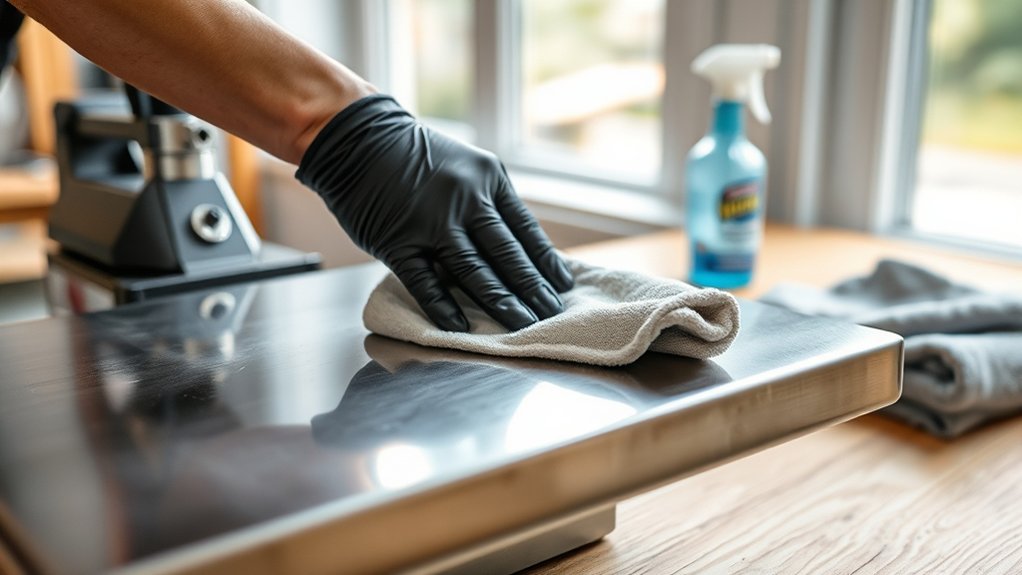

To clean your heat press, first power it off and let the platen cool completely.
Cleaning your heat press regularly ensures optimal performance and longevity. Use a soft, lint-free cloth lightly dampened with isopropyl alcohol or a specialized heat press cleaner to remove residue, avoiding abrasive materials that can scratch the surface.
For stubborn ink or adhesive, gently scrub with a non-abrasive sponge.
Regularly inspect and lubricate moving parts to maintain smooth operation. Following these steps helps preserve your machine’s performance and durability.
Keep exploring to uncover maintenance best practices and tips.
Key Takeaways
- Power off and let the heat press platen cool before cleaning to avoid burns and damage.
- Use a soft, lint-free cloth with isopropyl alcohol or specialized cleaner to remove residue gently.
- Avoid abrasive materials and harsh chemicals to prevent scratching or damaging the platen surface.
- Wipe the platen in circular motions and dry thoroughly to remove moisture and prevent buildup.
- Clean the heat press regularly after use and follow a maintenance schedule for optimal performance.
Tools and Materials You’ll Need to Clean Your Heat Press
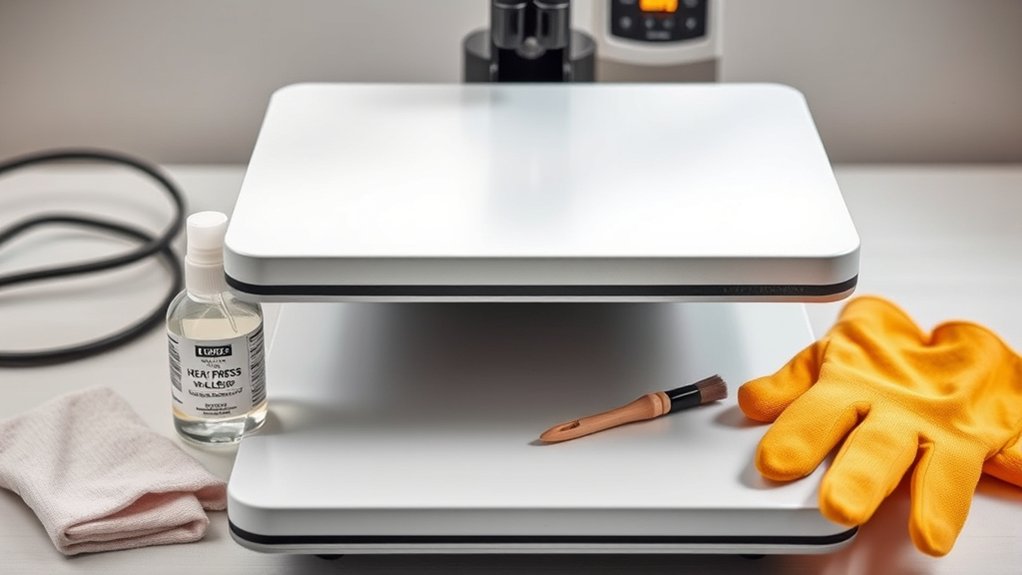
To clean your heat press effectively, you’ll need a few vital tools and materials. First, gather a soft, lint-free cloth or microfiber towel to avoid scratching surfaces. You’ll also require isopropyl alcohol or a specialized heat press cleaner to dissolve residue without damaging the platen.
A non-abrasive sponge or soft brush helps with stubborn deposits. Include heat-resistant gloves to protect your hands during cleaning. Knowing the ideal cleaning frequency is essential; cleaning after every 20 to 30 hours of use prevents buildup and maintains performance.
Avoid harsh chemicals or steel wool, which can damage the platen. Keeping these vital tools on hand guarantees you can perform regular maintenance efficiently, extending your heat press’s lifespan and assuring consistent transfer quality.
How to Safely Clean Your Heat Press Platen
To safely clean your heat press platen, select non-abrasive, heat-resistant cleaning materials that won’t damage the surface. Follow a step-by-step process: power off and cool down the platen, apply the cleaner gently, and wipe with a soft cloth.
This approach guarantees effective cleaning without compromising your heat press’s functionality.
Choosing Safe Cleaning Materials
Although selecting cleaning materials might seem straightforward, using the wrong products can damage your heat press platen or reduce its effectiveness. You should prioritize safe materials specifically designed for heat press maintenance.
Avoid abrasive cleaners, solvents, or harsh chemicals that can erode the platen’s non-stick coating or cause discoloration. Instead, opt for eco friendly cleaners that are gentle yet effective at removing residue without compromising platen integrity.
Look for water-based or non-toxic formulas that won’t emit harmful fumes during use. Additionally, use soft, lint-free cloths or non-abrasive sponges to apply these cleaners, preventing scratches on the surface.
Step-by-Step Cleaning Process
Cleaning your heat press platen involves five essential steps that guarantee effective residue removal without damaging the surface. Following a strict cleaning schedule is vital for peak heat press maintenance and longevity.
- Power Off and Cool Down: Always unplug the machine and let the platen cool before cleaning to avoid burns or damage.
- Remove Loose Debris: Use a soft brush or cloth to clear away lint and dust.
- Apply Cleaning Solution: Lightly dampen a cloth with a manufacturer-recommended cleaner; avoid abrasive agents.
- Wipe and Dry: Gently wipe the platen in circular motions, then dry thoroughly to prevent moisture buildup.
Adhering to this step-by-step cleaning process guarantees safe, efficient maintenance and preserves platen integrity.
Removing Ink and Adhesive From Your Heat Press
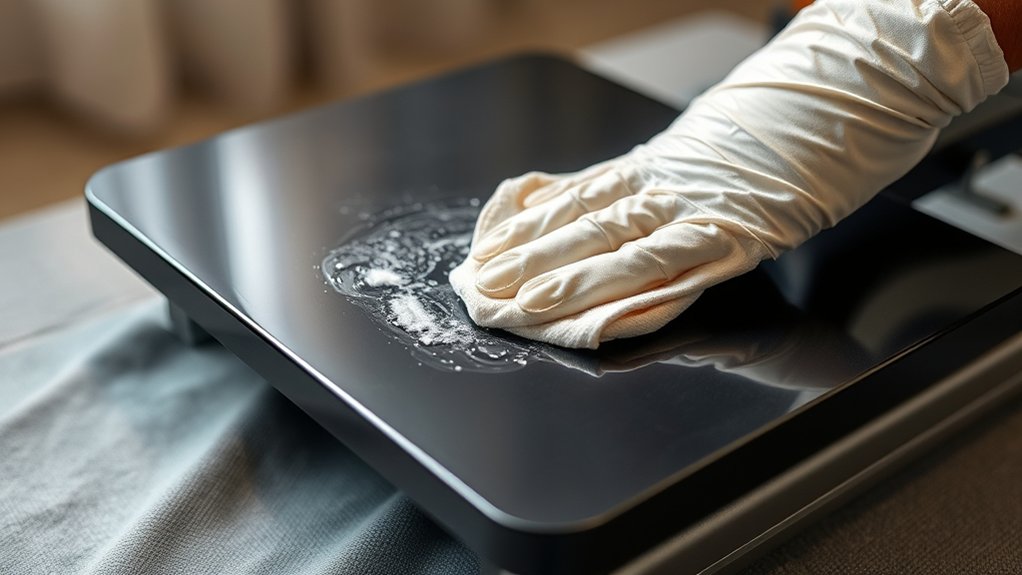
When ink or adhesive builds up on your heat press, it can affect the quality of your transfers and damage your equipment. Start by cooling the platen slightly, then apply ink removal techniques using a heat press-safe cleaner or a specialized ink remover.
Avoid abrasive materials that can scratch the surface. For adhesive residues, use adhesive solvents specifically designed for heat press use; apply a small amount on a clean cloth and gently wipe the affected area. Always test solvents on a discreet spot first to prevent damage.
After applying solvents or cleaners, wipe the platen with a damp cloth to remove any residue. Repeat the process if necessary, ensuring the surface is completely clean and dry before your next use to maintain ideal pressing results.
Maintaining Your Heat Press’s Moving Parts
Regularly inspecting and lubricating the moving parts of your heat press guarantees smooth operation and prolongs the machine’s lifespan. Focus on key components to prevent wear and mechanical failure.
Consistent inspection and lubrication keep your heat press running smoothly and extend its service life.
- Inspect belts for signs of fraying or slack; replace immediately if damaged.
- Lubricate hinges using a high-quality machine oil to reduce friction and prevent rust.
- Check the alignment of moving arms to verify even pressure distribution during operation.
- Tighten any loose screws or bolts around the moving parts to maintain structural integrity.
Perform these maintenance tasks monthly or after 100 hours of use. Avoid over-lubrication, which can attract dust and cause buildup. Proper upkeep of hinges, belts, and connections guarantees consistent pressing quality and reduces costly downtime.
Easy Tips to Keep Your Heat Press Clean Between Uses
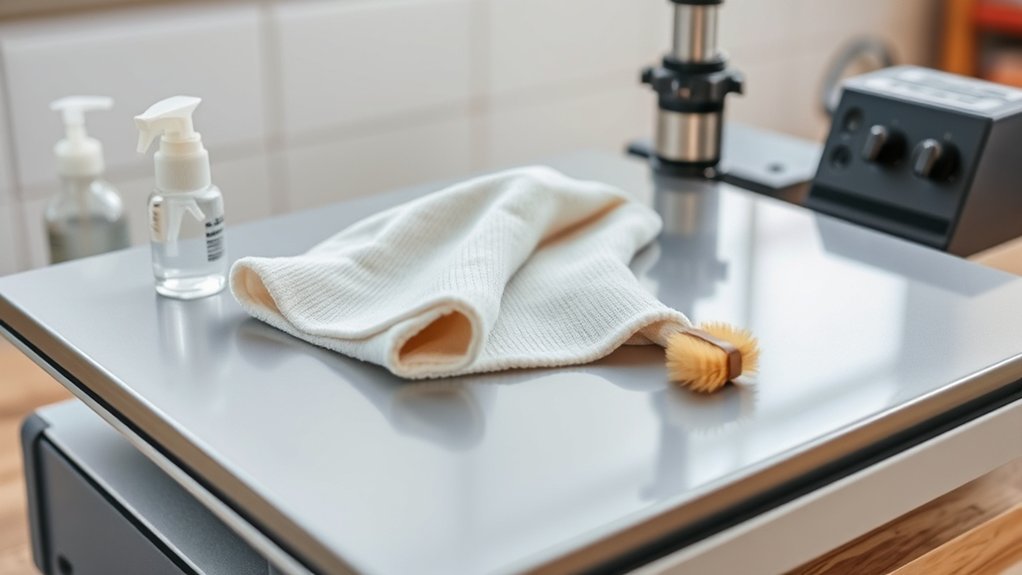
Three key practices help you keep your heat press clean between uses, guaranteeing peak performance. First, always wipe down the platen with a lint-free cloth to remove adhesive residue and dust. Use heat press accessories like protective silicone sheets to minimize direct contact with transfers, reducing buildup.
Second, apply preventive maintenance by inspecting and cleaning the heat press’s surface immediately after cooling; this prevents stubborn stains and extends platen efficiency.
Third, regularly check and clean the surrounding components, including hinges and pressure adjustment knobs, to avoid debris accumulation that can impair function.
Adhering to these steps consistently guarantees your heat press remains in prime condition, reduces downtime, and maintains transfer quality without needing intensive cleaning sessions between jobs.
Why Regular Cleaning Extends Your Heat Press’s Life
You’ll prevent overheating issues by regularly removing residue that blocks heat transfer. Keeping the platen clean guarantees consistent pressure during each press cycle, avoiding uneven prints.
This routine also reduces wear and tear on mechanical parts, extending your heat press’s overall lifespan.
Prevents Overheating Issues
Although heat presses are designed to handle high temperatures, accumulated residue and debris can cause the machine to overheat by insulating critical components and disrupting heat distribution. To prevent overheating causes, you need consistent heat press care focusing on cleanliness.
Here’s how regular cleaning helps:
- Removes adhesive buildup that traps heat, preventing hotspots.
- Clears dust and lint from vents, maintaining proper airflow.
- Guarantees the heating element operates efficiently without excess strain.
- Prevents sensor blockage, allowing accurate temperature regulation.
Maintains Consistent Pressure
Keeping your heat press clean not only guarantees proper temperature control but also preserves the machine’s pressure accuracy. Residue buildup on the platens or pressure components can interfere with pressure calibration, causing uneven force distribution during operation.
To maintain consistent pressure, regularly remove adhesive and ink deposits using appropriate cleaning agents recommended by the manufacturer. After cleaning, perform a pressure adjustment check to verify the force applied matches the specified settings.
Neglecting this step may lead to under- or over-pressurization, compromising transfer quality and causing premature wear. By routinely cleaning and verifying pressure calibration, you confirm that your heat press delivers uniform pressure, extending its functional lifespan and maintaining peak performance across all projects.
Reduces Wear And Tear
Since residue buildup accelerates mechanical degradation, regular cleaning directly reduces wear and tear on your heat press components. By removing contaminants, you enhance wear prevention and enhance longevity benefits for your machine.
To effectively reduce wear and tear, follow these steps:
- Clean heat platens after each use to prevent adhesive and ink buildup.
- Inspect and lubricate moving parts regularly to minimize friction.
- Use appropriate cleaning agents that won’t corrode metal surfaces.
- Check pressure sensors and replace worn components promptly.
These actions maintain ideal machine performance, reduce mechanical stress, and extend your heat press’s operational life. Prioritize routine maintenance to avoid premature part failures and costly repairs.
Consistent cleaning is a fundamental step in your heat press’s wear prevention strategy, ensuring long-term durability and reliable functionality.
Frequently Asked Questions
Can I Use Household Cleaners Instead of Specialized Heat Press Cleaning Products?
You can use household cleaner alternatives, but make certain they’re non-abrasive and free of harsh chemicals. Always test on a small area first.
Follow cleaning safety tips, like unplugging the press and avoiding excessive moisture during cleaning.
How Often Should I Deep Clean My Heat Press for Commercial Use?
A commercial print shop found weekly deep cleaning improved output quality. You should set a deep cleaning frequency based on usage, typically weekly or biweekly, and integrate it into your maintenance schedule for ideal heat press performance.
What Are the Signs My Heat Press Needs Professional Servicing?
You’ll notice malfunction signs like inconsistent pressure, uneven heat distribution, or error codes.
If these appear frequently or servicing frequency surpasses recommended intervals, schedule professional servicing promptly to maintain peak performance and avoid costly damage.
Can Cleaning My Heat Press Affect Its Warranty?
Imagine a car owner voiding warranty by using wrong oil; similarly, if you don’t follow your heat press’s warranty terms and cleaning guidelines precisely, your maintenance could nullify coverage.
Always use approved methods to protect your warranty.
Are There Heat Press Cleaning Products Safe for All Platen Types?
Yes, some heat press cleaning products suit all heat press materials. Choose ones labeled safe for your platen type, and adjust cleaning frequency based on usage to maintain peak performance without damaging surfaces or voiding warranties.
Conclusion
Regularly cleaning your heat press isn’t just about appearance—it directly impacts performance and longevity. Contrary to some beliefs, neglecting buildup doesn’t just cause minor issues; it can lead to uneven heat distribution and damage sensitive components.
By following precise cleaning steps and maintaining moving parts, you make certain of consistent pressure and temperature. This proactive care not only preserves your machine but also assures better transfer results.
In conclusion, a clean heat press truly performs at its best, highlighting the importance of regular cleaning for optimal operation.