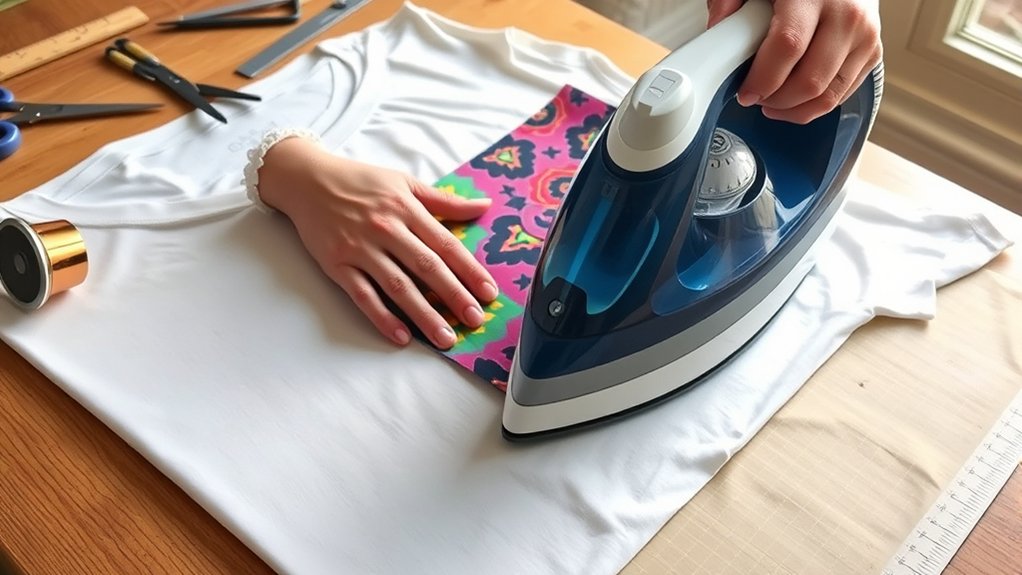

You can apply HTV without a heat press by using a household iron or even a hair straightener. This method is great for those who don’t have access to a heat press but still want to create custom designs.
First, prep your fabric by washing and ironing it flat. Place the HTV design on your fabric, then cover it with parchment paper.
Use a hot iron set to the cotton/high setting without steam. Press firmly for 10-15 seconds per section without sliding the iron.
Check the adhesion after each press and adjust the heat or pressure if needed.
Keep practicing, and you’ll find tips to perfect your HTV application without a heat press.
Key Takeaways
- Use a household iron set to cotton/high heat with no steam for applying HTV without a heat press.
- Place parchment paper or a Teflon sheet over the HTV design before pressing with the iron.
- Apply firm, steady pressure for 10-15 seconds per section without sliding the iron to ensure proper adhesion.
- Alternatively, use hair straighteners or a household laminator with protective layers for heat and pressure.
- Pre-wash and iron fabric flat before application to ensure a smooth surface and better HTV bonding.
HTV Materials You Need
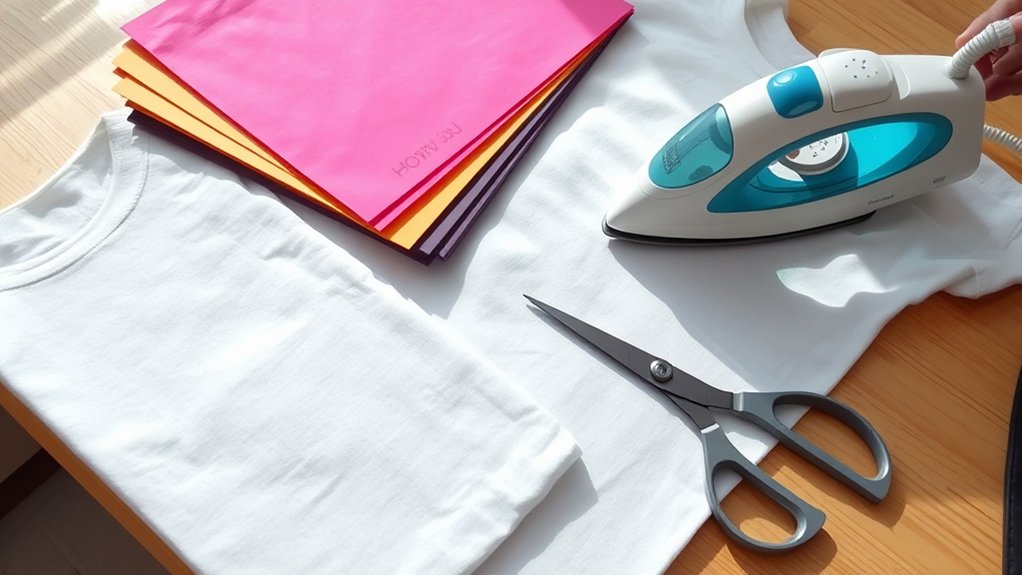
To get started with applying HTV without a heat press, you’ll need a few essential materials. First, choose the right HTV types for your project. Heat transfer vinyl comes in various forms like glitter, flock, and standard matte.
Each type has unique adhesive properties, so picking one compatible with your fabric is vital. Next, gather a household iron or a heat gun to apply heat. You’ll also need a sturdy surface, such as a wooden table, to work on.
Don’t forget parchment paper or a Teflon sheet to protect your HTV and fabric during pressing. Finally, have your scissors or cutting machine ready to trim your design precisely. With these materials in hand, you’re all set to start your no-heat-press HTV project confidently.
Preparing Fabric and HTV for Iron Use
Once you have all your HTV materials ready, it’s important to prepare both your fabric and vinyl properly for ironing. Proper fabric preparation guarantees the best adhesion, while careful HTV alignment assures a polished look.
Preparing fabric and HTV carefully ensures strong adhesion and a clean, professional finish.
- Pre-wash and dry your fabric to remove any sizing or chemicals that can prevent proper adhesion. Avoid fabric softeners.
- Iron the fabric flat on a hard surface to remove wrinkles. This creates a smooth base for your HTV.
- Align your HTV carefully on the fabric, using a ruler or measuring tape if needed. Position it exactly where you want the design before pressing.
Taking these steps sets you up for success when you move on to applying your HTV with an iron.
How to Apply HTV Using an Iron
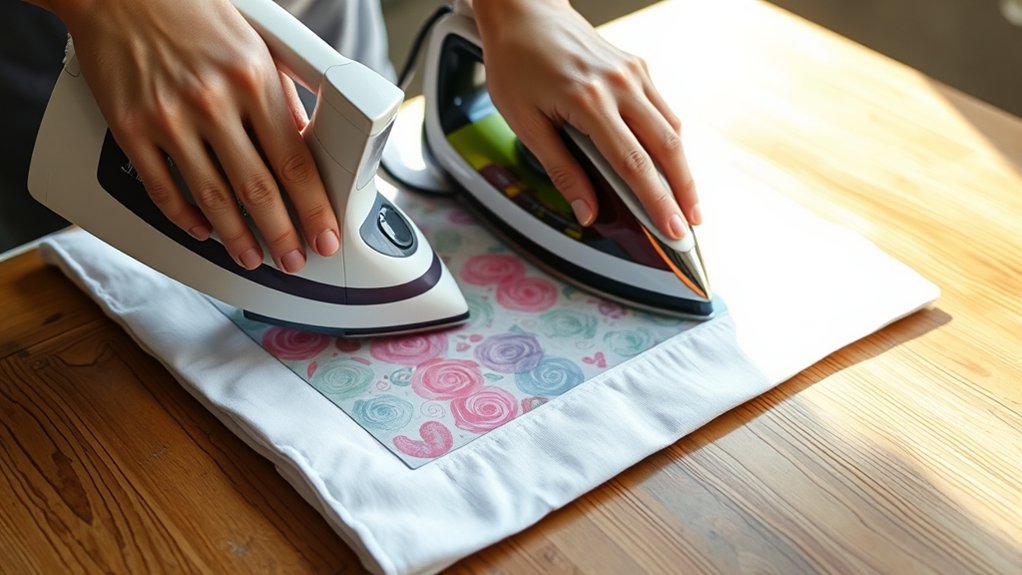
Although you’ve prepared your fabric and HTV carefully, applying the vinyl with an iron requires steady pressure and consistent heat. Set your iron to the correct iron temperature, usually cotton or high heat without steam. Place the HTV design on the fabric, cover with a thin cloth, and press firmly.
| Step | Action |
|---|---|
| 1. Iron Temperature | Set to cotton/high heat, no steam |
| 2. Position HTV | Align design on fabric |
| 3. Pressure Adjustment | Press firmly with steady pressure |
| 4. Timing | Hold for 10-15 seconds per area |
Adjust pressure as needed to guarantee the HTV bonds well. Avoid sliding the iron; instead, press and hold each section for best results.
Using Hair Straighteners and Other Tools for HTV
If you don’t have a heat press or want an alternative to an iron, hair straighteners and other household tools can help you apply HTV effectively. Here are some hair straightener tips and alternative tools to try:
- Hair Straightener Method: Set your straightener to medium-high heat, place the HTV design on your fabric, and press the straightener firmly for 10-15 seconds. Move slowly to cover the entire design evenly.
- Alternative Tools: Try a heavy book wrapped in foil or a household laminator for steady pressure and heat.
- Protect Your Design: Always use a thin cloth or parchment paper between the HTV and your tool to avoid scorching.
These simple steps guarantee your HTV adheres well without a heat press!
Adjust Heat and Pressure Without a Heat Press
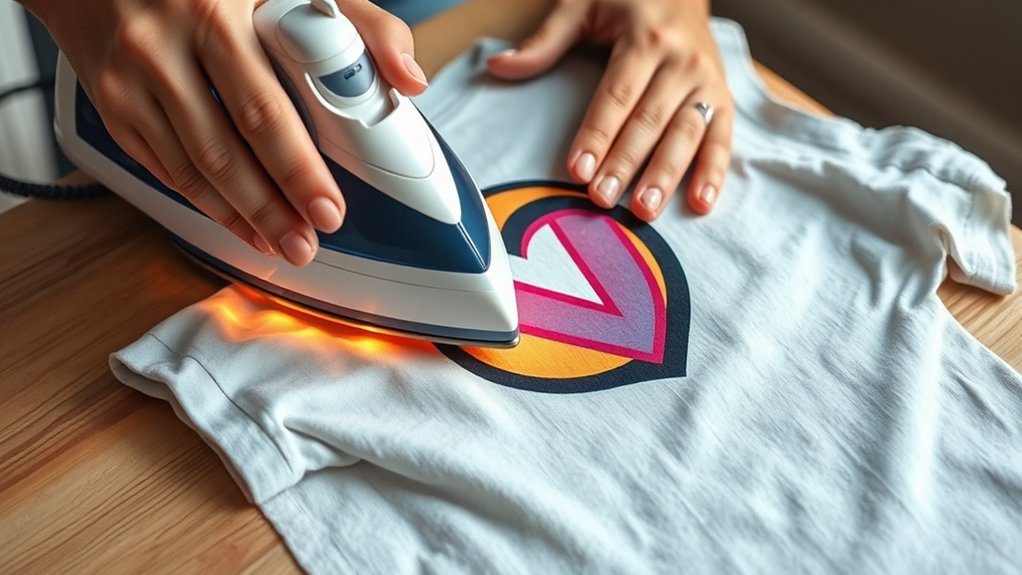
How do you get the right heat and pressure without a heat press? Start by setting your tool’s heat settings to match your HTV type, usually around 300-320°F. Next, apply firm, even pressure manually.
Use your hand or a flat object to press the HTV onto the fabric, holding steady for 10-15 seconds. Adjust pressure based on the fabric’s thickness.
| Fabric Type | Recommended Heat Settings | Pressure Adjustments |
|---|---|---|
| Cotton | 305°F | Firm, steady hand pressure |
| Polyester | 300°F | Moderate pressure |
| Delicate Fabrics | 280°F | Light pressure, gentle hold |
Common HTV Application Mistakes to Avoid
Getting the right heat and pressure sets you up for success, but avoiding common mistakes will guarantee your HTV design looks perfect every time. Here are three key application errors and misconceptions to watch out for:
Master the heat and pressure, and steer clear of common errors for flawless HTV designs every time.
- Insufficient Pressure: Without enough pressure, the HTV won’t properly adhere. Press firmly with your iron or tool to mimic a heat press’s even pressure.
- Skipping Preheat: Many think preheating isn’t needed, but warming your fabric first removes moisture and wrinkles, improving adhesion.
- Ignoring Peel Timing: Peeling the carrier too early or late causes lifting or incomplete transfer. Follow the HTV instructions for warm or cold peel times.
Avoid these pitfalls, and your HTV projects will turn out crisp and long-lasting every time!
How to Check HTV Adhesion
Once you finish applying your HTV, you’ll want to verify that it’s firmly adhered before moving on. Start by gently peeling back a corner of the carrier sheet. If the HTV stays stuck to your fabric, that’s a great sign your adhesion test passed.
If it lifts away, reapply heat or pressure, adjusting your method as needed. Remember, fabric compatibility plays a big role in adhesion, so guarantee your fabric type matches the HTV you’re using.
To further check adhesion, lightly rub the design with your fingers; it shouldn’t lift or peel. If any edges start to lift, press again, focusing on those spots.
Performing these quick checks helps guarantee your design stays put, giving your project a professional finish without the need for a heat press.
Caring for HTV-Decorated Fabrics
After confirming your HTV design sticks firmly, caring for your decorated fabric properly will keep it looking fresh and vibrant. Follow these essential washing instructions and fabric care steps:
- Turn your garment inside out before washing to protect the HTV from friction and fading.
- Use cold water and a gentle cycle to prevent the adhesive from loosening or peeling.
- Avoid bleach and fabric softeners, as they can break down the vinyl’s adhesive and reduce durability.
Always air dry or tumble dry on low heat to maintain the HTV’s integrity. By following these simple fabric care tips, you’ll extend the life of your HTV design and keep your decorated items looking great wash after wash. You’ve got this!
Frequently Asked Questions
Can HTV Be Applied on Non-Fabric Items Without a Heat Press?
Yes, you can apply HTV on non-fabric items by using a household iron or a strong adhesive. Just preheat, place your design, press firmly, and peel carefully.
Practice guarantees perfect HTV applications on non fabric items!
What Types of Fabrics Work Best With HTV and No Heat Press?
Imagine you’re customizing a cotton blend T-shirt without a heat press. You’ll find cotton blends and some synthetic fabrics work best. They’re durable and handle DIY heat well. Just use a household iron, press firmly, and be patient!
How Long Does HTV Typically Last Without Using a Heat Press?
HTV without a heat press typically lasts several washes, but durability factors like fabric type, adhesive quality, and application method matter. To extend life, use gentle washing, avoid high heat, and turn garments inside out when washing and drying.
Are There Any Safety Precautions When Using an Iron for HTV?
Yes, you should adjust iron settings based on fabric types to avoid damage. Use a cotton setting, avoid steam, and press firmly but gently.
Always test on a scrap piece before applying HTV to your project.
Can Multiple HTV Layers Be Applied Without a Heat Press?
Like building a cake, you can apply multiple HTV layers without a heat press. Use proper layering techniques, pressing each layer with an iron carefully to guarantee strong HTV adhesion. Take your time. You’ll nail it!
Conclusion
Don’t worry if you don’t have a heat press—you can still achieve great results with just an iron or hair straightener. Just remember to apply firm, even pressure and adjust your heat settings carefully. Take your time and follow each step, and your HTV will stick beautifully.
With patience and practice, you’ll create lasting, professional-looking designs without expensive equipment. You’ve got this—keep experimenting and enjoy your custom creations!
By mastering how to apply HTV without heat press, you open up a world of creative possibilities right at home.