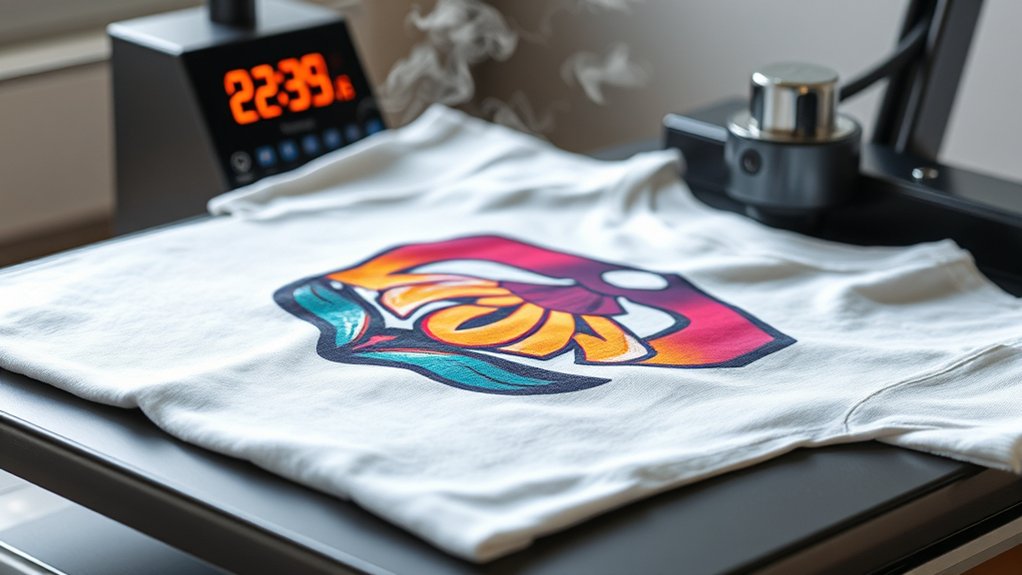

How Long to Heat Press Vinyl is crucial for achieving perfect results. You should heat press vinyl for about 8 to 20 seconds, depending on the vinyl type—standard HTV needs 10-15 seconds, while thicker or specialty vinyl requires up to 20 seconds.
Use temperatures between 275°F and 320°F, adjusting for fabric type and vinyl composition.
Apply consistent, medium pressure to guarantee strong adhesion. Press too briefly, and your vinyl won’t stick; too long, and you risk melting or bubbling.
Understanding these details helps you get flawless results every time.
Key Takeaways
- Standard HTV requires pressing for 10 to 15 seconds for optimal adhesion.
- Thicker vinyl types like glitter or flocked need 15 to 20 seconds of heat pressing.
- Specialty vinyls may require 8 to 25 seconds; always check manufacturer guidelines.
- Proper pressing time activates the adhesive, ensuring vinyl durability and preventing peeling.
- Adjust pressing time based on fabric type and heat press temperature for best results.
How Long Should You Heat Press Different Types of Vinyl?
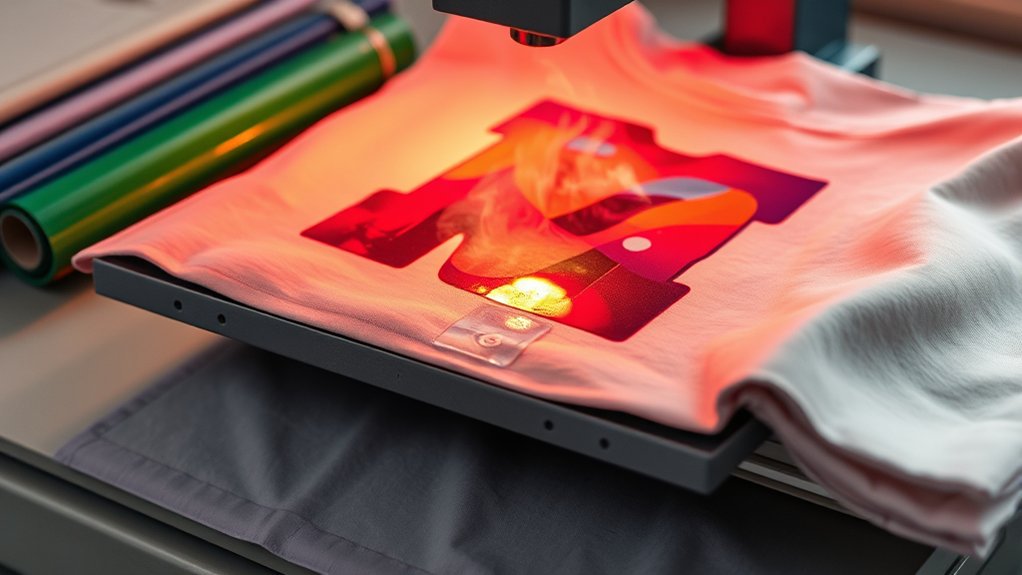
When you heat press different types of vinyl, the pressing time varies based on the material’s composition and thickness. For standard heat transfer vinyl (HTV), you typically press for 10 to 15 seconds using moderate heat settings.
Thicker vinyl types, like glitter or flocked vinyl, require longer pressing times, generally 15 to 20 seconds, to guarantee proper adhesion. For specialty vinyl types, such as metallic or reflective, consult manufacturer guidelines, as pressing times can range from 8 to 25 seconds.
What Temperature Should You Use for Vinyl Heat Pressing?
You should set your heat press to the ideal temperature range specific to the type of vinyl you’re using to guarantee proper adhesion. Different vinyl materials require different temperatures, typically between 275°F and 320°F, to activate their adhesive properties without damage.
Using the wrong temperature can cause vinyl to peel, warp, or burn, so precise control is essential.
Optimal Temperature Ranges
Although different types of vinyl require varying heat settings, maintaining an ideal temperature range is essential for achieving durable and vibrant transfers. Using a suitable vinyl heat press temperature guarantees proper adhesion without damaging the material or fabric. Generally, you’ll want to set your heat press between 305°F and 320°F (150°C to 160°C) for the best results.
Follow these guidelines for suitable temperature ranges:
- Preheat the press to the target temperature before applying the vinyl.
- Avoid exceeding 320°F to prevent vinyl scorching or fabric damage.
- Adjust the temperature slightly based on fabric thickness but stay within the suitable range.
- Monitor temperature consistency throughout pressing for uniform vinyl adhesion.
Sticking to these parameters will maximize your heat press efficiency and transfer quality.
Temperature Differences by Vinyl Type
Since each type of vinyl responds differently to heat, selecting the correct temperature is essential for perfect adhesion and durability. For standard polyurethane (PU) vinyl types, set your heat press between 300°F and 320°F. This range guarantees proper melting of the adhesive without damaging the vinyl’s surface.
For polyvinyl chloride (PVC) vinyl, lower heat settings around 270°F to 290°F are necessary to prevent warping or discoloration. Flocked vinyl requires a slightly lower temperature, typically 280°F, to maintain its texture.
When working with specialty or stretch vinyl types, always consult manufacturer guidelines because their heat sensitivity varies. Adjusting your heat settings precisely according to vinyl types helps achieve maximum bonding and extends the lifespan of your heat-pressed designs. Always confirm compatibility before pressing.
Effects of Incorrect Temperature
Selecting the right temperature for vinyl heat pressing directly impacts the quality and durability of your design. Using incorrect temperatures can cause several issues that compromise your project. If the heat is too low, you’ll face vinyl adhesion issues, resulting in peeling or incomplete transfers.
Conversely, excessive heat may cause vinyl melting or distortion, damaging both the design and fabric. Additionally, improper temperature settings can lead to heat press malfunction, reducing equipment lifespan. To avoid these problems, monitor your heat press settings closely.
- Too low temperature causes poor vinyl adhesion.
- Excessive heat leads to vinyl melting or warping.
- Incorrect temperature accelerates heat press malfunction.
- Wrong settings reduce transfer durability and appearance.
Stick to manufacturer guidelines for best results.
How Does Fabric Type Affect Heat Pressing Time?
You need to adjust heat pressing time based on fabric type to guarantee proper vinyl adhesion without damage. Cotton requires higher temperatures and longer pressing, while polyester demands lower heat and shorter duration to prevent melting.
For blends and delicate fabrics, modify time and temperature carefully to balance bonding and fabric integrity.
Cotton Vs. Polyester
Although both cotton and polyester are common choices for heat pressing, each fabric demands different time and temperature settings to guarantee proper vinyl adhesion without damage. Cotton offers excellent durability but requires a higher temperature and longer pressing time. Polyester, known for its versatility, needs lower heat and shorter pressing time to avoid melting or scorching.
Consider these guidelines:
- For cotton, set the heat press between 350°F-375°F for 10-15 seconds.
- For polyester, reduce temperature to 300°F-320°F and press for 8-12 seconds.
- Always use a Teflon sheet to protect synthetic fibers.
- Adjust pressure to medium-high for cotton and medium for polyester to secure vinyl adhesion without fabric distortion.
Following these steps guarantees ideal results tailored to each fabric’s properties.
Delicate Fabric Considerations
When working with delicate fabrics, you’ll need to lower both heat and pressing time to prevent damage such as scorching, melting, or distortion. Delicate fabrics exhibit increased heat sensitivity, requiring careful adjustment of your heat press settings.
Start by reducing the temperature by 10-15°F below the standard for cotton or polyester. Limit pressing time to 5-10 seconds, then check adhesion before extending time incrementally. Use a protective Teflon sheet or parchment paper between the vinyl and fabric to shield fibers.
Always perform a test press on a fabric scrap to verify that the heat and duration do not compromise the fabric’s integrity. By respecting the heat sensitivity of delicate fabrics, you guarantee a clean transfer without weakening or altering the textile’s appearance and feel.
Blended Material Adjustments
Adjusting heat press settings for blended fabrics requires understanding how different fibers interact with heat and pressure. Blended materials, such as cotton-polyester mixes, respond uniquely compared to pure fabrics, affecting pressing time and temperature.
To optimize your heat press process for fabric combinations, follow these guidelines:
- Identify dominant fiber: Prioritize settings based on the most heat-sensitive fiber.
- Adjust temperature: Lower heat for synthetic blends to prevent melting or damage.
- Modify pressing time: Increase time slightly for thicker blends, decrease for delicate synthetics.
- Test on scraps: Always trial press on a sample to fine-tune time and temperature to the specific blend.
Why Pressure and Time Matter When Heat Pressing Vinyl
Since proper pressure and time guarantee strong adhesion, you must carefully control both when heat pressing vinyl. Pressure application guarantees the vinyl contacts the fabric evenly, preventing lifting or peeling after washing.
Insufficient pressure results in weak vinyl adhesion, while excessive pressure can distort the vinyl or damage the garment. Likewise, the duration of heat exposure activates the adhesive on the vinyl, bonding it securely to the substrate.
Too little pressure weakens adhesion; too much can distort vinyl or harm the fabric, while heat duration activates the bond.
Too little time leaves the adhesive under-activated, causing poor adherence; too much time risks scorching or melting the vinyl. By precisely managing pressure and time, you achieve consistent, durable results with effective vinyl adhesion.
Use manufacturer guidelines as a baseline, and calibrate your heat press accordingly to maintain repeatability and quality in every application.
How to Adjust Heat Press Time for Layered or Multi-Color Vinyl
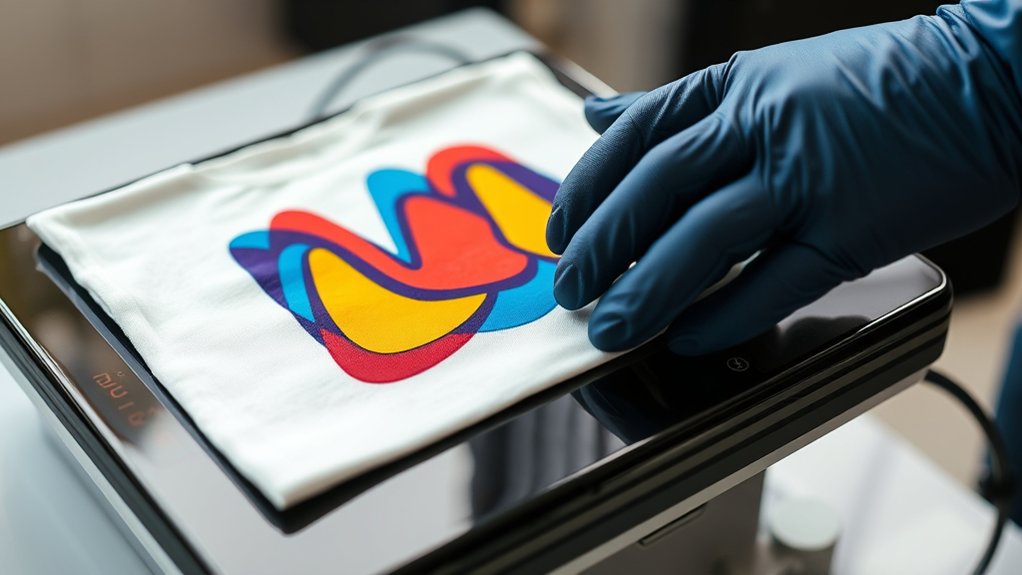
Although layering vinyl adds complexity, you must carefully modify heat press time to guarantee each layer bonds properly without overheating previous ones. Different vinyl types may require distinct temperature settings and pressing durations.
To adjust time effectively, follow these steps:
- Confirm precise layer alignment before pressing to avoid shifting during heat application.
- Reduce individual pressing time by 10-15% per layer to prevent heat damage.
- Use lower heat settings for delicate vinyl types, increasing time only if adhesion is insufficient.
- Allow brief cooling between layers to stabilize the vinyl and avoid warping.
What Are Signs You’re Heat Pressing Vinyl Too Long or Too Short?
How can you tell if you’re heat pressing vinyl for too long or not long enough? Signs of overheating include vinyl bubbling, peeling, or discoloring, indicating excessive temperature or time.
If you notice the vinyl surface melting or warping, that’s another clear sign overheating is damaging your design. Conversely, signs of underheating present as vinyl not fully adhering to the fabric, edges lifting, or designs peeling off after washing.
If the vinyl feels loose or you see incomplete transfer, you haven’t applied enough heat or pressure. To guarantee proper adhesion, monitor these signs closely during your process.
Adjust heat press time incrementally to avoid these issues, ensuring the vinyl bonds correctly without damage or detachment.
Tips to Nail Your Vinyl Heat Press Every Time
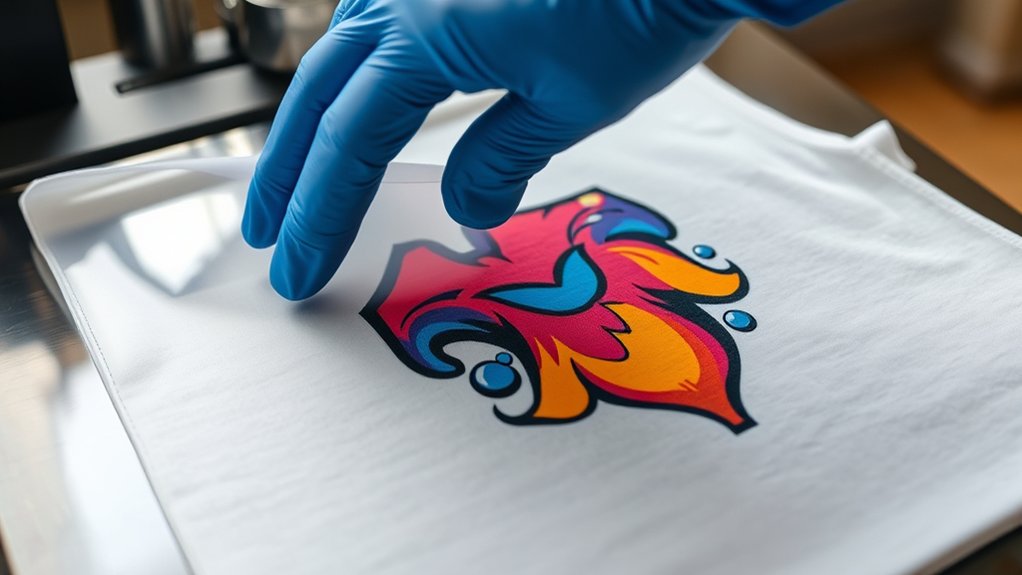
Recognizing the signs of improper heat pressing sets the stage for improving your technique. To nail your vinyl heat press every time, focus on these key vinyl application techniques while prioritizing heat press safety:
- Calibrate your heat press temperature accurately to match the vinyl type.
- Use consistent pressure; too much or too little affects adhesion and texture.
- Time your presses precisely. Refer to vinyl manufacturer guidelines to avoid under- or overheating.
- Always pre-press garments to remove moisture and wrinkles, ensuring even heat transfer.
Frequently Asked Questions
Can I Heat Press Vinyl on Non-Cotton Fabrics?
You can heat press vinyl on non-cotton fabrics, but you must adjust heat settings to suit fabric compatibility. Use lower temperatures for synthetics to prevent melting or scorching, ensuring ideal adhesion without damaging the material.
How Do I Clean My Heat Press After Using Vinyl?
Think of your heat press as a canvas; cleaning techniques like wiping with isopropyl alcohol and using non-abrasive cloths prevent residue buildup.
Regular maintenance tips include cooling before cleaning and inspecting for wear to guarantee consistent vinyl transfers.
Is It Safe to Reuse Vinyl Transfer Sheets?
You shouldn’t reuse vinyl transfer sheets because doing so reduces vinyl transfer longevity and compromises adhesion quality. Instead, focus on proper vinyl sheet recycling methods to maintain material integrity and guarantee consistent, professional heat press results.
What Is the Best Way to Store Unused Vinyl Sheets?
You should store vinyl sheets flat, in a cool, dry place to prevent warping. Use clear sleeves or folders for sheet organization, and avoid direct sunlight.
This vinyl storage method maintains material integrity and ease of access.
Can Heat Pressing Vinyl Damage My Heat Press Machine?
You won’t damage your heat press machine if you follow proper heat press maintenance.
Vinyl damage can occur if residue builds up, so clean the platen regularly to prevent sticking and guarantee consistent, safe operation.
Conclusion
Mastering vinyl heat pressing is like tuning a fine instrument—precision in time, temperature, and pressure guarantees perfect results every time. Adjust your heat press settings based on vinyl type and fabric to avoid under- or over-pressing.
Remember, layered vinyl needs extra attention to time and pressure. Watch for signs like peeling or scorching to fine-tune your process.
With these technical steps, you’ll consistently achieve durable, vibrant vinyl applications that last. Knowing how long to heat press vinyl is essential for achieving those perfect, lasting results.