
A heat press works by applying controlled heat and pressure through its heating platen onto a design transfer placed on your chosen material. This process activates adhesives or dyes to create a permanent bond, making the heat press an essential tool for customizing fabrics and other items.
You set precise temperature, time, and pressure settings to ensure the best results. The pressure mechanism guarantees even contact, preventing air gaps that cause poor transfers.
This exact process varies by press type and material, so understanding component functions and settings is key.
Explore more to optimize your heat press results and troubleshoot effectively.
Key Takeaways
- A heat press uses controlled heat and pressure to transfer designs from heat-applied materials onto substrates like fabric or hard surfaces.
- The heating platen uniformly distributes heat, activating adhesives or dyes to bond the design permanently to the substrate.
- Precise pressure ensures intimate contact between the transfer medium and substrate, eliminating air gaps for uniform adhesion.
- Temperature, pressure, and timing are adjustable via a control panel and timer to suit different materials and transfer types.
- Proper calibration, consistent settings, and workspace ergonomics are essential for achieving high-quality, durable transfer results.
What Is a Heat Press and How Does It Work?
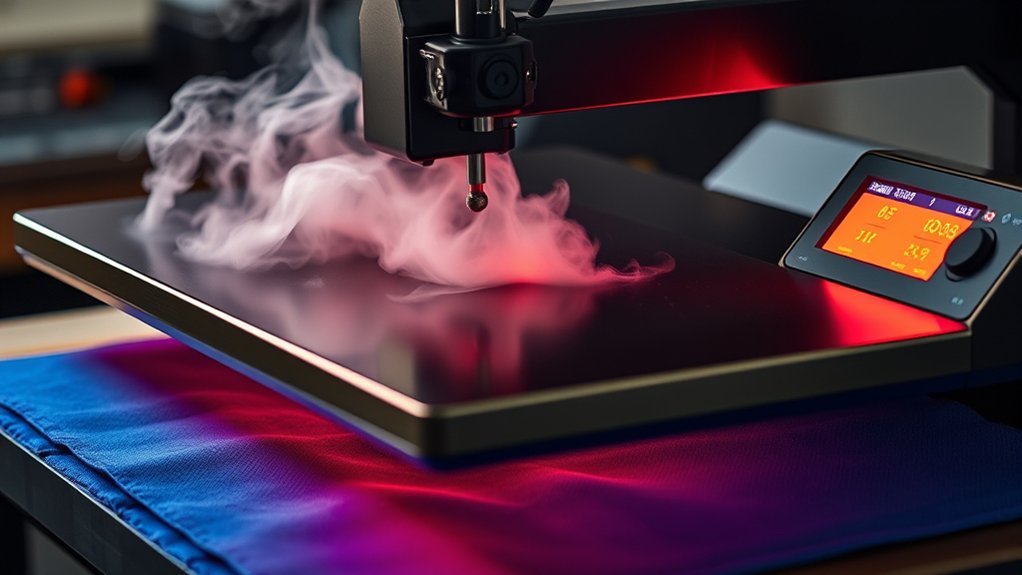
A heat press is a machine designed to transfer heat-applied materials onto substrates like fabric or metal with consistent pressure and temperature. When you use a heat press, you rely on controlled heat transfer to embed designs or graphics onto your chosen material.
Various heat press types exist, including clamshell, swing-away, and draw models, each offering specific operational advantages depending on your project’s requirements. You’ll engage the machine by setting precise temperatures and pressure levels to guarantee ideal adhesion without damaging the substrate or transfer medium.
The heat press applies thermal energy that activates adhesives or dyes in the transfer material, bonding it permanently. Understanding these mechanics allows you to select the appropriate heat press type and settings for efficient, high-quality heat transfer results.
Essential Parts of a Heat Press Machine
You’ll find that a heat press machine consists of several key components, each designed to perform a specific function. Understanding how the heating element, platen, pressure system, and control panel work together is essential for effective operation.
Let’s analyze the role and interaction of each part to grasp the machine’s overall functionality.
Key Components Overview
Although understanding how a heat press functions is important, grasping its key components is vital to mastering its operation. You’ll find that each part plays a critical role in delivering consistent, high-quality results. Focusing on these components helps you perform effective maintenance and troubleshoot issues efficiently.
The primary elements include:
- Heating Platen: Provides uniform heat distribution, critical for proper transfer.
- Pressure Mechanism: Guarantees consistent pressure application, affecting transfer durability.
- Control Panel: Allows precise adjustment of temperature, time, and pressure settings.
Knowing these components aids you in following proper maintenance tips, such as regularly checking platen calibration and pressure settings to prevent uneven transfers. By mastering these essentials, you can optimize your heat press’s performance and longevity.
Functionality of Each Part
When you understand how each component functions within a heat press machine, you can optimize its performance and troubleshoot issues more effectively. The platen applies uniform pressure and heat, essential for precise heat transfer.
The heating element regulates temperature control, guaranteeing consistent and accurate temperatures. The timer monitors heat exposure duration, critical for material integrity.
The pressure adjustment allows you to tailor the force applied, affecting transfer quality. Finally, the digital control panel displays and manages settings, streamlining operation.
| Part | Function | Impact on Heat Transfer / Temperature Control |
|---|---|---|
| Platen | Applies heat and pressure | Guarantees uniform heat transfer across substrate |
| Heating Element | Generates and maintains heat | Provides precise temperature control |
| Timer | Controls pressing duration | Prevents overheating or under-curing |
| Pressure Adjustment | Modulates pressure force | Influences transfer consistency |
| Control Panel | Displays and sets parameters | Enables accurate temperature and time management |
How Heat Presses Transfer Designs Onto Materials
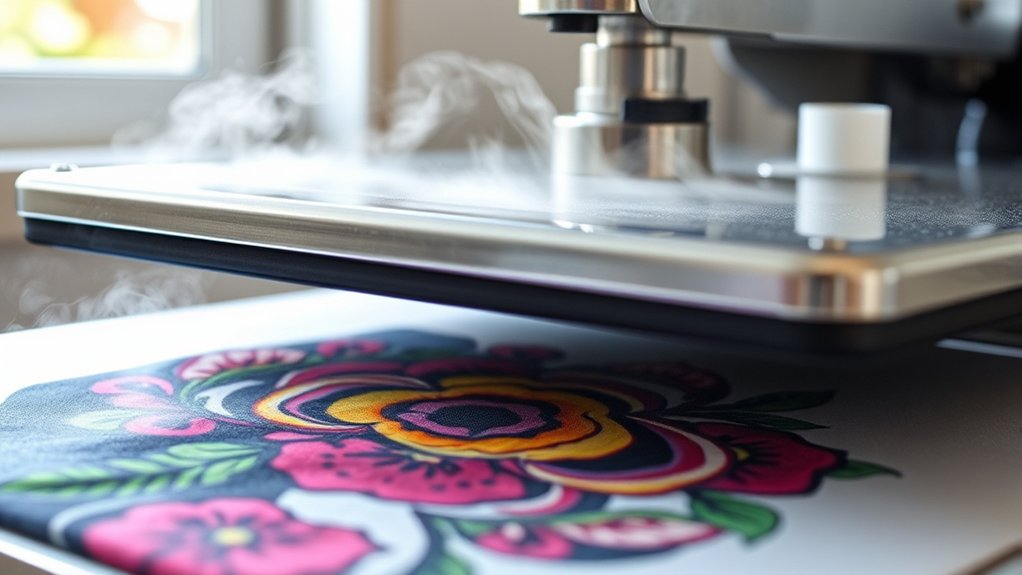
You activate a heat press by applying controlled heat to initiate the transfer process, which alters the adhesive properties of the design material. Alongside heat, you must apply precise pressure to guarantee the design bonds uniformly to the substrate.
Additionally, you need to take into account material compatibility, as different fabrics and surfaces respond uniquely to heat and pressure settings.
Heat Activation Process
Since heat plays a crucial role in the transfer process, understanding the heat activation mechanism is fundamental to mastering heat pressing. Heat activation involves raising the design’s adhesive elements to their melting point, enabling bonding with the substrate fibers.
Precise temperature control is critical; too low, and the adhesive won’t activate, too high, and you risk damaging materials.
When you operate a heat press, focus on:
- Maintaining consistent temperature to guarantee uniform activation
- Monitoring heat distribution to avoid hotspots or cold zones
- Adjusting temperature based on material type and transfer medium
This controlled heat environment triggers the chemical reactions in the transfer inks or adhesives, allowing the design to permanently fuse with the material. Mastering heat activation guarantees durability and vibrancy in your finished product.
Pressure Application Role
Pressure plays a pivotal role in the heat pressing process by guaranteeing intimate contact between the transfer medium and the substrate. When you apply pressure, you promote uniform adhesion by eliminating air gaps and improving heat conduction.
Precise pressure distribution across the platen is critical; uneven pressure can cause incomplete transfers or distortions. You must monitor pressure measurement carefully, often through calibrated gauges or digital sensors, to maintain consistent force throughout the pressing cycle.
This consistency guarantees that the heat-activated adhesives bond effectively at a molecular level. By controlling both the magnitude and uniformity of pressure, you optimize the transfer’s durability and visual quality.
Understanding and adjusting these parameters allows you to achieve professional results, minimizing defects and maximizing the efficiency of your heat press operation.
Material Compatibility Factors
Achieving ideal adhesion depends not only on consistent pressure but also on selecting materials that respond appropriately to heat and adhesive properties. When you use a heat press, the compatibility between fabric types and temperature settings is critical to guarantee the design bonds properly without damaging the substrate.
Different materials require tailored heat press parameters; synthetic fibers like polyester react differently than natural fibers such as cotton. Key factors to take into account include:
- Thermal tolerance of the fabric types to prevent scorching or melting
- Appropriate temperature settings for maximum adhesive activation
- Duration of heat application to balance penetration and fabric integrity
Understanding these variables allows you to fine-tune the heat press operation for diverse materials, resulting in durable, vibrant transfers without compromising fabric quality or design fidelity.
Types of Heat Presses and How to Use Them
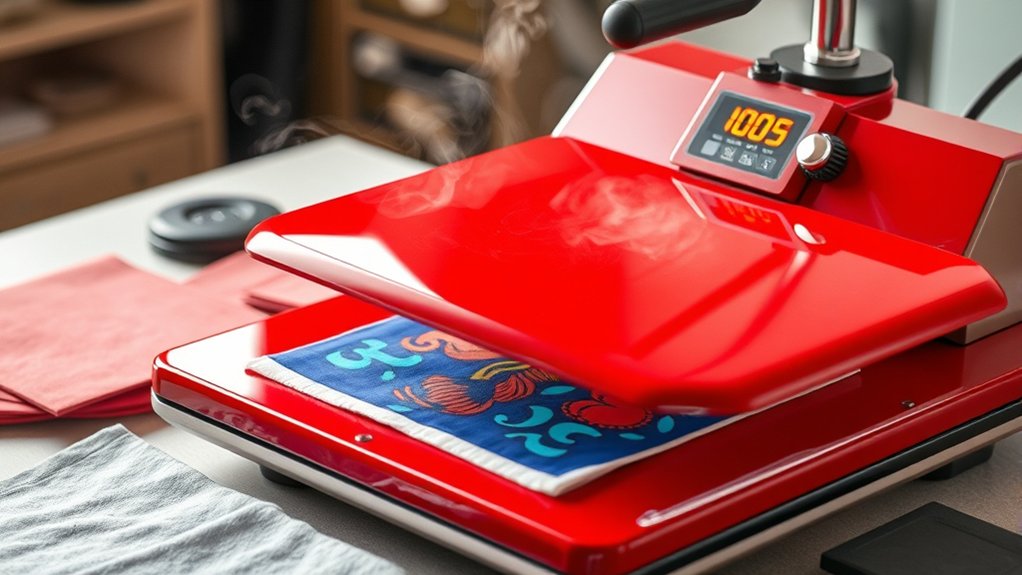
Heat presses come in various designs, each tailored for specific applications and materials. Two common types you’ll encounter are the swing away and clamshell designs.
The swing away press allows you to move the heated platen horizontally, giving you full access to the lower platen and better pressure distribution. This design is ideal when working with thicker or uneven materials.
The clamshell design, on the other hand, operates by lifting the upper platen vertically, resembling a clamshell. It’s compact and faster for high-volume, thin materials like t-shirts.
When using either type, you’ll need to set the correct temperature, pressure, and time based on your material. Proper alignment and even pressure application guarantee consistent transfers, so always calibrate your press before starting your project.
How to Choose the Right Heat Press for You
How do you determine which heat press suits your specific needs? Start by analyzing the heat press types available: clamshell, swing-away, and draw style. Each offers distinct operational dynamics and workspace accessibility.
Next, evaluate essential heat press features such as temperature control accuracy, pressure adjustment mechanisms, and platen size to match your project scale. Consider these factors:
Evaluate temperature control, pressure adjustments, and platen size to ensure your heat press fits your project needs.
- Project volume: High output favors automated or larger platen models.
- Material compatibility: Certain presses handle thicker substrates better.
- Workspace constraints: Size and ergonomics affect usability.
Tips for the Best Heat Press Results and Troubleshooting
Since precise temperature, pressure, and timing directly impact transfer quality, you’ll need to calibrate your heat press carefully before each job. Start by verifying your heat settings with an external thermometer to confirm accuracy.
Adjust the pressing time according to the material and transfer type; too short or too long can cause incomplete adhesion or scorching. Maintain consistent pressure. Uneven force leads to patchy transfers.
If you notice peeling or fading, re-evaluate your settings and test on a sample. Regularly clean the platen to prevent residue buildup, which affects heat distribution.
For troubleshooting, document each variable: temperature, pressure, and pressing time to isolate issues systematically. This analytical approach lets you optimize your process, assuring consistent, high-quality results with every press.
Frequently Asked Questions
Can I Use a Heat Press on Leather or Wood Materials?
You can use a heat press on leather, but guarantee proper leather compatibility to avoid damage.
For wood embellishments, heat pressing is less suitable due to wood’s sensitivity to heat and pressure, risking warping or discoloration.
How Do I Safely Clean and Maintain My Heat Press Machine?
Like tuning a fine instrument, your heat press demands precise cleaning techniques. Use a damp cloth on the platen and avoid abrasives. Apply maintenance tips such as lubricating moving parts and checking electrical connections regularly for ideal performance.
What Are Common Safety Precautions When Operating a Heat Press?
You should always follow heat press safety by wearing heat-resistant gloves, keeping the work area clear, and never leaving the machine unattended.
Adhere strictly to operating guidelines to prevent burns, electrical hazards, and guarantee proper machine function.
Can Heat Presses Be Used for Commercial Mass Production?
Yes, you can use heat presses for commercial mass production. Their heat press benefits include consistent quality and faster curing times, which greatly enhance production efficiency.
This allows you to scale operations while maintaining precision and durability in designs.
How Long Do Heat Press Machines Typically Last With Regular Use?
Think of your heat press as a marathon runner; with proper care, its heat press lifespan stretches 5-10 years.
Machine durability depends on maintenance, usage frequency, and quality components, ensuring consistent performance throughout its operational life.
Conclusion
Using a heat press is like wielding a precision tool, applying exact heat and pressure to transfer designs flawlessly. By understanding its essential parts and operation, you can choose the right machine and optimize your process.
Remember, consistent temperature, time, and pressure settings are vital for perfect results. With careful adjustments and troubleshooting, you’ll achieve professional-quality transfers every time.
Making your heat press an indispensable asset in your creative workflow depends on mastering how a heat press works.