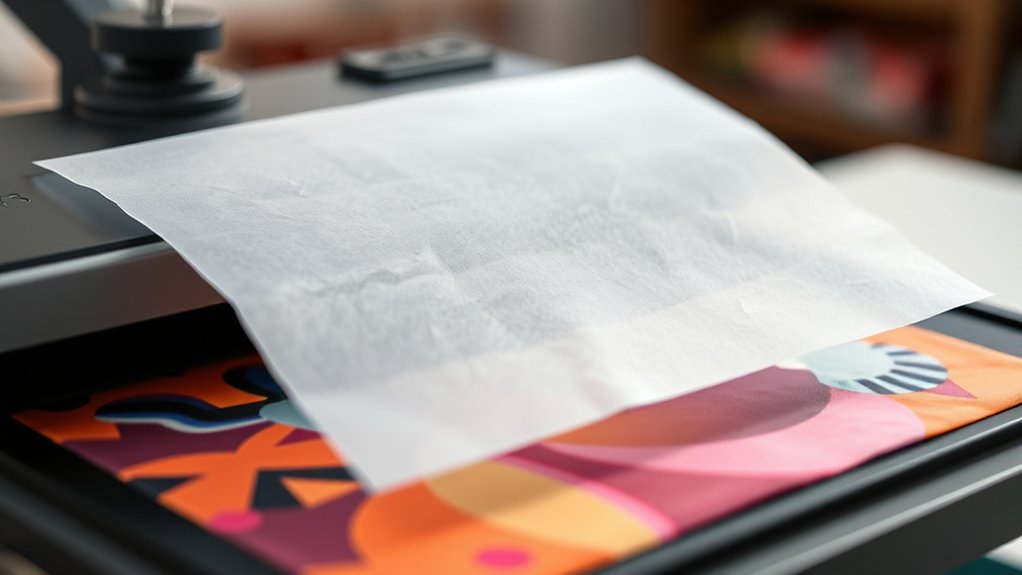

You can use parchment paper for heat press applications because it tolerates temperatures up to about 420°F. This makes it suitable for typical heat press settings and helps protect your heat platen and fabric from residue and scorching.
However, be cautious with pressure and temperature to avoid tearing or discoloration. For delicate fabrics, parchment paper offers a safe barrier that prevents damage during pressing.
To guarantee the best results and prevent damage, it’s important to understand when and how to properly use parchment paper.
Comparing it with other cover options can also help you choose the most effective solution for your project.
Key Takeaways
- Parchment paper is heat-resistant up to about 420°F, making it generally safe for standard heat press temperatures between 300°F and 400°F.
- It protects delicate fabrics and heat press surfaces from scorching, residue, and direct contact during heat transfer processes.
- Using parchment paper helps prevent ink or vinyl from sticking to the heat platen and reduces fabric damage risk.
- Conduct a test press to ensure parchment paper tolerates your specific heat press settings without scorching or tearing.
- Alternatives like Teflon sheets or butcher paper may offer better durability and heat resistance for frequent or high-temperature use.
What Is Parchment Paper and Its Heat-Pressing Properties
Parchment paper is a cellulose-based, non-stick material treated with silicone, designed to withstand high temperatures without burning or melting. When you use parchment paper, its heat resistance guarantees it maintains structural integrity under moderate heat, making it ideal for various cooking and crafting applications.
The silicone coating provides a smooth, non-stick surface that prevents adhesion, allowing you to handle delicate materials without damage. Its heat resistance typically ranges up to 420°F (215°C), which is sufficient for many tasks but requires consideration for higher-temperature applications.
Understanding these properties helps you select parchment paper appropriately, ensuring it performs effectively during heat exposure without compromising your project or equipment. This practical knowledge sets the foundation for safely integrating parchment paper into heat-based processes.
Can Parchment Paper Handle Heat Press Temperatures?
How well can parchment paper withstand the temperatures commonly used in heat pressing? Typically, heat presses operate between 300°F and 400°F.
Parchment paper heat resistance usually ranges up to 420°F, thanks to its silicone coating. This means you can depend on parchment paper durability within standard heat press settings without immediate risk of burning or melting.
However, its durability depends on consistent temperature control and proper pressure application. Overheating or extended exposure beyond its heat resistance threshold may degrade the paper’s integrity.
When you use parchment paper within recommended temperature ranges, it acts as an effective barrier, protecting your materials and heat press. Always verify the specific parchment paper’s heat resistance to ascertain compatibility with your heat pressing process.
Risks of Using Parchment Paper in Heat Pressing
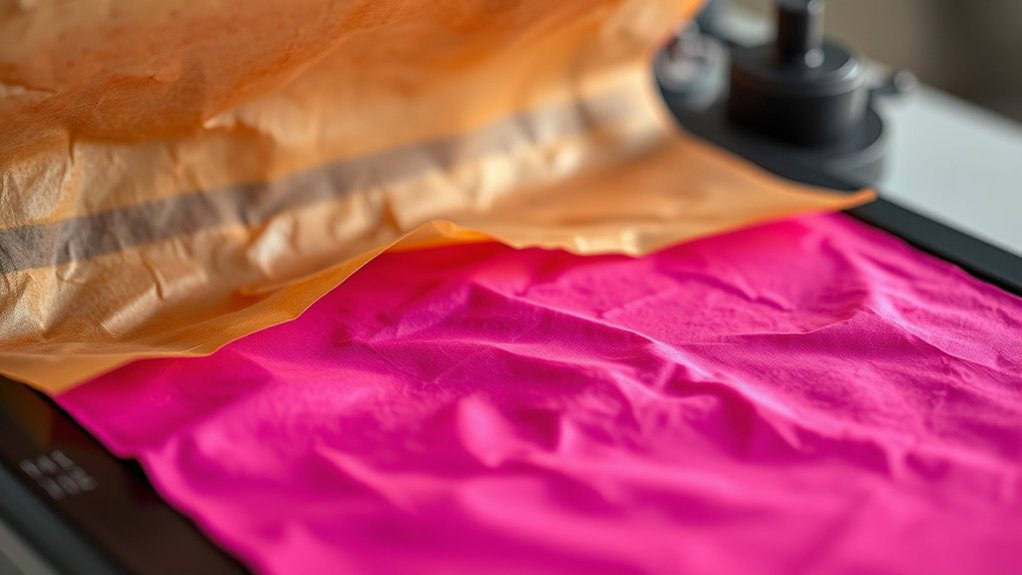
While parchment paper can handle typical heat press temperatures, you should be aware of potential risks such as scorching, sticking, or tearing if the paper is exposed to excessive heat or pressure. These issues can compromise your heat transfer quality and damage both the paper and the substrate.
When using parchment paper in heat pressing, watch out for:
- Scorch marks caused by temperatures exceeding the paper’s tolerance
- Adhesion of ink or vinyl to parchment paper when pressure is too high
- Tearing or ripping due to improper handling or uneven pressure distribution
- Residue buildup on the heat press platen from repeated use without cleaning
When to Use Parchment Paper as a Heat Press Cover
You should use parchment paper as a heat press cover when you need to protect the heat press surface from adhesive or ink residue.
It also prevents direct contact between the heat platen and your fabric, reducing the risk of scorching or fabric damage. Always place parchment paper between your design and the heat press for a clean, safe transfer.
Protecting Heat Press Surface
Although heat press machines are designed to withstand high temperatures, you should use parchment paper as a protective cover to prevent direct contact between the heat platen and your materials. This practice guarantees ideal surface protection and maintains the integrity of your heat transfer process.
Using parchment paper effectively:
- Shields the heat press surface from ink, adhesives, and residue buildup
- Provides a smooth barrier that promotes even heat distribution during heat transfer
- Minimizes wear on the heat platen, extending machine lifespan
- Prevents scorching or sticking, which could damage both the heat press and your transfers
Preventing Fabric Damage
Whenever you apply heat transfers to delicate fabrics, using parchment paper as a heat press cover becomes essential to prevent scorching, melting, or adhesive bleed-through. Parchment paper acts as a protective barrier that evenly distributes heat and pressure, ensuring fabric safety during the heat transfer process.
You should always use parchment paper when working with synthetic fabrics like polyester or blends prone to heat damage. It prevents direct contact between the heat platen and the fabric, minimizing the risk of burns or unwanted shine.
Additionally, parchment paper prevents adhesive from seeping onto your heat press, maintaining equipment cleanliness. For ideal results, cut parchment paper slightly larger than your design, covering the entire transfer area. This practice guarantees consistent heat transfer while safeguarding your fabric from damage.
Comparing Parchment Paper, Butcher Paper, and Teflon as Covers
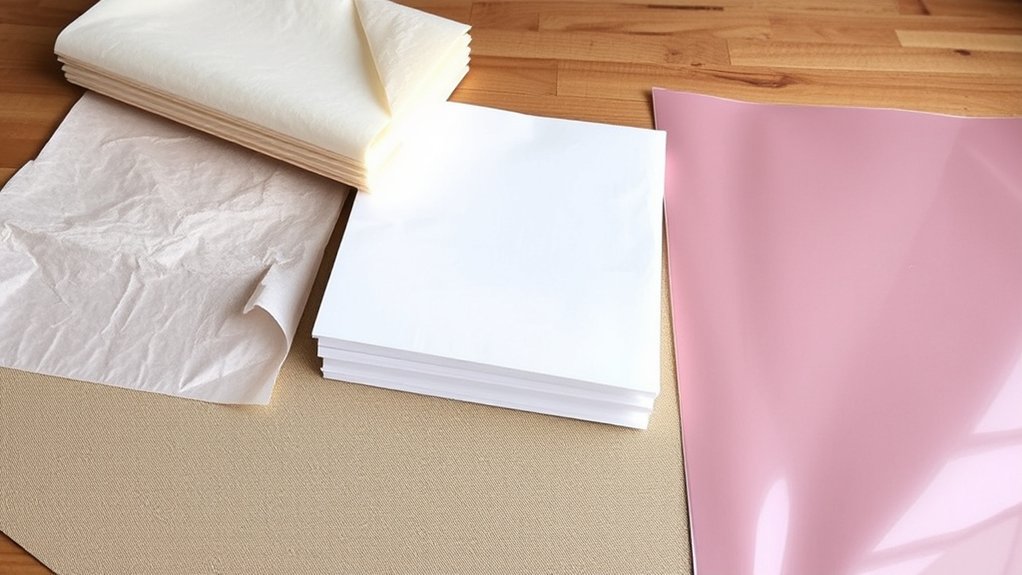
When selecting a cover for your heat press projects, understanding the distinct properties of parchment paper, butcher paper, and Teflon sheets is essential. Each serves as a parchment paper alternative with unique benefits depending on your heat press techniques.
Choosing the right cover—parchment, butcher paper, or Teflon—enhances your heat press project outcomes.
Parchment Paper: Affordable and disposable, it withstands moderate heat but can burn at very high temperatures.
Butcher Paper: More durable, resists ink bleed-through, and works well for sublimation but may absorb moisture.
Teflon Sheets: Highly heat resistant, reusable, and provides a non-stick surface, ideal for consistent, professional results.
Heat Resistance: Teflon sheets typically outperform both papers, tolerating higher temperatures without degradation.
Best Alternative Cover Sheets for Heat Pressing
Since selecting the right cover sheet directly impacts your heat press results, you need to choose materials that balance heat resistance, durability, and surface protection. The best cover alternatives include butcher paper, Teflon sheets, and silicone-coated fabrics.
Conduct a paper thickness evaluation to guarantee your cover withstands heat without compromising transfer quality or damaging the design. Here’s a quick comparison:
| Cover Sheet Type | Paper Thickness (gsm) | Heat Resistance | Durability |
|---|---|---|---|
| Butcher Paper | 40-60 | Moderate | Low |
| Parchment Paper | 50-60 | High | Medium |
| Teflon Sheet | N/A (Film) | Very High | High |
| Silicone-Coated Fabric | N/A (Textile) | Very High | Very High |
Choose covers based on your heat press temperature and design needs for best results.
Tips to Protect Your Heat Press and Designs Without Parchment
Although parchment paper is a popular choice for protecting your heat press and designs, you can achieve similar results using other methods and materials. To safeguard your heat press and guarantee clean design transfer without parchment, consider these tips:
Use heat-resistant Teflon sheets as alternative materials; they provide non-stick surfaces and withstand high temperatures.
Employ silicone baking mats which offer durability and smooth heat distribution.
Place a thin cotton or polyester cloth between the heat platen and your design to prevent scorching.
Regularly clean the heat platen to avoid residue buildup that can affect transfer quality.
How to Safely Test Parchment Paper for Heat Pressing
Start by selecting heat settings that match your material’s specifications to prevent damage. Perform a small test press with a scrap piece of parchment paper to monitor its behavior under heat and pressure.
Carefully observe any changes like discoloration or melting to guarantee the paper’s compatibility before full use.
Choose Appropriate Heat Settings
When preparing to use parchment paper with your heat press, you’ll need to determine the excellent temperature and pressure settings to prevent scorching or warping. Selecting the correct heat settings guarantees the parchment paper withstands the process without compromising your project.
Start by identifying the ideal temperature recommended for your specific parchment paper brand and the materials you’re pressing. Typically, parchment paper can handle temperatures up to 420°F (215°C).
To choose appropriate heat settings:
- Consult your heat press manual for recommended temperature ranges.
- Set the temperature slightly below the maximum tolerance of the parchment paper.
- Adjust pressure to medium or light to avoid excessive compression.
- Monitor the pressing time closely to prevent overheating.
This precise approach helps maintain parchment integrity and achieves consistent results.
Conduct Small Test Press
After setting the appropriate temperature and pressure for your parchment paper, you should conduct a small test press to verify these settings work without damaging your materials.
Begin by placing a small scrap of your substrate and parchment paper in the heat press. Activate the press using your predetermined heat settings, maintaining consistent pressure and timing.
This controlled test press allows you to confirm that the parchment paper withstands the heat without scorching or sticking and that the substrate remains intact.
Carefully inspect the test area for any discoloration, warping, or transfer issues. Adjust your heat settings incrementally if you notice any adverse effects.
This methodical approach guarantees your full project proceeds smoothly, minimizing the risk of waste or damage during heat pressing with parchment paper.
Observe Paper Reaction
Although parchment paper is designed to resist heat, you need to closely observe its reaction during your test press to guarantee it performs as expected under your specific conditions. Carefully assess the paper durability and heat resistance by noting any changes during pressing. Watch for:
- Discoloration or browning, indicating heat damage
- Warping or curling, which affects paper integrity
- Residue transfer to your material, signaling breakdown
- Loss of smooth texture, reducing protective function
Frequently Asked Questions
Can Parchment Paper Be Recycled After Heat Pressing?
You can’t recycle parchment paper after heat pressing because its heat resistance treatment alters its fibers, complicating the recycling process.
Instead, dispose of it properly or reuse if intact to minimize waste effectively.
Does Parchment Paper Affect the Color Vibrancy of Heat-Pressed Designs?
You might worry parchment paper dulls color retention, but it actually protects your heat-pressed designs. It preserves design clarity and vibrancy by evenly distributing heat, preventing scorching or fading during the pressing process.
How Does Parchment Paper Compare Cost-Wise to Other Heat Press Covers?
Parchment paper offers a cost-effective alternative compared to specialized heat press covers, making it a strong budget option. Its low price and wide availability provide a favorable cost comparison for practical, everyday heat pressing needs.
Can Parchment Paper Be Used With All Types of Heat Press Machines?
You can use certain parchment paper types with most heat press machines, but check heat press compatibility first. Not all parchment papers withstand high temperatures or pressure, so select a durable type designed specifically for heat pressing tasks.
Is Parchment Paper Safe for Food-Related Heat Press Projects?
Like a trusty shield, parchment paper guarantees food safety during heat transfer, preventing contamination and sticking. You’re safe using it for food-related heat press projects, as long as it’s uncoated and designed for high temperatures.
Conclusion
You might think parchment paper is a quick fix for heat pressing, but coincidence or not, it often can’t handle the high temperatures involved, risking your designs and press. While it’s sometimes useful as a temporary cover, relying on specialized materials like Teflon sheets or butcher paper is smarter.
To protect your equipment and achieve precise results, always choose the right cover. Test any new material carefully before committing to the full press.
In conclusion, while parchment paper may seem convenient, it is not the best choice for heat pressing. For optimal protection and quality, you should use materials specifically designed for heat press applications.