
Yes, you can heat press on polyester, but you need to use heat transfer vinyl designed for synthetic fabrics to avoid melting or scorching.
Keep your heat press settings lower—typically between 290°F and 320°F—and apply medium pressure for 8 to 15 seconds.
Always pre-press your fabric and protect it with a Teflon sheet to guarantee even adhesion and prevent damage.
Understanding these details helps you achieve durable, vibrant designs without ruining your garment.
Key Takeaways
- Yes, you can heat press on polyester using heat transfer vinyl designed for synthetic fabrics with lower temperature requirements.
- Ideal pressing temperatures for polyester range from 290°F to 320°F, with short dwell times between 8 to 18 seconds.
- Use medium pressure and protective sheets like Teflon to avoid melting, scorching, or imprinting the fabric.
- Pre-press polyester garments to remove moisture and wrinkles for even and effective heat transfer application.
- Avoid high heat, prolonged pressing, and skipping tests to prevent damaging polyester fibers during heat pressing.
Picking the Best Heat Transfer Materials for Polyester
When choosing heat transfer materials for polyester, you need to take into account the fabric’s sensitivity to high temperatures and its synthetic nature. Polyester characteristics include low heat tolerance and a tendency to melt or deform under excessive heat.
Consequently, selecting a transfer vinyl specifically designed for synthetic fabrics is essential. Look for heat transfer vinyl (HTV) labeled as suitable for polyester, which usually requires lower pressing temperatures and shorter dwell times. These specialized transfer vinyl materials guarantee strong adhesion without damaging the fabric.
Additionally, consider vinyl with flexible, breathable properties to maintain polyester’s moisture-wicking performance. Avoid general-purpose vinyls that may require higher heat or longer pressing, as they risk fabric distortion. Using the right transfer vinyl aligns with polyester’s thermal limits, guaranteeing durable, high-quality heat press results.
Best Temperature and Time Settings for Heat Pressing Polyester
Selecting the right temperature and time settings plays a key role in achieving ideal heat press results on polyester. You need to balance heat settings and pressure settings carefully to avoid damaging the fabric while ensuring proper transfer adhesion. Generally, polyester requires lower temperatures compared to cotton to prevent melting or distortion.
| Material Type | Temperature (°F) | Time (seconds) | Pressure Settings |
|---|---|---|---|
| Standard Polyester | 300-320 | 10-15 | Medium (40-50 psi) |
| Polyester Blend | 310-330 | 12-18 | Medium-High (50-60 psi) |
| Performance Polyester | 290-310 | 8-12 | Medium (40-50 psi) |
Adjust these settings based on your heat press machine and transfer material for best results.
Safe Heat Pressing Techniques for Polyester
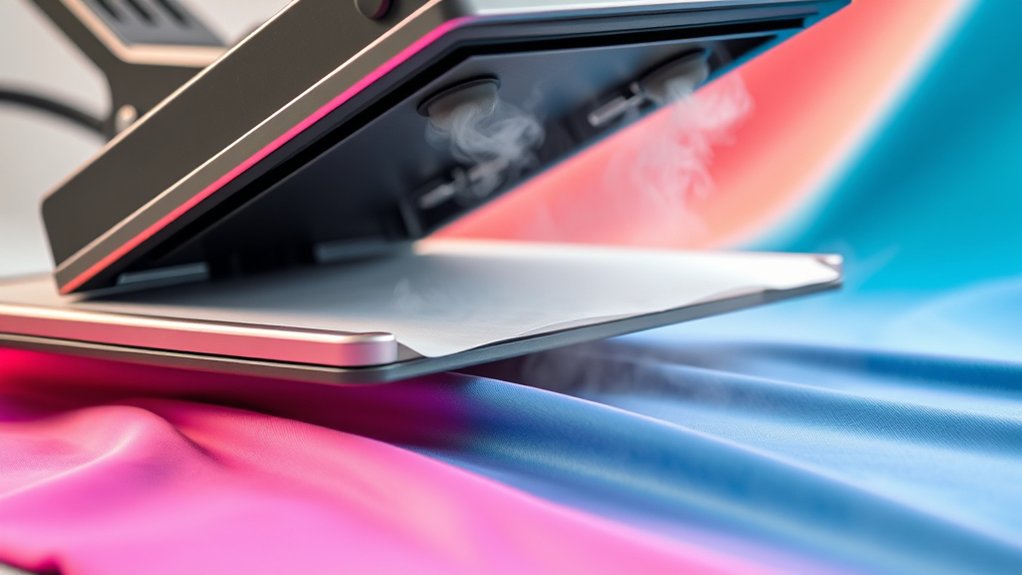
How can you guarantee your polyester fabric withstands the heat press without damage? First, always verify the fabric composition since polyester blends may require adjusted heat settings.
Use a lower temperature, generally between 270°F to 300°F, to prevent melting or scorching. Apply medium pressure to avoid imprinting or distortion.
Pre-press the fabric for a few seconds to remove moisture and wrinkles, ensuring consistent heat distribution. Place a protective Teflon sheet or parchment paper between the heat platen and fabric to prevent direct contact and potential shine marks.
Limit pressing time to 10–15 seconds to reduce thermal stress. Consistently monitor the process, adjusting heat settings based on the polyester blend ratio to maintain fabric integrity and achieve ideal transfer quality.
Common Mistakes to Avoid When Heat Pressing Polyester
Although polyester is durable, improper heat pressing can easily damage the fabric or ruin your transfer. One common mistake is using excessive temperature or pressure, which can melt or distort the polyester blend fibers. Always check the manufacturer’s recommended heat press settings before starting.
Another error is neglecting to pre-press the garment to remove moisture and wrinkles, which can cause uneven transfers. Avoid pressing directly on printed areas without a protective sheet, as this can cause smudging or scorching.
Additionally, rushing the dwell time often leads to incomplete adhesion or peeling. Finally, failing to test on a small fabric area or scrap polyester blend can result in irreversible damage.
How to Care for Heat-Pressed Polyester Garments
Once you’ve completed the heat pressing process, proper care is essential to maintain the quality and longevity of your polyester garment’s design. To guarantee garment longevity, always wash the garment inside out using cold water on a gentle cycle.
Avoid bleach and fabric softeners, as they can degrade the heat-pressed design. For fabric maintenance, opt for air drying or tumble dry on low heat to prevent heat damage.
When ironing, place a protective sheet over the design to avoid direct contact with the iron. Store the garment in a cool, dry place away from direct sunlight to prevent fading.
Following these precise care instructions will help preserve the integrity of the heat-pressed design and extend the lifespan of your polyester garment.
Frequently Asked Questions
Can You Use a Regular Iron Instead of a Heat Press on Polyester?
You can use a regular iron on polyester, but you must adjust ironing techniques carefully to avoid damage. Confirm fabric compatibility by using a low heat setting, a pressing cloth, and avoiding steam to protect the material properly.
Does Heat Pressing Damage Polyester Fabric Over Time?
You won’t damage polyester fabric longevity if you use proper heat settings. Pressing at too high a temperature repeatedly can weaken fibers, so always adjust heat carefully to preserve the material’s integrity over time.
What Types of Designs Work Best for Heat Pressing on Polyester?
You’ll get the best results with polyester designs using transfer materials like polyurethane or vinyl, which handle heat well. Choose thin, flexible transfers to guarantee durability and vibrant colors without damaging the fabric’s integrity during pressing.
Can You Heat Press on Polyester Blends With Cotton?
You know what they say: “Measure twice, cut once.” You can heat press polyester blends with cotton, but adjust time and temperature carefully to maintain polyester durability and cotton compatibility, ensuring ideal adhesion without fabric damage.
Is Pre-Washing Polyester Necessary Before Heat Pressing?
You don’t have to pre-wash polyester before heat pressing, but pre wash benefits include removing finishes and reducing fabric shrinkage. This ensures better adhesion and longevity for your design. Skipping it may risk slight shrinkage later.
Conclusion
Now that you know how to heat press polyester like a pro, you can avoid the pitfalls of the past—no more risking a medieval scorch mark on your modern fabrics. By choosing the right materials, setting precise temperatures and times, and following safe techniques, you’ll achieve flawless results every time.
Remember, proper care extends the life of your heat-pressed garments, keeping them vibrant and durable for countless wears ahead. Mastering the art of heat pressing on polyester ensures your creations look professional and last longer. With these tips, heat pressing on polyester becomes a reliable and rewarding process.