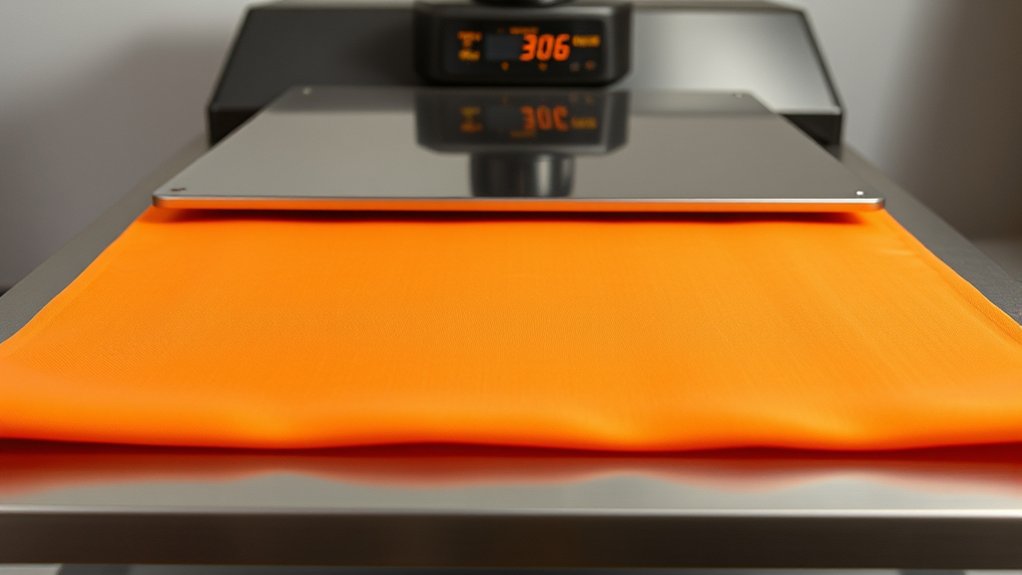

You can heat press on 100% polyester, but it requires careful control of temperature, pressure, and time to prevent melting or distortion of the fabric.
Set your heat press temperature between 270°F and 300°F, and limit the pressing time to 10–15 seconds using medium pressure.
Always use a Teflon or parchment sheet as a protective barrier to ensure even heat distribution and protect the material.
Choosing the right heat transfer material is essential for durability. Polyester-based vinyl or sublimation paper works best for 100% polyester fabrics.
By understanding and managing these factors, you can optimize your heat pressing results and maintain the longevity of your fabric.
Key Takeaways
- Heat press on 100% polyester is possible but requires careful temperature control between 270°F and 300°F to avoid melting fibers.
- Use moderate pressure and a dwell time of 10-15 seconds to prevent fabric distortion or damage during heat pressing.
- Employ a protective Teflon sheet or parchment paper to shield polyester fabric from direct heat and ensure even heat distribution.
- Sublimation transfer is preferred for vibrant, durable designs on polyester, using specialized sublimation paper and higher temperatures around 380°F.
- Avoid standard heat transfer vinyl unless formulated for polyester, as excessive heat or pressure may cause puckering, melting, or color shifts.
Can You Heat Press on 100% Polyester?
When heat pressing on 100% polyester, how can you guarantee ideal results without damaging the fabric? You need to control the temperature, pressure, and time precisely.
Polyester printing requires a lower temperature range, typically between 270°F and 300°F, to prevent melting or distortion. Excessive heat can cause the fibers to warp, so avoid exceeding recommended settings. For effective heat transfer, use a Teflon sheet or parchment paper as a protective barrier to distribute heat evenly and shield the fabric surface.
Maintain moderate pressure and limit the pressing time to 10-15 seconds to ensure the transfer adheres properly without compromising fabric integrity. By monitoring these variables closely, you can achieve consistent, high-quality polyester printing while preserving the garment’s durability and appearance.
Effects of Heat Pressing on 100% Polyester Fabric
Although heat pressing offers efficient customization for 100% polyester fabrics, improper application can lead to fabric distortion, melting, or reduced tensile strength. When you perform heat transfer on polyester, excessive temperature or pressure may compromise the fiber structure, causing irreversible damage.
You need to control heat exposure precisely to maintain fabric durability while achieving ideal adhesion of transfer materials. Thermal sensitivity of polyester demands careful calibration to prevent surface puckering or color shifts.
Additionally, repeated heat pressing cycles can degrade tensile strength, weakening the fabric over time. Understanding these effects helps you enhance your process, balancing effective heat transfer with preservation of the polyester’s mechanical integrity.
Set the Right Temperature and Time for Polyester
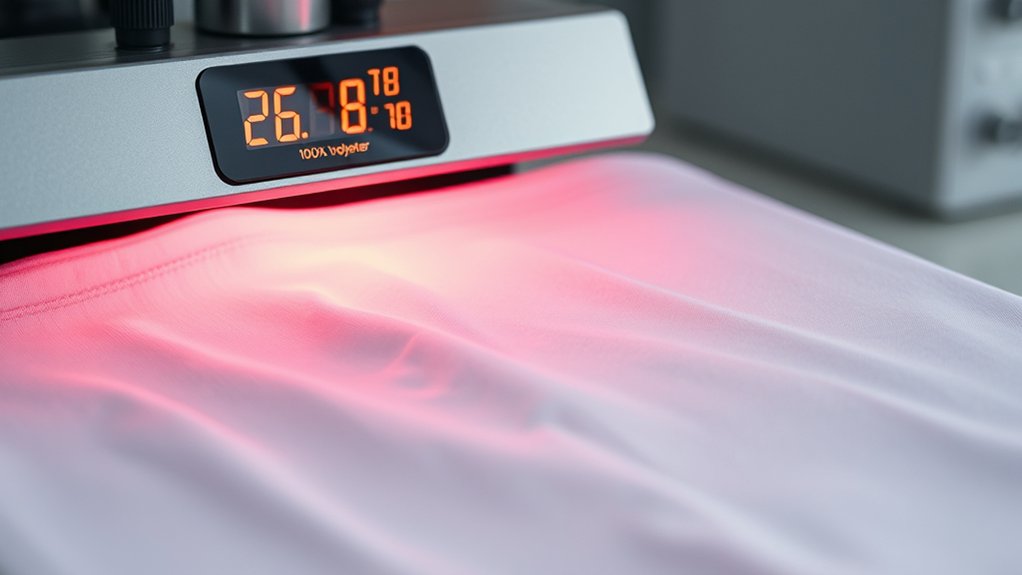
Choosing the right temperature and time settings is essential for successful heat pressing on polyester. You need precise temperature settings and press duration to avoid fabric damage or poor adhesion. Typically, polyester requires moderate heat and controlled timing.
| Temperature Settings (°F) | Press Duration (seconds) | Notes |
|---|---|---|
| 320 | 10 | Standard polyester |
| 330 | 12 | Slightly thicker fabric |
| 340 | 8 | Thin polyester blends |
| 350 | 6 | Delicate, heat-sensitive |
Adjust based on fabric thickness and transfer type. Excessive heat or duration can cause melting or distortion, so always test a small sample. Use these technical parameters to optimize results and maintain fabric integrity.
Choose the Best Heat Transfer Materials for Polyester
To achieve a durable and vibrant print on polyester, you need to select heat transfer materials specifically designed for synthetic fabrics. Consider materials like polyurethane or polyester-based heat transfer vinyl, which offer ideal adhesion and flexibility.
Pay close attention to compatibility guidelines to prevent fabric damage and guarantee long-lasting results.
Optimal Heat Transfer Types
When working with polyester, selecting heat transfer materials that withstand high temperatures without damaging the fabric is crucial. Sublimation techniques are ideal for 100% polyester since the dye bonds directly with the polyester fibers, producing vivid, durable prints without adding extra layers.
You should use specialized sublimation transfer paper designed to release dye at precise temperatures, typically around 380°F (193°C). Unlike traditional transfer paper that deposits a film, sublimation transfer paper guarantees a seamless integration, preserving fabric breathability and flexibility.
Avoid heat transfer vinyl (HTV) unless formulated specifically for polyester, as standard HTV may not adhere properly or could cause fabric distortion. By choosing sublimation techniques and corresponding transfer paper, you optimize print longevity and maintain polyester’s integrity, achieving professional results efficiently.
Material Compatibility Tips
Although polyester offers excellent durability, not all heat transfer materials interact with it effectively. To guarantee ideal adhesion and longevity, you need to select materials specifically formulated for polyester and polyester blends.
Heat transfer vinyl (HTV) designed for synthetic fabrics typically provides superior bonding compared to standard vinyl. When working with different fabric types, consider the fiber content and weave, as these influence heat tolerance and transfer efficacy.
For example, polyester blends may require adjusted temperature and pressure settings to prevent scorching or poor adhesion. Additionally, polyurethane-based transfers often perform better on polyester than plastisol inks, which may not bond as well without specialized primers.
Evaluating compatibility through test presses on fabric swatches can help you fine-tune parameters for consistent, durable results on polyester garments.
Follow This Step-by-Step Heat Press Guide for Polyester
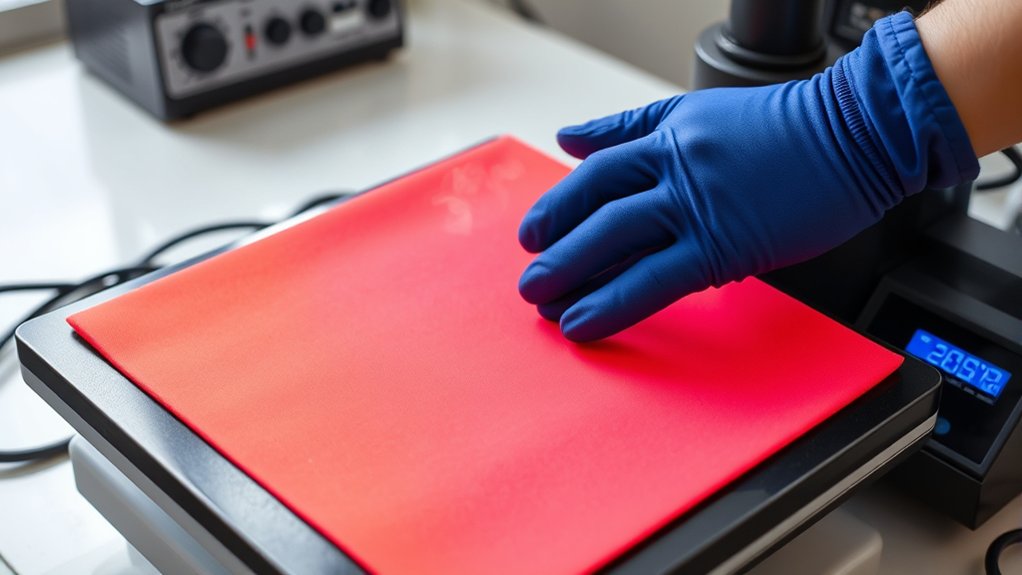
Since polyester requires careful temperature control to prevent damage, you’ll need to follow specific steps when using a heat press. Start by preheating your press to 320°F (160°C), a safe temperature for most polyester designs.
Use medium pressure and a pressing time of 15 seconds to guarantee adhesion without melting fibers. Always place a Teflon sheet or parchment paper between the heat source and fabric to distribute heat evenly.
| Step | Action |
|---|---|
| Temperature | Set to 320°F (160°C) |
| Pressure | Apply medium pressure |
| Duration | Press for 15 seconds |
These heat press techniques optimize transfer quality while preserving polyester’s integrity. Following this method minimizes risks and yields professional results.
Protect Polyester Fabric From Heat Press Damage and Avoid Mistakes
To protect your polyester fabric during heat pressing, you need to set the temperature between 270°F and 300°F, avoiding higher heat that can cause melting or distortion. Use a protective sheet, like a Teflon or parchment paper, between the heat plate and fabric to distribute heat evenly and prevent scorching.
These precautions minimize damage and guarantee a clean, professional transfer.
Heat Settings For Polyester
When heat pressing polyester, you must carefully control the temperature to prevent fabric damage such as melting or discoloration. Set your heat press between 270°F to 300°F (132°C to 149°C) for 100% polyester, adjusting slightly for polyester blends based on fabric content.
Higher temperatures risk melting the synthetic fibers, while lower settings may cause incomplete heat transfer. Apply medium pressure and limit dwell time to 10-15 seconds to avoid scorching.
Always conduct a test press on a scrap piece to optimize settings for your specific heat transfer material and polyester type. Precision in temperature, pressure, and timing guarantees a secure transfer without compromising fabric integrity or color vibrancy.
Avoid exceeding recommended settings to maintain polyester’s durability and appearance during heat transfer.
Protective Materials To Use
Protective materials play an essential role in safeguarding polyester fabric from heat press damage and preventing common mistakes during transfer. When working with 100% polyester, you should always use heat resistant sheets or protective covers between the heat press platen and the fabric.
These materials distribute heat evenly, reducing the risk of scorching or melting the polyester fibers. Heat resistant sheets, typically made from silicone or Teflon, provide a non-stick barrier that prevents adhesive or ink from sticking to the press or fabric.
Protective covers, such as parchment paper or specialized heat press sheets, also shield the fabric surface from direct contact with the press, minimizing pressure marks and discoloration. By incorporating these materials, you guarantee consistent transfer quality and extend the lifespan of your polyester garments during heat pressing.
Tips for Long-Lasting Heat Press Designs on Polyester
Achieving durable heat press designs on polyester requires careful control of temperature, pressure, and dwell time to prevent fabric damage and guarantee ink adhesion. To maximize design durability and guarantee ideal fabric care, follow these technical tips:
Use a temperature between 320°F and 350°F; higher heat risks melting polyester fibers. Apply medium pressure to avoid fabric distortion without compromising ink transfer.
Limit dwell time to 10-15 seconds to reduce thermal stress on the fabric. Always use a protective Teflon sheet or parchment paper to shield the polyester surface.
Frequently Asked Questions
Can Heat Pressing Affect the Moisture-Wicking Properties of Polyester?
Yes, heat pressing can alter moisture retention in polyester by affecting its fiber structure during heat transfer. You should control temperature and duration precisely to maintain the fabric’s moisture-wicking properties and avoid performance degradation.
Is Heat Pressing on Polyester Safe for Children’s Clothing?
You can safely heat press polyester for children’s clothing if you strictly follow safety standards, ensuring no harmful residues or fabric damage.
Prioritize children’s comfort by testing fabric softness and breathability after pressing to maintain ideal wearability.
How Does Heat Pressing Polyester Compare to Screen Printing?
You know what they say, “The proof is in the pudding.” Heat pressing on polyester offers quicker application and excellent heat transfer durability, while screen printing techniques provide richer colors but may require longer curing times for lasting results.
Can You Heat Press on Polyester Blends With Other Fabrics?
Yes, you can heat press on polyester blends, but you’ll need to adjust temperature and time settings carefully. Different fabric components affect heat tolerance, so test samples to prevent scorching or deformation during the heat press process.
What Are the Environmental Impacts of Heat Pressing Polyester?
You should consider that heat pressing polyester can release chemical emissions, impacting air quality. To minimize environmental harm, adopt sustainable practices like using low-emission inks, efficient machines, and proper ventilation during the heat pressing process.
Conclusion
Heat pressing on 100% polyester is like steering a delicate balance—too much heat, and you risk melting the fabric; too little, and the design won’t adhere properly.
By mastering precise temperature, timing, and materials, you guarantee your creation stands strong like a well-forged tool. Protecting polyester from damage isn’t just technique—it’s respecting the fabric’s limits.
This approach turns your heat press into a reliable instrument for lasting, flawless designs when you heat press on 100% polyester.