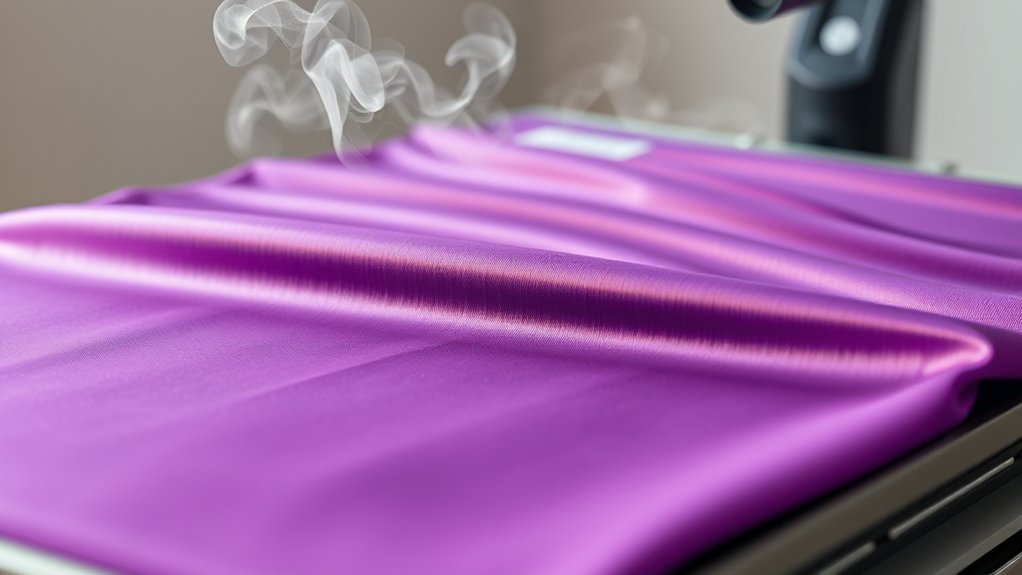

You can heat press nylon safely by carefully managing temperature, pressure, and time to prevent melting or distortion.
Heat pressing nylon requires precise control to maintain the fabric’s integrity and achieve the best results.
Use moderate heat between 270°F and 300°F with light to medium pressure for no more than 15 seconds. Always protect the fabric with a Teflon sheet to avoid direct contact with the heat press.
Test a small swatch first to guarantee durability and adhesion. Applying vinyl made for flexible fabrics helps avoid peeling or cracking.
Exploring this further will reveal key techniques and common pitfalls to watch for.
Key Takeaways
- Yes, nylon can be heat pressed using moderate temperatures and careful technique to avoid damage.
- Ideal heat press settings for nylon are 270°F to 300°F with light to medium pressure for 10-15 seconds.
- Always use a protective barrier like a Teflon sheet to prevent direct heat contact and fabric distortion.
- Pre-test a small swatch of nylon to ensure the heat press settings do not melt or warp the fabric.
- Use heat transfer vinyl specifically designed for nylon to ensure proper adhesion and durability.
Can You Heat Press Nylon Without Damaging It?
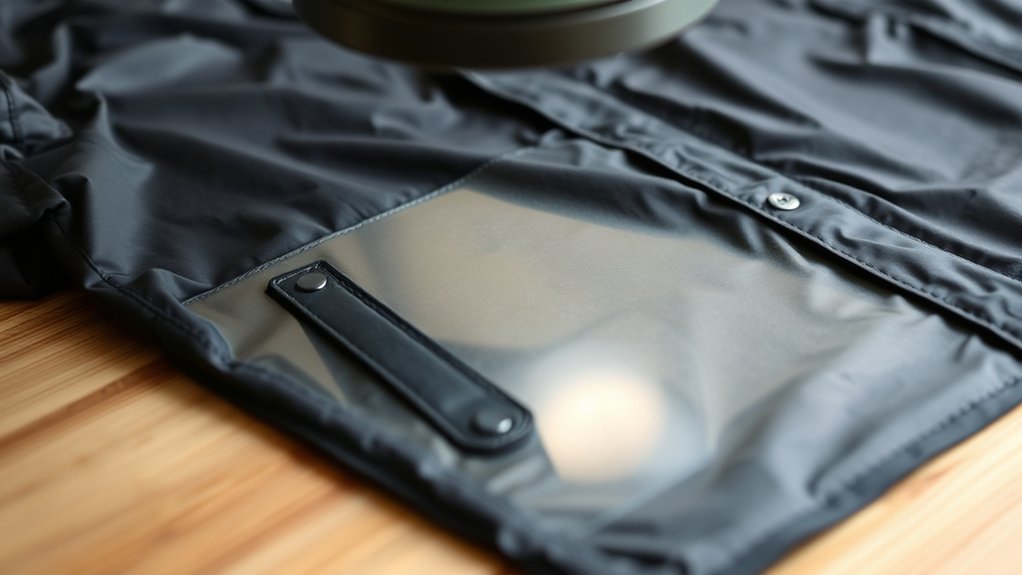
How can you heat press nylon without causing damage? You must carefully balance temperature, pressure, and time to maintain nylon durability. Nylon is sensitive to high heat; excessive temperature can melt or distort its fibers, compromising structural integrity.
Effective heat transfer requires moderate heat settings and a protective barrier, like a Teflon sheet, to distribute heat evenly and prevent direct contact with the press. Applying light to medium pressure minimizes fabric stress, avoiding deformation.
Short heat press durations reduce exposure, preserving nylon’s mechanical properties. By controlling these variables precisely, you achieve successful heat transfer without impairing nylon’s durability.
Always test on a fabric sample first, ensuring ideal settings that maintain appearance and strength while providing effective adhesion for your design.
What Heat Press Settings Work Best for Nylon?
Although nylon requires careful handling, you can optimize your heat press settings by selecting a temperature range between 270°F and 300°F. Apply light to medium pressure and limit the pressing time to 10-15 seconds. These parameters accommodate nylon characteristics such as low melting point and sensitivity to excessive heat, preventing fabric damage while guaranteeing effective adhesion.
| Parameter | Recommended Range | Notes |
|---|---|---|
| Temperature | 270°F – 300°F | Avoid higher to prevent melting |
| Pressure | Light to Medium | Guarantees fabric integrity |
| Time | 10–15 seconds | Minimizes heat exposure |
| Fabric Type | Nylon variants | Adjust settings slightly as needed |
| Cooling | Immediate cooling | Prevents heat retention damage |
Adjusting heat settings within these limits maximizes transfer quality without compromising nylon’s structural properties.
Preparing Nylon for Heat Pressing: Fabric and Equipment Tips
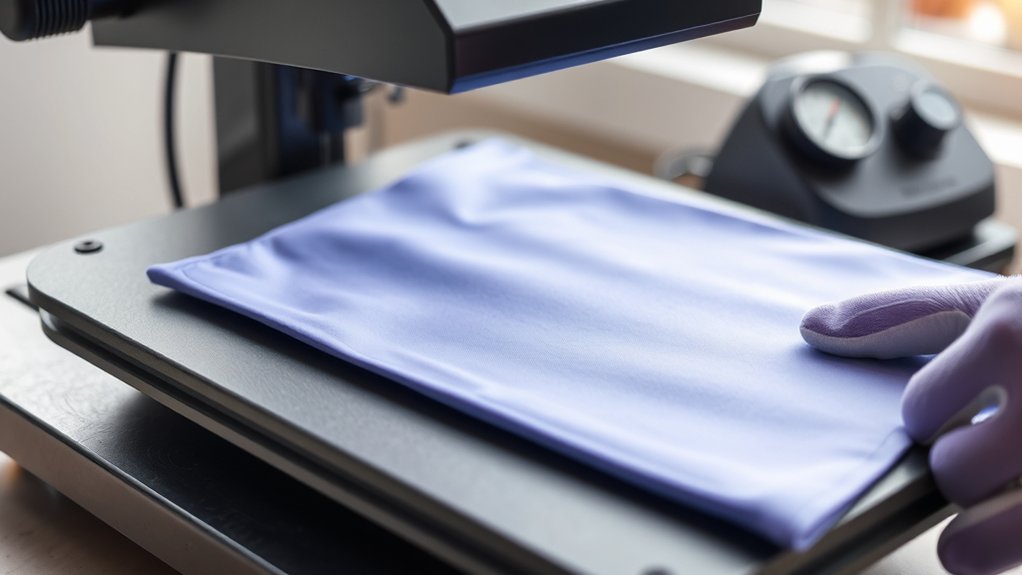
Mastering the ideal heat press settings lays the groundwork, but preparing both your nylon fabric and equipment guarantees consistent results. Start by understanding nylon characteristics, its sensitivity to high temperatures and tendency to melt or warp under excessive heat.
Pre-wash the fabric to remove finishes that could interfere with adhesion. Always test a small swatch first. For heat press equipment, verify your machine provides precise temperature control and uniform pressure distribution.
Pre-wash nylon to ensure adhesion and test a swatch to verify heat press precision and pressure consistency.
Use a Teflon sheet or protective cover to shield nylon from direct contact with the platen, preventing scorching. Adjust the pressure to medium-low to accommodate nylon’s delicate weave, avoiding fabric distortion.
Finally, maintain your heat press regularly to verify consistent heat output and pressure, which are critical for working effectively with nylon materials.
Tips for Applying Heat Transfer Vinyl on Nylon With a Heat Press
Applying heat transfer vinyl (HTV) on nylon demands precise control of temperature, pressure, and timing to prevent fabric damage and secure strong adhesion. When working with different nylon fabric types, you must adjust vinyl adhesion techniques accordingly. Here’s how to optimize your heat press process:
- Set temperature between 270°F and 300°F (132°C – 149°C): Nylon melts at lower temperatures, so keep heat moderate.
- Apply medium pressure: Too much pressure can distort nylon fibers; moderate pressure ensures vinyl bonds without fabric damage.
- Limit pressing time to 10-15 seconds: Excessive heat exposure compromises nylon’s integrity and vinyl adhesion.
Common Mistakes to Avoid When Heat Pressing Nylon
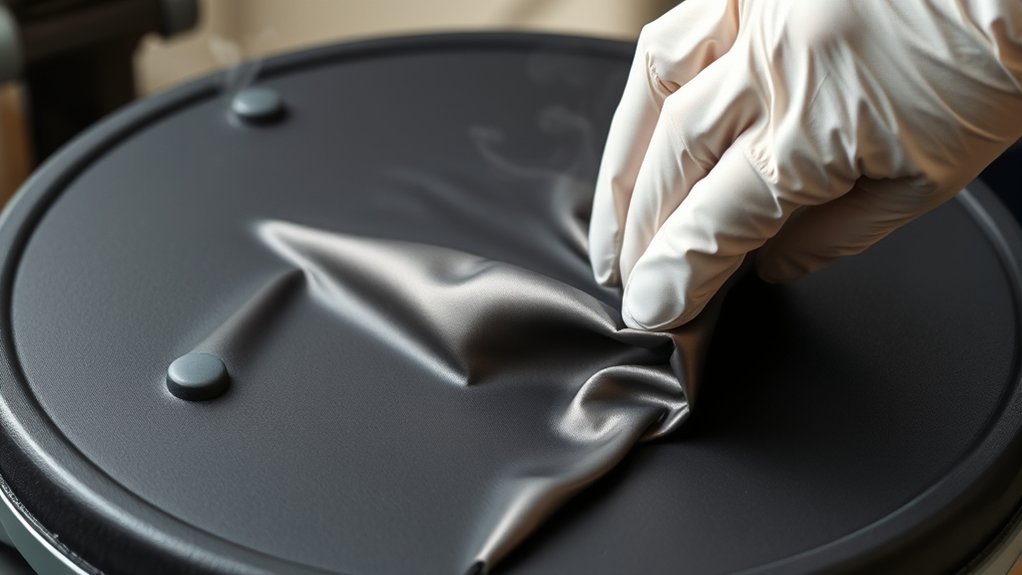
When you heat press nylon, overlooking key parameters like temperature, pressure, or duration can cause fabric damage or weak vinyl adhesion. One common mistake is using inappropriate heat settings; too high a temperature can melt or warp nylon, while too low may prevent proper vinyl bonding. Always verify the fabric’s heat tolerance and adjust accordingly.
Another error involves poor vinyl selection. Using vinyl not designed for synthetic fibers results in peeling or cracking. Opt for vinyl specifically formulated for nylon or flexible fabrics.
Additionally, applying excessive pressure can distort the fabric’s texture, so calibrate your press carefully. Finally, neglecting to use a protective cover sheet can cause direct heat damage. Avoid these pitfalls to guarantee durable, professional-quality results when heat pressing nylon.
Frequently Asked Questions
Can You Wash Heat-Pressed Nylon Without Damaging the Design?
You can wash heat-pressed nylon without damaging the design by using gentle washing techniques like cold water and mild detergent. This preserves design durability and prevents peeling or fading, ensuring the heat-pressed image remains intact longer.
Are There Specific Types of Heat Transfer Vinyl Best for Nylon?
About 70% of heat transfer vinyls lack nylon compatibility, so you’ll need specialized vinyl designed for synthetic fabrics. These guarantee strong adhesion and durability on nylon, preventing peeling and maintaining vibrant designs over time.
How Long Does a Heat-Pressed Design Last on Nylon Fabric?
Your heat-pressed design on nylon typically lasts several wash cycles, but durability depends on nylon properties like moisture resistance and heat tolerance.
Proper temperature and pressure settings enhance design durability, ensuring longer-lasting adhesion without fabric damage.
Can You Use a Home Iron Instead of a Heat Press on Nylon?
You’re maneuvering a delicate dance: home iron vs heat press on nylon demands precision. Home irons often lack consistent nylon heat settings, risking burns or poor adhesion.
Heat presses guarantee controlled, uniform temperature and pressure for durable, professional results.
Is Nylon Safe to Heat Press With Eco-Friendly Vinyl Materials?
Yes, nylon compatibility with eco-friendly vinyl options depends on temperature control; you’ll need to use low heat settings and test adhesion carefully to avoid melting or warping.
This ensures best results without compromising fabric integrity.
Conclusion
Now that you know nylon’s sensitivity demands precise heat press settings, are you ready to apply your designs without ruining your fabric? Remember, balancing temperature and pressure is essential—too hot or too firm, and you risk melting or warping.
But get it just right, and your heat transfers will be flawless. So, will you take the careful steps needed to master nylon heat pressing, or will you risk costly mistakes?
The choice is yours when it comes to how you heat press nylon.