
You can heat press 100% polyester, but you need to control temperature, time, and pressure carefully to avoid melting or scorching the fibers.
Set your heat press between 270°F and 300°F, apply medium pressure around 30-40 psi, and limit pressing time to 10-15 seconds.
Always pre-press the fabric to remove moisture and wrinkles, and use compatible transfer materials designed for polyester.
Following these guidelines guarantees a clean transfer and fabric integrity.
Uncover what else you can do to optimize your results.
Key Takeaways
- Yes, 100% polyester can be heat pressed, but temperature should be controlled between 270°F and 300°F to avoid fiber melting.
- Use medium pressure (30-40 psi) and limit pressing time to 10-15 seconds for optimal transfer quality.
- Pre-press polyester fabric to remove moisture and wrinkles before applying the heat transfer.
- Select heat transfer materials like PU or PVC films designed specifically for polyester fabrics.
- Always test on a fabric swatch to find the best temperature, time, and pressure settings for your specific polyester type.
Special Care Needed for Heat Pressing Polyester
When heat pressing 100% polyester, you need to adjust the temperature and time settings carefully to avoid damaging the fabric. Different polyester types respond uniquely to heat, so understanding the specific polyester or fabric blend you’re working with is essential.
Blends containing polyester mixed with cotton or other fibers may require lower heat and shorter press durations than pure polyester. You should always test a small fabric swatch to determine the optimum settings before proceeding with the entire piece.
Additionally, avoid direct contact between the heat platen and the fabric by using a protective cover sheet, which helps prevent melting or scorching. By recognizing the characteristics of your polyester types and fabric blends, you guarantee a successful heat press process without compromising the material’s integrity.
Best Temperature, Time, and Pressure Settings for 100% Polyester
Adjusting your heat press settings properly guarantees you avoid damaging 100% polyester fabric. Set your temperature between 270°F and 300°F (132°C to 149°C) to prevent melting or scorching.
Apply medium pressure, around 30-40 psi, to facilitate even contact without crushing the fabric’s fibers. Limit pressing time to 10-15 seconds; exceeding this can cause fabric distortion or color fading.
Use medium pressure (30-40 psi) and press for 10-15 seconds to protect fabric quality and color vibrancy.
When working with polyester blends, you may need to adjust these settings slightly, as other fabric types in the blend can alter heat tolerance and pressure sensitivity. Always test on a small fabric piece first.
Maintaining precise control over temperature, time, and pressure is crucial to achieve ideal transfer results while preserving the integrity of 100% polyester and polyester blend materials.
How to Prepare Polyester Fabric Before Heat Pressing
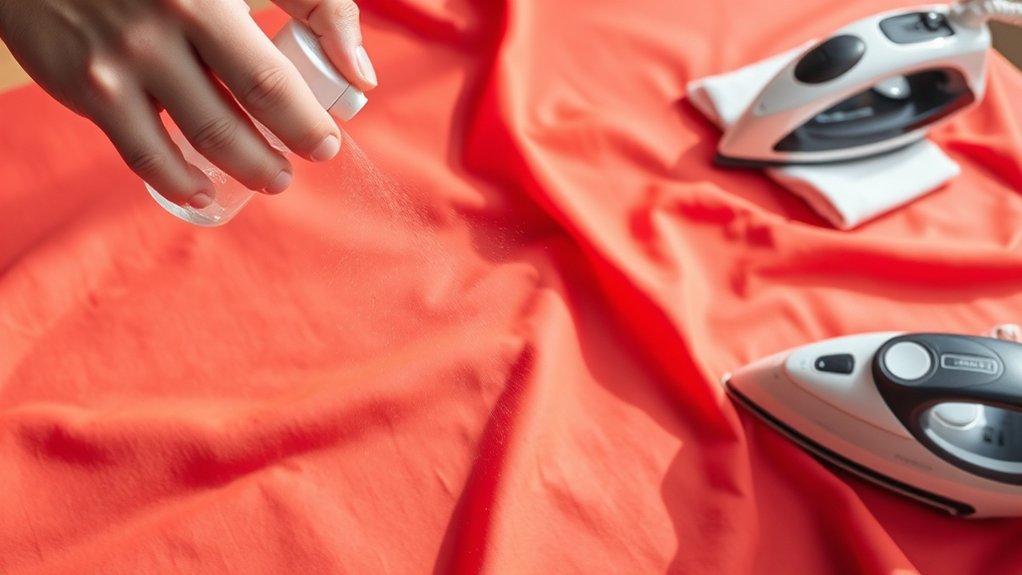
Before heat pressing, make sure you clean the polyester fabric thoroughly to remove any dirt or oils that could affect adhesion. Set your heat press to the recommended pre-press temperature and apply it briefly to eliminate moisture and wrinkles.
Always run test presses on sample pieces to verify settings and fabric compatibility before proceeding.
Cleaning Polyester Fabric
Although polyester is a durable fabric, cleaning it thoroughly prior to heat pressing is essential to guarantee optimal adhesion and print quality. To maintain polyester’s fabric durability, start by washing the garment with a mild detergent in cold or warm water, avoiding bleach or fabric softeners that can impair adhesion.
Confirm the fabric is free from oils, dirt, and residues by rinsing thoroughly. After washing, dry the polyester completely using low heat or air drying to prevent heat damage.
For polyester maintenance, avoid starch or heavy sizing products, as they create barriers between the fabric and heat transfer materials. Proper cleaning guarantees the surface is suitably prepared, enhancing print longevity and vibrancy when you apply heat pressing techniques.
Pre-Press Heat Settings
To prepare polyester fabric properly for heat pressing, you’ll need to set your heat press to the correct temperature and time parameters. Start by adjusting the heat press to a moderate temperature, typically between 270°F and 300°F (132°C to 149°C).
The pre press technique involves applying heat for 3 to 5 seconds to remove moisture and wrinkles from the fabric, ensuring ideal fabric compatibility with heat transfers. This step prevents improper adhesion and fabric distortion during the final press.
Avoid exceeding recommended temperatures to prevent melting or scorching polyester fibers. Additionally, use a Teflon sheet or protective parchment paper as a barrier to protect the fabric surface.
Consistently applying these pre press heat settings guarantees a smooth, clean surface and improves transfer durability on 100% polyester materials.
Test Press Samples
When you start heat pressing 100% polyester, testing press samples is essential to guarantee best results. Begin by selecting fabric swatches identical to your final material. Apply your intended heat press settings—temperature, pressure, and time—on these samples.
Conduct a thorough sample evaluation by inspecting for any signs of scorching, color distortion, or adhesive failure. Adjust your parameters based on these observations to prevent damage during full production.
Test pressing allows you to fine-tune the heat press process, ensuring ideal ink adhesion and fabric integrity. Skipping this step risks costly errors and inconsistent quality.
Safe Heat Transfer Materials for 100% Polyester
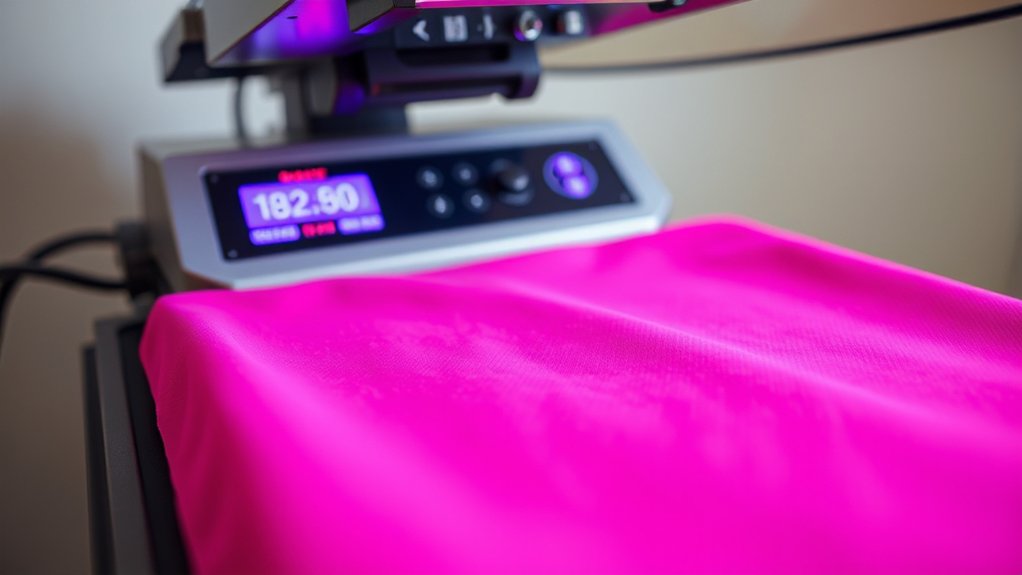
Since 100% polyester requires controlled heat application, choosing the right heat transfer materials is crucial to avoid fabric damage. You should prioritize materials specifically designed for polyester, such as polyurethane (PU) and polyvinyl chloride (PVC) heat transfer films, which exhibit strong adhesion without requiring excessive heat.
Safety precautions include verifying the material compatibility with polyester to prevent melting or discoloration. Avoid using sublimation transfers at high temperatures unless they are rated for polyester. Additionally, low-temperature heat transfer vinyl (HTV) variants engineered for synthetic fibers provide reliable results.
Always check manufacturer guidelines to confirm your chosen transfer material aligns with polyester’s thermal limits. By selecting compatible heat transfer materials and adhering to safety precautions, you can maintain fabric integrity and achieve durable, professional-quality heat press results.
How to Avoid Scorching or Melting Polyester When Heat Pressing
Although polyester’s heat sensitivity poses challenges, you can prevent scorching or melting by carefully controlling temperature, pressure, and pressing time. Set your heat press to a maximum of 300°F (149°C), as exceeding this risks damaging the fabric.
Use medium pressure to avoid compressing the fibers excessively, which can cause deformation. Limit pressing time to 10-15 seconds to maintain fabric integrity. For scorch prevention, always test on a small fabric swatch to verify heat compatibility.
Additionally, verify fabric compatibility by confirming that your transfer materials and protective sheets are suitable for polyester. Utilize Teflon sheets or parchment paper as a heat barrier to distribute heat evenly and shield the polyester surface.
Following these steps guarantees favorable results without compromising the polyester’s quality during heat pressing.
Troubleshooting Heat Press Problems With Polyester
Mastering temperature, pressure, and timing reduces the risk of common heat press issues with polyester, but problems can still arise. If you notice polyester shrinkage, verify that your heat press settings aren’t exceeding 320°F, as excessive heat deforms fibers.
Uneven transfers often indicate inconsistent pressure; adjust the platen to guarantee uniform contact. When heat transfer techniques produce blurring or peeling, confirm the transfer paper’s compatibility with polyester and the duration aligns with manufacturer guidelines.
If adhesive residue remains, increase pressure slightly or extend pressing time incrementally. Always perform test presses on scrap fabric to identify ideal settings before final application. Troubleshooting these variables systematically helps you maintain fabric integrity and achieve crisp, durable transfers on 100% polyester garments.
Additional Tips for Perfect Heat Pressing Results on Polyester
To achieve perfect heat pressing results on 100% polyester, you need to set the temperature between 300°F and 320°F with medium pressure. Always pre-press the fabric for 5 seconds to remove moisture and wrinkles before applying your design.
These steps guarantee better adhesion and prevent fabric damage during the heat transfer process.
Temperature And Pressure Settings
Achieving ideal temperature and pressure settings is essential when heat pressing 100% polyester to prevent fabric damage and guarantee vibrant, durable transfers. Set your heat press to a temperature between 270°F and 300°F (132°C to 149°C), as higher temperatures can melt polyester fibers.
Apply medium pressure, firm enough to confirm proper heat transfer but not so much that it crushes the fabric’s texture. When working with polyester blends, adjust temperature slightly lower if the blend contains sensitive fibers to avoid scorching.
Use a consistent pressure throughout the heat transfer process, typically around 40-60 psi, to secure even adhesion. Avoid excessive pressure that may cause puckering or distortion. By precisely controlling these parameters, you confirm that your heat transfer adheres flawlessly while maintaining the integrity of both 100% polyester and polyester blends.
Pre-Pressing Fabric Preparation
Before applying heat and pressure, verify you thoroughly pre-press the polyester fabric to eliminate moisture and wrinkles that could interfere with transfer adhesion. Different fabric types respond uniquely to heat, so adapting your pressing techniques accordingly is essential.
For 100% polyester, a brief pre-press at moderate temperature removes residual moisture and flattens fibers, ensuring a smooth surface. Avoid prolonged pressing, as polyester is heat-sensitive and can melt or distort.
Use a teflon sheet or protective cover sheet to prevent scorching and provide even heat distribution. By mastering these fabric-specific pre-pressing techniques, you enhance transfer durability and print clarity.
Proper pre-pressing sets the foundation for ideal heat pressing results, minimizing defects and ensuring consistent, professional-quality polyester customization.
Frequently Asked Questions
Can You Heat Press Polyester Blends as Easily as 100% Polyester?
You can heat press polyester blends, but they require careful temperature control to maintain polyester durability. Blend compatibility varies, so you must adjust time and heat settings precisely to avoid damaging synthetic fibers or compromising the print quality.
Does Heat Pressing Affect the Colorfastness of Polyester Fabric?
Heat pressing can cause color fading if done improperly, but when you use the correct temperature and time, you preserve fabric durability and maintain colorfastness on polyester. This ensures vibrant, long-lasting prints without compromising the material.
What Types of Heat Press Machines Are Best for Polyester?
For flawless finishes, choose clamshell presses or swing away machines. Clamshells offer compact convenience, while swing away models provide precise pressure control and heat distribution. Both are perfect for preserving polyester’s integrity during heat pressing.
Can You Use Heat Press Vinyl on Polyester Garments?
Yes, you can use heat press vinyl on polyester garments, but guarantee ideal vinyl adhesion by adjusting heat settings carefully.
Polyester requires lower temperatures, around 270°F, to prevent melting while securing proper vinyl bonding.
Is It Safe to Heat Press Polyester Items for Commercial Use?
You can safely heat press polyester items commercially if you follow guidelines precisely.
Polyester durability depends on correct temperature and time settings, typically around 305°F for 15 seconds, to avoid melting or damage while ensuring lasting prints.
Conclusion
When heat pressing 100% polyester, you’ll want to treat your fabric with gentle care to avoid any unwelcome surprises like scorching or melting. By carefully selecting the right temperature, time, and pressure, and prepping your fabric properly, you’ll preserve its integrity while achieving crisp, vibrant results.
Remember, a delicate touch not only protects your polyester but also guarantees your designs stay flawless, making every project a smooth success. Ultimately, mastering the technique of how to heat press 100 polyester ensures your fabric remains intact and your prints look their best.