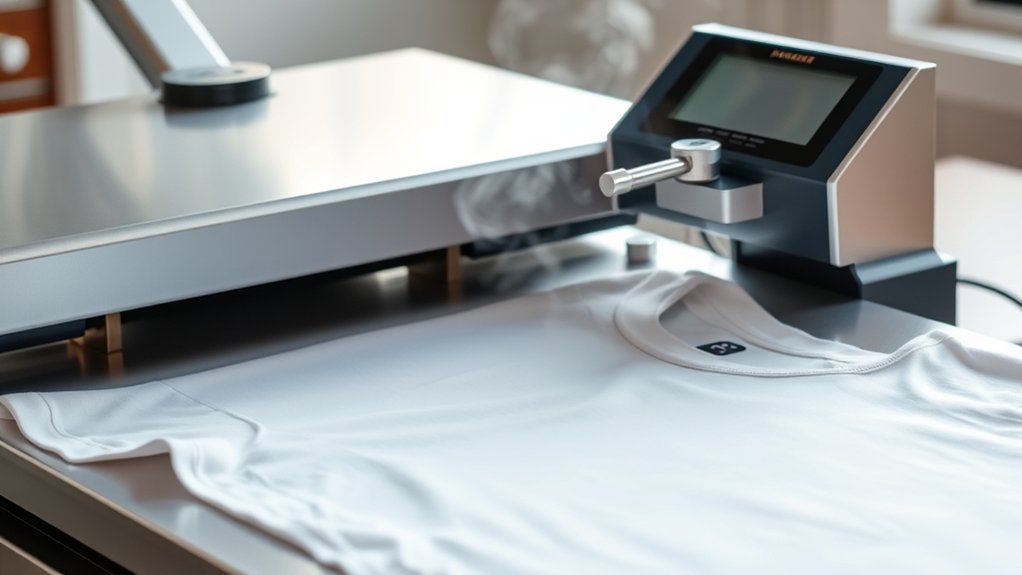

You can heat press at home safely by using a heat press machine designed for home use, ensuring it fits your workspace and electrical capacity. This approach allows you to create custom designs conveniently and efficiently.
Always maintain a well-ventilated area and wear heat-resistant gloves to prevent burns. Preheat your garment, set the correct temperature and pressure, and apply firm, even pressure for the right time.
Avoid leaving the machine unattended, and regularly inspect it for wear. Understanding these basics prepares you to master the craft effectively.
Key Takeaways
- Heat pressing uses controlled heat and pressure to transfer designs onto fabrics and other materials effectively.
- You can safely heat press at home using equipment with safety features and proper ventilation.
- Preheating garments and aligning designs are essential steps for successful heat pressing.
- Adjustable temperature, pressure, and timing settings ensure proper bonding and avoid damage.
- Avoid common mistakes like improper calibration, uneven pressure, and skipping pre-pressing to ensure quality results.
What Is Heat Pressing And How Does It Work?
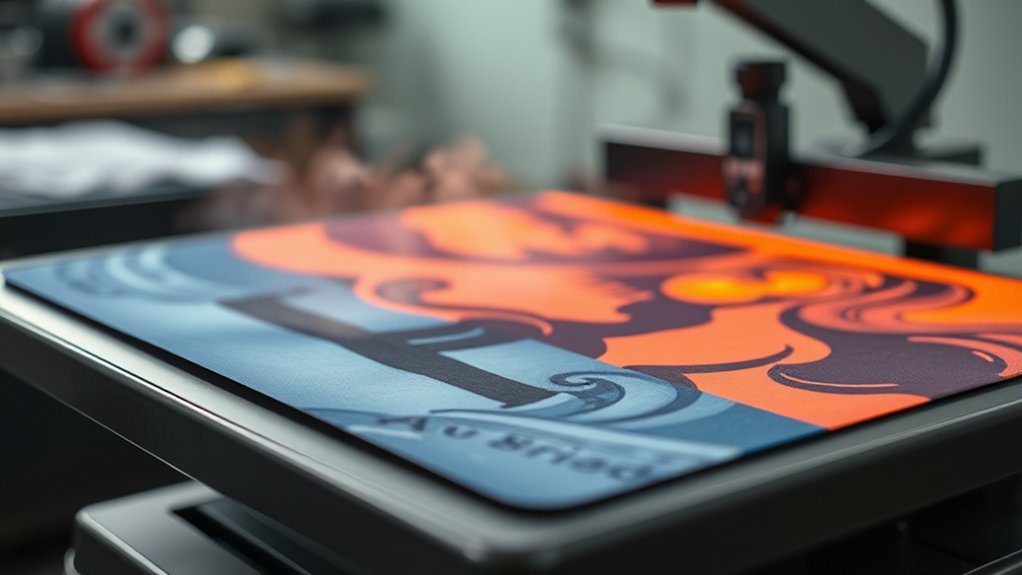
Heat pressing is a technique that uses controlled heat and pressure to transfer designs onto materials like fabric, metal, or ceramics. In this process, you place a heat transfer substrate, such as vinyl or transfer paper, on the target material.
The heat press machine then applies precise temperature and pressure for a specific duration, causing the design to adhere firmly. Understanding heat transfer is essential here; the method relies on thermoplastic properties to bond ink or vinyl with the base material.
Precise heat and pressure activate thermoplastic properties, ensuring designs bond firmly to the material.
Different design techniques, like sublimation or vinyl pressing, require adjusting temperature, pressure, and time to achieve ideal results. By mastering these variables, you guarantee durable, high-quality prints that resist fading or peeling.
Heat pressing offers a reliable, repeatable way to create professional-grade transfers efficiently.
Can You Heat Press At Home Safely?
You can heat press at home safely by following essential safety precautions like using heat-resistant gloves and keeping the area well-ventilated.
Choose equipment designed for home use that fits your workspace and electrical capacity. Set up a stable, flat surface free from clutter to guarantee precise and secure operation.
Essential Safety Precautions
Although operating a heat press at home can be straightforward, you must follow essential safety precautions to prevent burns, electrical hazards, and equipment damage. Prioritize heat press safety by always wearing heat-resistant gloves and ensuring your workspace is clear of flammable materials.
Regular equipment maintenance is vital; inspect power cords and heating elements for wear before each use to avoid electrical faults. Additionally, never leave the heat press unattended while powered on to minimize fire risk. Follow these core guidelines:
- Use heat-resistant gloves and protective gear to avoid burns.
- Inspect and maintain electrical components regularly for safe operation.
- Keep your work area clean and free from combustible materials.
Suitable Home Equipment
Maintaining safety starts with selecting the right equipment designed for home use. When choosing heat press types for your home, prioritize models with built-in safety features like automatic shut-off, temperature control, and insulated handles.
Compact clamshell or swing-away heat presses are ideal home equipment options, as they offer precise pressure adjustment and require minimal space. Avoid industrial-grade machines, which often exceed home power limits and lack user-friendly safety controls.
Confirm the device’s power rating matches your home electrical capacity to prevent overloads. Always inspect the heat platen for even heating and damage before use.
Workspace Setup Tips
Three essential factors determine a safe and efficient heat press workspace: organization, ventilation, and accessibility. To optimize your workspace organization, designate a clear, stable surface for your heat press placement, guaranteeing it’s away from flammable materials.
Adequate ventilation is vital to dissipate heat and fumes effectively. Position your heat press near a window or use an exhaust fan. Accessibility means keeping all tools and materials within reach, minimizing movement during operation to reduce accidents.
Allocate a dedicated, sturdy table for heat press placement, maintaining a clutter-free area. Guarantee proper airflow by situating the workspace near ventilation sources.
Organize tools and heat transfer materials in labeled containers close to your press.
How To Pick A Heat Press For Your Home
When choosing a heat press for your home, consider the size to match your available workspace and the dimensions of your projects. Make certain the machine offers precise temperature and pressure controls for consistent results.
Finally, balance your budget with the features you need to avoid overspending or missing critical functions.
Size And Workspace
Although heat presses come in various sizes, selecting one that fits your available workspace is essential for efficient operation. Begin by measuring your workspace dimensions accurately, ensuring you account for both the heat press footprint and clearance needed for safe equipment placement.
Consider the size of your typical projects to determine the platen size that matches your needs without overwhelming your space.
Keep these factors in mind:
- Confirm the heat press’s closed and open dimensions to avoid spatial conflicts.
- Allocate extra room around the equipment for ventilation and ease of movement.
- Evaluate your workspace layout to position the heat press near power outlets and work surfaces.
Temperature And Pressure Control
Since temperature and pressure directly impact your heat press results, you need precise control over both to secure consistent quality. Start by verifying the heat press offers accurate temperature calibration, allowing you to set and maintain exact temperatures critical for different materials.
Look for models with digital displays and built-in sensors to avoid fluctuations. Next, focus on pressure adjustment mechanisms. Choose a heat press that lets you easily modify pressure levels, either via a knob or lever, to accommodate varying thicknesses and fabric types.
Proper pressure ensures ink or transfers bond correctly without damaging the substrate. Avoid machines with fixed or imprecise pressure settings, as they limit your control and affect output quality. Mastering temperature calibration and pressure adjustment will elevate your home heat press projects.
Budget And Features
Controlling temperature and pressure lays the foundation for successful heat pressing, but selecting the right machine also depends heavily on your budget and desired features. When evaluating budget factors, balance cost with durability and warranty coverage. Feature comparisons should focus on usability and versatility to match your project needs.
Key points to take into account:
- Heat platen size and uniformity: Larger platens handle bigger designs; uniform heat ensures consistent results.
- Pressure adjustment mechanism: Manual vs. automatic adjustments affect precision and ease of use.
- Additional functionalities: Timer settings, digital controls, and portability impact workflow efficiency.
What Materials Work Best For Heat Pressing?
When selecting materials for heat pressing, you’ll want to focus on those that withstand high temperatures and maintain their structural integrity. Cotton and polyester blends are ideal fabric types due to their heat tolerance and ability to absorb transfer inks effectively.
Avoid delicate or synthetic fabrics that may melt or warp under heat. Additionally, choose transfer papers compatible with your fabric; for instance, inkjet transfer papers suit cotton, while sublimation papers work best with polyester.
Always verify the manufacturer’s temperature and pressure guidelines for both fabric and transfer paper to guarantee maximum adhesion and durability. By selecting the correct fabric types and transfer papers, you’ll achieve vibrant, long-lasting designs without damaging your materials during the heat pressing process.
How To Heat Press Your First Design
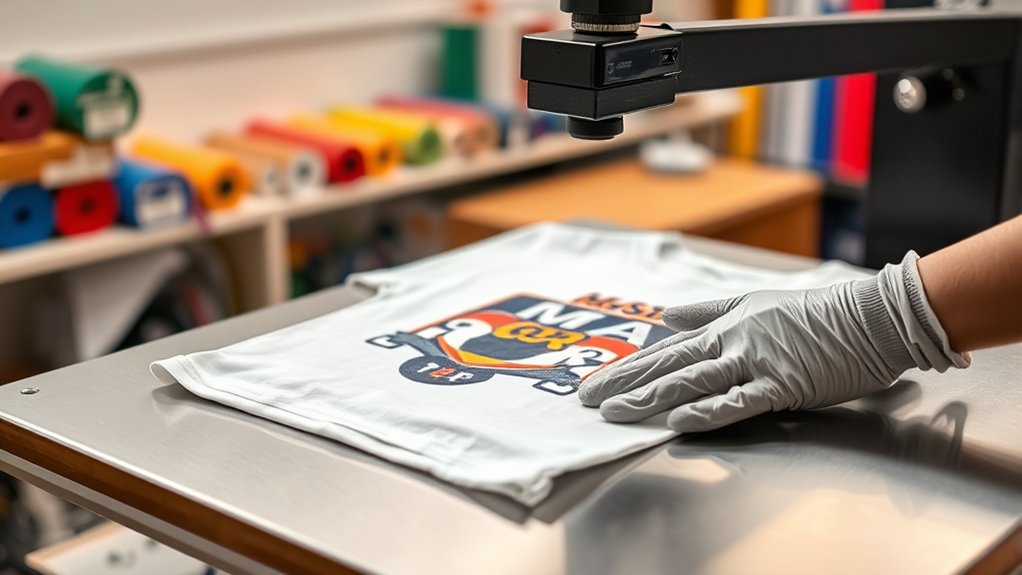
Choosing the right materials sets the foundation for successful heat pressing, but applying your first design requires careful preparation and exact steps. Begin by selecting the appropriate transfer type for your fabric; each demands specific temperature, pressure, and time settings.
Selecting the right materials and transfer type is essential for precise temperature, pressure, and timing in heat pressing.
Next, focus on precise design placement. Align your transfer to avoid misprints or off-center results. Before pressing, preheat the garment to remove moisture and wrinkles, ensuring better adhesion.
Follow these steps:
- Set the heat press temperature and time according to the transfer type.
- Position the design carefully, using a ruler or guide for accuracy.
- Apply firm, even pressure during pressing to secure the transfer.
Common Heat Pressing Mistakes To Avoid
How can you guarantee every heat press session delivers flawless results? Start by avoiding common errors that compromise your work. First, never neglect temperature calibration; an inaccurate heat press can scorch or under-adhere your design.
Next, avoid improper pressure settings—too much pressure can damage fabric, too little prevents transfer adhesion. Also, don’t overlook timing: exceeding recommended press duration causes discoloration, while insufficient time yields incomplete transfers.
Another frequent mistake is skipping pre-pressing, which removes moisture and wrinkles for ideal adhesion. Finally, verify you position your design precisely; misalignment leads to crooked prints. By addressing these common errors—temperature, pressure, timing, pre-pressing, and alignment—you’ll consistently produce professional-quality heat press results.
Frequently Asked Questions
Can Heat Pressing Be Used on Ceramics or Glass?
You can heat press on ceramics and glass, but confirm ceramic coatings suit high temperatures and verify glass compatibility to avoid cracking.
Use specialized heat press settings and appropriate transfer materials for ideal adhesion and durability.
How Long Do Heat Press Transfers Typically Last?
You’ll find heat press transfers typically last 20 to 50 washes, depending on materials and care.
To maximize transfer durability and heat press lifespan, always follow manufacturer guidelines and use proper heat, pressure, and time settings.
Are There Eco-Friendly Heat Press Materials Available?
Yes, you can use sustainable materials and eco friendly alternatives like water-based inks and biodegradable transfer films in heat pressing. Choose certified, low-impact products to guarantee durability while minimizing environmental impact during your printing process.
Can Heat Pressing Damage My Clothing Fabric Permanently?
Yes, heat pressing can permanently damage your clothing fabric if you ignore fabric sensitivity and use incorrect heat settings. Always check manufacturer guidelines, test on scrap fabric, and adjust temperature and time carefully to avoid burns or warping.
What Maintenance Does a Heat Press Machine Require?
Like tuning a Stradivarius, your heat press demands precise care. Regular machine cleaning, inspecting for wear, lubricating moving parts, and calibrating temperature guarantee peak heat press care and prevent damage. This maintains consistent performance every use.
Conclusion
Now that you know the nuts and bolts of heat pressing, you can confidently create crisp, clean designs at home. Carefully choose your press, pick proper materials, and practice precise pressing to prevent problems.
Remember, mastering methods means minimizing mistakes and maximizing results. With steady steps and smart safety, you’ll smoothly succeed in your heat pressing projects.
Stay sharp, stay safe, and start stamping stunning styles today! Can you heat press? Absolutely—with the right knowledge and tools, you’re ready to make your mark.