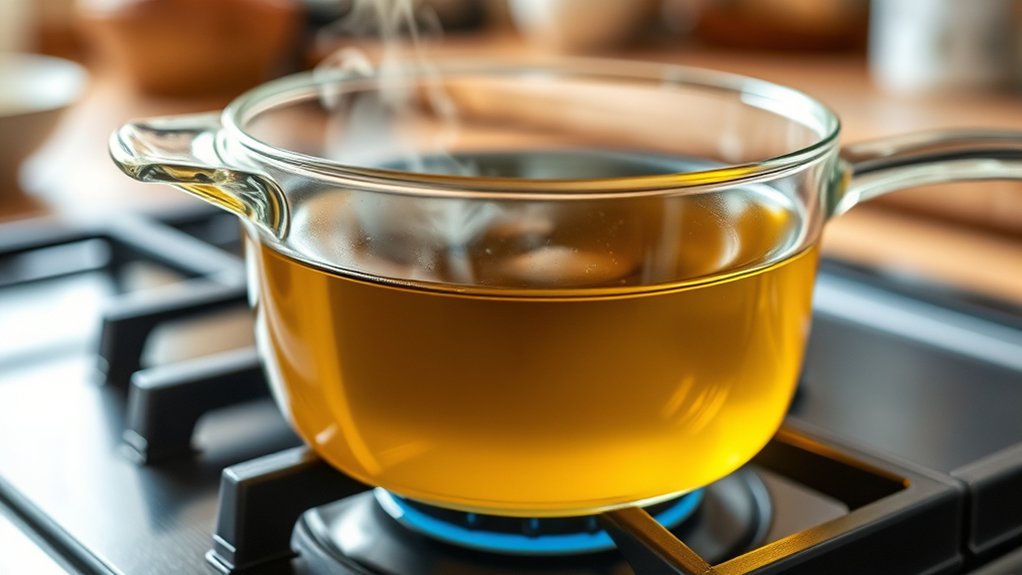

You can heat cold pressed oil, but you should keep the temperature below its smoke point to protect its nutrients and avoid harmful compounds.
Cold pressed oils have lower smoke points than refined oils, so high heat cooking like deep frying isn’t ideal.
Use them for low or medium heat or add them near the end of cooking. This helps preserve their flavor and health benefits.
To understand the best ways to use and heat these oils, keep exploring their properties.
Key Takeaways
- Cold pressed oils can be heated but require caution due to their lower smoke points compared to refined oils.
- Avoid heating cold pressed oils beyond their smoke points to prevent nutrient degradation and harmful compounds formation.
- Use gentle, low to medium heat or add cold pressed oil towards the end of cooking to preserve nutrients.
- High-temperature cooking methods like deep frying should be avoided to maintain oil’s health benefits and flavor.
- For best nutrition and flavor, use cold pressed oils raw in dressings or dips rather than for heating.
What Is Cold Pressed Oil?
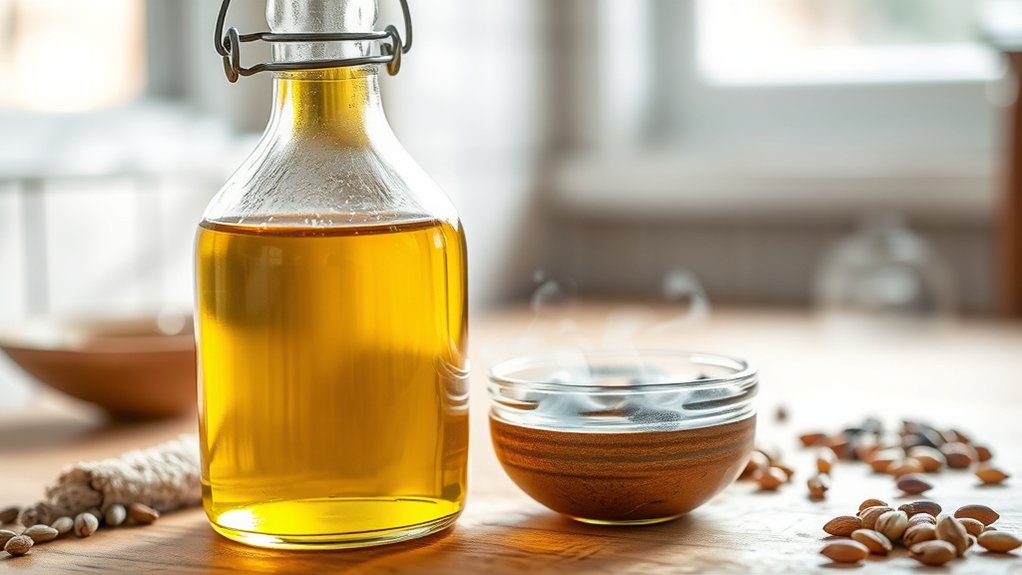
Cold pressed oil is extracted by mechanically pressing seeds or fruits without using heat or chemicals, preserving its natural nutrients and flavor. This extraction method guarantees that the delicate compounds, like antioxidants and essential fatty acids, remain intact, offering you superior nutritional benefits compared to oils processed with heat or solvents.
Because no high temperatures are involved, the oil retains its original aroma and taste, making it a healthier choice. When you choose cold pressed oil, you’re opting for a product that maintains its purity and is less likely to contain harmful residues.
Understanding these extraction methods helps you appreciate why cold pressed oil is often favored for its clean profile and nutrient retention, supporting your overall health and culinary experience.
Can You Safely Heat Cold Pressed Oil?
You can heat cold pressed oils, but it’s important to take into account their lower smoke points compared to refined oils. Heating them beyond these points can degrade nutrients and produce harmful compounds.
Understanding the balance between temperature and nutrient retention helps you cook safely and healthily.
Smoke Points Of Oils
Although many oils can be heated safely, cold pressed oils often have lower smoke points, which limits their suitability for high-temperature cooking. The smoke point is the temperature at which an oil begins to break down, producing smoke and harmful compounds.
Cold pressed oils retain more natural compounds, which can reduce oil stability and lower their smoke points compared to refined oils. For example, cold pressed extra virgin olive oil has a smoke point around 375°F (190°C), while refined oils often endure higher temperatures.
When you heat cold pressed oils beyond their smoke point, you risk degrading nutrients and creating off-flavors. To maintain oil stability and safety, keep the cooking temperature below the specific oil’s smoke point, especially with cold pressed varieties.
This helps you use them effectively without compromising quality or health.
Nutrient Retention When Heated
Heating oils affects more than just their smoke points; it also impacts the nutrients they contain. When you heat cold pressed oils, you risk nutrient degradation, especially of sensitive compounds like vitamins and antioxidants.
These nutrients often give cold pressed oils their health benefits, but they can break down under high temperatures. The heat stability of an oil determines how well it retains these nutrients during cooking. Cold pressed oils generally have lower heat stability compared to refined oils, making them less suitable for high-heat cooking.
To preserve nutrient content, use cold pressed oils for low to medium heat or as finishing oils. Understanding nutrient degradation helps you make better choices and maximize the health benefits of your cooking oils.
What’s the Smoke Point of Cold Pressed Oils, and Why Does It Matter?
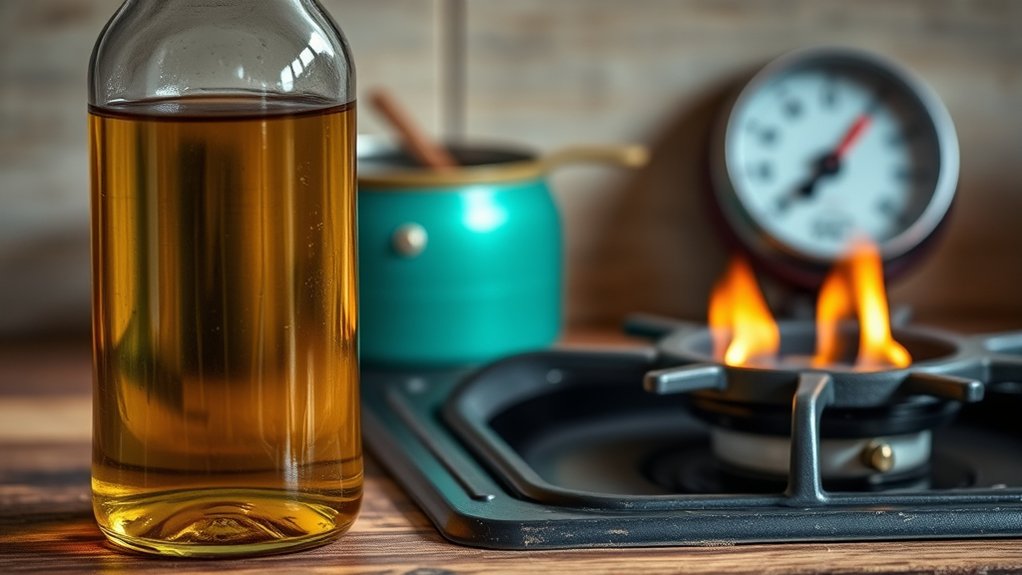
You should know that the smoke point is the temperature at which oil starts to burn and break down, affecting flavor and nutrition.
Cold pressed oils like extra virgin olive or flaxseed have lower smoke points compared to refined oils. Understanding these limits helps you choose the right oil for cooking without compromising quality.
Understanding Smoke Point Basics
Because cold pressed oils retain more natural compounds and impurities, they generally have lower smoke points compared to refined oils. The smoke point is the temperature at which an oil starts to smoke and break down, producing harmful compounds and unpleasant flavors. Understanding this is essential when choosing heating methods.
While cold pressed benefits include richer nutrients and flavors, these oils are best suited for low to medium-heat cooking or as finishing oils. High-heat methods like frying can degrade their quality and health properties.
To preserve the nutritional value and avoid toxic fumes, use cold pressed oils for dressings, sautéing at moderate temperatures, or drizzling over dishes after cooking. This approach helps you enjoy their benefits safely and effectively.
Common Cold Pressed Oils
Different cold pressed oils come with varying smoke points, which directly impacts how you can use them in cooking. For example, cold pressed extra virgin olive oil has a smoke point around 375°F (190°C), making it suitable for low to medium heat cooking methods like sautéing or drizzling over dishes.
In contrast, cold pressed flaxseed oil has a much lower smoke point, about 225°F (107°C), so it’s best reserved for dressings or finishing touches to preserve its oil benefits. Understanding these smoke points helps you avoid overheating, which can degrade nutrients and create harmful compounds.
Impact on Oil Quality
Although cold pressed oils retain many of their natural nutrients, their smoke points play an essential role in determining how heating affects their quality. During oil extraction, cold pressing preserves delicate flavors and beneficial compounds by avoiding heat, but this also results in lower smoke points compared to refined oils.
When you heat cold pressed oils beyond their smoke points, they break down, producing harmful compounds and altering the taste. This not only compromises flavor preservation but also diminishes nutritional value. For example, extra virgin olive oil has a smoke point around 375°F (190°C), suitable for light sautéing but not high-heat frying.
Which Cold Pressed Oils Are Safe for Cooking and Heating?
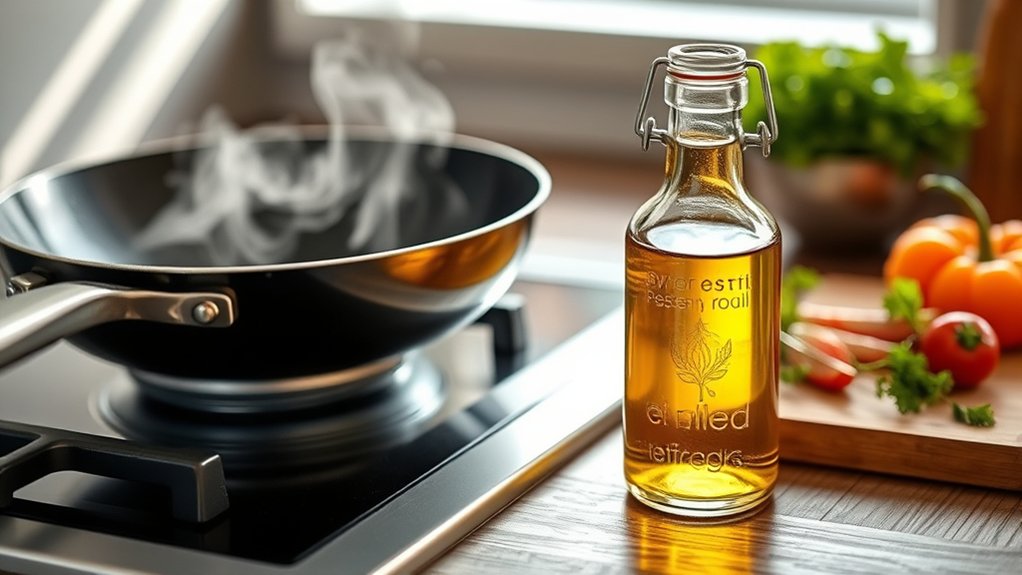
When you choose cold pressed oils for cooking or heating, it’s essential to evaluate their smoke points and nutritional stability. Oils like cold pressed avocado and refined coconut oil have higher smoke points, making them safer for various cooking methods, including sautéing and light frying.
On the other hand, oils such as extra virgin olive oil and flaxseed oil have lower smoke points and delicate nutrient profiles, which means they’re better suited for dressings or low-heat cooking. Understanding these differences helps you preserve the oils’ beneficial compounds while avoiding harmful oxidation.
To maximize health benefits and flavor, match the oil’s smoke point with your intended cooking method, ensuring you maintain oil integrity without compromising nutritional quality.
How Does Heating Affect Cold Pressed Oil’s Nutrients and Flavor?
How exactly does heating impact the nutrients and flavor of cold pressed oils? When you apply heat, cold pressed oils often undergo nutrient degradation, especially in sensitive compounds like antioxidants and vitamins. High temperatures can break down these beneficial nutrients, reducing the oil’s health benefits.
However, moderate heating might lead to some flavor enhancement, as certain volatile compounds develop, enriching the oil’s aroma and taste. Still, excessive heat generally diminishes both nutritional value and delicate flavors.
You should be aware that each oil reacts differently; for instance, oils with higher smoke points retain nutrients better during heating. Understanding this balance helps you use cold pressed oils effectively, preserving their health properties while enjoying improved flavor profiles when cooked appropriately.
How Can You Heat Cold Pressed Oil Without Losing Its Benefits?
What’s the best way to heat cold pressed oil without sacrificing its nutritional value? To preserve the cold pressed benefits, you should use gentle heating methods. Avoid high temperatures that break down delicate nutrients and alter flavor.
Instead, warm the oil slowly over low to medium heat, ideally below its smoke point. This approach helps retain antioxidants and essential fatty acids. Using a double boiler or adding cold pressed oil toward the end of cooking also minimizes nutrient loss.
When Should You Avoid Heating Cold Pressed Oil?
While gentle heating can help preserve the benefits of cold pressed oil, certain situations call for avoiding heat altogether. You should steer clear of heating cold pressed oil when the cooking method requires very high temperatures, as this can degrade essential nutrients and diminish the oil’s health benefits.
Additionally, avoid heating if you’re using oils rich in polyunsaturated fats, which are more prone to oxidation under heat. Finally, if your goal is to maximize oil preservation for salad dressings or dips, heating isn’t advisable because it alters flavor and nutritional quality.
Avoid heating oils rich in polyunsaturated fats to preserve flavor and nutritional quality in dressings and dips.
- Cooking methods like deep frying or searing at high heat
- Oils high in omega-3 and other fragile polyunsaturated fats
- When aiming to retain maximum nutritional value in raw applications
Avoiding heat in these cases helps you maintain the full health benefits of cold pressed oil.
Frequently Asked Questions
How Is Cold Pressed Oil Different From Refined Oil?
Cold pressed oil retains more nutritional benefits and has a richer flavor profile because it’s extracted without heat or chemicals.
Refined oil undergoes processing that strips nutrients and neutralizes flavor, making it more stable but less nutritious.
Can Cold Pressed Oil Be Used for Salad Dressings?
Yes, you can use cold pressed oil in salad dressings. It enhances salad recipes with rich flavors, making dressing combinations more nutritious and tasty.
Just mix it with vinegar or lemon juice for the best results.
What Are the Common Sources of Cold Pressed Oils?
You’ll find cold pressed oils commonly come from sunflower oil and olive oil seeds. These oils retain natural nutrients and flavors since they’re extracted without heat or chemicals.
This process ensures a pure, high-quality product you can trust.
How Should Cold Pressed Oil Be Stored to Maintain Freshness?
You should store cold pressed oil in airtight storage containers, away from light and heat sources. Keep temperature control consistent by refrigerating or placing it in a cool, dark area to maintain freshness and prevent rancidity.
Are There Any Health Risks Associated With Consuming Cold Pressed Oil?
Think of cold pressed oil as a double-edged sword; while its oil properties offer health benefits, consuming rancid or improperly stored oil can pose health risks.
Always check freshness to enjoy benefits safely and effectively.
Conclusion
You can heat cold pressed oil, but you’ve got to be careful—know its smoke point and respect its limits. Some oils handle heat better than others, so choose wisely to keep those nutrients and flavors intact.
Remember, heating cold pressed oil too much can turn a health boost into a health risk. So, heat smart, cook smart, and enjoy the benefits without burning the good stuff.
After all, balance is key when you heat cold pressed oil.