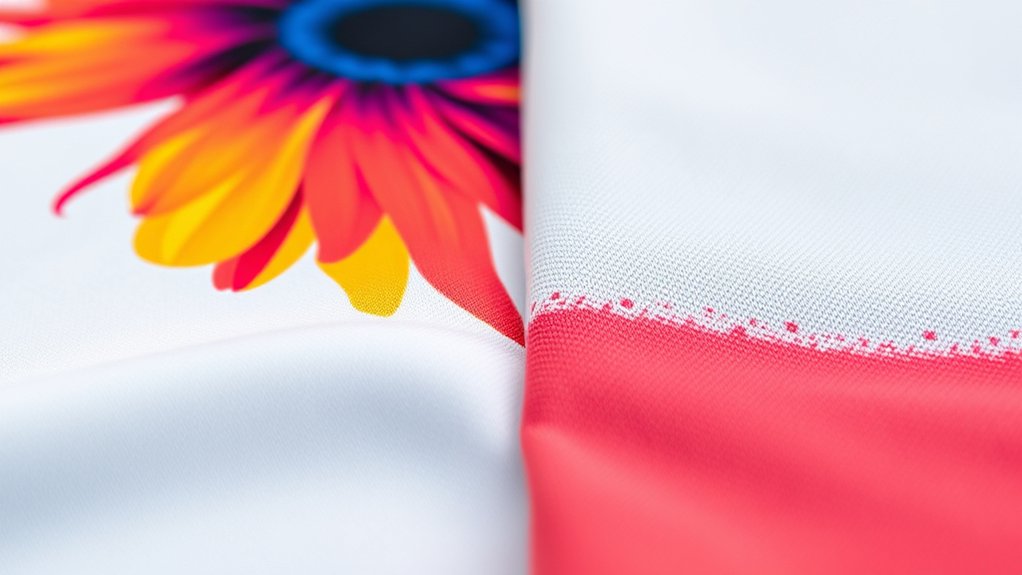

When choosing between UV print and screen print, consider your project’s needs carefully.
UV printing cures ink instantly with ultraviolet light, offering sharp, vibrant colors on rigid surfaces like glass or metal. This method excels in producing intricate designs with excellent durability.
Screen printing works well for textiles and bulk orders, providing bold, opaque colors but with less detail compared to UV printing. It is a cost-effective option for large runs and is ideal for materials like fabric.
Understanding these differences helps you pick the right method to match your material, detail, and budget demands.
Explore further to see which suits your project best.
Key Takeaways
- UV printing cures ink instantly with ultraviolet light, enabling precise, multi-layered, and detailed prints on rigid, non-porous surfaces.
- Screen printing uses mesh stencils to apply bold, solid colors, ideal for textiles and flexible materials like cotton and polyester.
- UV printing offers superior color vibrancy, sharpness, and durability, resisting fading, scratching, and weathering better than screen printing.
- Screen printing is more cost-effective for high-volume runs but has longer setup times and less capability for intricate designs.
- Choose UV printing for complex, multi-color graphics on materials like acrylic or metal, and screen printing for bulk textile orders with simple designs.
How UV Print and Screen Print Work: Key Differences
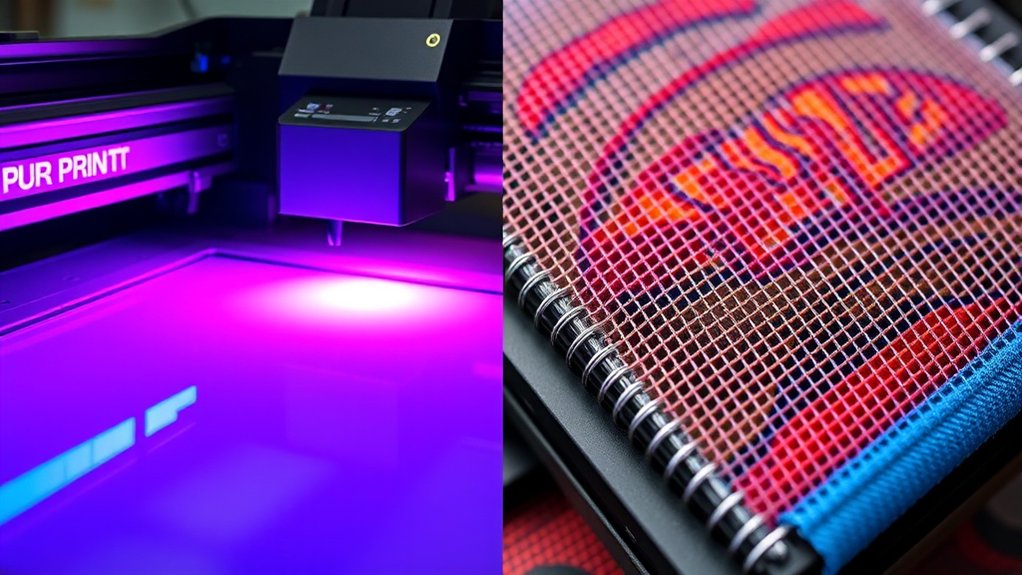
Although both UV printing and screen printing serve the purpose of transferring images onto surfaces, they operate through fundamentally different processes that affect quality, durability, and application scope. UV printing uses ultraviolet light to cure ink instantly as it’s jetted onto a substrate, allowing for precise layering with minimal drying time.
This technique enhances design flexibility, accommodating intricate details and diverse materials without setup changes. Screen printing, on the other hand, pushes ink through a mesh stencil onto the surface, building layers manually.
While it excels in producing vibrant, thick prints, it demands specific screens per color and suits simpler designs. Understanding these distinct printing techniques helps you choose the right method based on your project’s complexity, texture, and printing volume requirements.
Color and Detail: How UV and Screen Printing Stack Up
When comparing color vibrancy and detail precision, UV printing delivers exceptional sharpness and a broader color gamut that captures subtle gradients and fine lines with ease. You’ll notice UV printers use UV-curable inks that instantly harden under ultraviolet light, preserving color intensity and crisp edges.
In contrast, screen printing relies on stencils and layered inks, which limits its ability to reproduce intricate details and smooth color shifts. While screen printing excels in bold, solid colors with excellent opacity, it struggles with gradient effects and minute precision.
If your project demands vivid color vibrancy combined with intricate detail precision, UV printing outperforms. However, for designs emphasizing solid colors without fine detail, screen printing remains a strong contender. Understanding these distinctions helps you choose the best print method for your visual goals.
Best Materials for UV Print and Screen Print
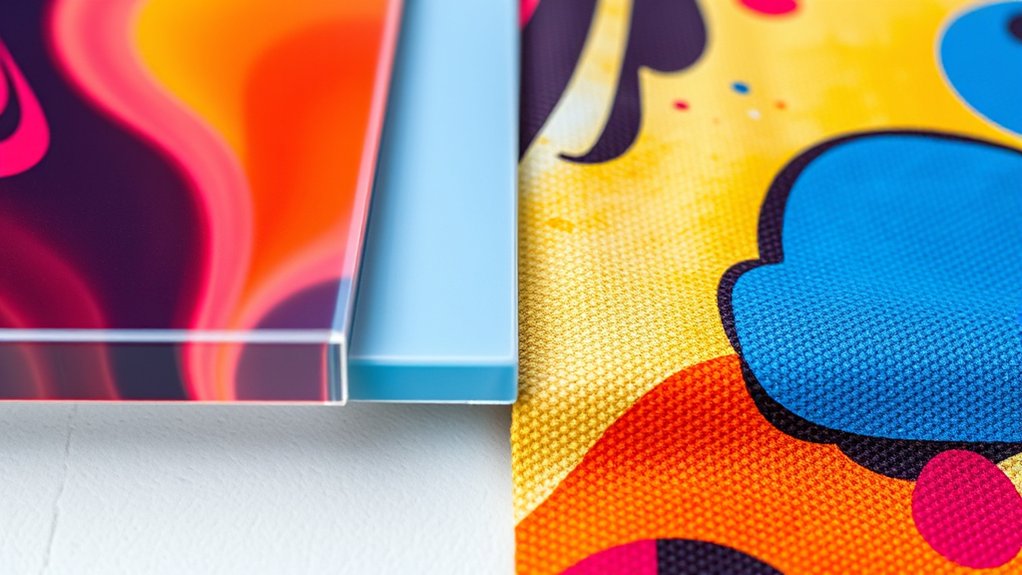
Because each printing method interacts differently with substrates, choosing the right material is essential for excellent results. You need to evaluate material compatibility and the print surface to maximize print quality and longevity.
UV printing excels on rigid, non-porous materials, while screen printing thrives on textiles and flexible surfaces.
| Printing Method | Best Materials |
|---|---|
| UV Print | Acrylic, Glass, Metal |
| Screen Print | Cotton, Polyester, Paper |
UV print’s quick curing process bonds well with smooth, hard surfaces, offering precise detail. Screen printing, however, deposits ink through a mesh, requiring porous substrates to absorb ink effectively.
Durability and Cost: Comparing UV and Screen Printing
Since durability and cost often dictate your choice between UV and screen printing, understanding their differences helps you make an informed decision. UV printing offers superior longevity due to its UV-cured inks that resist fading, scratching, and weathering, making it ideal for intricate designs on various substrates.
However, its initial setup and equipment costs tend to be higher, which might affect cost effectiveness for large runs. Screen printing, by contrast, excels in high-volume jobs with lower per-unit costs once screens are prepared. Its durability is strong, especially on textiles, but it may fade faster outdoors compared to UV prints.
When conducting a longevity comparison, consider your project’s lifespan and volume; UV printing delivers premium resilience, while screen printing maximizes cost effectiveness for bulk production.
Choosing Between UV Print and Screen Print: Which Is Right for You?
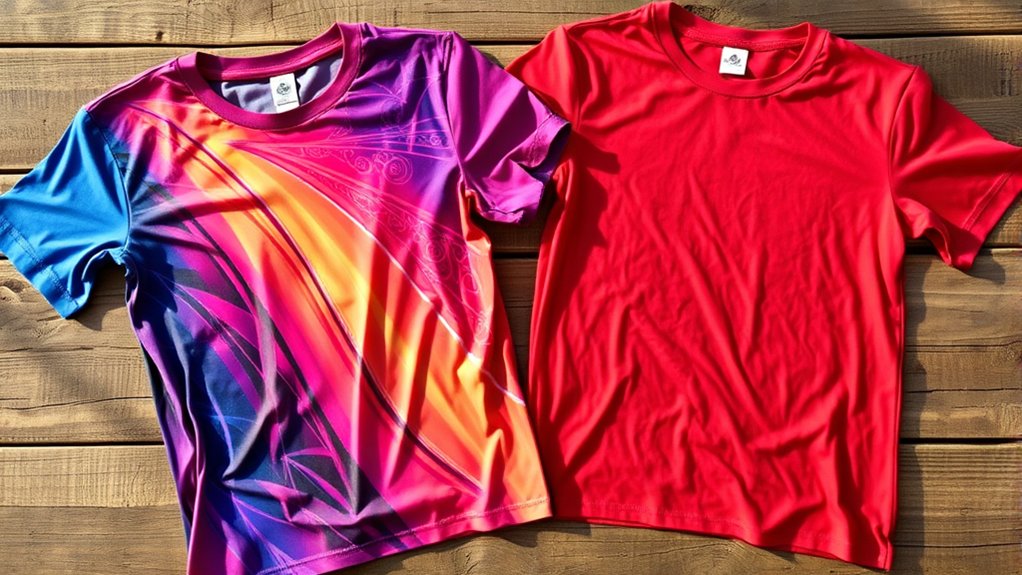
How do you determine the best printing method for your project’s needs? You’ll want to evaluate key factors like design preferences and production speed to make an informed choice between UV print and screen print. Consider these points:
- Complexity of design: UV print excels with intricate, multi-color graphics.
- Volume and turnaround: Screen printing offers faster production speed for large runs.
- Surface compatibility: UV print adapts well to varied materials.
- Budget constraints: Screen print is often more cost-effective for bulk orders.
- Durability requirements: Screen print generally provides longer-lasting results on fabrics.
Frequently Asked Questions
Can UV and Screen Printing Be Combined on the Same Product?
You can combine UV and screen printing using mixed techniques, ensuring product compatibility. By carefully selecting materials and layering methods, you’ll achieve vibrant, durable designs that leverage each process’s strengths effectively on the same product.
What Environmental Impacts Do UV and Screen Printing Have?
You might think both printing methods are equally eco-friendly, but UV printing uses less ink and energy, promoting sustainable practices. Screen printing’s ink disposal often harms ecosystems if not managed precisely and creatively.
How Long Does the Curing Process Take for UV Prints?
The cure time for UV prints typically ranges from a few seconds to a minute, depending on curing factors like lamp intensity, ink thickness, and substrate type. You’ll want to optimize these to guarantee a perfect finish.
Are There Any Health Risks Associated With UV or Screen Inks?
When it comes to ink safety, you shouldn’t throw caution to the wind; both UV and screen inks can cause chemical exposure risks if mishandled. Always use protective gear and proper ventilation to keep health hazards at bay.
Can UV Printing Be Done on Curved or Irregular Surfaces?
Yes, you can UV print on curved surfaces and irregular shapes by using specialized printers with adjustable print heads and flexible fixtures. This ensures precise ink application that conforms to complex geometries without compromising print quality or durability.
Conclusion
When deciding between UV print and screen print, consider that UV printing can produce up to 10 million colors with incredible precision, far surpassing traditional methods. If you need vibrant detail on diverse materials, UV printing excels.
However, for large runs and cost-efficiency, screen printing remains unbeatable. It is especially effective for simple designs and bulk orders where durability and budget are key.
By understanding these nuances, you’ll choose the method that perfectly balances quality, durability, and budget for your specific project. Your print’s success depends on making an informed choice between UV print vs screen print.