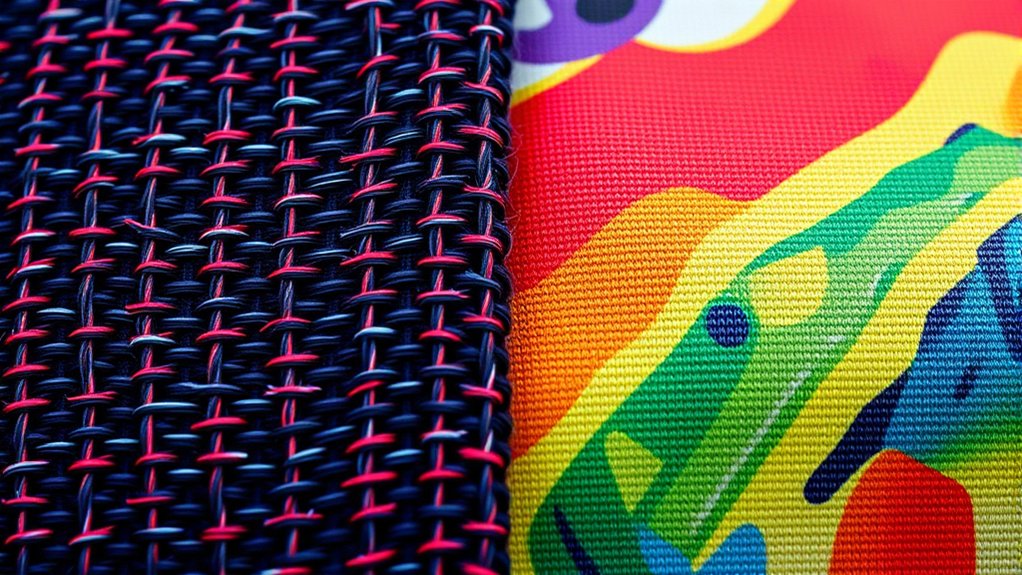

Tackle twill vs screen print is a common debate when choosing the best method for apparel decoration.
You’ll want tackle twill for thick, durable letters with a raised, textured look that lasts through lots of wear and washing. It’s perfect for sports jerseys and jackets but costs more due to labor and materials.
Screen printing, on the other hand, gives you vibrant, smooth, sharp designs at a lower price, ideal for intricate artwork and large runs.
Though it can fade or crack over time, it remains a popular choice for its affordability and detail.
Keep exploring to uncover which option fits your project best.
Key Takeaways
- Tackle twill uses stitched fabric patches for a textured, durable finish, while screen printing applies flat ink directly onto garments.
- Screen printing is more cost-effective and faster for large orders; tackle twill involves higher labor and material costs.
- Tackle twill is best for simple shapes and thicker fabrics; screen printing handles intricate designs and various fabric types.
- Tackle twill offers superior longevity and resistance to fading and wear compared to screen printing.
- Choose tackle twill for bold, dimensional logos; select screen printing for smooth, detailed artwork and budget-friendly production.
Tackle Twill: Definition and Process
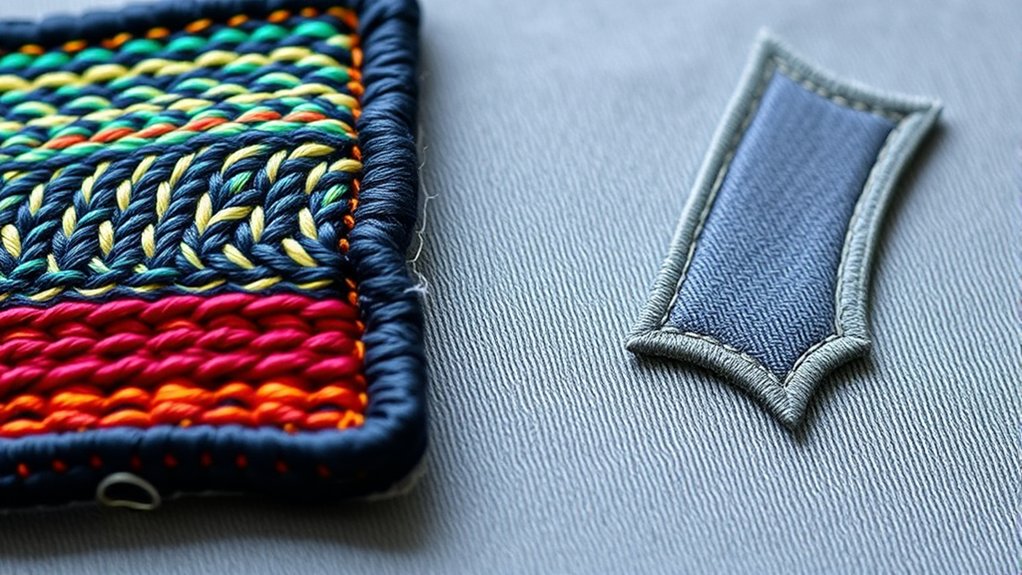
Tackle twill is a durable fabric technique that stitches letters or designs onto garments with precision. You start by cutting fabric patches, typically polyester or cotton twill, into shapes matching your design.
These patches are then sewn onto the garment using a tight zigzag stitch, ensuring sharp edges and vibrant detail. This method’s strength lies in tackle twill applications like sports jerseys, varsity jackets, and hats where durability and texture matter.
You’ll appreciate tackle twill benefits such as enhanced longevity, resistance to fading, and a professional, textured look that screen printing can’t replicate. When you choose tackle twill, your design stands out with a raised, tactile finish, making it ideal for high-quality branding that lasts through heavy wear and washing.
Screen Printing: Definition and Process
While tackle twill relies on fabric patches and stitching, screen printing uses a different approach by applying ink directly onto the garment through a mesh screen. You start by preparing a stencil of your design on the screen.
Then, you spread ink across the screen, forcing it through the open areas onto the fabric beneath. This method allows for sharp, vibrant images with precise edges. Different screen printing techniques, like spot color or simulated process, help you achieve various effects.
You’ll choose from ink types such as plastisol for durability, water-based for softness, or discharge inks that remove fabric dye to create a vintage look. Each step in the process, from stencil creation to ink selection, impacts the final design’s clarity and feel, making screen printing a versatile choice.
Visual, Cost, and Durability Differences Between Tackle Twill and Screen Printing
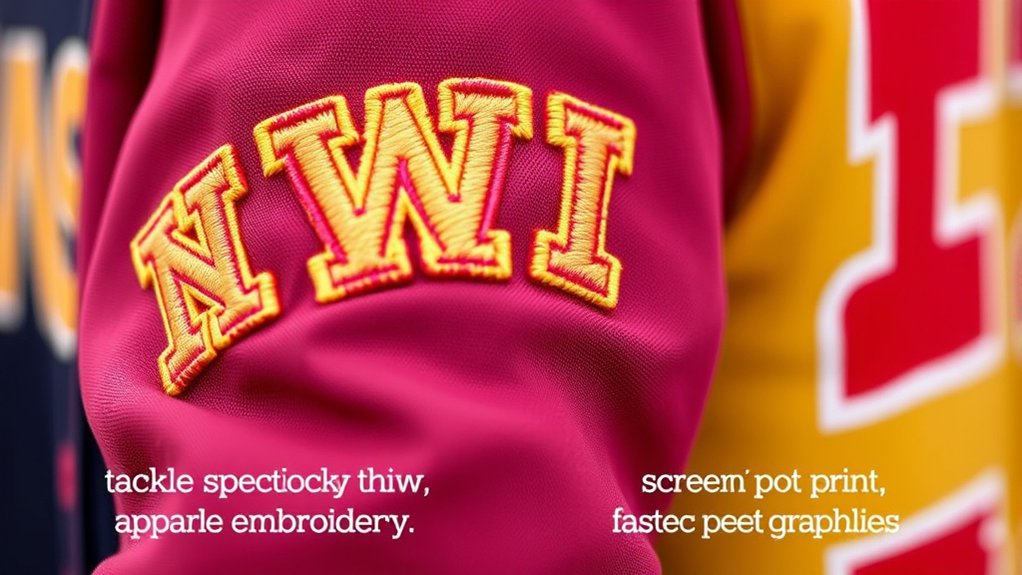
Even though both methods create distinctive looks, you’ll notice striking differences in their visual appeal, cost, and durability. Tackle twill offers a textured, dimensional finish that stands out with vibrant, stitched letters or logos, enhancing depth and richness.
Screen printing, relying on ink layers, produces flat, smooth designs with sharp edges and diverse color options. When it comes to application techniques, tackle twill is sewn onto fabric, requiring more labor and higher material costs, making it pricier upfront.
Screen printing applies ink directly, making it faster and more cost-effective for large runs. Durability favors tackle twill; its raised fabric withstands frequent washing and wear without fading or cracking, unlike screen printing, where ink may fade or peel over time.
You’ll weigh these factors based on your project’s needs and budget.
Choosing Tackle Twill or Screen Printing for Your Project
How do you decide between tackle twill and screen printing for your project? Focus on your design complexity, budget, and desired texture. Tackle twill benefits include a bold, textured finish perfect for logos needing dimension.
Decide between tackle twill and screen printing by considering design complexity, budget, and the texture you want.
Screen printing advantages shine when you want vibrant colors and smooth surfaces, especially on large or detailed designs.
Consider these factors:
- Design detail: Choose tackle twill for simple, bold shapes; screen printing suits intricate artwork.
- Budget: Screen printing often costs less for large runs; tackle twill may be pricier but adds premium feel.
- Fabric type: Tackle twill works best on thicker fabrics; screen printing adapts well across materials.
Durability and Longevity: Tackle Twill vs Screen Printing
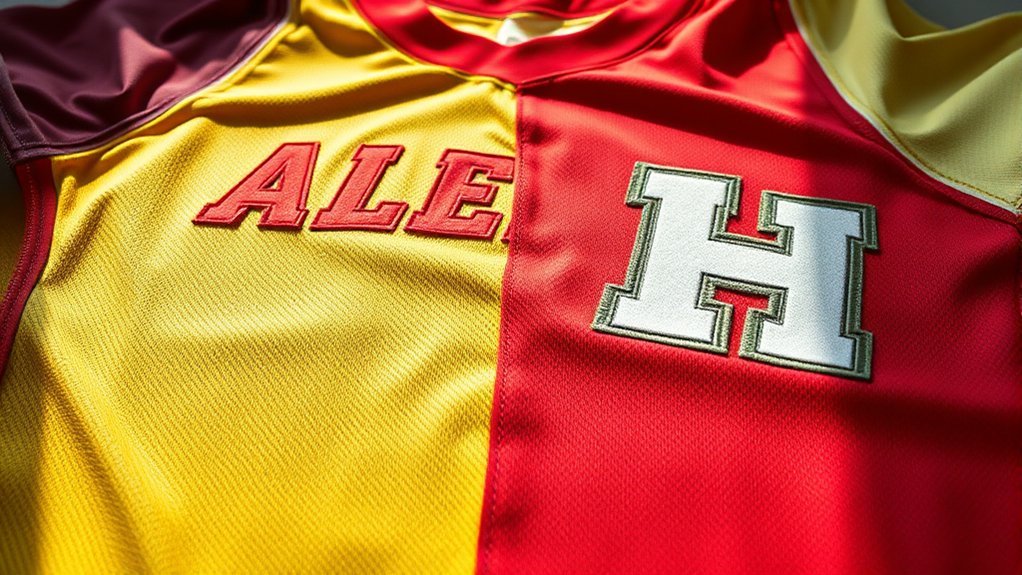
Because your project’s lifespan depends heavily on wear and care, understanding durability differences between tackle twill and screen printing is essential. Tackle twill offers superior resistance to wear and tear, thanks to its layered fabric construction. It maintains vibrant colors and texture even after repeated washing and heavy use.
Screen printing, while initially sharp and colorful, tends to crack and fade quicker under frequent abrasion or improper washing. To extend tackle twill’s longevity, avoid harsh detergents and machine drying. For screen prints, follow gentle washing and turn garments inside out to reduce friction.
Both require specific maintenance tips, but tackle twill generally withstands rough conditions better. Choosing tackle twill means you get long-lasting durability, while screen printing suits projects with lighter usage and simpler care routines.
Budget Considerations for Tackle Twill vs Screen Printing
While tackle twill outlasts screen printing under tough conditions, it also comes with a higher upfront cost. When you’re doing a cost analysis, consider how pricing comparison plays a role in your decision. Screen printing is generally more budget-friendly for large runs and simple designs.
Tackle twill, with its layered fabric and stitching, demands higher initial investment but offers lasting value.
Keep these budget considerations in mind:
- Screen printing suits tight budgets and bulk orders.
- Tackle twill’s durability reduces frequent replacement costs.
- Setup fees are higher for tackle twill due to customization and labor.
Fabric Effects on Tackle Twill and Screen Printing
Though both tackle twill and screen printing transform fabric surfaces, they interact with materials in distinct ways that affect texture, appearance, and durability. Tackle twill adds a raised, textured feel, enhancing fabric texture, while screen printing lies flat, preserving smoothness but varying in color vibrancy based on fabric type.
| Factor | Tackle Twill | Screen Printing |
|---|---|---|
| Fabric Texture | Raised, tactile | Smooth, integrates with fabric |
| Color Vibrancy | Limited to twill colors | Highly customizable |
| Durability | Strong, withstands washing | Can crack or fade over time |
| Best Fabrics | Thick materials (e.g., jerseys) | Versatile, works on many |
| Appearance | Bold, dimensional | Crisp, detailed designs |
Choose based on your fabric’s texture and desired vibrancy for the best result.
Final Thoughts: Making the Right Choice for Your Apparel
Understanding how fabric interacts with tackle twill and screen printing helps you pinpoint which method suits your apparel needs. Both have distinct design aesthetics and application techniques that impact the final look and durability.
Tackle twill offers a textured, layered appearance ideal for bold, classic styles, while screen printing excels in detailed, colorful designs with smooth finishes.
Consider these factors when deciding:
- Longevity and wear resistance based on fabric type
- Complexity and color range of your design aesthetics
- Production volume and cost-efficiency of application techniques
Frequently Asked Questions
Can Tackle Twill Be Customized With Multiple Colors?
Yes, you can customize tackle twill with multiple colors using color layering. This technique enhances design versatility, letting you create detailed, vibrant patches that stand out with rich textures and sharp edges on various fabrics.
Is Screen Printing Eco-Friendly Compared to Tackle Twill?
You’ll find screen printing often uses eco-friendly materials and sustainable practices, reducing waste and water usage. Tackle twill, though durable, generally involves less eco-conscious production. So, screen printing edges out in green benefits.
How Long Does the Tackle Twill Application Process Take?
You can expect the tackle twill timeline to take several hours per garment, depending on complexity. Its application efficiency is high for detailed designs, but stitching and layering require precision, extending overall production time slightly.
Can Screen Printing Be Applied to Non-Fabric Materials?
Think of screen printing applications like paintbrushes on a canvas. They work well on non fabric substrates like glass, metal, and plastic. You’ll find screen printing adapts beautifully, delivering sharp, vivid designs beyond textiles.
Are There Any Special Care Instructions for Tackle Twill Apparel?
You should wash tackle twill apparel inside out in cold water, avoid bleach, and tumble dry low or air dry.
For tackle twill maintenance, iron on low heat with a cloth over the design to protect fabric care.
Conclusion
When deciding between tackle twill and screen printing, think about your project’s vibe, budget, and lifespan needs. Tackle twill offers bold, textured durability that can outlast a thousand wash cycles, while screen printing gives you vibrant, detailed designs at a lower cost.
Consider your fabric and how each method will wear over time. Screen printing tends to be lighter and more flexible, whereas tackle twill adds a raised, stitched look that stands out.
Choose wisely—you want your apparel to not just look great but stand the test of time without fading into the background. When it comes down to lasting quality and a premium feel, tackle twill often comes out on top.