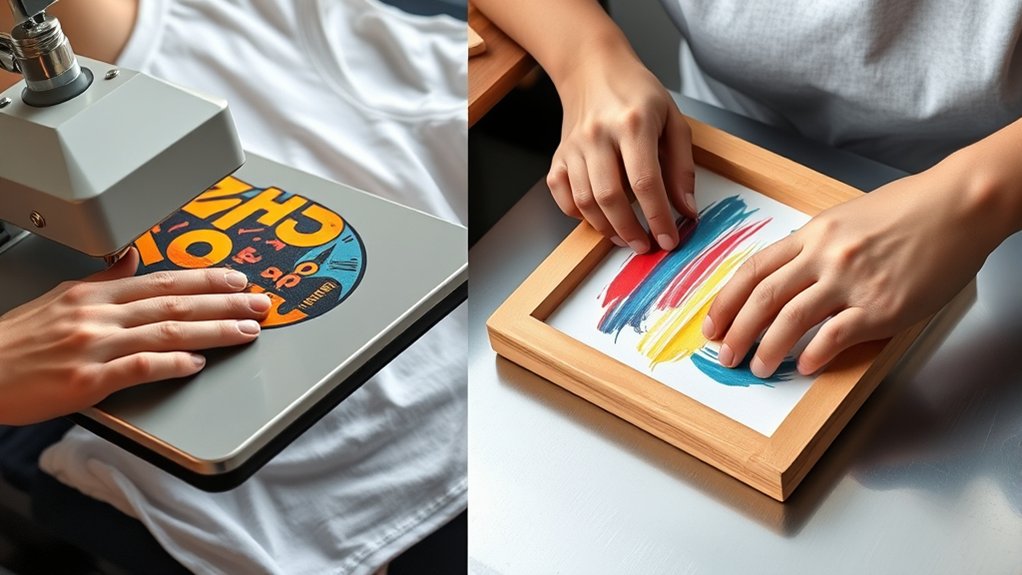

T Shirt Heat Press Vs Screen Printing is a key consideration when choosing the best method for your designs.
If you want crisp, detailed designs fast, heat press is your go-to—it’s perfect for small batches and intricate images. It offers lower startup costs and quicker setup, making it ideal for beginners and short runs.
But if you need bold, vibrant colors that last through countless washes, especially on large orders, screen printing shines with thick, durable ink layers.
Screen printing excels in bulk efficiency and produces long-lasting results.
Keep exploring to uncover which method best suits your design and order needs.
Key Takeaways
- Heat press suits intricate, multi-color designs and small batches with quick setup and lower initial costs.
- Screen printing excels in bold, simple designs and large orders due to durable ink and cost efficiency per unit.
- Heat press offers sharp, photo-realistic prints but may fade or crack after repeated washing.
- Screen printing delivers vibrant, long-lasting colors with textured ink layers that enhance design depth.
- Heat press enables fast turnaround for varied colors, while screen printing requires more time due to stencil setup.
How Heat Press and Screen Printing Work for Custom T-Shirts
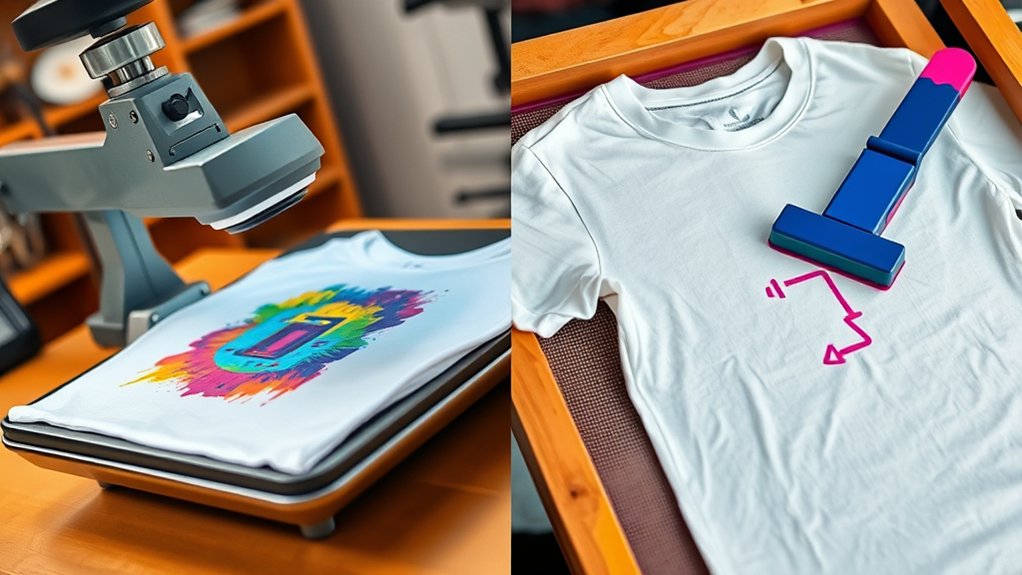
Although both heat press and screen printing create vibrant custom t-shirts, they use very different methods. With heat press, you place a pre-printed transfer onto your shirt, then apply intense heat and pressure to bond the design directly to the fabric. This transfer technique allows you to replicate detailed images and photographic designs with ease.
On the other hand, screen printing involves pushing ink through a mesh stencil onto the fabric, layer by layer. You’ll find it ideal for bold, solid colors and simpler design options.
Heat press suits smaller runs and varied color schemes, while screen printing excels in bulk orders with consistent, sharp colors. Understanding these methods helps you choose the best process for your custom t-shirt project’s style and scale.
Print Quality and Durability: Heat Press Vs Screen Printing
When choosing between heat press and screen printing, you’ll notice distinct differences in print quality and durability. Heat press delivers sharp, photo-realistic images with excellent color vibrancy, especially on dark fabrics. However, its print longevity can be limited, as the transfer may crack or fade after multiple washes.
Screen printing, on the other hand, excels in durability. By applying thick layers of ink directly onto the fabric, it creates vibrant colors that stand the test of time. You’ll see how screen printing’s texture adds a tactile dimension, enhancing design depth.
If you want prints that hold up longer and maintain their vividness wash after wash, screen printing offers superior print longevity. Heat press is great for detailed designs but may sacrifice durability over time.
Which Method Is Faster and Easier for Small Batches?
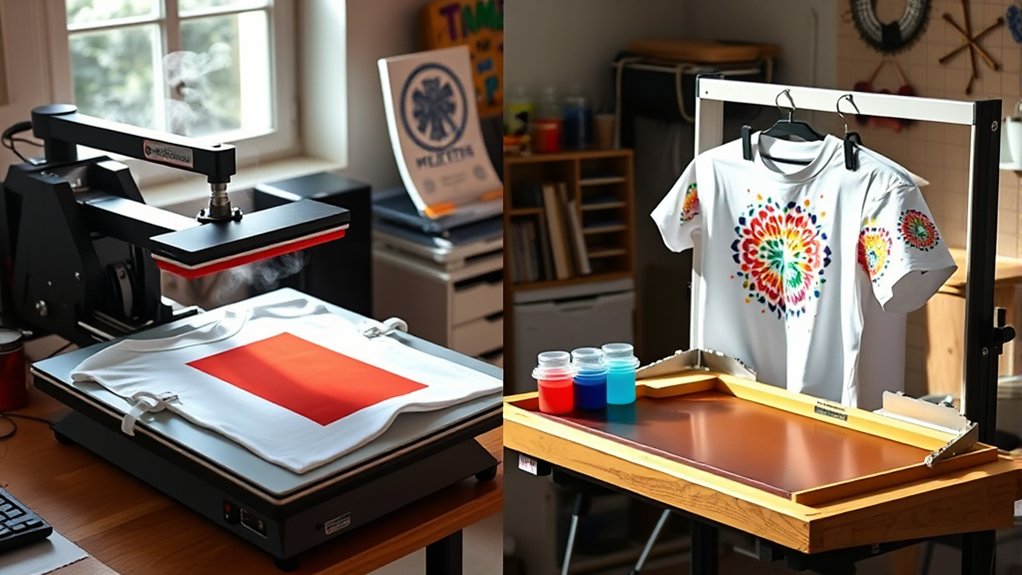
When you’re working on small batches, speed and simplicity matter most. Heat press lets you press each shirt quickly without the setup time screen printing demands.
You’ll find the process more straightforward, especially if you’re handling varied designs or limited quantities.
Speed Comparison
Since small batches demand quick turnaround, choosing the faster printing method can save you valuable time and effort. When comparing heat press and screen printing, speed factors like setup time and drying impact production time greatly.
- Heat Press: You prep designs digitally, then apply heat instantly. It’s ideal for rapid, one-off prints with minimal setup.
- Screen Printing: Requires creating stencils for each color, increasing preparation time, which slows down small batch production.
- Production Time: Heat press lets you print each shirt in under a minute once ready, while screen printing takes longer due to layering and drying.
For small runs, heat pressing wins on speed, getting your tees done faster without extensive setup delays.
Ease Of Use
Although both heat press and screen printing have their merits, you’ll find heat pressing much easier and faster for small batches. The user friendly features of a heat press, like digital temperature controls and simple timer settings, mean you can jump right in without fumbling through complex steps.
Setup simplicity shines here: just align your design, press, and peel. In contrast, screen printing demands mixing inks, preparing screens, and drying layers, which can slow you down. If you need quick turnaround and minimal fuss, heat pressing saves you time and effort.
Its straightforward operation lets you focus on pressing each shirt perfectly, avoiding the intricate prep that screen printing requires. For small runs, heat press offers a clear advantage in ease of use, cutting down your workload while maintaining quality.
Cost Differences Between Heat Press and Screen Printing
While both heat press and screen printing offer unique benefits, their cost structures differ markedly, shaping your decision based on budget and project scale. Conducting an investment analysis helps you understand upfront and ongoing expenses. Here’s a clear pricing breakdown:
Choosing between heat press and screen printing hinges on budget, project size, and understanding upfront versus ongoing costs.
- Heat Press: Lower initial investment, around $200-$1,000, ideal for small runs. Supplies like transfer paper add to per-shirt costs.
- Screen Printing: Higher upfront cost due to equipment and screens, typically $1,000+, but cheaper per unit for large orders.
- Volume Impact: Heat press suits low quantities with minimal setup, while screen printing’s setup costs pay off in bulk production.
How to Pick the Best Method for Your Design and Order Size
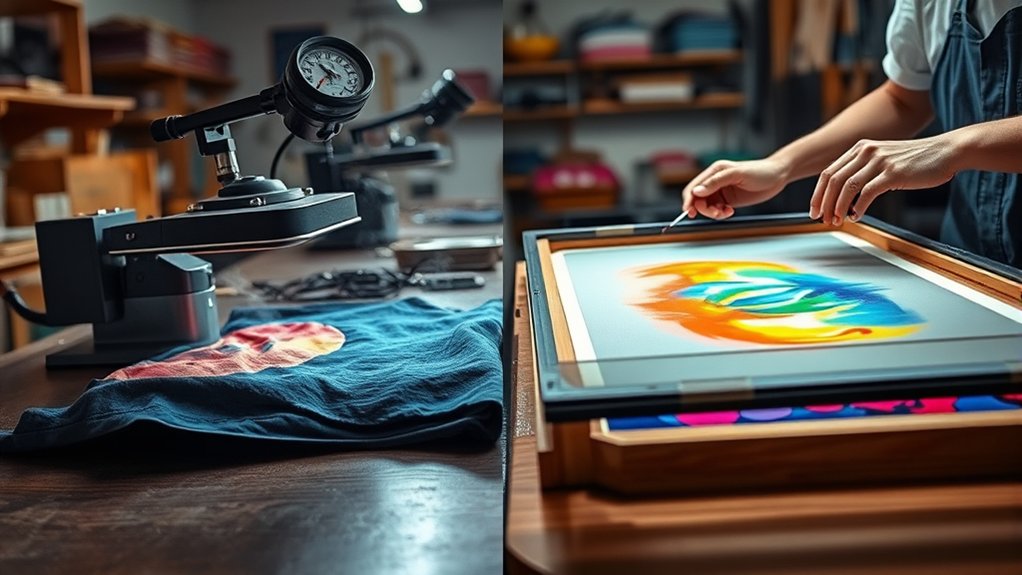
How do you decide which printing method fits your design and order size best? Start by examining your design preferences. Complex, multi-colored images with gradients lean toward heat press for sharp detail. If your design uses limited colors and bold shapes, screen printing delivers vibrant, durable results.
Next, consider order size. Small batches usually favor heat press since setup is minimal and cost-effective. Large orders benefit from screen printing’s efficiency and lower per-unit cost despite higher initial setup.
Also, factor in turnaround time and fabric type. By aligning your design preferences with order considerations, you’ll pick the method that maximizes quality and value for your project. This focused approach guarantees your final product looks professional and meets your production needs seamlessly.
Tips for Choosing Between Heat Press and Screen Printing
When deciding between heat press and screen printing, start by weighing your budget against the size of your order. Screen printing shines with large batches, while heat press suits smaller runs.
Next, examine your design’s details; intricate, multi-colored artwork often favors heat press for sharpness. Finally, consider how many shirts you need to produce, as each method handles volume differently and impacts your overall cost efficiency.
Cost Efficiency Comparison
Because budget often dictates your choice, understanding the cost efficiency of heat press versus screen printing is essential. A clear cost analysis helps you make informed budget considerations tailored to your needs.
- Initial Investment: Heat press machines are generally cheaper upfront, perfect if you’re starting small or testing designs. Screen printing setups require more capital, especially for multiple colors.
- Per-Unit Cost: Screen printing shines with large batches, lowering cost per shirt considerably. Heat press remains costlier per unit, ideal for low-volume or custom orders.
- Materials and Maintenance: Heat press uses transfer paper and vinyl, which add recurring costs. Screen printing involves ink and screens, which last longer but need upkeep.
Design Complexity Considerations
Budget considerations often hinge on the complexity of your design. If you’re working with design simplicity, think bold shapes and limited colors, a heat press handles this efficiently, especially with vinyl or transfers. It’s perfect when color limitations aren’t a problem, as fewer colors reduce setup time and cost.
On the other hand, screen printing shines with intricate, multi-color designs. It captures fine details and gradients better than heat press, despite its higher initial setup. However, remember that each additional color adds layers and increases expense.
Production Volume Suitability
Although both heat press and screen printing produce quality results, your choice largely depends on how many shirts you need to make. For a small batch, heat press offers quick setup and flexibility, letting you customize each piece without waste.
When handling large volume orders, screen printing shines with its speed and cost-effectiveness per unit once the screens are prepared. Consider these points:
- Small batch: Heat press is ideal for short runs and detailed designs.
- Medium batch: You might weigh cost and time; heat press remains practical but screen printing can start to save money.
- Large volume: Screen printing drastically lowers per-unit cost and boosts efficiency.
Choose based on your production volume to balance quality, time, and budget effectively.
Frequently Asked Questions
Can Heat Press and Screen Printing Be Combined on One Shirt?
Yes, you can combine heat transfer techniques and screen printing on one shirt. This fusion offers you design versatility, letting you layer vibrant prints and intricate details for a unique, eye-catching result that stands out vividly.
Are There Environmental Concerns With Either Printing Method?
Think of sustainability factors as your shirt’s green heartbeat: heat press uses less ink but more electricity, while screen printing produces more waste.
You’ll need strong waste management to keep environmental impact low in either method.
Which Method Is Better for Printing on Dark Fabrics?
You’ll find screen printing better for dark fabrics because its ink opacity guarantees bold, vibrant colors that pop. Heat press can struggle with vibrancy, so for rich, lasting hues, screen printing’s your go-to.
Can Both Methods Be Used on Materials Other Than Cotton?
You’ll find heat press works like a chameleon, adapting well to polyester blends and diverse fabric compatibility. Screen printing, however, prefers cotton’s canvas but can handle some blends with specific inks, expanding your creative palette.
How Do Washing Instructions Differ for Each Print Type?
You’ll want to wash heat press prints inside out, cold water, gentle cycle to boost washing durability. Screen prints handle warmer water and regular cycles better, preserving print longevity with minimal cracking or fading over time.
Conclusion
So, whether you want your design to survive a zombie apocalypse or just a few laundry cycles, you’ve got choices. Heat press is your quick, colorful friend for small runs, while screen printing is the marathon runner—durable but takes its sweet time.
Picking the “best” method? Easy, right? Just juggle your budget, design complexity, and patience. Who knew choosing a T-shirt print could feel like deciding your life’s destiny?
When it comes down to it, deciding between T shirt heat press vs screen printing is all about what fits your needs best—speed and detail, or durability and volume.