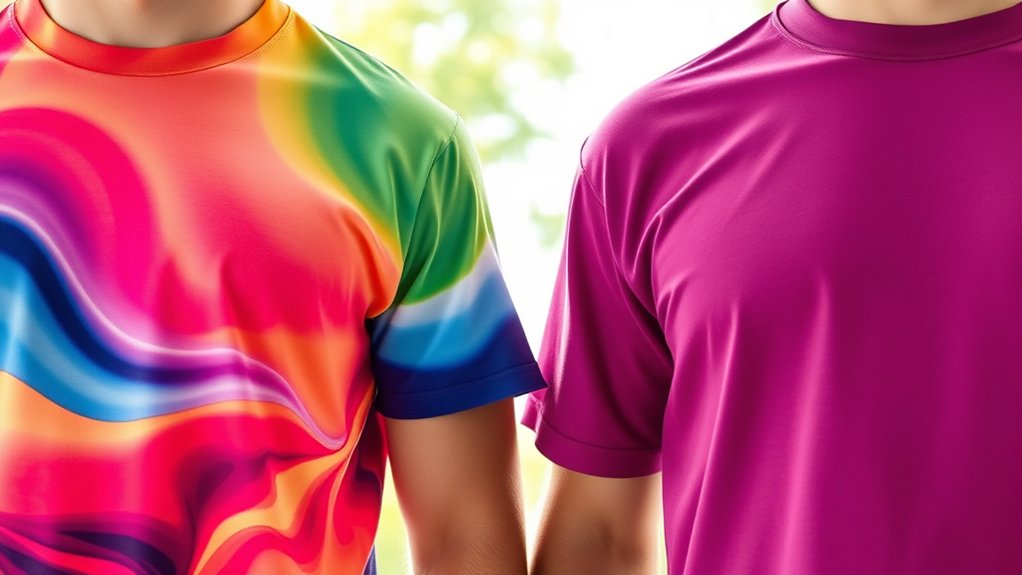

When choosing between sublimation and screen printing, it’s important to consider your fabric and design needs.
Sublimation excels on polyester, embedding vibrant, long-lasting colors with intricate details. In contrast, screen printing works best on cotton and offers bold, textured prints but may fade or crack over time.
Sublimation suits complex, full-color images, especially for small runs. Meanwhile, screen printing is cost-effective for high volumes with fewer colors.
To optimize your apparel printing outcomes, understanding these differences in durability, color quality, and production is essential.
Key Takeaways
- Sublimation embeds dye into polyester fabric, offering vibrant, fade-resistant prints without texture changes.
- Screen printing applies thick ink layers on fabric, ideal for bold designs on natural fibers like cotton.
- Sublimation supports full-color, intricate images with unlimited color gradients, while screen printing suits fewer colors.
- Screen printing inks may crack or peel over time; sublimation prints remain vivid and durable after many washes.
- Sublimation has higher startup costs but is faster for small runs; screen printing is cost-effective for large volume orders.
How Sublimation and Screen Printing Differ
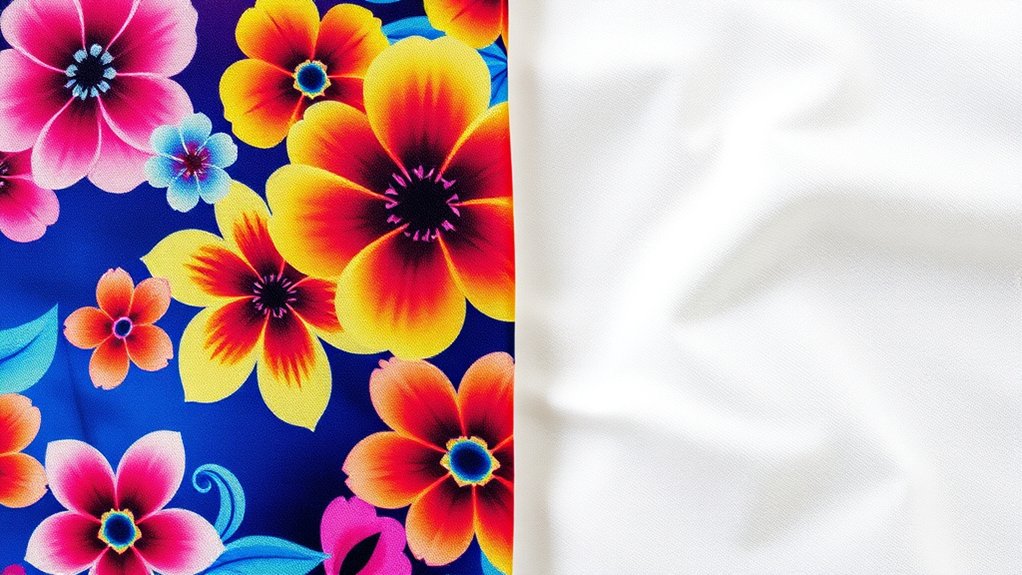
Although both sublimation and screen printing serve the purpose of transferring designs onto fabrics, they operate through fundamentally different processes that affect the final product’s durability, color vibrancy, and texture. In sublimation, you use a specialized print head to apply heat-sensitive dye-based inks onto a transfer paper, which then bonds with polyester fibers under high temperature and pressure.
This process embeds the ink beneath the fabric’s surface, resulting in vibrant colors that won’t crack or peel. Conversely, screen printing forces thicker, plastisol or water-based ink types through a mesh stencil directly onto the fabric’s surface.
This layer sits atop the material, creating a tactile texture but risking wear over time. Understanding these core distinctions helps you choose the right technique based on your project’s durability and aesthetic needs.
Best Fabrics and Colors for Sublimation and Screen Printing
Choosing the right fabric and color is essential to maximizing the effectiveness of sublimation and screen printing. For sublimation, polyester-rich fabric types work best because the dye bonds chemically with synthetic fibers, ensuring vibrant, permanent prints. White or light-colored fabrics enhance color combinations, allowing them to pop without distortion.
Conversely, screen printing excels on natural fibers like cotton, where ink sits atop the fabric, creating bold, opaque designs. Darker fabrics are ideal here, as you can use underbase layers to maintain color integrity in complex color combinations. When selecting fabric types and colors, consider the interaction between your chosen method and substrate to achieve sharp, lasting results that complement your design’s intent.
Design Flexibility of Sublimation vs Screen Printing
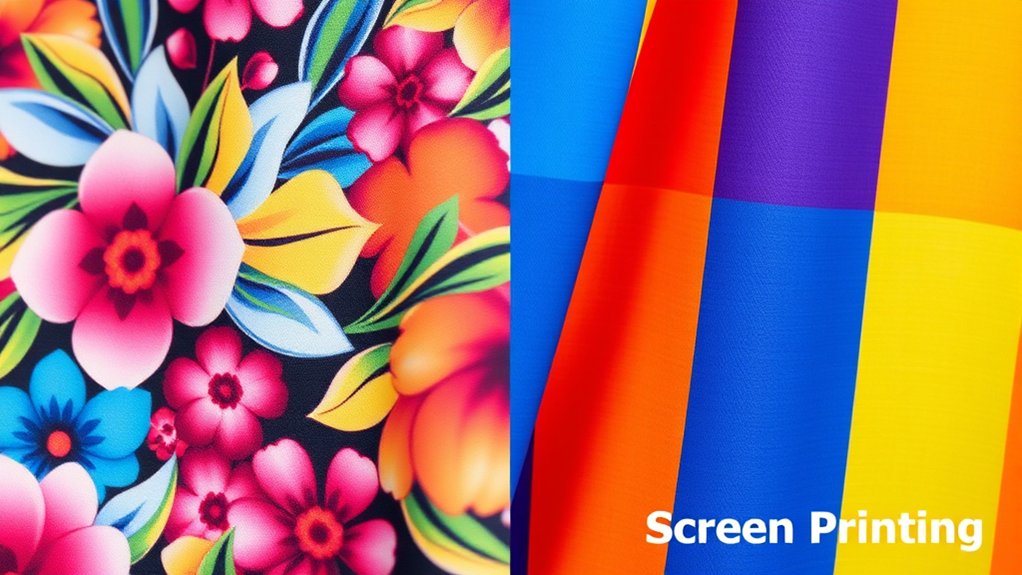
When you compare sublimation and screen printing, the design flexibility each offers can considerably impact your creative possibilities. Sublimation excels in design versatility, letting you print intricate, full-color images with gradients and fine details seamlessly.
Screen printing, however, shines with bold, solid colors and sharp edges but limits you to fewer colors per design due to layering constraints.
Consider these factors for design flexibility:
- Sublimation supports unlimited colors and photographic-quality prints.
- Screen printing allows specialty inks like metallics and fluorescents.
- Sublimation integrates designs into fabric fibers, avoiding texture changes.
- Screen printing can create tactile effects with raised ink layers.
Your choice hinges on whether you prioritize complex color gradients or tactile, vivid color blocks for your project.
Durability and Color Quality Compared
Beyond design flexibility, understanding how sublimation and screen printing perform over time reveals important differences in durability and color quality. Sublimation embeds ink into polyester fibers, resulting in exceptional ink longevity and superior fade resistance.
This process guarantees colors stay vibrant even after numerous washes, as the dye becomes part of the fabric rather than sitting on top. Conversely, screen printing applies ink layers on fabric surfaces, which can crack or peel over time, affecting durability.
While screen printing offers rich, opaque colors initially, its fade resistance diminishes with frequent wear and washing. So, if you prioritize long-lasting, vivid prints that endure harsh conditions, sublimation stands out.
But if your focus is on bold color opacity with moderate longevity, screen printing still holds value.
Cost and Setup Differences Between Sublimation and Screen Printing
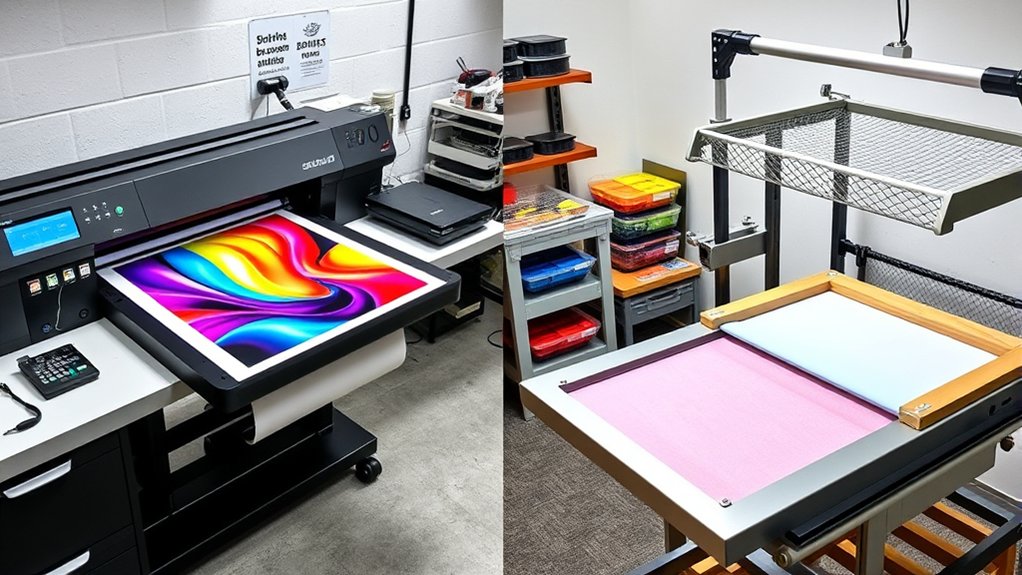
You’ll notice that sublimation requires a higher initial investment in specialized printers and heat presses, while screen printing demands setup costs for screens and inks. When it comes to production efficiency, sublimation excels with quick turnaround on small runs, whereas screen printing becomes more cost-effective as volume increases.
Understanding these differences helps you optimize your process based on project size and budget constraints.
Initial Investment Comparison
Although both sublimation and screen printing require upfront costs, their initial investments differ greatly in equipment, materials, and workspace setup. When you evaluate initial costs, sublimation demands specialized printers and heat presses, while screen printing calls for screens, squeegees, and exposure units.
Your equipment expenses will vary accordingly, influencing your budget and space planning.
Consider these key factors:
- Sublimation needs a dye-sublimation printer and a heat press for transfer.
- Screen printing requires mesh screens, emulsion, and a drying area.
- Workspace for sublimation is compact but needs ventilation for heat.
- Screen printing demands more room for multiple stations and ink handling.
Understanding these distinctions helps you allocate funds wisely and design an efficient setup tailored to your chosen printing method.
Production Efficiency Differences
When comparing production efficiency, sublimation and screen printing each present unique cost structures and setup demands that directly impact your workflow and profitability. Sublimation excels in production speed for small to medium runs, as minimal setup is required, just digital file preparation and heat press calibration, boosting workflow efficiency markedly.
Conversely, screen printing demands extensive setup, including creating screens and aligning color separations, which slows initial production speed but becomes cost-effective with high-volume orders. The recurring costs in sublimation largely stem from ink and transfer paper, whereas screen printing involves ink, mesh screens, and cleaning supplies.
Understanding these dynamics helps you optimize job scheduling and resource allocation, ensuring you balance setup time and per-unit cost effectively to maximize overall production throughput and maintain competitive pricing.
Best Apparel Uses for Sublimation and Screen Printing
Choosing the right printing method for your apparel depends heavily on the fabric type and design complexity. Sublimation excels with polyester blends, offering vibrant, all-over prints that align with current apparel trends targeting younger, fashion-forward audiences.
Screen printing, however, suits cotton and thicker fabrics, ideal for simpler designs and mass production.
Consider these best uses:
- Sublimation for sportswear, where moisture-wicking polyester dominates
- Screen printing for heavyweight cotton hoodies and sweatshirts
- Sublimation on lightweight, breathable fabrics for activewear
- Screen printing for bold, single-color logos on casual tees
Frequently Asked Questions
Can Sublimation Be Used on Dark Fabrics?
You can’t use sublimation on dark fabrics directly because sublimation limitations cause colors to appear dull or invisible. Dark fabric challenges require white or light bases for vibrant prints; otherwise, colors won’t bond or show properly.
Is Screen Printing Eco-Friendly?
You might be surprised, but screen printing can be eco-friendly when you use eco-friendly materials and sustainable practices like water-based inks and recycling screens.
Choosing these methods reduces waste and environmental impact considerably.
How Long Does Sublimation Ink Last in Sunlight?
You’ll find sublimation ink longevity typically lasts around two to three years under consistent sunlight exposure. Its vibrant colors fade gradually due to UV radiation, so consider protective coatings or shade to maximize durability and maintain brilliance.
Can Screen Printing Handle Photographic Images?
Photographic precision poses problems: screen printing can’t capture complex, continuous tones or subtle shading with photo quality like other printing techniques.
You’ll find it better suited for bold, simple designs than detailed photographic images.
Are There Health Risks With Sublimation Inks?
You shouldn’t worry much about sublimation ink safety if you follow health guidelines; these inks are generally non-toxic. Guarantee proper ventilation and avoid direct skin contact during heating to minimize any potential exposure risks.
Conclusion
You’ll find sublimation excels on polyester with vibrant, permanent colors, while screen printing dominates cotton with bold, opaque inks. Sublimation offers endless design flexibility but demands lighter fabrics; screen printing thrives on versatility yet involves higher setup costs.
Durability favors sublimation’s colorfastness, contrasting screen printing’s tactile texture. Choosing between them means balancing fabric, budget, and design needs—each method’s strengths and limits create a dynamic tension.
Ultimately, understanding the differences between sublimation vs screen printing helps you select the best technique to achieve your desired print quality and longevity.