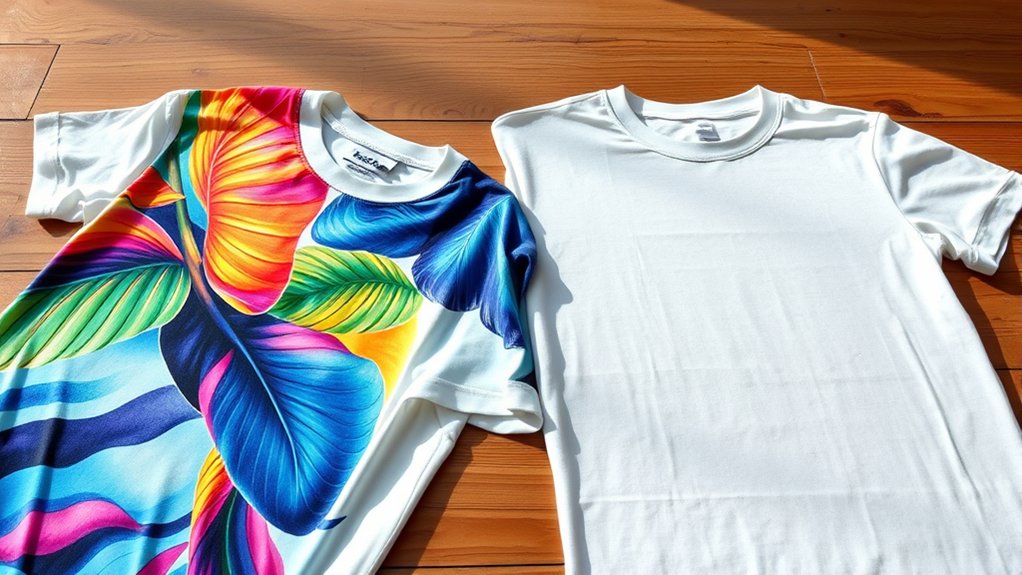

When choosing between sublimation shirts vs screen printing, it’s important to consider fabric type and design details.
Sublimation works best on polyester, embedding vibrant, precise images directly into the fibers. This results in smooth, durable prints that resist fading over time.
Screen printing, on the other hand, suits various fabrics by layering bold ink on the surface. However, it may lose fine detail and fade with wear.
Costs also vary: sublimation handles complex colors consistently, while screen printing’s price increases with each added color layer.
Understanding these differences will help you select the ideal technique for your project.
Whether you prioritize durability, fabric compatibility, or color complexity, choosing between sublimation shirts vs screen printing is key to achieving the best results.
Key Takeaways
- Sublimation works best on 100% polyester for vibrant, smooth designs, while screen printing suits various fabrics including cotton blends.
- Sublimation dye penetrates fabric fibers for detailed, gradient-rich images; screen printing layers ink on fabric surface for bold, solid colors.
- Sublimation prints resist fading and cracking longer due to dye embedding; screen prints may wear down and need gentler washing.
- Setup costs for sublimation are higher, but per-shirt pricing is stable; screen printing costs rise with color complexity but benefit from bulk orders.
- Choose sublimation for soft, intricate designs and screen printing for bold, defined graphics favored in large volume runs.
Which Fabrics Work Best With Sublimation or Screen Printing Shirts?
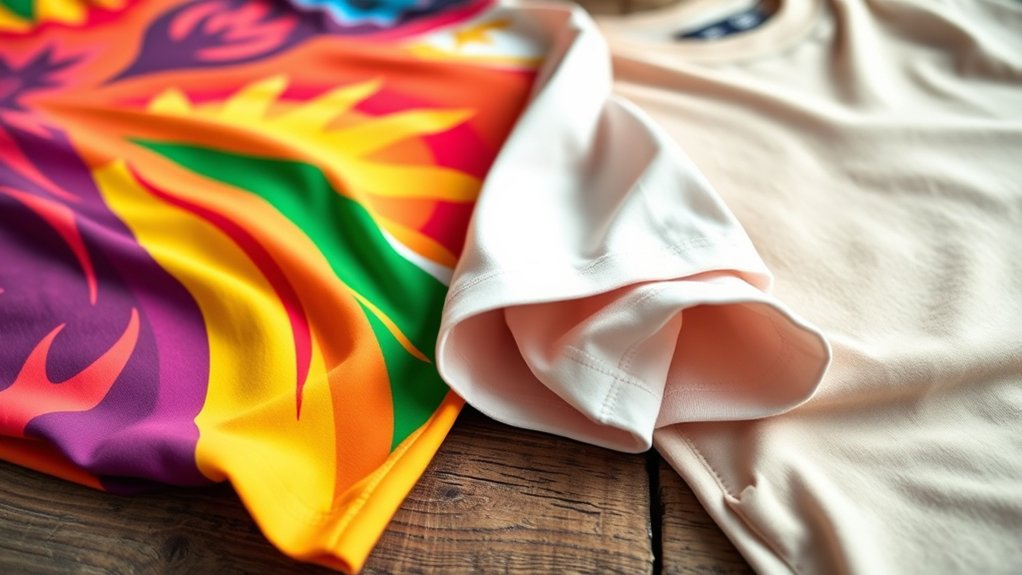
Although both sublimation and screen printing create vibrant designs, the choice of fabric plays an essential role in achieving ideal results. When considering fabric compatibility, sublimation excels with polyester or polymer-coated materials, as its dye bonds chemically with synthetic fibers.
You’ll notice that 100% polyester shirts offer the best material suitability for sublimation, producing sharp, vivid images that penetrate the fabric rather than sitting on top. Conversely, screen printing demonstrates versatility across various textiles, including cotton, blends, and even darker fabrics.
The ink sits atop the fibers, requiring materials with a surface that allows for proper ink adhesion and durability. Understanding these nuances guarantees you select the right fabric to maximize print longevity and visual impact, optimizing your design’s performance whether you choose sublimation or screen printing.
How Do Sublimation and Screen Printing Shirt Printing Processes Work?
When you plunge into sublimation and screen printing, you’ll find two distinct methods that transform blank shirts into vibrant canvases. The sublimation process uses heat to convert solid dye into gas, which then penetrates polyester fibers.
You print your design on transfer paper, place it on the shirt, and apply heat and pressure with a press. The dye bonds at a molecular level, resulting in a seamless, full-color image embedded into the fabric.
Screen printing, on the other hand, involves pushing ink through a fine mesh screen stencil onto the shirt’s surface. Each color requires a separate screen, and the ink sits atop the fabric, drying into a durable layer.
Both methods demand precision but differ fundamentally in technique and material interaction.
Color Quality and Design Detail: Sublimation Vs Screen Printing Shirts
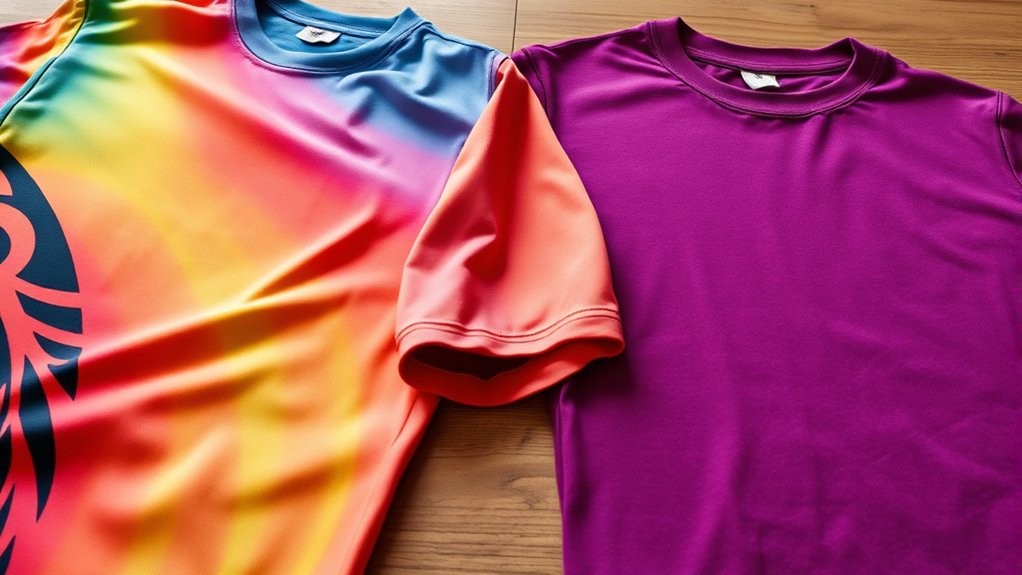
You’ll notice sublimation offers exceptionally vibrant colors that penetrate fabric fibers, creating a smooth, photographic finish with sharp gradients. In contrast, screen printing applies ink layers on the surface, delivering bold, solid hues but sometimes losing subtle shading and fine lines.
Understanding these differences helps you choose the method that best preserves your design’s color intensity and intricate details.
Color Vibrancy Comparison
Color vibrancy plays a critical role in determining the visual impact and longevity of printed shirts. When you choose sublimation, you benefit from exceptional color saturation because the dye penetrates the fabric fibers, producing vivid, long-lasting hues that won’t crack or peel.
Sublimation offers unmatched design flexibility, allowing you to reproduce gradients and complex color blends seamlessly. In contrast, screen printing applies ink on the surface, which may result in slightly less intense colors, especially on darker fabrics.
While screen printing can produce sharp, solid colors, it often struggles with subtle shades and intricate color shifts. So, if you want vibrant, durable prints with smooth color gradients, sublimation excels. But for bold, solid colors, screen printing still holds its ground. Your choice depends on the effect you want.
Design Precision Differences
Beyond vibrancy, the precision of design details and color quality sets sublimation and screen printing apart. When you use sublimation, the ink permeates the fabric, allowing for high image resolution and crisp design intricacies without any texture changes.
This method captures fine lines, gradients, and subtle color shifts flawlessly, making it ideal for complex, photo-realistic images. In contrast, screen printing applies ink layers on top of the fabric, which can cause slight blurring or loss of detail, especially with tiny elements or intricate patterns.
While screen printing excels in solid colors and bold designs, it struggles with gradients and fine lines due to ink layering limitations. So, if your design demands sharp detail and smooth color blends, sublimation offers superior precision and color fidelity compared to screen printing.
Durability and Washability Comparison for Sublimation and Screen Printing Shirts
When evaluating the durability and washability of sublimation versus screen printing shirts, the key lies in how each method interacts with fabric fibers. Sublimation longevity stems from dye molecules embedding directly into polyester fibers, creating a bond that resists cracking, peeling, or fading even after numerous washes.
You’ll notice sublimated designs retain vibrant colors because the ink becomes part of the fabric. In contrast, screen printing resilience depends on ink layers sitting atop the fabric surface. These layers can wear down over time, especially with frequent laundering or exposure to harsh detergents, causing fading or cracking.
To maintain screen-printed shirts, you’ll need gentler washing techniques. Sublimation excels in long-term colorfastness on polyester, while screen printing offers versatility but demands more care to preserve design integrity.
How Much Do Sublimation and Screen Printing Shirts Cost?
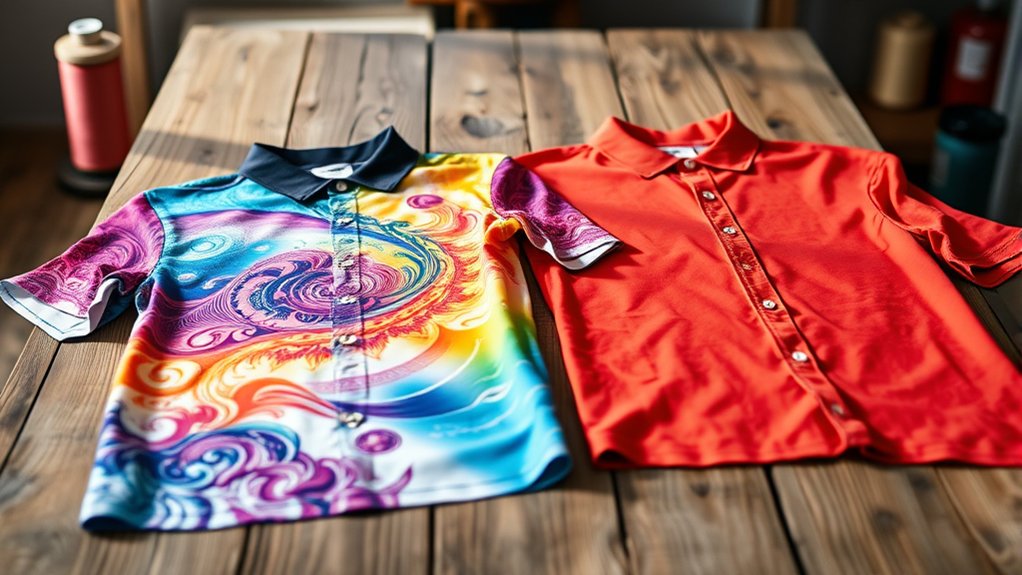
You’ll notice sublimation requires a higher initial setup cost due to specialized printers and inks, while screen printing demands expenses for screens and emulsion.
When pricing per shirt, sublimation often stays consistent regardless of color complexity, but screen printing costs rise with each additional ink color. Understanding these cost structures helps you choose the most economical method for your design needs.
Initial Setup Expenses
Although both sublimation and screen printing require upfront investment, the initial setup costs differ considerably due to the equipment and materials involved. When considering initial setup costs, you must evaluate the scale and complexity of each method’s equipment investments.
- Sublimation demands a high-quality dye-sublimation printer, heat press, and specialized sublimation inks, which can quickly add up to several thousand dollars.
- Screen printing requires screens, squeegees, a screen printing press, and emulsion materials, often making the initial investment lower but more labor-intensive.
- Additionally, sublimation’s need for polyester garments limits fabric choices but simplifies color management, whereas screen printing’s versatility involves more setup time and materials.
Understanding these differences helps you anticipate your initial expenses accurately and choose the method aligning with your budget and production goals.
Per Shirt Pricing
Calculating per shirt pricing requires analyzing material costs, labor intensity, and production scale specific to sublimation and screen printing. With sublimation, you’ll notice higher upfront ink and transfer paper expenses, but minimal labor per unit once set up, making it cost-effective for bulk orders. Pricing tiers often drop considerably after reaching certain volume thresholds, sometimes halving the per shirt cost.
Screen printing involves more manual steps, mixing inks, aligning screens, curing, that increase labor costs per shirt. However, ink costs per unit are lower, benefiting large bulk orders where setup costs spread thin. Pricing tiers in screen printing typically hinge on color count and order size; fewer colors and bigger runs reduce per shirt price. You’ll want to balance order quantity, color complexity, and setup costs to pinpoint the most economical option.
Choosing Sublimation Shirts: When and Why It’s the Right Choice
When should you choose sublimation shirts over other printing methods? Opt for sublimation when you need:
- Full-color, intricate designs. Sublimation benefits shine here, allowing seamless gradients and photographic detail impossible with traditional inks.
- Design flexibility on polyester fabrics. Sublimation dye bonds directly with synthetic fibers, ensuring vibrant, durable prints that won’t crack or peel.
- All-over coverage. Sublimation enables edge-to-edge printing, wrapping designs around seams and sleeves, creating visually immersive apparel.
You’ll appreciate how sublimation integrates ink beneath the fabric surface, producing vivid colors that remain soft to the touch. If your project demands sharp, complex artwork with lasting wearability and no texture change, sublimation shirts are your technical solution.
This method’s unique process reveals creative possibilities unmatched by other printing techniques.
Choosing Screen Printing Shirts: When It Works Best
Screen printing excels in producing bold, vibrant designs with solid colors and sharp edges that stand out on a variety of fabrics. You’ll find it works best when your design demands high-opacity inks and crisp, defined lines, especially for logos or artwork with limited colors.
Its design flexibility shines with spot colors and specialty inks like metallic or puff, which can’t be replicated through sublimation. Consider your target audience: screen printing suits bulk orders for sports teams, corporate apparel, or retail lines where durability and consistent color reproduction matter.
It’s also ideal if you want your design to pop on darker or heavier fabric types that sublimation can’t handle well. Ultimately, choose screen printing when precision, fabric compatibility, and vibrant color saturation are your priorities.
Combining Sublimation and Screen Printing Shirts: Tips and Best Practices
Although combining sublimation and screen printing may seem complex, mastering their integration can elevate your shirt designs with unmatched depth and texture. To successfully merge sublimation techniques with screen printing strategies, start by selecting polyester or polyester-blend fabrics that retain sublimation dye vibrancy.
Next, print your sublimation base layer with vivid, full-color gradients, guaranteeing the ink saturates the fabric evenly. Then apply screen printing on top for sharp, opaque details or metallic effects that sublimation alone can’t achieve.
Remember these key tips:
- Use low-cure inks in screen printing to avoid degrading sublimation prints.
- Align print layers precisely to maintain crisp edges and consistent color registration.
- Test fabric stretch and wash durability to ascertain combined methods withstand wear.
With careful execution, combining these techniques enriches visual complexity and tactile appeal on your shirts.
Frequently Asked Questions
Can Sublimation or Screen Printing Be Done on Dark-Colored Shirts?
You can’t use sublimation on dark-colored shirts because of sublimation limitations. It requires light fabrics. But with screen printing, you face challenges like ink opacity and color vibrancy, yet it works well on dark textiles.
Are There Environmental Concerns With Sublimation or Screen Printing Inks?
You’ll notice ink composition matters; screen printing inks often contain plastisol, which is less eco friendly. Sublimation uses water-based, eco friendlier dyes. Choosing eco friendly options reduces toxins, waste, and environmental impact during production and disposal.
How Long Does Each Printing Method Take From Start to Finish?
You’ll find sublimation turnaround time faster, with production speed around 15-30 minutes per shirt. Screen printing takes longer, often several hours, due to setup, drying, and curing stages, impacting overall efficiency.
Can Custom Designs With Gradients Be Achieved Better With Sublimation or Screen Printing?
You might think screen printing handles gradient accuracy well, but sublimation truly excels with complex designs. It infuses ink into fabric, preserving subtle gradient shifts and intricate details without the layering limitations of screen printing.
Is One Method Better for Small Batch Versus Large Batch Orders?
You’ll find small batch advantages with sublimation, thanks to its no-setup process and vibrant gradients.
For large batch efficiency, screen printing excels, delivering consistent colors quickly once screens are prepared. This method is ideal for high-volume orders.
Conclusion
When deciding between sublimation and screen printing shirts, think of your design like paint on a canvas—each method shapes your vision differently. Sublimation infuses vibrant colors deep into polyester fibers, perfect for intricate, full-color designs on synthetic fabrics.
Screen printing, meanwhile, offers bold, durable prints ideal for cotton and simpler graphics. By understanding fabric compatibility, cost, and durability, you’ll craft shirts that don’t just look good—they perform brilliantly wash after wash.
Choosing between sublimation shirts vs screen printing ultimately depends on your design needs and fabric choice to ensure the best result.