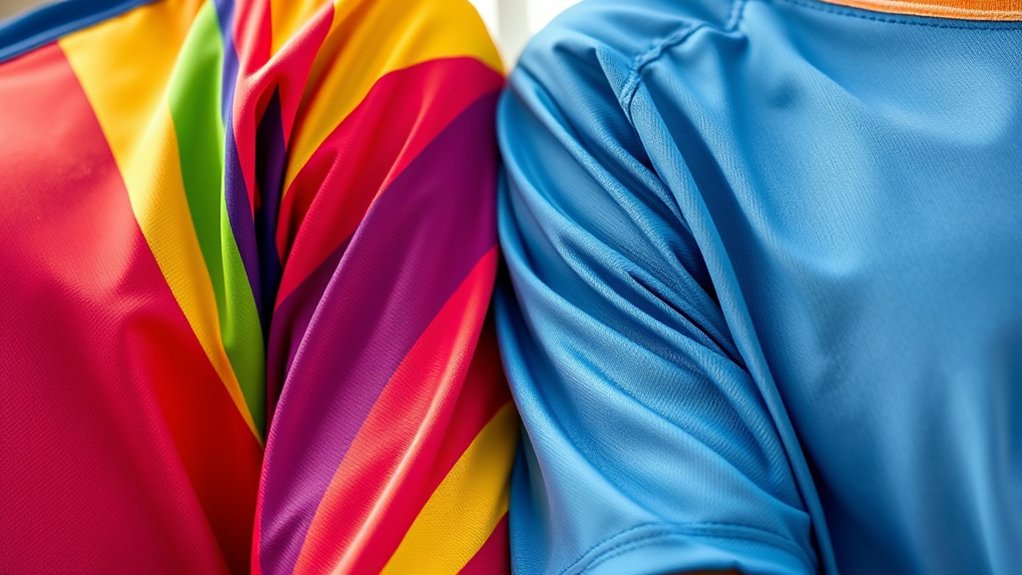

When choosing between sublimated jerseys and screen printing, know that sublimation infuses vibrant, long-lasting colors directly into polyester fabric, ensuring breathability and durability without cracking or fading.
Screen printing sits on the surface, limiting color options and potentially affecting comfort due to ink layering, though it suits simpler designs and various fabrics better.
Production costs and times differ too—sublimation handles complex, bulk runs efficiently, while screen printing favors smaller batches.
Keep exploring to uncover which method perfectly matches your team’s needs.
Key Takeaways
- Sublimation infuses ink into polyester fabric for vibrant, intricate designs, while screen printing applies surface ink suited for simpler patterns.
- Sublimated jerseys offer superior durability and color longevity, resisting fading and cracking better than screen-printed ones.
- Sublimation maintains fabric breathability and softness, whereas screen printing can create stiffness and block airflow.
- Sublimation supports unlimited color complexity and gradients; screen printing works best with solid colors and fewer hues.
- Screen printing is cost-effective for small runs, but sublimation scales faster and cheaper for complex, large-volume orders.
Sublimation Vs Screen Printing: What’s the Difference?
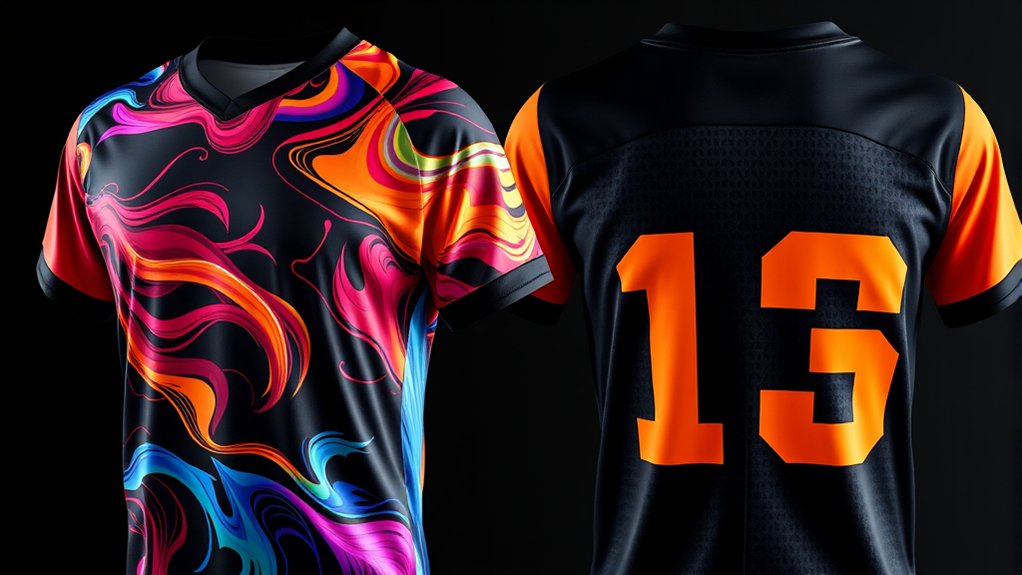
How do sublimation and screen printing differ in producing custom jerseys? Sublimation infuses ink directly into the fabric using heat and pressure, resulting in vibrant, permanent designs without adding weight or texture. This process offers sublimation advantages such as unlimited color options and intricate detailing, making it ideal for complex graphics.
In contrast, screen printing applies ink layers on the fabric’s surface, which can lead to a heavier, less breathable jersey. Screen printing drawbacks include limited color palettes, potential cracking over time, and longer setup times for multicolor designs.
When choosing a method, consider that sublimation excels in delivering high-resolution, durable prints on polyester materials, whereas screen printing suits simpler, bold designs on various fabric types but with less flexibility and potential wear issues.
Which Printing Method Lasts Longer on Sports Jerseys?
Understanding the durability of sublimation and screen printing is key when selecting a method for sports jerseys. In a durability comparison, sublimation integrates ink into the fabric fibers, ensuring long-lasting colors that don’t crack or peel.
Screen printing, however, applies ink on the surface, making it more prone to fading and cracking over time, especially under heavy use.
Consider these maintenance considerations to extend longevity:
- Sublimated jerseys require less delicate washing, as the print is embedded.
- Screen-printed jerseys need gentle cycles and avoidance of harsh detergents to prevent print degradation.
- Both methods benefit from air drying to maintain print integrity.
Ultimately, sublimation offers superior print longevity, ideal for teams prioritizing durability with minimal upkeep.
How Printing Affects Jersey Comfort and Breathability
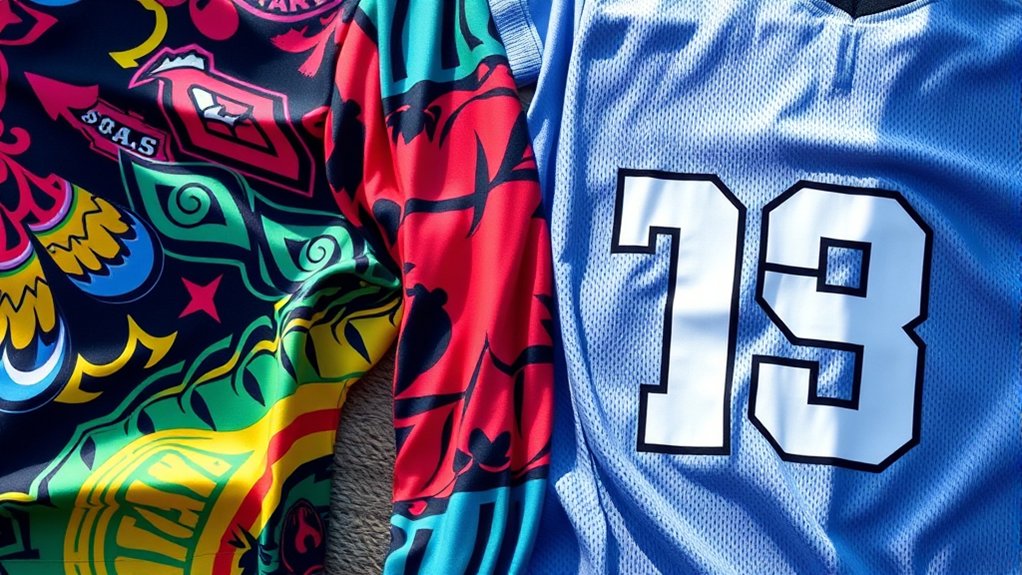
You’ll notice that printing methods directly influence the fabric’s texture and overall comfort. Sublimated jerseys maintain breathability since the ink integrates with the fibers, while screen printing adds layers that can block airflow.
Understanding these differences helps you select jerseys that optimize performance and wearer comfort.
Impact On Fabric Texture
Although both sublimated and screen-printed jerseys serve their purpose in customization, their impact on fabric texture and breathability varies considerably. When you evaluate fabric feel, sublimation integrates ink directly into the fibers, preserving the original texture with minimal alteration.
Screen printing, however, deposits ink layers on the surface, creating a noticeable texture impact that can alter hand feel and flexibility.
Consider these factors:
- Sublimated jerseys maintain fabric softness and stretch due to ink infusion.
- Screen printing adds thickness, potentially causing stiffness and reduced flexibility.
- Heavily screen-printed areas may cause fabric to feel heavier and less natural.
Understanding these differences helps you choose the printing method that balances design durability with ideal fabric performance.
Breathability Differences Explained
When choosing between sublimated and screen-printed jerseys, consider how each method impacts breathability and overall comfort. Sublimation integrates ink into fabric fibers, maintaining moisture management and airflow performance. Screen printing adds layers on top, potentially hindering breathability and increasing heat retention.
| Feature | Sublimated Jerseys | Screen-Printed Jerseys |
|---|---|---|
| Ink Application | Embedded in fibers | Surface layer |
| Moisture Management | Unaffected | Slightly reduced |
| Airflow Performance | High | Moderate to low |
| Comfort Level | Enhanced | Can feel heavier |
| Durability | High (no cracking) | Moderate (may crack) |
Choose sublimation for superior breathability and moisture control. Screen printing suits bold designs but may compromise comfort.
Best Colors and Designs for Sublimated Vs Screen Printed Jerseys
You’ll notice sublimated jerseys offer unmatched color vibrancy and can handle intricate designs without adding weight. Screen printing, however, excels with solid colors and simpler patterns, providing strong fade resistance on select inks.
Understanding these distinctions helps you choose the best method for your team’s visual impact and durability needs.
Color Vibrancy Comparison
Color vibrancy plays an essential role in choosing between sublimated and screen printed jerseys. When evaluating your options, you’ll want to focus on color saturation and vibrancy longevity to guarantee your jerseys maintain their visual impact over time.
Sublimation infuses ink directly into the fabric, delivering high saturation and exceptional vibrancy longevity without cracking or peeling. Screen printing, however, offers thicker ink layers that can produce bold colors but may fade or crack with extensive wear.
Consider these factors:
- Sublimated jerseys excel in gradient shifts and complex color blends due to dye infusion.
- Screen printing provides strong opacity on darker fabrics but risks vibrancy loss after repeated washes.
- Both methods require different fabric treatments to optimize color retention and durability.
Understanding these nuances helps you select the best method for your team’s performance and aesthetic needs.
Design Complexity Options
Although both sublimation and screen printing offer unique advantages, your choice depends heavily on the complexity and color range of your jersey designs. Sublimation provides superior design flexibility, enabling intricate, full-color graphics without complexity limits.
You can reproduce gradients, fine lines, and photographic elements seamlessly, making it ideal for highly detailed, multi-colored designs. In contrast, screen printing imposes complexity limits due to the need for separate screens per color.
This method suits simpler designs with fewer colors but delivers sharp, bold prints. If your design requires numerous colors or gradients, sublimation is your best bet. However, for limited-color logos or text-based designs, screen printing offers cost-effective precision.
Understanding these design complexity options guarantees you select the most effective printing method for your jerseys’ specific visual requirements.
Fade Resistance Differences
When selecting between sublimated and screen printed jerseys, understanding fade resistance is essential for maintaining vibrant visuals over time. Sublimation infuses ink directly into the fabric, offering superior color retention and resistance to cracking or peeling.
Screen printing applies ink layers on the surface, which can degrade faster with repeated wash cycles, impacting fade resistance.
Consider these factors for ideal color retention:
Sublimated jerseys excel with complex, multi-color designs that require consistent fade resistance.
Screen printed jerseys perform well with bold, solid colors but may show wear sooner.
High-quality inks and proper curing processes enhance fade resistance in screen printing.
Costs and Production Time for Sublimated Vs Screen Printed Jerseys
Understanding the costs and production time differences between sublimated and screen printed jerseys is essential for making informed decisions in sports apparel manufacturing. Sublimation typically involves higher upfront setup costs due to digital printing technology but offers superior production scalability and faster turnaround for complex, full-color designs.
You’ll benefit from bulk pricing as quantities increase, reducing per-unit cost efficiently. Conversely, screen printing demands multiple screens for different colors, increasing initial setup time and costs, especially for multi-color designs.
Production scalability is limited by manual processes, which can slow large orders. While screen printing may be cost-effective for small runs with simple designs, sublimation excels in speed and cost efficiency at scale, making it ideal when you prioritize production speed and complexity without sacrificing budget control.
Which Printing Method Is Best for Customizing Team Jerseys?
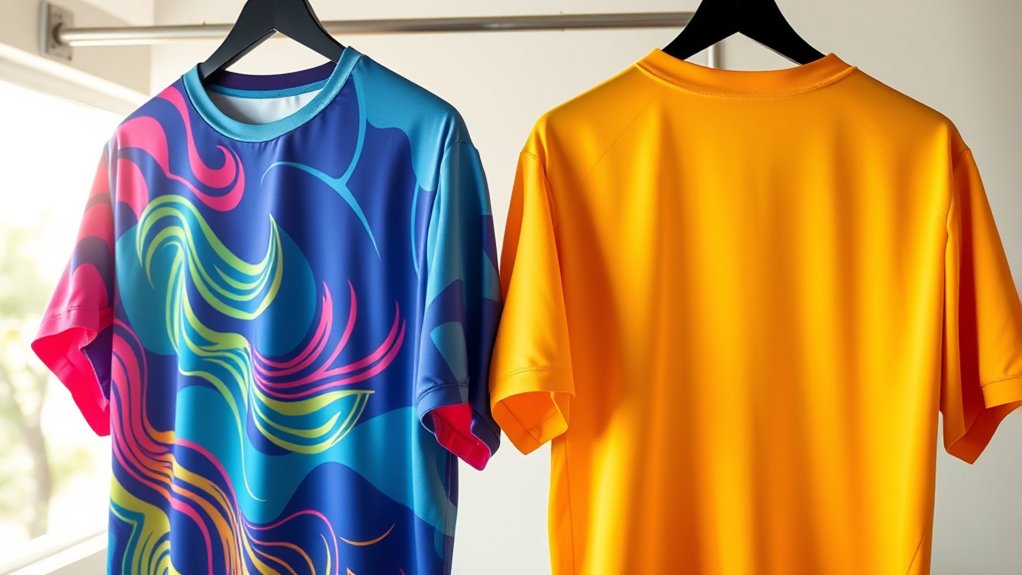
How do you determine the best printing method for customizing team jerseys? It hinges on your priorities for durability, design complexity, and budget alignment with current jersey trends. You want to boost team spirit with vibrant, lasting graphics that stand up to wear.
Consider these factors:
- Design Complexity: Sublimation excels with intricate, multi-color designs; screen printing suits simpler, bold logos.
- Fabric Compatibility: Sublimated prints integrate into polyester fabrics; screen printing adapts to diverse materials.
- Longevity and Feel: Sublimation offers a lightweight, breathable feel without cracking; screen printing may add texture but risks fading over time.
Choosing the right method means balancing these technical elements to elevate team spirit and stay ahead in evolving jersey trends.
Key Tips for Choosing Between Sublimated and Screen Printed Jerseys
Why choose sublimated jerseys over screen printed ones or vice versa? It boils down to your priorities: sublimated designs offer vibrant, all-over graphics with no cracking or peeling, while screen printed durability excels under heavy wear and repeated washing.
Consider these key factors:
| Factor | Sublimated Jerseys | Screen Printed Jerseys |
|---|---|---|
| Design Flexibility | Complex, full-color, photo-quality | Limited colors, simpler designs |
| Durability | Integrated ink, less fade | Strong, withstands abrasion |
| Cost Efficiency | Cost-effective for large orders | Better for small runs |
Use this matrix to align your choice with your team’s needs, balancing vibrant sublimated designs against the proven screen printed durability.
Frequently Asked Questions
Can Sublimated Jerseys Be Easily Repaired if Damaged?
You can’t easily repair sublimated jerseys due to dye infusion in fabric. Repair techniques are limited, impacting jersey longevity.
Focus on preventive care to maintain durability, as restoration often compromises material integrity and affects overall performance.
Are There Environmental Impacts Unique to Each Printing Method?
You’ll find sublimation reduces waste, enhancing sustainability, while screen printing generates more chemical runoff.
Effective waste management is essential for screen printing, but sublimation’s digital process limits environmental impact, improving overall sustainability concerns.
How Do Sublimated and Screen Printed Jerseys Perform in Cold Weather?
In cold weather, you’ll notice sublimated jerseys maintain fabric insulation better, as inks permeate fibers without adding layers.
Screen printed jerseys may reduce insulation slightly due to thicker ink layers, affecting cold weather performance more noticeably.
Can Either Printing Method Accommodate Last-Minute Order Changes?
You’ll find screen printing offers more order flexibility for last-minute changes, despite design limitations with complex graphics.
Sublimation requires pre-planned designs, limiting quick adjustments but guarantees vibrant, durable prints once finalized.
What Are the Best Care Instructions for Each Type of Printed Jersey?
Like handling a delicate instrument, you’ll preserve fabric longevity by washing sublimated jerseys inside out, cold, and avoiding bleach. For screen printed ones, gentle cycles and air drying prevent cracking, ensuring ideal washing techniques extend wear.
Conclusion
When choosing between sublimated and screen printed jerseys, you’re steering through a crossroads where durability meets design precision. Sublimation weaves your colors into the fabric’s very soul, ensuring lasting vibrancy and breathability, while screen printing lays bold, tactile statements on the surface.
Your decision hinges on balancing longevity, comfort, and detail complexity. Sublimated jerseys offer superior moisture-wicking properties and intricate color blends, making them ideal for high-performance needs. On the other hand, screen printing provides vivid, textured designs that stand out but may fade or crack over time.
By understanding these trade-offs, you’ll craft team apparel that performs like a finely tuned engine—reliable, sharp, and built to win. Ultimately, choosing between sublimated jerseys vs screen printing comes down to what matters most for your team’s style and durability.