
Silk Screen Printing Vs Screen Printing highlights the differences in mesh materials and applications.
Silk screen printing uses natural silk mesh, allowing for finer detail and superior ink adhesion. This method is ideal for natural fabrics like cotton or silk where print vibrancy and durability are important.
Regular screen printing typically employs synthetic meshes, which favor speed and cost-efficiency. It is well-suited for high-volume runs on a variety of fabrics but offers less precision compared to silk screen printing.
Each method suits different project needs based on fabric type, detail complexity, and production scale. Understanding these factors helps you select the best fit for your specific print job.
Key Takeaways
- Silk screen printing uses natural silk mesh for finer detail, while screen printing often uses synthetic polyester mesh for durability and cost efficiency.
- Silk screen printing offers superior ink adhesion and print longevity, especially on natural fabrics like cotton and silk.
- Screen printing typically allows faster production times and lower setup costs for simpler designs and shorter runs.
- Silk screen printing excels in vibrant colors and intricate designs due to better ink flow control and fabric compatibility.
- Fabric type and ink compatibility significantly impact print quality and durability in both silk screen and conventional screen printing methods.
Understanding Silk Screen Printing
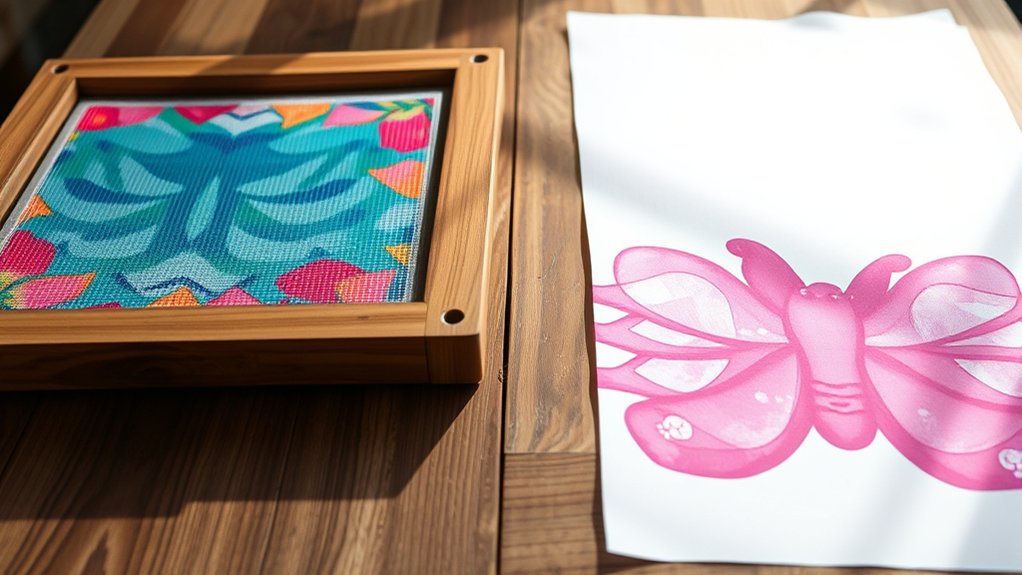
Silk screen printing, often referred to as serigraphy, uses a fine mesh screen traditionally made from silk fibers to transfer ink onto a substrate. You’ll appreciate that the silk properties, such as its uniform weave and durability, allow precise control over ink flow, ensuring sharp, consistent images.
This traditional screen printing technique involves coating the screen with a photosensitive emulsion, then exposing it to light through a stencil to create a design. As you apply ink, the mesh’s openness dictates the ink deposit, impacting color vibrancy and detail.
Understanding these printing techniques helps you optimize your process, from selecting suitable inks to maintaining screen tension. Mastering silk screen printing means leveraging silk’s unique characteristics to produce high-quality, repeatable prints efficiently.
Differences Between Silk Screen and Other Screen Printing Methods
While both silk screen and other screen printing methods rely on stencils and mesh screens to transfer ink, they differ considerably in materials, mesh types, and applications. Silk screen printing uses natural silk fibers, offering superior silk advantages such as finer mesh for detailed work and enhanced ink flow control.
Other methods often utilize synthetic meshes like polyester or nylon, which provide higher durability and cost-efficiency but may compromise detail precision. You’ll notice silk screens excel in printing versatility, accommodating various ink types and intricate designs.
Conversely, synthetic screens favor high-volume, industrial printing where speed and longevity are priorities. Understanding these differences helps you select the appropriate method based on project complexity and desired output quality, maximizing both efficiency and print fidelity.
Best Materials and Surfaces for Each Printing Method
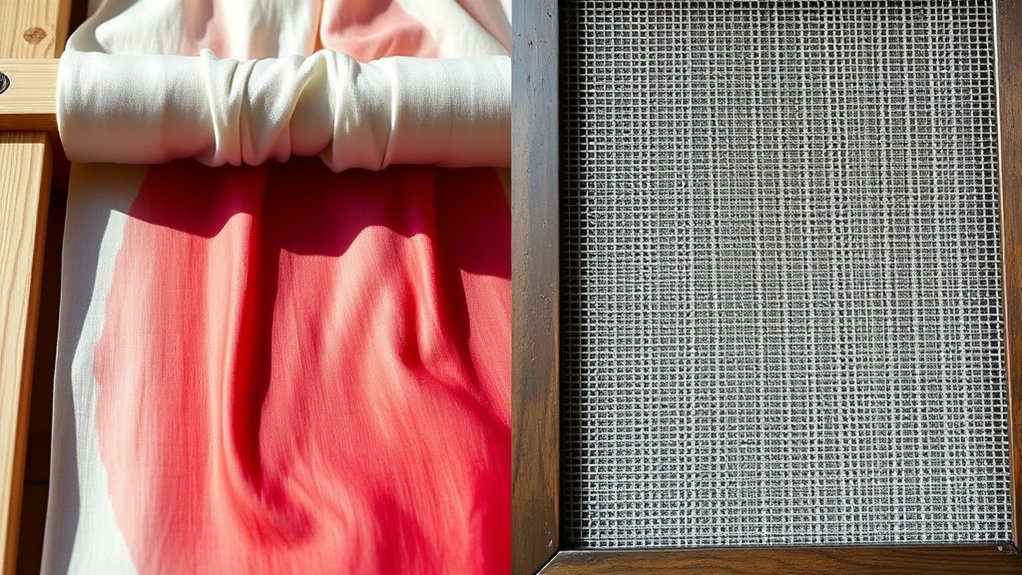
Because different printing methods interact uniquely with various substrates, choosing the right materials and surfaces is essential for ideal results. Silk screen printing excels on natural fabric types like cotton and silk, where its finer mesh allows intricate designs without bleeding. It also performs well on smooth surface textures, enabling sharp detail reproduction.
Conventional screen printing, however, adapts better to synthetic fabrics such as polyester and blends, handling coarser surface textures effectively due to its thicker ink deposits. When working with rigid substrates like wood, glass, or metal, traditional screen printing provides stronger adhesion. Understanding these distinctions helps you select the best fabric types and surface textures for each method, ensuring precision and efficiency in your printing projects.
Print Quality and Durability: Silk Screen vs. Other Methods
You’ll notice that silk screen printing often delivers superior ink adhesion compared to other methods, which directly impacts print longevity. When exposed to repeated wear and washing, silk screen prints typically maintain their vibrancy and integrity longer.
Understanding these differences helps you choose the right technique for durable, high-quality results.
Ink Adhesion Differences
Although both silk screen printing and other screen printing methods apply ink through a mesh stencil, the adhesion characteristics differ considerably due to variations in ink formulation and mesh tension. You’ll find that silk screen printing typically employs thicker ink types, such as plastisol or heavy-bodied water-based inks, which enhance adhesion by filling fabric pores more effectively.
In contrast, alternative screen printing methods often use lighter inks optimized for speed and finer detail, sometimes sacrificing adhesion strength. Adhesion techniques also vary: silk screen printing benefits from tighter mesh tension, which forces ink deeper into substrate fibers, improving bond durability.
Meanwhile, other methods might rely on chemical additives or pre-treatment processes to compensate for looser mesh or thinner inks. Understanding these distinctions helps you select the appropriate method for your project’s adhesion requirements.
Longevity Under Wear
The way ink adheres to a substrate directly impacts how well a print holds up over time under repeated wear and washing. When considering longevity under fabric wear, silk screen printing typically offers superior durability due to its thicker ink deposits and strong adhesion.
Key longevity factors include:
- Ink penetration depth: deeper penetration enhances resistance to cracking and fading.
- Ink type and curing: proper curing guarantees ink resilience against abrasion and washing.
- Fabric texture and composition: smooth, tightly woven fabrics improve ink bonding.
- Washing and care instructions: following guidelines reduces premature wear.
You’ll find that silk screen printing’s robust ink layers maintain vibrancy longer compared to other methods that deposit thinner ink films. By optimizing these longevity factors, you guarantee your prints withstand the rigors of daily use.
Cost and Production Time Differences
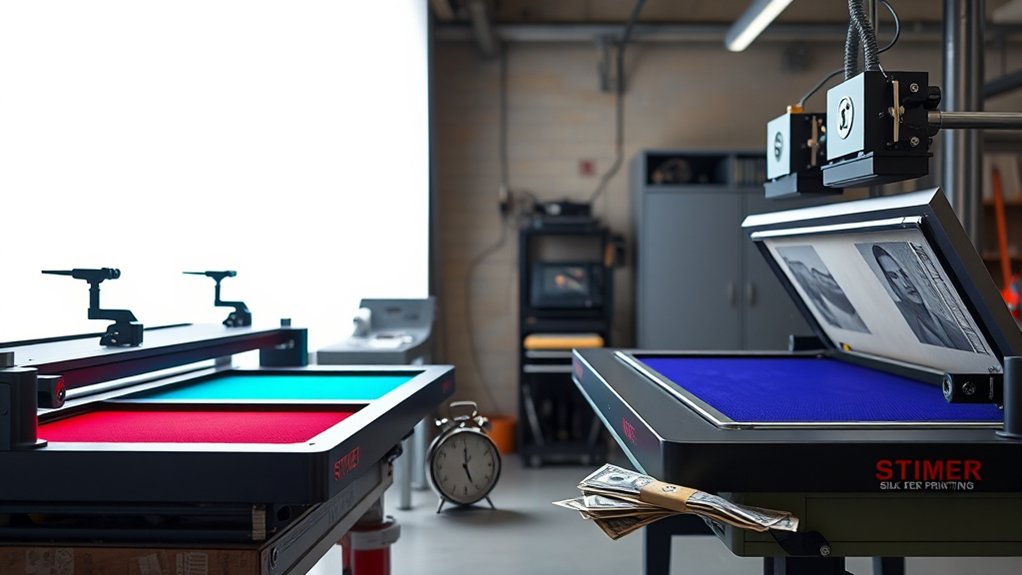
Cost efficiency and turnaround time play crucial roles when choosing between silk screen printing and screen printing. Understanding the cost comparison and production efficiency helps you enhance your budget and deadlines.
Silk screen printing often involves more setup time, increasing initial costs but reducing unit costs in large runs. Screen printing typically allows faster production with simpler designs, benefiting shorter runs.
| Method | Setup Cost | Unit Cost | Production Time (per 100 units) |
|---|---|---|---|
| Silk Screen | High | Low | 4 hours |
| Screen Printing | Medium | Medium | 3 hours |
| Digital Printing | Low | High | 2 hours |
| Offset Printing | High | Low | 5 hours |
Choose based on volume and turnaround needs for maximum production efficiency.
How to Choose the Right Printing Method for Your Project
You need to assess your project’s complexity to determine which printing method suits your design details and color requirements. Evaluate cost efficiency by comparing setup expenses and production volume for both silk screen and screen printing.
Also, consider material compatibility to guarantee the chosen technique adheres properly and maintains durability on your substrate.
Project Complexity Considerations
When deciding between silk screen printing and screen printing, consider the complexity of your project’s design and production requirements. Your choice hinges on factors like project scale and design intricacy. Silk screen printing excels with large runs and simpler designs, while screen printing adapts better to detailed, multicolor artwork.
Evaluate these key points:
- Project scale: Larger quantities favor silk screen for efficiency.
- Design intricacy: Fine details require high-resolution screen printing.
- Color layering: Complex color blends are better managed by screen printing.
- Material compatibility: Both methods suit different substrates; confirm based on your project.
Cost Efficiency Analysis
Understanding the financial implications of each printing method can greatly impact your project’s budget and outcome. Conducting a thorough cost analysis helps you identify fixed and variable expenses tied to silk screen printing versus screen printing.
Silk screen printing often involves higher initial setup costs due to stencil preparation, making it more suitable for large runs where per-unit cost decreases considerably. Conversely, screen printing may offer lower upfront costs and quicker turnaround for smaller batches.
Effective budgeting strategies require you to weigh these factors against your project scale and deadlines. By evaluating material costs, labor, and equipment usage, you can select the method that optimizes your resources while maintaining quality.
This precision in cost efficiency analysis guarantees your project remains financially viable without compromising results.
Material Compatibility Factors
Material compatibility plays an essential role in determining the ideal printing method for your project. You need to take into account how different fabric types interact with various inks and printing techniques to guarantee durability and visual quality.
For instance, synthetic fabrics often require specific inks for best adhesion, while natural fabrics might absorb ink differently, affecting color vibrancy.
Key factors to evaluate include:
- Fabric types: cotton, polyester, blends, or synthetics
- Ink compatibility: water-based, plastisol, or discharge inks
- Durability requirements: wash resistance and wear
- Print detail complexity: fine lines or bold graphics
Frequently Asked Questions
What Is the Historical Origin of Silk Screen Printing?
You’ll find silk screen printing originated in ancient China, using fine mesh and stencils. This technique marks a key moment in printing evolution, blending art and technology to create detailed, repeatable images efficiently.
Can Silk Screen Printing Be Done at Home?
Yes, you can do silk screen printing at home. With a proper home setup and mastering DIY techniques like coating screens and using emulsion, you’ll achieve precise, professional results right in your own space.
Are There Eco-Friendly Inks Used in Silk Screen Printing?
Yes, you can use eco-friendly options like water-based or soy-based inks in silk screen printing. These inks utilize sustainable materials, reducing environmental impact while maintaining vibrant, durable prints suitable for various applications.
How to Clean and Maintain Silk Screens After Printing?
Of course, you’ll want to skip screen cleaning said no pro ever. You’ll rinse immediately, use appropriate cleaners, remove ink residues, dry screens, and store properly.
Regular screen maintenance guarantees crisp prints and prolongs screen life efficiently.
What Safety Precautions Are Needed During Screen Printing?
You should always wear protective gear like gloves and goggles, guarantee your workspace ventilation is adequate to avoid inhaling fumes, and handle chemicals carefully to prevent skin contact and respiratory issues during screen printing processes.
Conclusion
When deciding between silk screen printing and other screen printing methods, remember: like choosing between a classic fountain pen and a modern stylus, each serves its purpose with distinct advantages. Silk screen printing offers unmatched durability and vibrant detail, ideal for traditional materials.
Meanwhile, other methods may suit faster, cost-effective projects. By understanding your material, budget, and quality expectations, you’ll select the printing technique that perfectly aligns with your project’s demands and vision.
Ultimately, choosing between silk screen printing vs screen printing depends on balancing these factors to achieve the best results for your specific needs.