
When choosing between screen printing water based ink vs plastisol, it’s important to understand their distinct characteristics.
Water-based inks soak into fabric fibers, resulting in a soft, breathable feel with matte, subtle colors. However, they require precise curing to prevent fading over time.
Plastisol inks, on the other hand, sit on the fabric surface, producing vibrant, opaque prints with a durable and glossy finish. They work especially well on synthetic and heavy textiles, maintaining color intensity and longevity.
Additionally, water-based inks have a lower environmental impact and offer simpler cleanup compared to plastisol.
By understanding these nuances, you can select the best ink type to match your project’s fabric and design requirements.
Key Takeaways
- Water-based inks dry by evaporation and soak into fabric, offering a soft, breathable finish. Plastisol inks require heat curing and form a thick surface layer.
- Plastisol inks provide brighter, more opaque colors and durability, whereas water-based inks yield softer hues with lower opacity and a matte finish.
- Water-based inks are environmentally friendly with low VOCs and easy cleanup. Plastisol inks contain PVC and phthalates, posing higher environmental concerns.
- Water-based inks are ideal for natural fibers like cotton, preserving fabric texture. Plastisol inks suit synthetic fabrics and bold, multi-layer designs.
- Water-based prints may fade or crack sooner without proper curing. Plastisol prints offer superior resistance to fading, cracking, and wear.
What Are Water-Based and Plastisol Screen Printing Inks?
Screen printing inks primarily come in two types: water-based and plastisol. You’ll find water-based ink composition consists mainly of pigments suspended in a water-soluble binder, which requires evaporation of water during the drying process. This ink soaks into the fabric fibers, creating a softer finish.
Plastisol ink, on the other hand, is composed of PVC particles suspended in a plasticizer. It doesn’t dry by evaporation; instead, it requires heat to cure and solidify, forming a durable film atop the substrate. Understanding these differences in ink composition and drying process is essential for controlling print quality and substrate compatibility.
You’ll choose water-based for its eco-friendliness and curing at lower temperatures, while plastisol offers versatility and opacity but demands higher heat during the drying process.
Fabric Feel and Appearance: Water-Based vs Plastisol Ink
Although both water-based and plastisol inks serve the same purpose, you’ll notice significant differences in fabric feel and appearance after printing. Water-based ink soaks into the fabric fibers, preserving the fabric texture and creating a softer hand feel. Plastisol ink, in contrast, sits atop the fabric, forming a thicker layer that alters texture noticeably.
Key distinctions include:
- Water-based ink offers lower ink opacity, allowing fabric color and texture to show through.
- Plastisol provides higher ink opacity, delivering solid, vibrant prints.
- Water-based prints yield a matte finish, enhancing subtlety.
- Plastisol prints generally exhibit a glossy or semi-gloss finish.
- The fabric feel with water-based ink remains breathable, while plastisol can feel heavier and less flexible.
Choosing between them depends on your priority: maintaining natural fabric texture or achieving bold, opaque designs.
Vibrancy and Durability: Water-Based vs Plastisol Ink
When you want your prints to retain vivid colors over time, understanding how water-based and plastisol inks perform in vibrancy and durability is essential. The vibrancy comparison reveals plastisol inks typically offer brighter, more opaque colors, while water-based inks yield softer, more subtle hues.
Durability factors depend on ink composition and curing. Plastisol’s thick layer resists cracking and fading better, especially on darker fabrics, whereas water-based inks penetrate fibers, resulting in a softer feel but potentially less resistance to repeated washing.
| Aspect | Water-Based Ink | Plastisol Ink |
|---|---|---|
| Vibrancy | Softer, translucent tones | Bright, opaque, highly vibrant |
| Durability | Good if properly cured; may fade/crack sooner | Excellent resistance to fading and cracking |
| Fabric Feel | Soft, breathable | Thicker, less breathable |
Screen Printing Environmental Impact: Water-Based vs Plastisol Ink
Because you’re weighing sustainability alongside print quality, understanding the environmental impact of water-based and plastisol inks is essential. Water-based inks typically present fewer sustainability concerns due to their lower VOC content and easier cleanup processes.
Plastisol inks, conversely, contain PVC and phthalates, raising significant ink disposal challenges. Here’s a precise comparison:
- Water-based inks use water as a solvent, reducing hazardous emissions.
- Plastisol inks require chemical solvents for cleaning, increasing toxic waste.
- Ink disposal of water-based inks is less regulated but still demands care.
- Plastisol ink waste often classifies as hazardous, necessitating specialized disposal.
- Energy consumption differs; water-based inks cure at lower temperatures, lowering environmental footprint.
Choosing water-based inks can mitigate environmental risks, but you must manage ink disposal responsibly to align with sustainability goals.
Best Inks for Different Fabrics and Designs
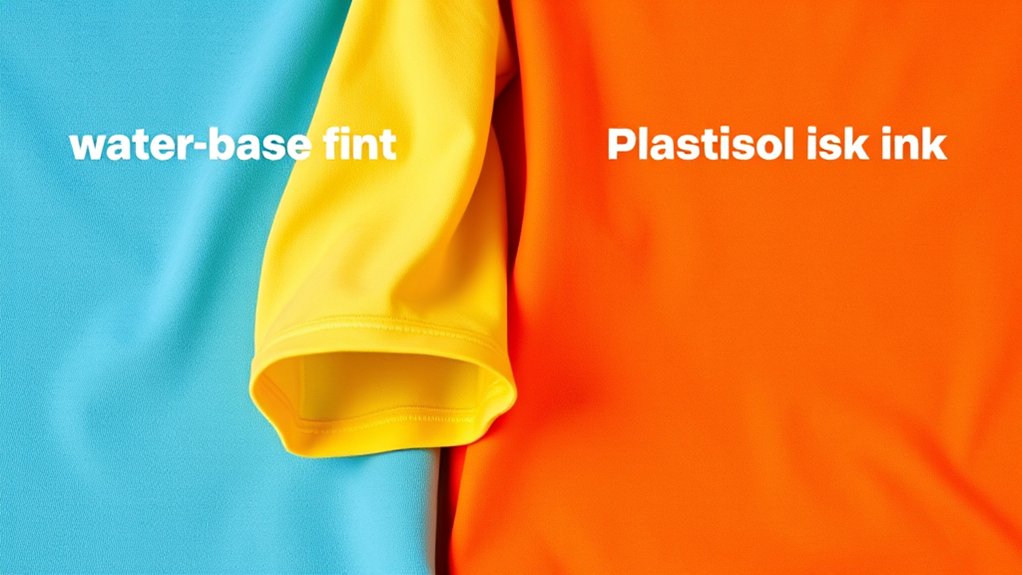
Selecting the right ink hinges on the fabric type and design complexity you’re working with, as each combination demands specific ink properties for ideal adhesion, durability, and visual impact.
For natural fibers like cotton, water-based inks excel due to superior fabric compatibility and soft hand feel, especially with intricate, detailed designs requiring fine line work. Conversely, plastisol inks offer robust opacity and durability on synthetic fabrics such as polyester, making them preferable for bold, vibrant designs that demand longevity.
When printing on blends, consider ink flexibility and curing temperature to prevent cracking or fading. Your design preferences also dictate ink choice; water-based inks deliver a matte, integrated look, while plastisol inks produce brighter, raised prints.
Balancing these factors guarantees peak print quality tailored to your specific fabric and design requirements.
Screen Printing Setup and Cleanup: Ink Choices Matter
Though ink choice directly impacts print quality, it also plays a critical role in your screen printing setup and cleanup processes. Different screen printing techniques demand specific ink applications, influencing how you prepare and maintain your equipment. Plastisol inks require solvents for cleanup, while water-based inks usually clean up with water, affecting your workflow speed and environmental considerations.
Keep these factors in mind:
- Ink viscosity affects mesh selection and squeegee pressure
- Drying time impacts curing setup and production speed
- Cleanup solvents or water dictate waste disposal methods
- Ink adhesion influences screen reclaiming ease
- Ink residue buildup alters screen tension and print consistency
Tips for Choosing Water-Based vs Plastisol Ink for Your Project
When you decide between water-based and plastisol inks, consider your project’s specific requirements, such as fabric type, desired finish, and production volume. Water-based inks penetrate fabric fibers, offering a soft hand feel, ideal for lightweight materials and designs requiring subtle gradients.
Plastisol inks sit atop fabric, providing vibrant colors and durability, best suited for heavier textiles and bold designs. Evaluate application techniques: water-based inks require precise mesh tension and slower drying to prevent clogging, while plastisol tolerates faster printing speeds and multiple ink layering without curing between layers.
For complex, multi-layer designs, plastisol’s layering capability excels. However, if eco-friendliness and softness are priorities, water-based is preferable. Ultimately, match your choice to the fabric, design complexity, and production demands for peak print quality and efficiency.
Frequently Asked Questions
Can Water-Based Ink Be Used on Dark Fabrics Without a White Underbase?
You can’t effectively use water-based ink on dark fabrics without a white underbase because water-based opacity is low. This makes dark fabric challenges significant; the ink won’t appear vibrant or opaque without that essential layer beneath.
How Do Water-Based and Plastisol Inks Affect Print Longevity After Multiple Washes?
Think of print durability like a marathon: plastisol inks, with superior wash resistance, endure many cycles, while water-based inks, though softer, may fade sooner. You’ll want to weigh longevity against feel for your project.
Are There Specific Health Risks Associated With Handling Plastisol Ink?
Yes, you should be cautious with plastisol ink. Prolonged ink exposure can cause health concerns like skin irritation, respiratory issues, and allergic reactions.
Always wear gloves and work in well-ventilated areas to minimize risks effectively.
Can Water-Based Inks Be Mixed to Create Custom Colors Easily?
You can mix water-based inks for custom color mixing easily, but beware of getting perfect ink compatibility, which feels like solving the universe’s toughest puzzle. Always test blends precisely, as variations affect drying times and print quality considerably.
What Is the Cost Difference Between Water-Based and Plastisol Inks per Gallon?
You’ll find water-based inks generally cost more per gallon than plastisol, with ink pricing varying by brand and quality. The cost comparison shows water-based inks can be 10-30% higher, affecting your budget planning precisely.
Conclusion
Choosing between water-based and plastisol inks is like picking the right tool from a craftsman’s kit—each serves a distinct purpose. Water-based inks offer a soft, breathable finish with eco-friendly advantages, perfect for intricate, lightweight designs.
Plastisol inks, on the other hand, deliver vibrant colors and superior durability, ideal for bold, long-lasting prints. They provide excellent coverage and are easier to work with for many screen printers.
By understanding their technical differences, you can precisely tailor your screen printing process to achieve peak results for every project. Ultimately, knowing when to use screen printing water based ink vs plastisol will ensure you get the best finish and performance for your designs.