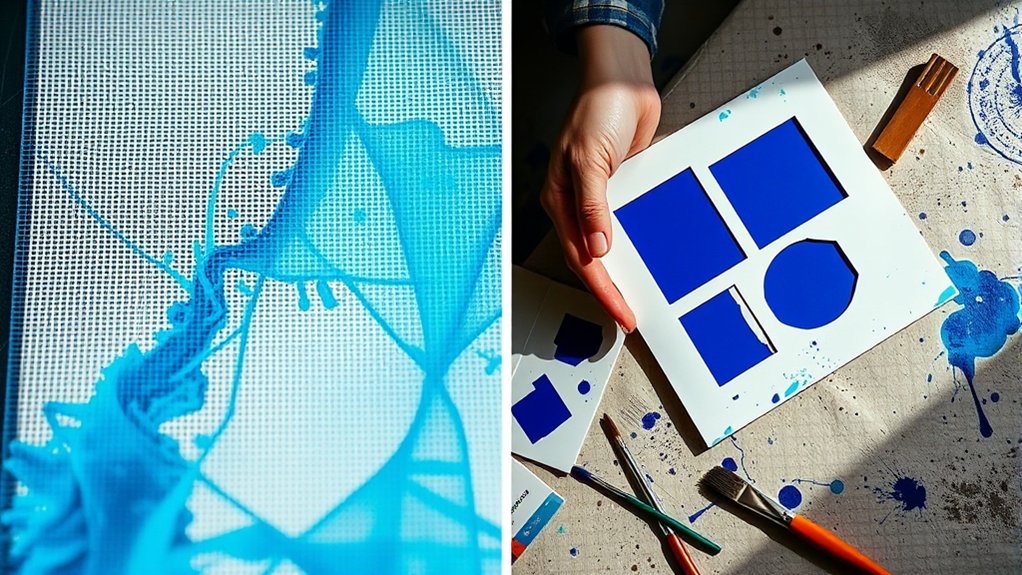

When you choose screen printing, you get crisp, vibrant designs with fine details and sharp edges, perfect for bold logos or intricate patterns on apparel.
Screen printing vs stencil is a common comparison for those deciding how to bring their designs to life.
Stenciling, on the other hand, offers a rustic, handmade charm with simpler shapes and textured flair, great for personalized items or home decor.
Screen printing serves large runs efficiently, while stenciling shines in small batches or one-off projects.
If you want to explore which fits your creative vision best, there’s more to uncover.
Both methods have unique advantages depending on your project needs and style preferences.
Key Takeaways
- Screen printing produces high-resolution, vibrant designs ideal for intricate patterns and bulk production.
- Stenciling offers a handmade look with bold, less detailed edges, suited for small batches or one-offs.
- Screen printing requires higher upfront setup costs but is cost-effective for large runs.
- Stenciling uses simple materials and is more flexible for personalized, textured, or layered artwork.
- Screen printing excels in uniformity and detail, while stenciling provides a tactile, artistic feel perfect for home decor.
How Screen Printing Works
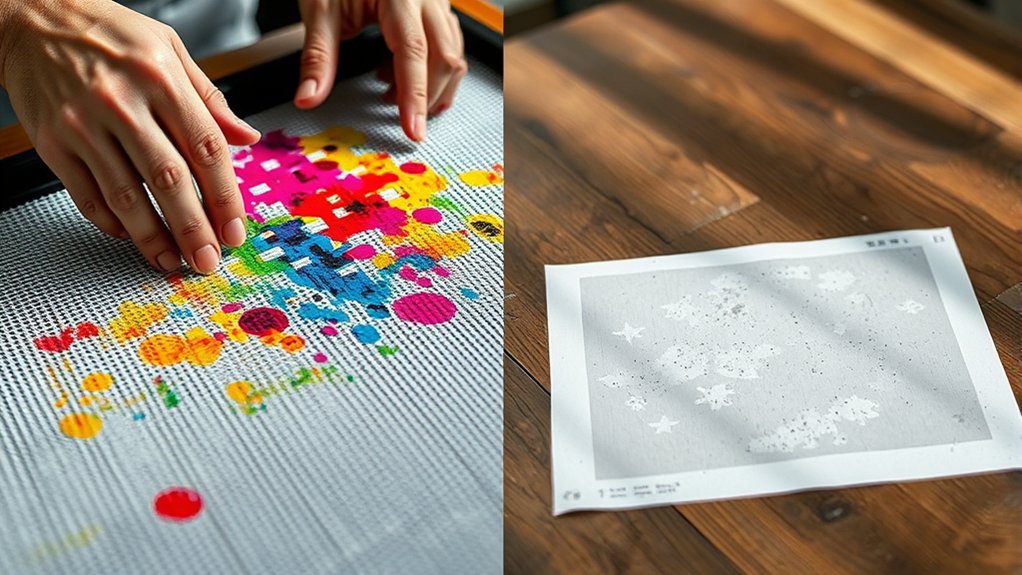
Imagine pressing vibrant ink through a fine mesh to bring your design to life. That’s the essence of screen printing. You start by selecting the right mesh type, each with its unique thread count, controlling how much ink passes through.
Coarser meshes let more ink flow for bold, thick lines, while finer meshes deliver delicate details. Next, you prepare a screen coated with a light-sensitive emulsion, then expose it to light with your design, hardening the emulsion except where your image blocks it.
During ink application, you spread ink across the screen, using a squeegee to push it through open areas of the mesh onto your substrate. This precise, controlled process guarantees your design appears crisp and vibrant every time you print.
How Stenciling Works
Stenciling lets you create sharp, repeatable patterns by cutting your design into a sturdy material and placing it directly onto your surface. You start by selecting stencil materials, often mylar, cardboard, or acetate, that hold their shape and resist paint bleed.
After carving out your design, you secure the stencil tightly against your canvas, wall, or fabric to keep edges crisp. Then, you apply paint or ink over the stencil openings, ensuring even coverage without smudging.
This hands-on method adapts easily to various stencil applications, from decorating walls and furniture to customizing apparel or signage. Because you control each step, stenciling offers a tactile, immediate connection to your artwork, making it ideal for bold, graphic designs that demand precision and repeatability.
Screen Printing Vs Stenciling: Quality and Detail Comparison
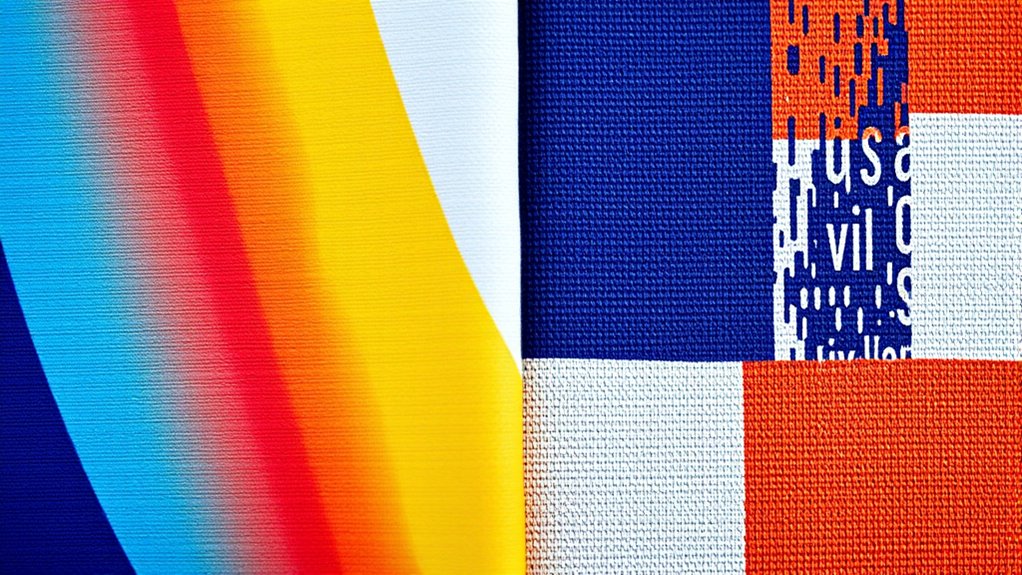
You’ll notice screen printing captures finer details with sharper resolution, making complex designs pop with precision. Stenciling, while versatile, tends to blur edges and simplify shapes, giving your artwork a more rugged, handmade charm.
Let’s compare how each handles the challenge of turning intricate ideas into vivid prints.
Print Resolution Differences
Although both screen printing and stenciling can produce striking designs, their print resolution capabilities vary considerably. This affects the clarity and detail you’ll achieve in your final piece. Screen printing offers higher print resolution, capturing fine lines and subtle gradients with impressive image clarity. Stenciling, while bold and effective for simpler shapes, often results in coarser edges and less precise detail.
| Technique | Max Print Resolution | Image Clarity |
|---|---|---|
| Screen Printing | High (up to 300 dpi) | Sharp, detailed |
| Stenciling | Moderate (up to 150 dpi) | Bold, less refined |
| Hybrid | Variable | Balanced clarity |
Choose screen printing when crisp, intricate designs matter most. Stenciling suits bold, graphic visuals with less fine detail.
Design Complexity Capabilities
When your design demands layers of detail and intricate patterns, screen printing excels by handling complexity with finesse and consistency. You’ll find its design scalability impressive; it adapts effortlessly from tiny text to elaborate multi-color artworks, preserving sharpness and vibrancy.
In contrast, stenciling faces artistic limitations; fine lines and subtle gradients can blur or break, restricting your creative freedom. While stencils shine for bold, straightforward shapes, screen printing lets you push boundaries, capturing delicate nuances and subtle shading.
If you want to elevate your project with complex imagery or multiple hues, screen printing provides the precision and flexibility you need. So, when weighing design complexity capabilities, trust screen printing to bring your most detailed visions to life without compromise.
Cost and Time: Which Method Is More Efficient?
How quickly can you turn your design ideas into finished products without breaking the bank? When weighing screen printing against stenciling, a cost analysis reveals key differences. Screen printing demands upfront investment in screens and setup, but it rewards you with remarkable time efficiency for large runs.
Once the screens are ready, you can churn out consistent prints rapidly, saving you hours and dollars in the long haul. Stenciling, however, offers a lower initial cost and faster setup, perfect for one-offs or small batches. Yet, when scaling up, the manual nature slows you down, increasing labor time and expenses.
Best Projects for Screen Printing and Stenciling
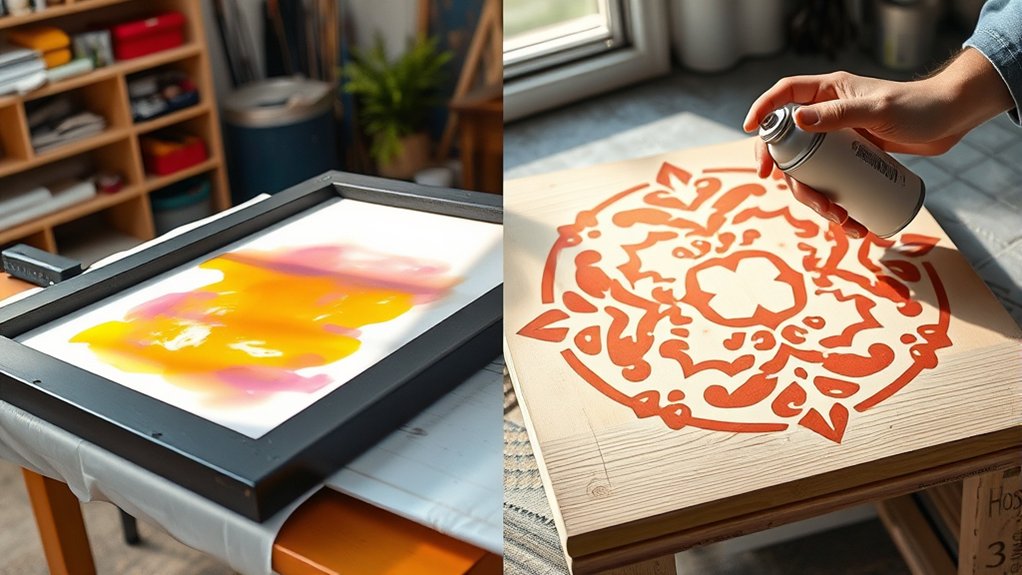
Where should you turn to bring your creative vision to life: screen printing or stenciling? If you’re aiming to create vibrant, uniform designs on custom apparel, screen printing shines. It’s perfect for bold logos, intricate patterns, and bulk projects where consistency is key.
On the other hand, stenciling offers flexibility and charm for home decor. Think textured wall art, personalized pillows, or one-of-a-kind furniture accents. Stenciling lets you experiment with layering and subtle gradients, ideal for adding a handcrafted touch.
How to Choose Between Screen Printing and Stenciling
You’ll want to weigh your budget and timeline carefully. Screen printing shines with larger runs but takes more setup time, while stenciling offers quick, cost-effective bursts.
Think about your design’s detail: intricate patterns demand screen printing’s precision, whereas bold, simple shapes work perfectly with stencils.
Choosing the right method means matching your project’s style and schedule with the technique that brings your vision to life effortlessly.
Cost And Time Efficiency
Although both screen printing and stenciling can create striking designs, choosing the right method often hinges on balancing cost and time. When you conduct a cost analysis, screen printing typically demands a higher upfront investment, such as screens, setup, and specialized inks, but shines with large runs by lowering the cost per item.
Stenciling, on the other hand, keeps initial expenses low and suits small batches or one-offs, saving you money if your production timeline is tight or quantity limited. You’ll find screen printing requires more prep time but speeds up mass production, while stenciling offers quick setup and flexibility, ideal for rapid or custom projects.
Design Complexity And Detail
When your design calls for intricate details and vibrant layers, screen printing delivers sharp, consistent results that stencil methods often struggle to match. You’ll notice how screen printing captures every nuance of design intricacies with precision, bringing complex patterns and fine lines to life.
Stenciling, meanwhile, faces artistic limitations. Its simpler approach often blurs fine details and restricts color layering. If your project demands subtle gradients or multi-colored depth, screen printing offers the clarity and vibrancy you need.
However, if you prefer bold, straightforward shapes with fewer details, stenciling can be a quicker, more accessible option. Ultimately, your choice hinges on how much detail you want to preserve and how those design intricacies impact the final visual impact.
Frequently Asked Questions
Can Screen Printing Be Used on Curved Surfaces?
You can use screen printing on curved surfaces, but it’s tricky. You’ll need specialized printing techniques and flexible screens to guarantee the ink adheres smoothly. This helps preserve your design’s sharpness without distortion or smudging on the curve.
Is Stenciling Safe for Children to Do at Home?
Yes, stenciling’s safe for kids at home if you follow safety precautions and provide child supervision. Use non-toxic paints, keep sharp tools away, and create a colorful, mess-friendly space where creativity flows freely and safely.
How Environmentally Friendly Are Screen Printing Inks?
You’ll find screen printing inks can be eco friendly when you choose water based inks; they dry cleanly, reduce toxins, and blend vibrant colors while protecting Earth’s palette. Perfect for your green creative projects.
Can Stencils Be Reused Multiple Times Without Damage?
You can reuse stencils multiple times, but their durability depends on stencil materials. Plastic or mylar last longer than paper.
Treat them gently and clean carefully, and you’ll keep crisp designs flowing without damage for many uses.
What Equipment Is Essential for Starting Screen Printing?
Right out of the gate, your essential screen printing equipment includes a frame, mesh, squeegee, and emulsion. Don’t forget ink and a light source. These essential supplies turn your ideas into vibrant, lasting prints with ease.
Conclusion
Choosing between screen printing and stenciling comes down to your project’s needs. Did you know screen printing can produce up to 1,000 high-quality prints per hour? That’s a game-changer if you’re aiming for sharp detail and speed.
But if you want a hands-on, artistic touch, stenciling offers that personal flair. Picture your design coming alive—now decide which method will bring your vision to life with the perfect blend of precision and creativity.
Ultimately, understanding the strengths of screen printing vs stencil will help you choose the best technique for your creative goals.