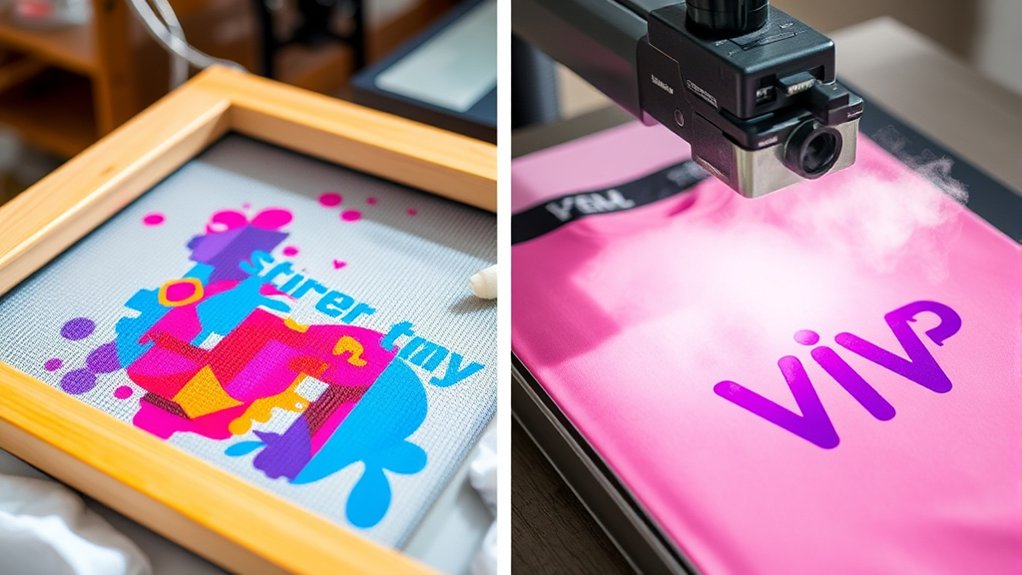

Screen printing vs heat press are two popular methods for customizing apparel, each offering distinct advantages depending on your needs.
If you want vibrant, durable prints with a slightly raised texture, screen printing pushes ink deep into natural fabrics like cotton. This technique is perfect for bold, simple designs and bulk orders.
Heat press, meanwhile, uses heat and pressure to fuse detailed, photo-quality images onto smooth fabrics like polyester. It’s ideal for small batches and intricate colors but tends to be less rugged over time.
Each method offers unique looks and costs, so keep exploring to find the perfect match for your project.
Key Takeaways
- Screen printing is ideal for bold, simple designs with vibrant colors and high durability on natural fabrics like cotton.
- Heat press excels at detailed, multi-colored designs with smooth finishes, suitable for polyester and blends.
- Screen printing has higher setup costs but lower per-unit prices, making it cost-effective for large runs.
- Heat press offers quick setup and low minimum orders, perfect for small batches and fast turnaround.
- Screen printing inks penetrate fabric for longer-lasting prints, while heat press prints may peel or crack over time.
How Screen Printing and Heat Press Work: Key Differences
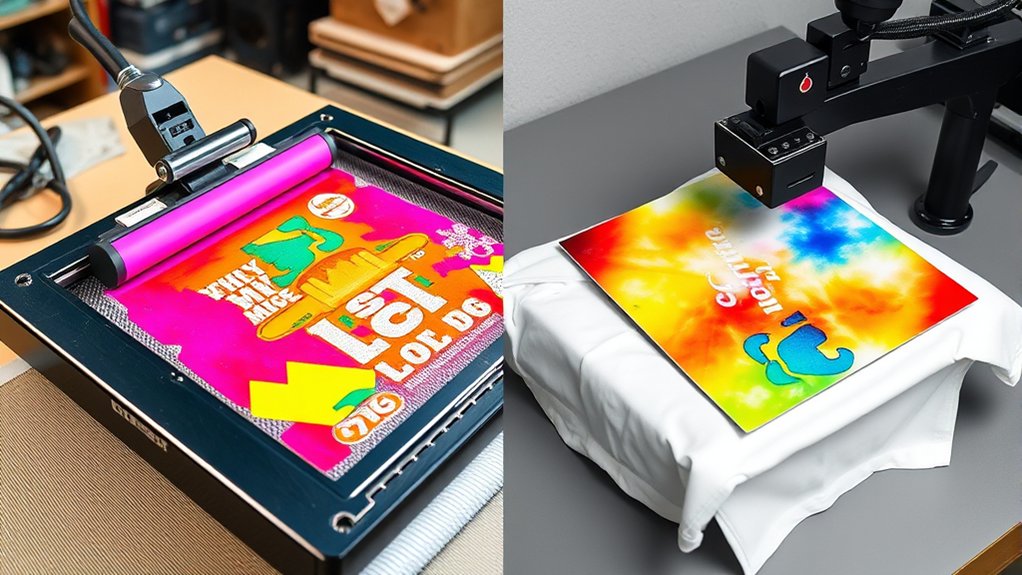
While both screen printing and heat press create vibrant designs on fabric, they use very different methods to achieve their results. Screen printing relies on a stencil-like mesh screen, pushing ink through tiny openings to imprint your design directly onto the fabric. This technique excels in layering colors and works best for bulk orders.
Heat press, on the other hand, uses heat and pressure to transfer a pre-printed vinyl or sublimation design onto your material. You place the design on the fabric, then apply a heated platen that bonds the ink or vinyl to the fibers. These distinct printing techniques offer unique application methods: screen printing immerses ink into the fabric, while heat press fuses designs on the surface, giving you varied textures and durability options.
Comparing Print Quality: Screen Printing Vs Heat Press
Both screen printing and heat press offer distinct visual effects that impact the final look of your design. Screen printing excels in color vibrancy, layering thick ink that pops on fabric.
Heat press provides sharper print resolution with smooth gradients. Your choice shapes how bold or detailed your artwork appears.
| Aspect | Screen Printing |
|---|---|
| Print Resolution | Moderate, best for bold designs |
| Color Vibrancy | High, vivid and saturated colors |
| Texture | Slightly raised, tactile feel |
| Durability | Excellent for long-term wear |
| Ideal Use | Large runs, simple color schemes |
| Aspect | Heat Press |
| Print Resolution | High, fine details and gradients |
| Color Vibrancy | Moderate, slightly muted tones |
| Texture | Smooth, almost flat finish |
| Durability | Good, but less robust than screen |
| Ideal Use | Small runs, complex images |
Cost Comparison of Screen Printing and Heat Press
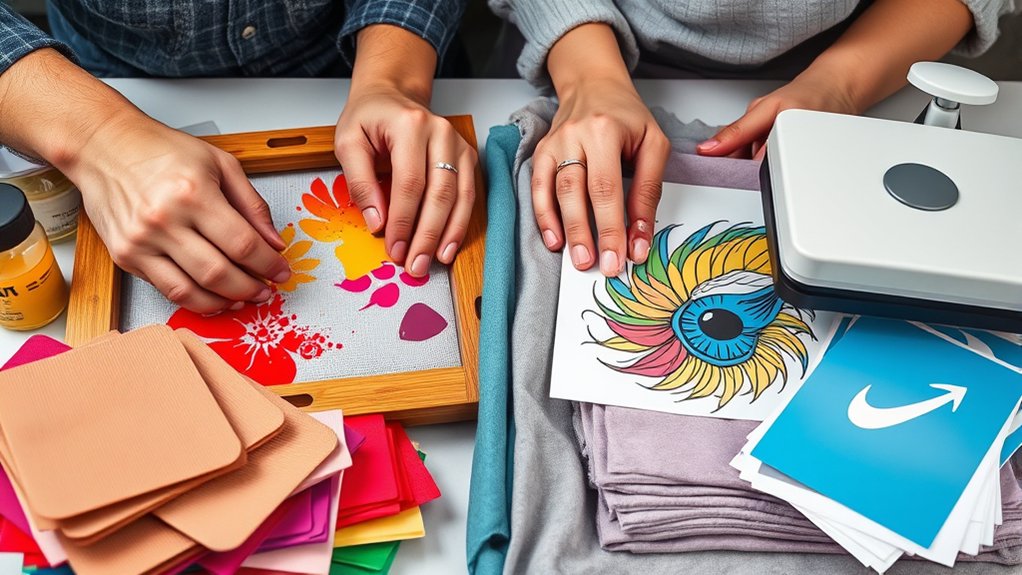
When deciding between screen printing and heat press, understanding the cost dynamics can save you money and hassle. Screen printing costs often involve upfront investments in screens, inks, and setup, making it economical for large runs. Heat press expenses, on the other hand, focus more on machine purchase and transfer materials, ideal for small batches or custom jobs.
Consider these key cost factors:
- Initial equipment price: screens vs. heat press machines
- Consumable costs: ink and screens vs. transfer paper and vinyl
- Setup time impacting labor expenses
- Minimum order quantity influencing per-unit cost
- Maintenance and replacement frequency of materials
Durability: Which Lasts Longer, Screen Printing or Heat Press?
You’ll notice screen printing’s inks sink deep into fabric fibers, creating a vibrant design that resists fading through countless washes.
Heat press prints, while sharp and detailed, often sit atop the fabric and can crack or peel over time. Let’s compare how each method stands up to wear and the relentless test of time.
Ink Longevity Comparison
Although heat press designs can dazzle with vibrant colors initially, screen printing tends to hold its ground better over time, thanks to its thicker ink layers that embed deeply into the fabric. When you compare ink longevity, the ink types and ink formulations play significant roles.
Screen printing uses plastisol or water-based inks that resist fading and cracking, while heat press relies on heat transfer vinyl or sublimation inks, which may degrade faster under stress. Here’s what you should consider:
- Screen printing’s ink penetrates fibers, enhancing durability
- Heat press inks sit atop the fabric, prone to peeling
- Plastisol inks resist washing and UV exposure better
- Sublimation inks bond chemically but only on polyester
- Ink formulations in screen printing adapt for longevity
Choosing screen printing means choosing lasting vibrancy and resilience.
Fabric Wear Resistance
Since your garments face constant friction and stretching, understanding fabric wear resistance is essential to choosing between screen printing and heat press techniques. Screen printing inks penetrate the fabric fibers, creating a durable bond that resists fabric abrasion over time.
This method offers excellent print flexibility, allowing the design to move naturally with the fabric without cracking or peeling. In contrast, heat press prints often sit atop the fabric as a vinyl or transfer layer.
While they provide vibrant colors, these layers are more prone to wear from repeated washing and stretching, leading to flaking or fading. If you want a design that withstands daily wear and maintains integrity through fabric abrasion and movement, screen printing typically outperforms heat press in long-term durability.
Best Fabrics and Designs for Screen Printing and Heat Press
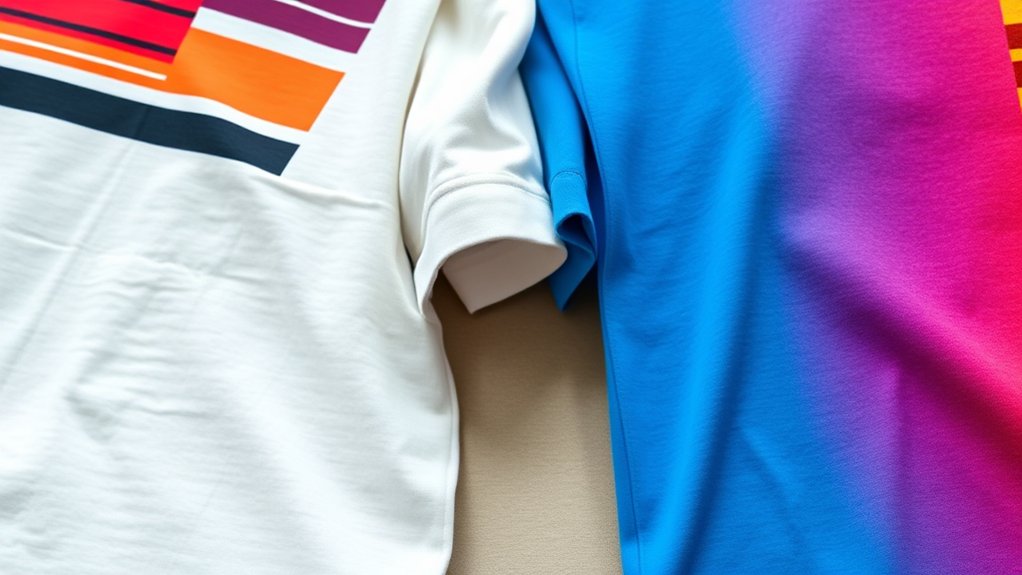
You’ll find screen printing shines on natural fabrics like cotton, where ink soaks in for vibrant, lasting colors. Heat press, on the other hand, pairs best with polyester blends and smooth surfaces that grip transfer vinyl or sublimation prints cleanly.
Understanding which designs—bold blocks or intricate details—suit each method helps you craft striking, flawless apparel every time.
Ideal Fabrics for Screen
Choosing the right fabric sets the foundation for vibrant, lasting prints in both screen printing and heat press methods. For screen printing, you want materials that absorb ink well without bleeding or fading. Cotton blends excel here, offering softness and durability while holding vivid colors brilliantly.
Synthetic fibers, like polyester, can be trickier, but specialized inks can tackle these for sharp, clean designs.
Consider these fabrics for your screen printing projects:
- 100% cotton: natural texture enhances ink absorption
- Cotton blends: balance softness and print durability
- Linen: breathable with unique texture for artistic prints
- Tri-blends (cotton/polyester/rayon): smooth feel, good print clarity
- Pre-shrunk fabrics: maintain print integrity after washing
Selecting the right fabric guarantees your designs pop with precision and longevity.
Best Materials for Heat
Although heat press techniques excel on a variety of fabrics, you’ll find that materials with smooth, non-porous surfaces deliver the sharpest, most vibrant transfers. Your material selection directly influences how well the heat transfer adheres and how vivid your design appears.
Synthetic fibers like polyester and blends respond brilliantly, while cotton offers a softer, matte finish but may require special heat transfer vinyl.
| Fabric Type | Heat Transfer Quality | Recommended Use |
|---|---|---|
| Polyester | High | Sportswear, activewear |
| Cotton | Medium | Casual tees, hoodies |
| Nylon | High | Jackets, bags |
| Blends | High | Versatile applications |
Choosing the right fabric guarantees crisp edges and vibrant colors, maximizing your heat press project’s impact.
Design Types Compatibility
Fabric choice sets the stage, but matching your design to the right printing method brings your vision to life. Screen printing thrives on bold, simple graphics with limited colors, perfect when you want to tackle high design complexity without sacrificing clarity. Heat press, meanwhile, shines with intricate, multi-colored artwork, overcoming many artwork limitations screen printing faces.
Here’s how to pair designs and fabrics smartly:
- Screen printing suits cotton and cotton blends, ideal for solid, vibrant prints.
- Heat press works well on polyester and performance fabrics, handling detailed images.
- Avoid delicate fabrics with screen printing’s heavy ink layers.
- Heat press accommodates photographic prints and gradients flawlessly.
- Choose screen printing for large runs, heat press for small batches or custom pieces.
Speed and Volume: Which Printing Method Is Faster?
How quickly can you turn out a batch of custom tees? Screen printing excels in production efficiency once you’ve handled setup time—creating screens, aligning colors, and prepping inks. This initial phase demands patience, but afterward, the workflow management becomes a rhythmic hum, pumping out high volumes swiftly and consistently.
On the flip side, heat press minimizes setup time, letting you jump straight into printing, perfect for quick order fulfillment and smaller runs. Its speed shines when you’re managing diverse designs or on-demand projects.
Ultimately, if your focus is bulk production with streamlined workflow, screen printing edges ahead. But for rapid, flexible tasks with minimal prep, heat press takes the lead. Understanding these dynamics helps you optimize speed and volume based on your project’s demands.
When to Choose Screen Printing or Heat Press for Your Project
Deciding between screen printing and heat press depends largely on your project’s design complexity, quantity, and material choice. You’ll want to leverage screen printing benefits for bold, vibrant colors and large volumes, while heat press advantages shine with intricate, multi-colored designs or low quantities.
Consider these factors:
- Choose screen printing for simple, high-contrast designs with sharp edges
- Opt for heat press when working with photographic or gradient images
- Screen printing benefits include durability and cost-efficiency for bulk orders
- Heat press advantages allow printing on diverse materials like polyester and blends
- Pick heat press for fast turnarounds on small batches or custom one-offs
Summary: Which Printing Method Is Right for You?
Choosing the right printing method shapes the final look and feel of your design. If you crave vivid, durable prints with bold colors and high detail, screen printing excels, especially when you need production scalability for large batches.
On the other hand, heat press offers sharp, photo-quality images and flexible customization options perfect for small runs or personalized items. Your choice hinges on volume, design complexity, and material type.
Screen printing suits mass production and simpler color palettes, while heat press adapts swiftly to varied designs with quick turnaround. By weighing your project’s scale and artistic demands, you guarantee your final product not only looks stunning but also meets your efficiency and customization needs precisely.
Frequently Asked Questions
Can Screen Printing or Heat Press Be Used on Non-Fabric Materials?
Yes, you can use both for non fabric applications, but material compatibility matters. Screen printing suits rigid surfaces like wood or metal, while heat press works better on heat-resistant items, giving you vibrant, detailed prints on diverse materials.
Are There Environmental Concerns With Screen Printing or Heat Press?
Back in the Renaissance, eco friendly practices mattered less, but today you’ll tackle waste management with precision. You’ll minimize chemical runoff in screen printing and choose heat press inks wisely, painting a greener, cleaner future for prints.
What Are Common Maintenance Issues for Screen Printing and Heat Press Machines?
You’ll face ink drying clogs in screens and need thorough equipment cleaning to avoid buildup. Heat press machines demand regular pad replacement and hinge lubrication to keep pressure even and temperatures consistent, ensuring crisp, vibrant prints every time.
Can Beginners Easily Learn Screen Printing or Heat Press Techniques?
You’ll find mastering screen printing basics gently nudges your creativity, while heat press techniques offer a more straightforward, hands-on approach. Both let you craft vivid designs, making your learning journey visually rewarding and technically clear.
Which Method Offers More Customization Options for Small Orders?
You’ll find heat press offers more order flexibility and custom designs for small batches. It lets you quickly apply vibrant, detailed images without setup hassle, making your creative vision pop on every unique piece.
Conclusion
So, you want the *perfect* print, right? Well, screen printing flaunts durability and vibrancy like a seasoned artist, while heat press offers quick, sleek versatility—almost like a ninja in your toolkit.
Choosing between them isn’t rocket science; it’s more like picking your favorite superhero. Just remember: whichever you pick, your designs won’t magically print themselves.
Now, go create something worth staring at! When it comes to screen printing vs heat press, understanding their strengths will help you make the best choice.