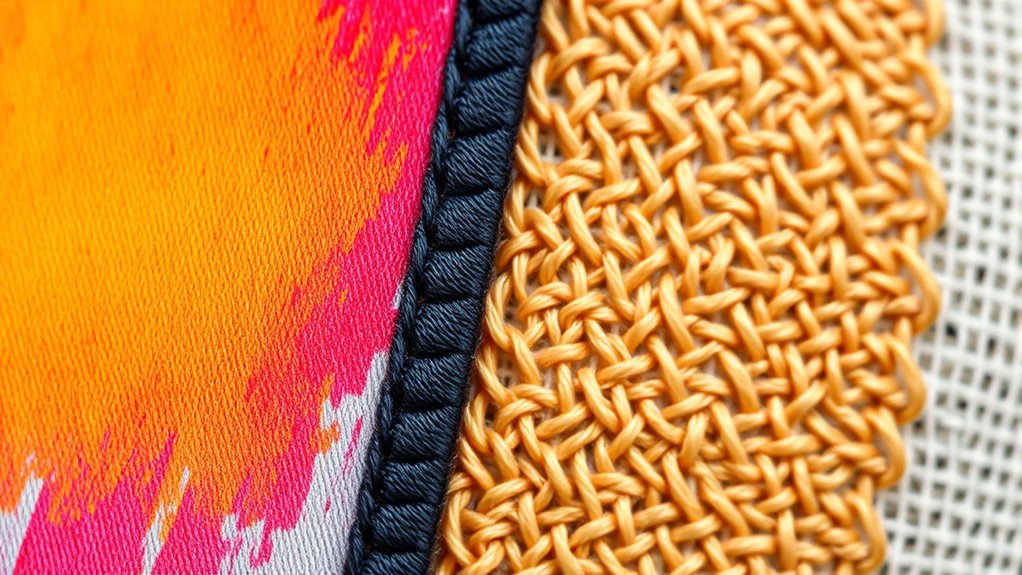

Screen printed vs embroidered designs each have their unique advantages depending on your project needs.
If you want vibrant, detailed designs on smooth fabrics like cotton, screen printing is your best bet. It offers sharp colors and fine lines but less texture.
For durability, embroidery excels by stitching raised, long-lasting patterns into sturdier fabrics like denim. This method is ideal for logos that withstand heavy wear and washing.
Screen printing suits large runs cost-effectively, while embroidery handles smaller batches with a premium feel.
Understanding these distinctions will help you pick the perfect method for your project’s fabric and design needs.
Key Takeaways
- Screen printing produces sharp, vibrant, and detailed designs best suited for complex colors on smooth, lightweight fabrics like cotton and polyester.
- Embroidery creates raised, textured designs with high durability and longevity, ideal for sturdy fabrics such as denim and canvas.
- Screen printing has moderate wear resistance but may crack and fade over time with frequent washing.
- Embroidery withstands frequent washing better, maintaining design integrity and vibrant appearance over long-term use.
- Screen printing is cost-effective for large orders with longer setup, while embroidery suits small runs with higher per-piece costs.
What Screen Printing Is and How It Looks
Although screen printing has been around for decades, it remains a preferred method for applying designs on fabric due to its precision and durability. When you use screen printing techniques, a mesh screen transfers ink onto fabric except in areas blocked by a stencil.
This method allows for sharp, vibrant colors and detailed imagery that often surpasses other printing methods in clarity. Unlike embroidery, which adds texture, screen printing produces a smooth, flat finish that integrates seamlessly with the fabric.
For design applications, it excels in replicating complex gradients and fine lines, making it ideal for logos or full-color artwork. However, it’s less suited for highly textured or three-dimensional effects.
Understanding these nuances helps you choose the right technique based on your design’s visual and tactile requirements.
How Embroidery Creates Durable, Textured Designs
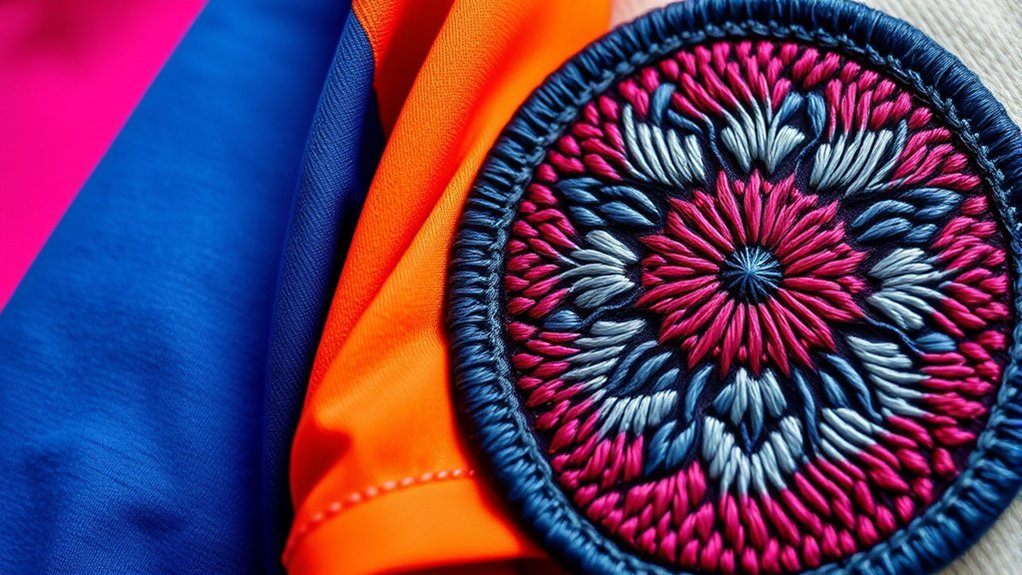
Embroidery uses needle and thread to stitch designs directly onto fabric, creating a raised texture that screen printing cannot replicate. This technique offers superior texture enhancement by layering threads that add depth and tactile interest to your design.
Unlike screen printing, which applies ink on the surface, embroidery integrates the design into the fabric’s structure, boosting design longevity. The stitched threads resist fading and cracking over time, maintaining their vibrant appearance through repeated wear and washing.
You’ll also notice embroidery’s ability to produce intricate patterns with a three-dimensional effect, which screen printing struggles to achieve. By choosing embroidery, you guarantee your design not only stands out visually but also endures the rigors of daily use, making it a technically sound option for long-lasting, textured apparel decoration.
Durability Comparison: Screen Printing Vs Embroidery
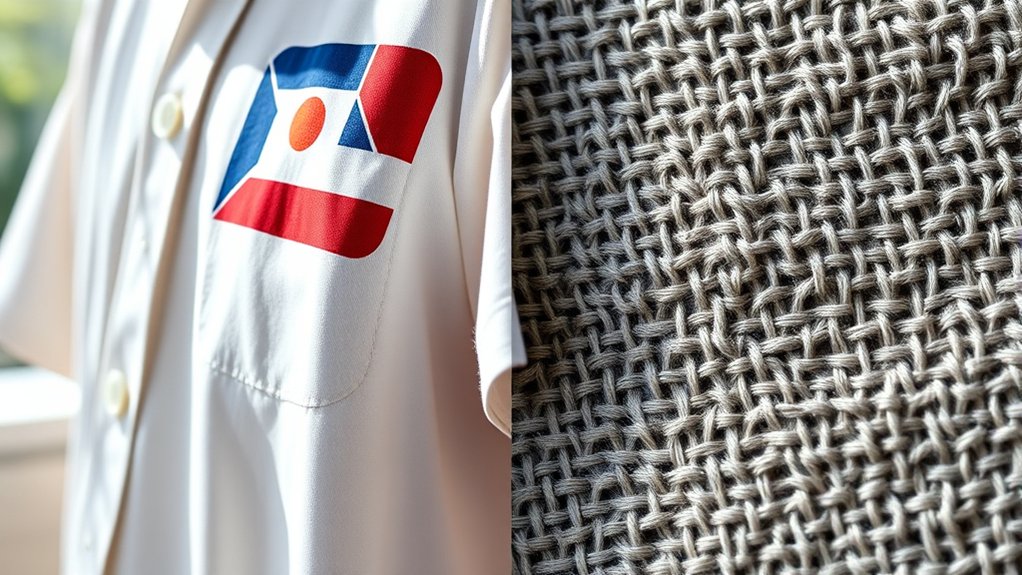
When you evaluate durability, screen printing and embroidery offer distinct advantages based on their construction methods. Screen printing applies ink layers that can crack or fade under repeated washing, impacting wear resistance.
Embroidery uses stitched threads, providing superior durability factors like resistance to abrasion and long-term color retention. However, embroidery can snag or fray over time, especially on delicate fabrics.
| Durability Factor | Screen Printing | Embroidery |
|---|---|---|
| Wear Resistance | Moderate; ink may crack | High; sturdy thread work |
| Longevity | Medium; fades with time | Long-lasting |
| Fabric Impact | Minimal | Potential snagging |
| Texture | Smooth surface | Raised, textured design |
Understanding these durability factors helps you choose the best method for your garment’s intended use and lifespan.
Cost and Setup Time Comparison
Understanding durability helps set expectations, but cost and setup time often determine which method fits your project budget and schedule. When you conduct a cost analysis, screen printing generally offers lower per-unit costs, especially for large orders, due to its efficient stencil reuse.
However, its initial setup requires creating screens, which can take several hours, impacting setup efficiency negatively for small runs. Embroidery involves minimal setup time since digitizing designs is quicker, but the higher cost of thread and machine time increases overall expenses, making it less cost-effective for large quantities.
If you prioritize rapid setup and moderate quantities, embroidery suits you. Conversely, screen printing excels in cost efficiency and setup scalability for bulk projects, balancing initial preparation time with lower material costs.
Best Fabrics for Screen Printing and Embroidery
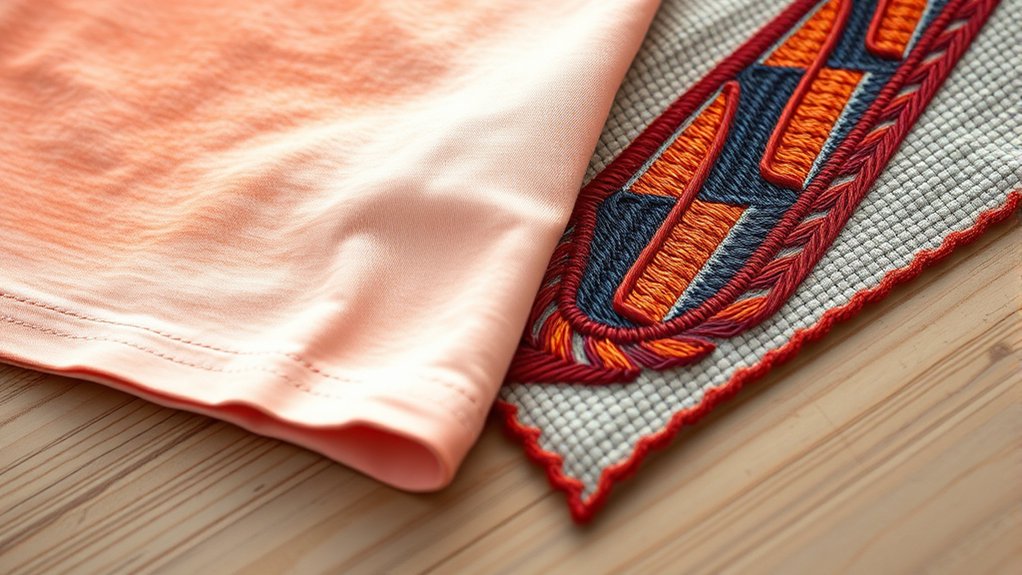
You’ll want to choose cotton or cotton blends for screen printing since their smooth, absorbent surfaces hold ink sharply and resist bleeding. For embroidery, opt for sturdier fabrics like twill, denim, or canvas that can support dense stitching without puckering or distortion.
Understanding these textile properties guarantees your design stays crisp and durable regardless of the technique.
Ideal Fabrics For Printing
Choosing the right fabric plays a crucial role in determining the quality and durability of both screen printed and embroidered designs. Different fabric types interact uniquely with printing methods. For screen printing, smooth, tightly woven fabrics like cotton and polyester blends excel, ensuring ink adhesion and clarity.
Embroidery demands sturdier textiles that withstand needle perforations without distortion. Here’s a quick comparison:
| Fabric Type | Printing Method Suitability |
|---|---|
| Cotton | Excellent for screen printing; moderate for embroidery |
| Polyester | Great for screen printing; good for embroidery |
| Blends (Poly-Cotton) | Balanced for both methods |
| Canvas | Less ideal for screen printing; excellent for embroidery |
| Nylon | Challenging for screen printing; suitable for embroidery |
Choose fabrics based on your design needs and printing process to optimize results effectively.
Best Textiles For Embroidery
When selecting the best textiles for embroidery, you need fabrics that maintain their shape and support detailed stitching without puckering or stretching. Medium to heavy fabric weight, such as twill, canvas, or denim, works best because they provide a stable base for complex embroidery techniques.
Lighter fabrics like silk or thin cotton tend to distort under dense stitching, causing puckering. Natural fibers such as cotton and linen offer better thread grip compared to synthetics, which can slip during embroidery. Blends with polyester add durability but may affect needle penetration.
When comparing to screen printing, embroidery demands more structurally sound textiles due to thread tension. Choosing the right fabric weight and fiber content guarantees your embroidery holds its detail and longevity, especially with intricate designs requiring precise embroidery techniques.
Designs Best Suited to Screen Printing Vs Embroidery
You’ll find screen printing excels with complex, highly detailed designs and supports a broad spectrum of colors, especially on smooth fabrics.
Embroidery, however, suits simpler designs with fewer colors and works best on thicker, more durable materials. Understanding these differences helps you choose the right method based on your design’s complexity, color needs, and fabric type.
Complexity And Detail
Although both screen printing and embroidery can produce high-quality apparel designs, they differ markedly in handling complexity and detail. When your design demands fine lines, gradients, or intricate shading, screen printing excels due to its ability to reproduce high-resolution graphics with precision.
It captures subtle design intricacy and enhances visual appeal without the limitations of thread thickness. Conversely, embroidery is best suited for simpler, bold designs with fewer details; its tactile texture adds dimension but can blur fine elements. Stitch density and needle size restrict how much detail embroidery can render, often resulting in less sharpness compared to screen printing.
Color Variety Options
Because screen printing uses separate ink layers for each color, it can reproduce a wide spectrum of vibrant hues and complex color blends with high accuracy. This technique offers extensive color options, allowing you to achieve subtle gradients and multi-colored designs with excellent fidelity.
In contrast, embroidery relies on thread colors, which are limited to the available thread palette and can’t replicate fine color shifts as effectively. While embroidery provides a tactile, dimensional look, its color versatility is constrained compared to screen printing.
If your design demands intricate color variations or photographic quality, screen printing is your best bet. However, for simpler designs with fewer colors, embroidery’s color options still deliver a polished, textured effect. Understanding these differences helps you choose the method that matches your design versatility needs precisely.
Fabric Compatibility Considerations
When selecting between screen printing and embroidery, fabric type plays a significant role in determining which method suits your design best. Screen printing excels on smooth, lightweight fabrics like cotton and polyester, where ink adheres evenly. Embroidery thrives on heavier materials, such as denim or canvas, where stitches hold firmly without puckering.
| Fabric Type | Screen Printing Suitability | Embroidery Suitability |
|---|---|---|
| Lightweight (T-shirts) | High | Low |
| Medium Weight (Polos) | Medium | Medium |
| Heavyweight (Denim) | Low | High |
Material weight affects durability and appearance; light fabrics risk distortion with embroidery, while heavy fabrics may absorb screen print ink unevenly. Choose based on your fabric’s characteristics for best results.
How to Choose Screen Printing or Embroidery for Your Project
How do you determine whether screen printing or embroidery best suits your project’s needs? First, assess your design preferences: intricate, multi-colored designs with fine detail often favor screen printing due to its precision and color versatility. Conversely, embroidery excels with bold, textured logos and lettering, adding a tactile dimension.
Next, consider your project scope. For large runs, screen printing offers cost-effective scalability, while embroidery suits smaller batches given its longer production time and higher per-piece cost.
Also, factor in fabric compatibility and durability requirements. Embroidery withstands frequent washing better, ideal for long-term use. By weighing design complexity, production volume, and material, you can select the method that aligns with both aesthetic goals and functional demands, ensuring exceptional results for your project.
Frequently Asked Questions
Can Screen Printing or Embroidery Be Combined on One Garment?
Yes, you can combine techniques on one garment, but you’ll face design limitations. Embroidery adds texture, while screen printing offers color depth.
Balancing these guarantees durability and visual appeal without compromising fabric integrity or detail precision.
How Do Washing Instructions Differ for Screen Printed Vs Embroidered Items?
You’ll need gentler washing care for embroidered items to protect stitches, using cold water and mild detergent.
Screen printed garments tolerate warmer washes but require fabric compatibility checks to avoid print cracking or fading over time.
Are There Environmental Impacts Unique to Screen Printing or Embroidery?
You’ll find screen printing uses more water and demands strict waste management due to chemical inks. Embroidery consumes less water but generates thread waste, requiring different environmental strategies to minimize their unique impacts effectively.
Can Both Methods Be Used on Non-Clothing Items Like Bags or Hats?
You can customize 90% of bags and hats using both screen printing and embroidery, thanks to their versatile non-clothing applications. Screen printing offers vibrant, detailed designs, while embroidery provides durable, textured customization options for various materials.
How Long Does Each Method Take From Design Approval to Finished Product?
You’ll find screen printing’s design process quicker, with a production timeline around 3-7 days. Embroidery’s more intricate design process extends the timeline to 7-14 days due to digitizing and stitching complexities.
Conclusion
When deciding between screen printing and embroidery, you’re really choosing how your design will live and breathe on fabric. Screen printing offers vibrant, smooth finishes that suit complex artwork, while embroidery brings a textured, lasting elegance with a touch of craftsmanship.
Consider your fabric, budget, and design complexity—each method carries its own charm and endurance. Screen printing works well for bold, colorful designs that need fine detail, whereas embroidery excels with simpler, classic looks that stand the test of time.
Ultimately, your project’s personality will guide you to the option that best wears its story over time. When making your choice, remember that screen printed vs embroidered designs each offer unique benefits to showcase your creativity beautifully.