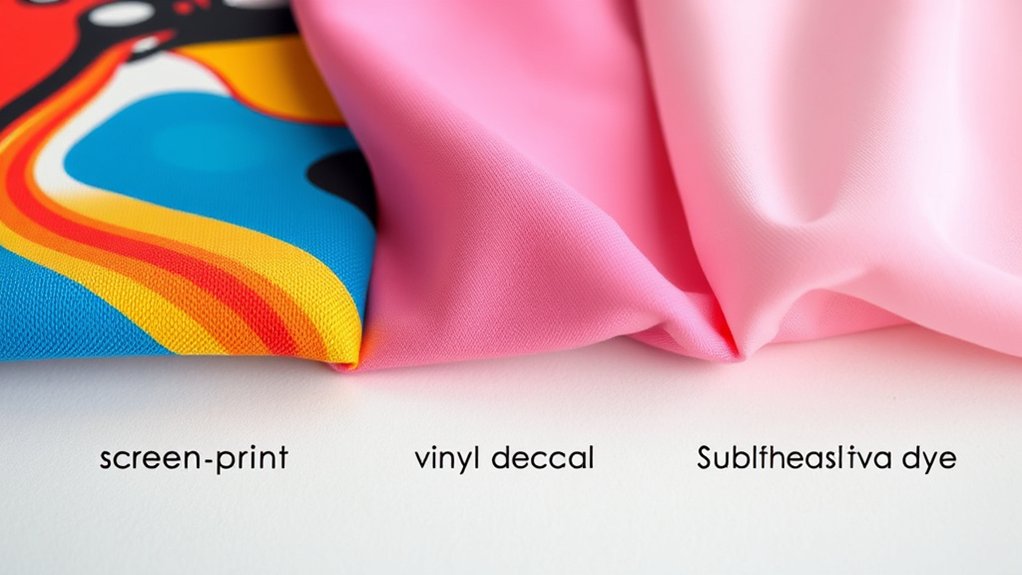

Screen print vs vinyl vs sublimation are popular printing methods, each suited for different needs.
Screen printing is great for bold, simple designs on various materials. It excels in bulk durability with vibrant, consistent colors.
Vinyl offers sharp, clean edges and holds up well through wear. It’s perfect for custom apparel and logos that require precision.
Sublimation shines with intricate, full-color images on polyester fabrics. This method embeds prints into fabric for lasting vibrancy.
Each method has unique strengths depending on design detail, fabric, and budget.
Explore deeper to match your project’s exact needs.
Key Takeaways
- Screen printing is best for bold, simple designs and large volume runs due to low per-unit costs after setup.
- Vinyl printing offers sharp, clean lines and durability, ideal for small batches and custom apparel with limited color complexity.
- Sublimation excels at vibrant, full-color, intricate designs but only works on polyester fabrics and requires specialized equipment.
- Screen printing and sublimation provide high durability; vinyl is durable but can peel if washed harshly or exposed to high heat.
- Choose printing methods based on design complexity, fabric type, color needs, and production volume for optimal results.
Screen Printing: How It Works and When to Use It
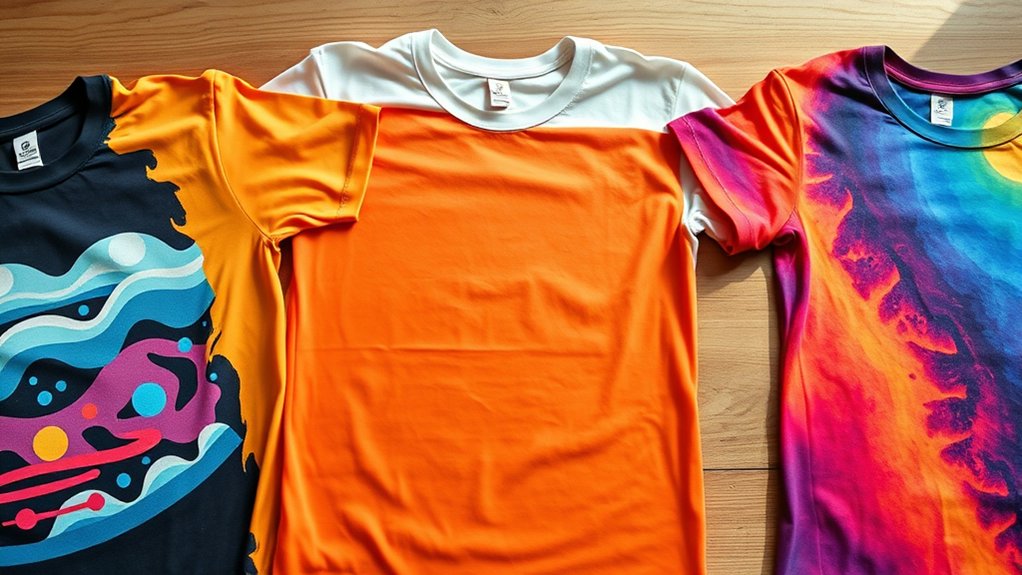
Although screen printing has been around for decades, it remains a top choice when you need vibrant, durable designs on fabric or other materials. You’ll appreciate how screen printing techniques involve pushing ink through a finely woven mesh stencil, layer by layer, to build vivid, long-lasting images.
This method excels in producing sharp edges and consistent color density, especially for bulk orders. When considering screen printing applications, think beyond t-shirts; it’s perfect for posters, bags, and even wood or glass surfaces.
You can customize colors with precision, but complex designs with many colors may increase setup time and cost. So, if you want high-quality, cost-effective prints for large runs with bold visuals, screen printing offers unmatched reliability and versatility to meet your creative and commercial demands.
Vinyl Printing: Features and Best Applications
Vinyl printing stands out for its sharp, clean lines and vibrant colors achieved by cutting designs from colored sheets of vinyl and heat-pressing them onto your chosen surface. You’ll appreciate vinyl durability, as it withstands frequent washing, stretching, and exposure to sunlight without cracking or fading.
This makes vinyl ideal for custom apparel, sports jerseys, and promotional items where longevity is key. Vinyl applications also extend to decals, signage, and personalized accessories, offering versatility across materials like cotton, polyester, and leather.
When precision and crispness are your priorities, vinyl printing delivers unmatched results. Keep in mind, though, complex gradients or photographic images aren’t its forte. Instead, rely on vinyl for bold, single-color or multi-layered designs that demand durability and vivid, clean finishes.
Sublimation Printing: Process and Ideal Projects
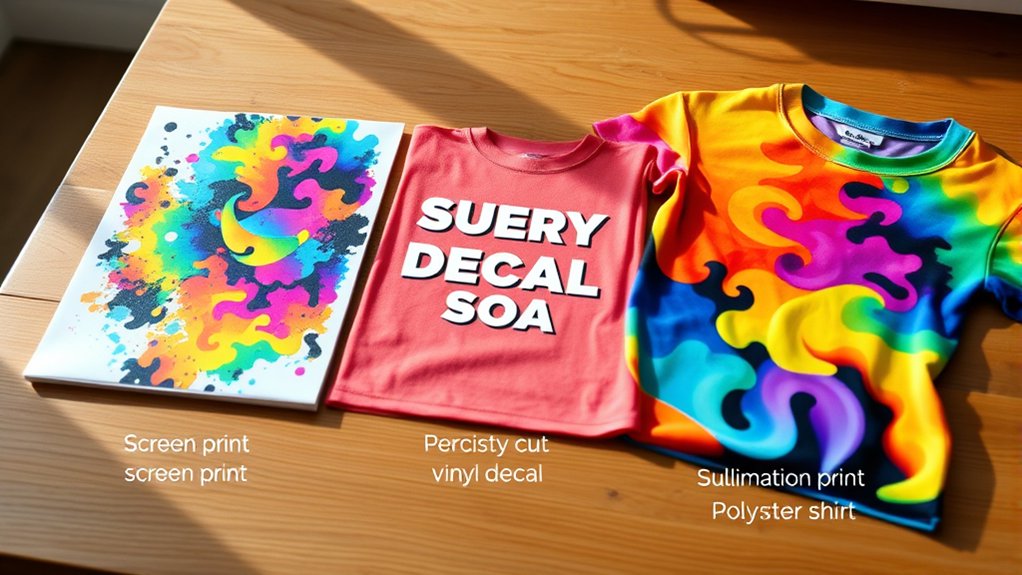
If you’re seeking a printing method that captures vibrant, full-color images with photographic detail, sublimation printing might be your best bet. This process uses heat to transfer dye onto ideal materials, turning solid ink into gas without passing through liquid, embedding the design directly into the substrate. The sublimation benefits include durability and a soft feel since the ink becomes part of the fabric or surface.
Consider these ideal projects for sublimation printing:
- Polyester apparel, where colors stay vivid wash after wash
- Customized mugs and drinkware coated with polymer
- Hardboard or metal photo panels for vibrant, long-lasting displays
- Polyester-based home decor like cushions and curtains
Comparing Color Vibrancy and Design Detail
When choosing between screen printing, vinyl, and sublimation, understanding how each method handles color vibrancy and design detail can make all the difference in your final product. Screen printing excels in color saturation, delivering bold, vivid hues that really pop, especially on darker fabrics. It captures design intricacies well but can struggle with extremely fine lines due to screen mesh limitations.
Vinyl offers sharp edges and solid colors, making it great for simple, blocky designs, but it lacks subtle gradients and detailed shading. Sublimation shines in reproducing intricate, full-color designs with smooth gradients and exceptional detail, thanks to its dye-infused inks. However, its color saturation depends on the fabric’s fiber content, performing best on polyester.
Durability and Care Across Printing Methods
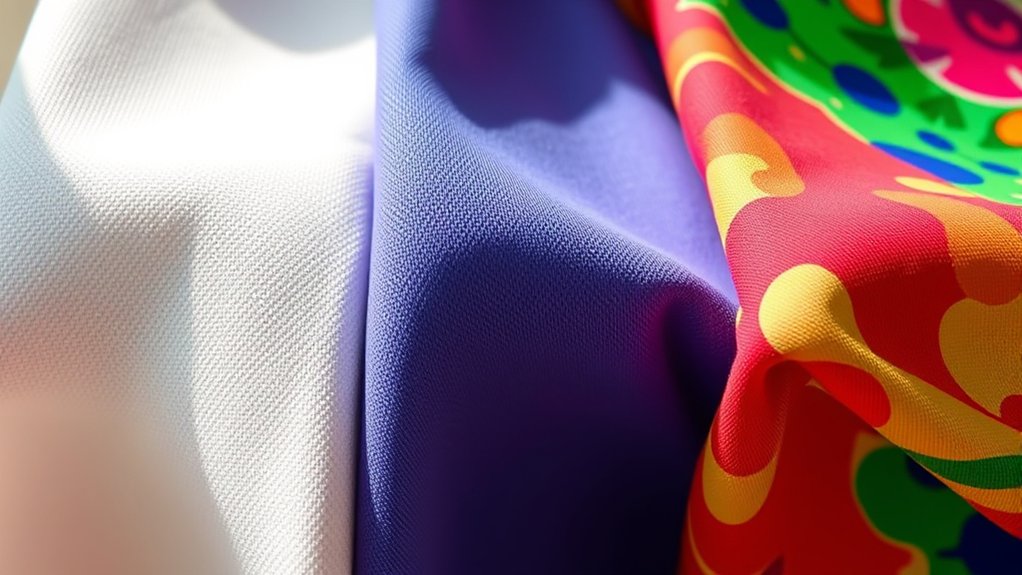
Durability stands as an essential factor when selecting a printing method, as it directly affects how your design withstands daily wear and washing. Each method has unique durability factors and care instructions you need to take into account.
- Screen Printing: Offers robust durability, resisting fading and cracking. Follow cold wash and air dry to extend life.
- Vinyl: Durable but prone to peeling if washed harshly. Turn garments inside out and avoid high heat.
- Sublimation: Integrates ink into fabric fibers, making it highly durable. Machine wash cold, no bleach or fabric softener.
- Care Instructions: Proper laundering, avoiding heat and abrasives, greatly prolongs print lifespan across all methods.
Cost Comparison of Screen Printing, Vinyl, and Sublimation
When you weigh screen printing against vinyl and sublimation, the initial setup costs can vary dramatically, with screen printing demanding more upfront investment for screens and equipment.
Vinyl offers a moderate entry cost but adds expenses as you scale, while sublimation requires specialized printers and inks that impact your startup budget. Understanding these upfront and ongoing production costs helps you choose the most cost-effective method for your specific needs.
Initial Setup Expenses
Comparing the initial setup expenses of screen printing, vinyl, and sublimation reveals distinct cost structures that can markedly impact your budget. Your initial investment varies sharply depending on the method you choose, primarily due to equipment costs and material requirements.
- Screen Printing demands significant upfront spending on screens, inks, and a press. It is ideal if you plan high-volume runs.
- Vinyl cutting requires a plotter, transfer tape, and vinyl rolls, with moderate initial investment suited for smaller batches.
- Sublimation needs a specialized printer, heat press, and sublimation inks, which can be costly but offer vibrant, durable prints.
- Don’t forget ancillary costs like software and workspace setup, which can subtly inflate your initial outlay.
Understanding these factors guarantees you allocate your budget efficiently from the get-go.
Long-Term Production Costs
Once you’ve navigated the initial setup costs, the real test lies in how each printing method affects your ongoing expenses. Long term savings hinge on production efficiency and material durability.
Screen printing shines with low per-unit costs at scale but demands costly screen maintenance. Vinyl incurs moderate material expenses but slows when cutting intricate designs.
Sublimation offers consistent speed and minimal waste, ideal for complex, full-color prints, though ink costs remain higher.
| Method | Production Efficiency | Long Term Savings |
|---|---|---|
| Screen Print | High for bulk runs | High with volume |
| Vinyl | Moderate, detail slows | Moderate |
| Sublimation | Fast, low waste | Moderate to High |
Choose based on your order volume and design complexity to maximize long term savings.
How to Choose Between Screen Printing, Vinyl, and Sublimation
You’ll want to start by matching your fabric type with the right printing method. Sublimation works best on polyester, while screen printing and vinyl handle cotton like a pro.
Next, consider your design’s complexity: intricate gradients favor sublimation, whereas bold shapes shine in vinyl or screen printing. Pinpointing these factors helps you pick the method that delivers crisp, durable results every time.
Fabric Compatibility
Although each printing method offers unique advantages, selecting the right one starts with understanding fabric compatibility. Different fabric types and their material properties heavily influence the outcome of your print.
- Screen Printing thrives on natural fibers like cotton due to its ink absorption qualities.
- Vinyl works well on cotton blends and synthetic fabrics but may feel stiff on delicate materials.
- Sublimation requires polyester or polymer-coated fabrics, as it bonds with synthetic fibers at a molecular level.
- Blends pose challenges; high polyester content favors sublimation, while cotton-heavy blends suit screen printing or vinyl.
Design Complexity
When deciding which printing method suits your project, consider the complexity of your design carefully. Design limitations and complexity factors like color gradients, fine details, and layering dictate the best choice. Screen printing excels with bold, simple designs but struggles with intricate details.
Vinyl offers clean lines for moderate complexity but isn’t ideal for gradients. Sublimation thrives with complex, full-color images and intricate details but only works on polyester fabrics.
| Method | Design Complexity Strengths |
|---|---|
| Screen Print | Bold, simple designs; limited details |
| Vinyl | Clean lines; moderate complexity |
| Sublimation | Full-color, intricate; complex gradients |
| Limitations | Screen: color limits; Vinyl: no gradients |
| Sublimation: fabric restrictions |
Choose by matching your design’s complexity factors with each method’s strengths and limitations.
Frequently Asked Questions
Can These Printing Methods Be Combined on a Single Product?
You can definitely use combination techniques to enhance product versatility by merging screen print, vinyl, and sublimation on one item. This approach maximizes durability, color vibrancy, and texture, creating unique, high-quality customized products.
What Environmental Impacts Do Each of These Printing Methods Have?
You’ll find screen printing uses more water and chemicals, vinyl emits plastics, and sublimation uses less waste but energy.
Choosing eco friendly alternatives and effective waste management reduces your environmental footprint considerably.
Are There Any Health Risks Associated With These Printing Techniques?
Imagine inhaling fumes from a freshly painted room. Printing health concerns are similar. You’ll need safety regulations to avoid exposure to inks and adhesives.
Proper ventilation and protective gear keep you safe during screen printing, vinyl, or sublimation.
How Do These Methods Affect the Feel or Texture of the Fabric?
You’ll notice a feel comparison reveals vinyl adds thickness, creating a textured, raised surface. Screen printing offers a softer, flatter texture, while sublimation seamlessly bonds ink with fibers, giving you a smooth, lightweight feel. Perfect for detailed texture analysis.
Can These Printing Methods Be Used on Non-Textile Materials?
You can use these printing methods for non textile applications, but material compatibility matters. Screen printing excels on rigid surfaces, vinyl adheres well to plastics, while sublimation needs polyester-coated substrates for vibrant, lasting results on diverse materials.
Conclusion
Whether you’re aiming for bold, lasting prints with screen printing, crisp, textured designs via vinyl, or vibrant, all-over color through sublimation, you’re actually shaping your project’s future every step of the way. Coincidentally, your choice doesn’t just affect the look—it dictates durability, cost, and care too.
So, by understanding these nuances, you’re not just picking a method; you’re engineering the perfect print that fits your vision and lifestyle seamlessly. When deciding between screen print vs vinyl vs sublimation, this knowledge ensures you make the best choice for your specific needs.