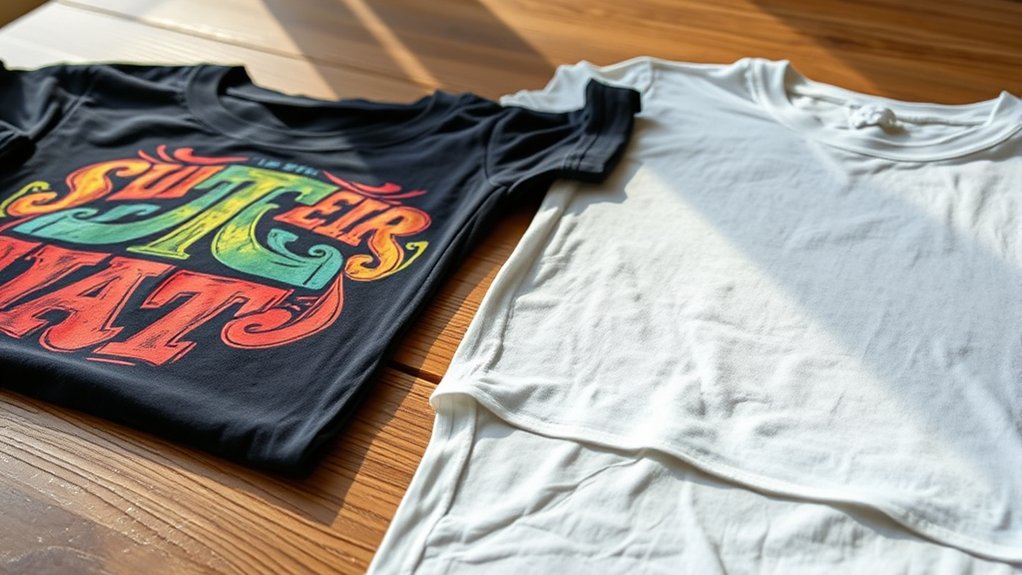

If you want vibrant, durable designs on fabric, understanding the difference between screen print vs vinyl is essential.
Screen printing suits large orders with complex, multi-color patterns and offers lasting ink embedded in fibers.
Vinyl printing delivers sharp, bold graphics with a raised texture, ideal for smaller runs and personalization but may peel over time.
Screen printing excels on cotton; vinyl sticks well to polyester.
Your choice depends on design detail, quantity, and fabric.
Exploring their differences further reveals which fits your project best.
Key Takeaways
- Screen printing uses stencils and ink pressed through mesh, ideal for bulk orders and complex designs with gradients.
- Vinyl printing cuts colored sheets applied with heat, perfect for sharp, vibrant graphics on small runs or personalized items.
- Screen printing is more cost-effective for large quantities due to lower per-unit costs despite higher setup time.
- Vinyl printing offers quicker setup and consistent cost per unit, making it suitable for small batches and custom designs.
- Screen prints are highly durable and fade-resistant, while vinyl can peel or crack over time with frequent washing.
Screen Print vs Vinyl: Overview and Key Differences
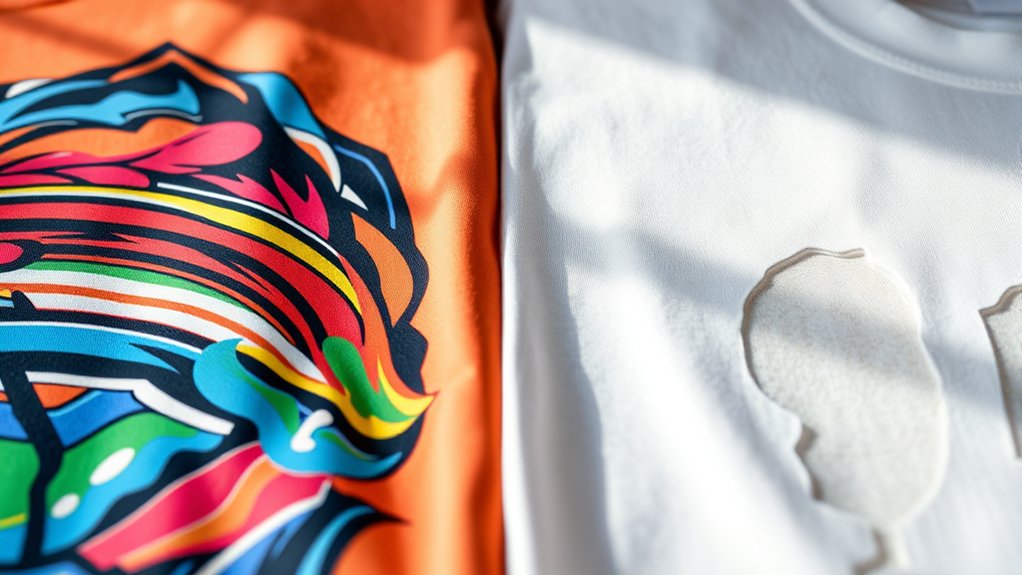
While both screen printing and vinyl offer effective methods for customizing apparel and products, they differ markedly in process, durability, and visual outcome. When choosing between these printing techniques, you’ll notice that screen printing uses stencils and ink pushed through mesh screens, ideal for bulk production and complex designs with gradients.
Vinyl, on the other hand, involves cutting colored sheets applied with heat, offering sharp, vibrant graphics suitable for smaller runs or personalized items. Material selection also plays a critical role: screen printing works best on cotton or cotton blends, while vinyl adheres well to polyester and synthetic fabrics.
Understanding these distinctions helps you match your project requirements with the most suitable technique, balancing cost efficiency, design complexity, and intended use.
How Screen Printing Works and When to Use It
Because screen printing pushes ink through a fine mesh stencil onto fabric, you get precise, durable prints with vibrant colors. This method excels when you need consistent results across large quantities. Different ink types, including plastisol, water-based, and discharge, offer versatility for various print applications, from bold graphics to soft, breathable designs.
Screen printing delivers precise, vibrant, and durable prints, perfect for consistent, high-quality designs across large batches.
You should use screen printing when:
- Producing bulk orders with repeat designs
- Needing high durability and color vibrancy
- Printing on diverse materials, including cotton and polyester
Screen printing’s process involves layering each color separately, allowing you to achieve sharp edges and rich textures. It’s ideal when your project demands longevity and visual impact without sacrificing detail, especially in apparel and promotional items.
How Vinyl Printing Works and When to Use It
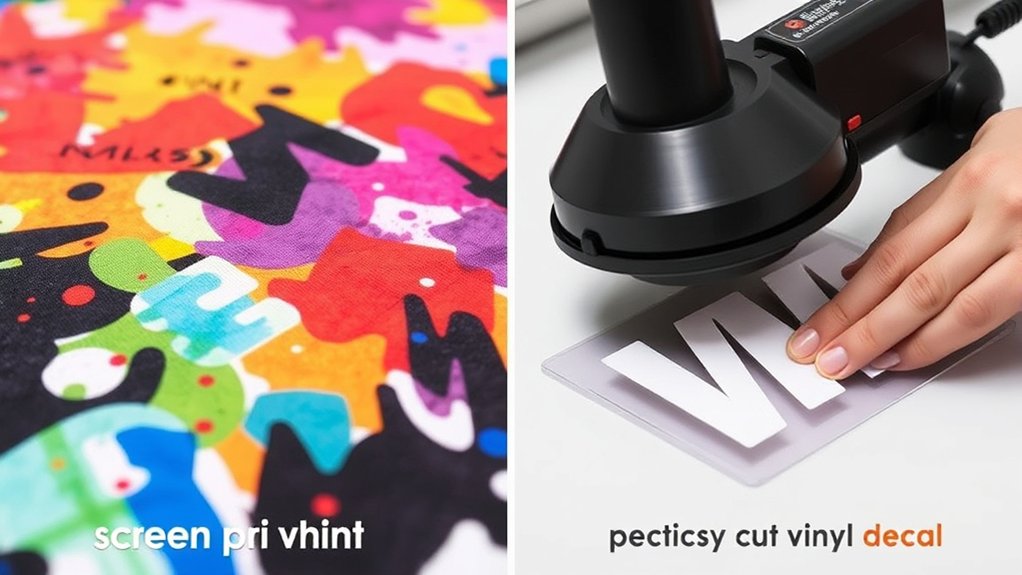
Vinyl printing uses a heat press to transfer cut vinyl designs onto fabric, creating sharp, clean edges with a slightly raised texture. You start by digitally cutting your design from sheets of colored vinyl, then position it on your garment.
The heat press applies controlled temperature and pressure, bonding the vinyl permanently to the fabric. This method excels in vinyl applications requiring precise, vibrant details on small runs or one-off projects.
The vinyl advantages include durability, resistance to fading, and the ability to produce multi-colored designs without complex setups. You’ll find vinyl printing ideal for customization, sports jerseys, and lettering, especially when you want bold, tactile graphics.
It’s less suited for large, complex images but perfect when sharpness and texture matter most.
Screen Print vs Vinyl: Cost and Setup Time Compared
Although screen printing demands more upfront setup with stencil creation and color separations, it becomes cost-effective on larger runs due to its ability to reproduce designs quickly. When you perform a cost analysis, screen printing’s initial setup time is higher, but the per-unit cost drops noticeably as volume increases.
Vinyl printing, by contrast, offers greater setup efficiency for small batches since it skips complex stencil steps, but its cost per unit stays relatively steady regardless of quantity.
Consider these points for setup time and cost efficiency:
- Screen printing requires longer preparation but lowers costs in bulk.
- Vinyl printing suits quick turnarounds with minimal setup.
- Cost analysis favors screen printing when exceeding moderate quantities.
Choose based on your production volume and time constraints.
Durability and Design: Which Printing Lasts and Looks Better
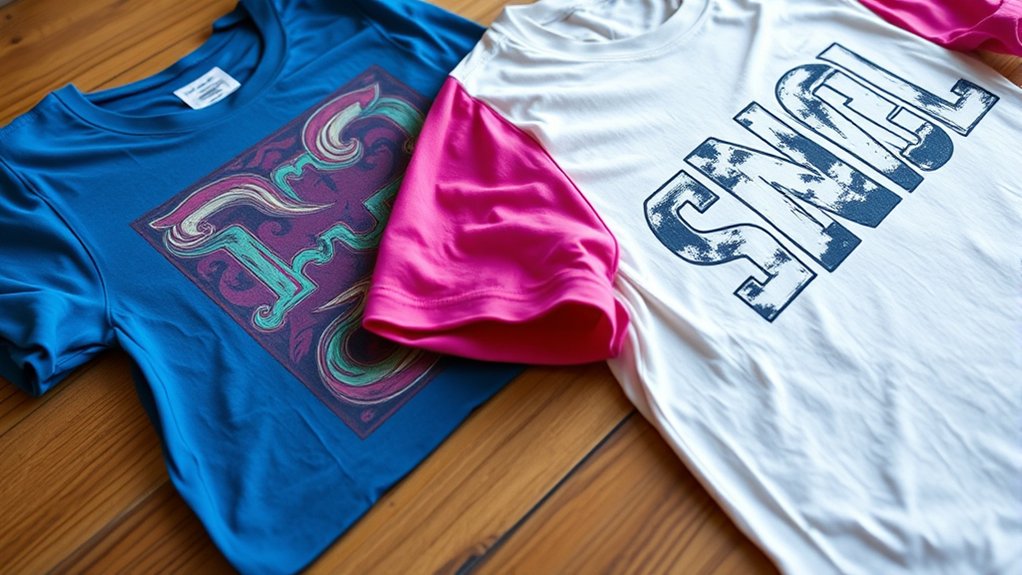
When you compare durability, screen printing stands out for its ability to withstand repeated washing and wear without significant fading or cracking. The ink penetrates fabric fibers, enhancing print longevity and maintaining vibrant colors over time.
Vinyl uses a heat-applied film that can peel or crack with frequent use, reducing its lifespan. With regard to design appeal, screen printing excels with complex, multi-color images and smooth gradients, offering depth and texture.
Vinyl shines with sharp, bold graphics and solid colors but struggles with intricate details. If you want a print that lasts longer and maintains a rich, detailed look, screen printing provides superior performance.
Vinyl may suit simpler designs but compromises on long-term durability and nuanced visual effects.
Which Printing Method Should You Choose? Final Decision Guide
Deciding on the right printing method hinges on your project’s specific needs, including design complexity, durability requirements, and budget constraints. Screen printing excels with bold, simple designs and high durability, fitting traditional printing trends and mass production.
Vinyl printing suits intricate, multi-color designs and smaller runs, aligning with modern design preferences and customization. Consider these factors:
- Design Complexity: Choose vinyl for detailed, colorful artwork; screen print for solid, fewer colors.
- Durability Needs: Screen print offers superior longevity for frequent washing and wear.
- Budget & Quantity: Vinyl is cost-effective for small batches; screen print lowers cost per unit at scale.
Match your choice to your project’s priorities, balancing printing trends with what your design demands for best results.
Frequently Asked Questions
Can Screen Printing and Vinyl Be Combined on One Garment?
Yes, you can combine them on one garment to expand design possibilities. Screen printing offers vibrant, long-lasting colors, while vinyl adds textured durability.
This hybrid approach balances visual impact and durability comparison effectively for complex designs.
Which Method Is More Eco-Friendly, Screen Printing or Vinyl?
You’ll find screen printing more eco-friendly since it uses sustainable materials and eco-friendly practices, like water-based inks and minimal waste. Vinyl involves synthetic materials and higher energy consumption, making it less sustainable overall.
Are There Fabric Types That Don’T Work Well With Vinyl?
Yes, you’ll find fabric compatibility issues with vinyl. Delicate or stretchy fabrics like silk or spandex pose vinyl limitations. They won’t adhere well or may crack, so always test materials before applying vinyl for best results.
How Do Washing Instructions Differ for Screen Printed Vs Vinyl Prints?
Think of washing techniques as a gentle rain for prints: you should cold wash and air dry screen prints to preserve ink layers. Vinyl needs low heat to avoid cracking, ensuring maximum print durability.
Can Screen Printing or Vinyl Printing Be Done at Home?
You can do vinyl printing at home with a modest setup and lower cost, while screen printing demands more space, equipment, and higher initial investment.
Vinyl’s home setup is simpler and more budget-friendly in comparison.
Conclusion
Choosing between screen printing and vinyl comes down to your project’s needs. Want vibrant, long-lasting designs for large runs? Screen printing’s your go-to. Need quick, detailed customization with minimal setup? Vinyl fits perfectly.
Both have strengths in cost, durability, and visual impact, but which suits your vision and budget best? Consider your priorities carefully—making the right call guarantees your design not only looks great but stands the test of time.
Ready to decide? Understanding the key differences between screen print vs vinyl will help you choose the best method for your project.