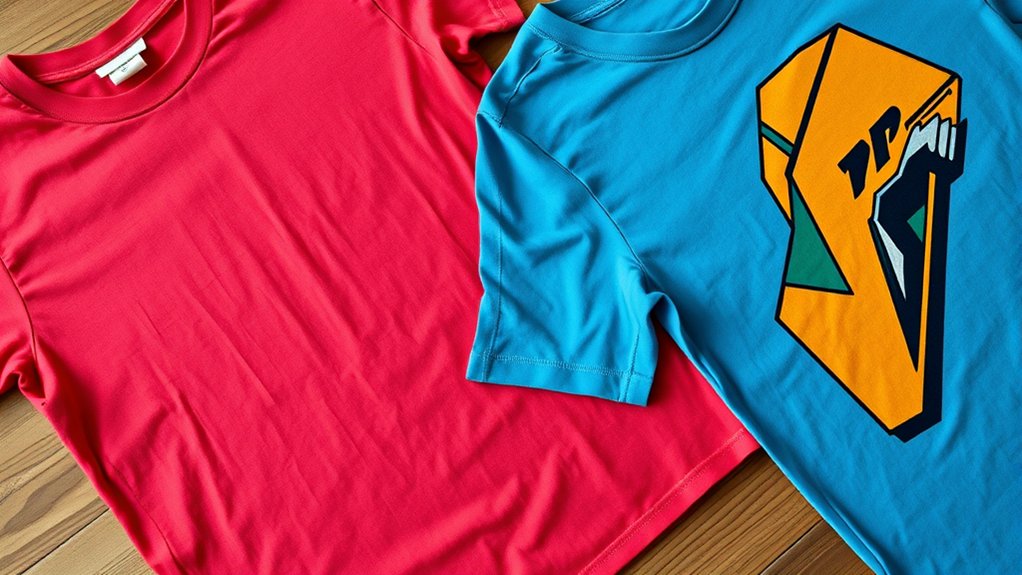

Screen print transfers vs vinyl is a common comparison when choosing the best method for custom apparel.
If you want vibrant, durable designs with smooth gradients, go for screen print transfers—they bond ink into fabric for lasting, breathable colors.
Vinyl printing gives you sharp edges and strong wear resistance, ideal for bold, simple graphics that flex with the fabric without cracking.
Vinyl works well in small batches, while screen prints excel at larger runs and complex designs.
To figure out which suits your project best, explore their processes, durability, color, and cost differences in detail.
This will help you make an informed decision tailored to your needs.
Key Takeaways
- Screen print transfers create vibrant, detailed designs with smooth color gradients and integrate ink into fabric for softness.
- Vinyl printing offers sharp, bold edges with solid colors but lacks gradient and subtle shading capabilities.
- Vinyl is more cost-effective and durable for small runs and simple designs, resisting cracking and peeling well.
- Screen print transfers are ideal for large runs with complex, multi-colored designs requiring breathability and wash resistance.
- Proper temperature, pressure, and substrate preparation are essential for optimal adhesion and durability in both methods.
Screen Print Transfers: Process and Benefits
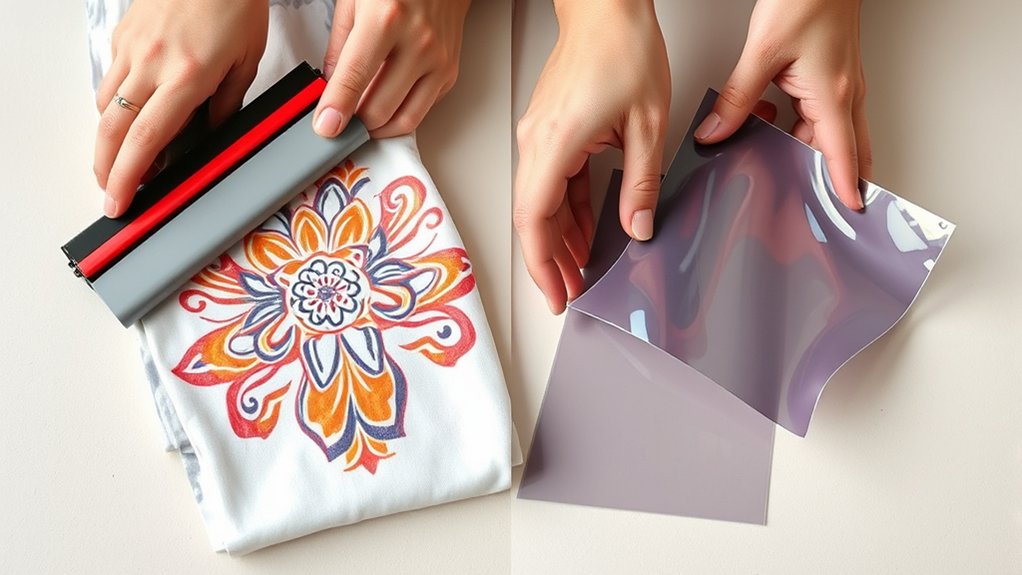
Although screen print transfers involve multiple steps, you’ll find the process straightforward and efficient. First, you create a stencil on a mesh screen, then push ink through to form the design on a special transfer paper.
Once dried, the transfer is heat-pressed onto the fabric, embedding vibrant, durable colors directly into the fibers. This method excels in transfer applications requiring bold, detailed graphics and long-lasting wear.
You’ll appreciate how screen print transfers handle complex color blends and gradients with sharp precision, unlike simpler methods. Plus, their versatility suits various materials, including cotton and polyester blends.
Vinyl Printing: Process and Benefits
You apply vinyl printing by cutting designs from colored sheets, then heat-pressing them onto your fabric for a clean, precise finish. This technique offers strong durability and flexibility, ensuring your prints resist cracking and peeling over time.
Plus, vinyl lets you work with vibrant, solid colors that maintain their brightness wash after wash.
Vinyl Printing Techniques
Vinyl printing employs a precise layering process that involves cutting designs from colored vinyl sheets and heat-pressing them onto fabric. You start by creating a digital design, which a cutting machine then slices from vinyl material.
Each color is cut separately, allowing you to apply layering techniques to build complex, multi-colored images. Using heat transfer methods, you align each vinyl layer on the garment and press it with a heat press to bond the material securely.
This technique guarantees crisp edges and vibrant colors, with minimal bleeding or distortion. By mastering these layering techniques and controlling heat transfer parameters—temperature, pressure, and time—you can achieve sharp, detailed prints that stand out visually.
This method offers precision unmatched by traditional printing options.
Durability and Flexibility
How long will your printed design maintain its vibrancy and shape under regular wear and washing? Vinyl printing excels in print longevity due to its robust adhesive and durable material composition.
The vinyl layer resists cracking and peeling, even after multiple wash cycles, ensuring your design stays intact. Flexibility factors play an essential role here; the vinyl’s ability to stretch and conform to fabric contours prevents damage during movement.
This flexibility minimizes stress on the print, enhancing durability. Compared to traditional screen print transfers, vinyl offers superior resistance to abrasion and environmental factors, maintaining structural integrity over time.
When you choose vinyl printing, you’re investing in a method that balances durability with flexibility, providing long-lasting, resilient designs that withstand everyday use without compromising comfort or appearance.
Color Vibrancy Options
Beyond durability and flexibility, the vibrancy of colors in vinyl printing sets it apart. When you work with vinyl, you benefit from precise color mixing that guarantees each hue is vivid and true to your design.
The process allows for high color saturation, meaning colors appear more intense and less prone to fading over time. Unlike screen print transfers, which can sometimes dull colors due to layering limitations, vinyl’s solid pigment application delivers sharp, vibrant visuals on various fabrics.
You can expect consistent brightness and saturation, even on dark or textured materials, enhancing your design’s impact. This capability makes vinyl printing ideal when color accuracy and visual pop are critical to your project’s success.
Durability Comparison: Screen Print Transfers Vs. Vinyl
Although both screen print transfers and vinyl offer vibrant designs, their durability varies greatly under different conditions. Screen print transfers excel in wear resistance due to their ink bonding directly with fabric fibers, providing superior long term performance, especially after multiple washes. However, they may crack or fade over extended use in harsh environments.
Vinyl features a polymer layer that resists abrasion and maintains its shape and color longer on rough surfaces. Yet, it’s prone to peeling or cracking if not applied correctly or exposed to frequent stretching. When choosing between the two, consider your garment’s use. Screen prints suit heavy wash cycles, while vinyl withstands mechanical wear better. Both offer durable solutions but differ in resilience depending on wear and care conditions.
Color and Detail Comparison Between Screen Print Transfers and Vinyl
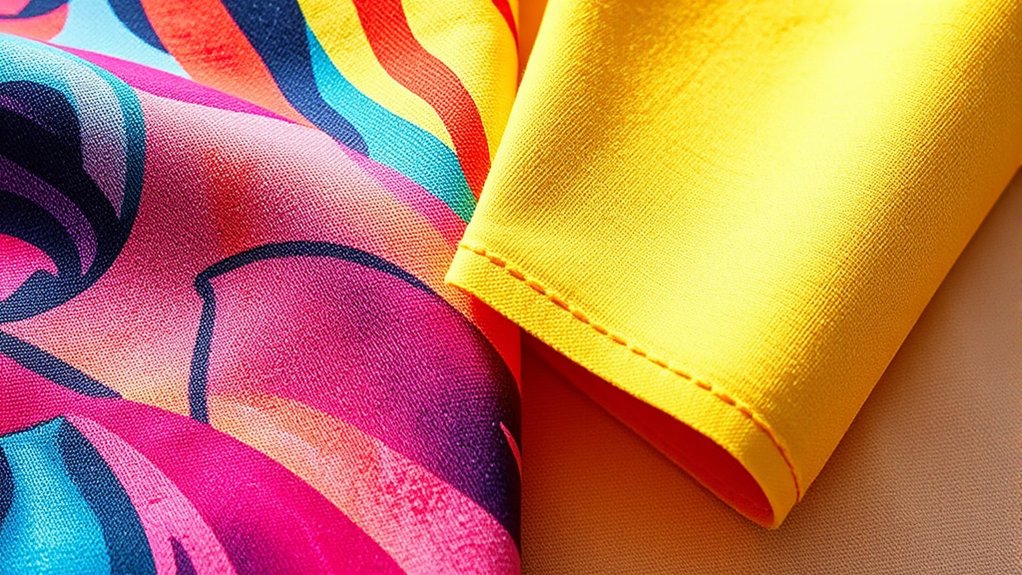
When you need vibrant colors and intricate details, screen print transfers deliver smooth gradients and subtle shading by blending inks directly into the fabric. Their superior color saturation guarantees your designs pop with depth and richness. In contrast, vinyl offers sharp, clean edges but lacks smooth gradient capabilities, limiting detail precision.
Consider these key differences:
- Color Saturation: Screen prints excel with vibrant, layered hues; vinyl colors appear solid but flatter.
- Detail Precision: Vinyl provides crisp outlines ideal for bold designs; screen print captures fine shading and subtle changes.
- Texture Impact: Screen print integrates ink into fibers, maintaining softness; vinyl sits atop fabric, adding slight texture.
Your choice depends on whether you prioritize rich, detailed visuals or bold, defined shapes.
Cost Comparison: Which Method Is More Affordable?
Choosing between screen print transfers and vinyl often comes down to cost alongside color and detail preferences. A cost analysis reveals distinct pricing factors for each method. Screen print transfers typically involve higher initial setup costs due to screens and equipment but become more affordable per unit in large runs.
Vinyl’s pricing factors include material costs per cut design and labor intensity, making it more cost-effective for small batches or simple designs. You’ll find vinyl costs rise with complexity and color count, while screen printing benefits from economies of scale.
Assess your order size and design intricacy carefully; for smaller runs with fewer colors, vinyl is usually cheaper. For larger quantities demanding color vibrancy and durability, screen print transfers offer better value per piece.
Best Uses for Screen Print Transfers and Vinyl in Apparel
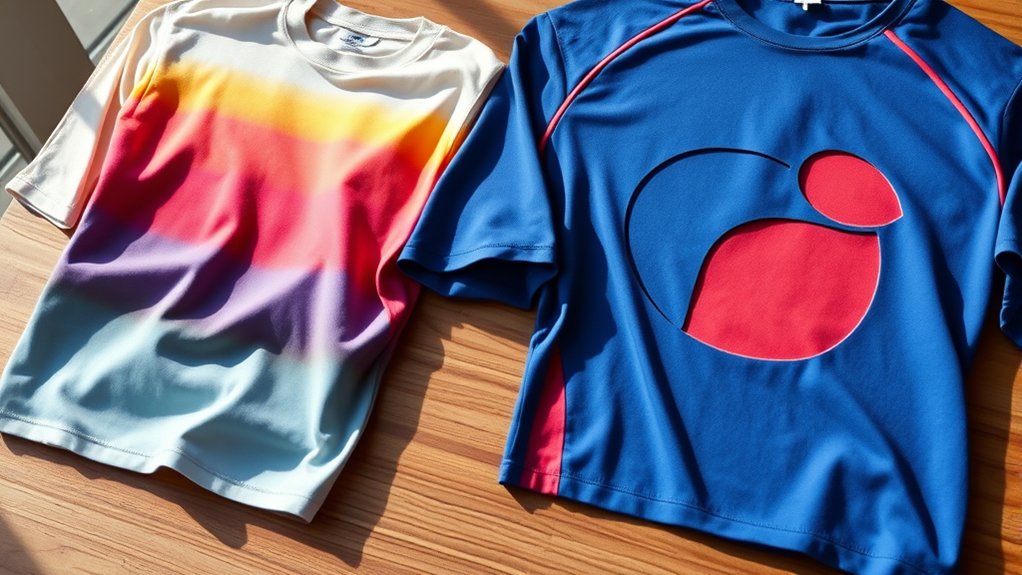
You’ll want to choose screen print transfers when you need durable, breathable designs that handle complex gradients and fine details.
Vinyl works best for bold, simple graphics that demand high durability and sharp edges. Understanding these strengths helps you match the method to your apparel’s performance and aesthetic needs.
Durability and Wearability
Although both screen print transfers and vinyl offer vibrant designs, their durability and wearability differ greatly under various conditions. You should consider wear testing results and fabric compatibility when choosing between them. Screen print transfers bond well with natural fibers, maintaining softness and flexibility after multiple washes.
Vinyl excels on synthetic fabrics but can stiffen, affecting comfort.
Key factors to weigh include:
Abrasion resistance: Vinyl withstands rubbing better, ideal for high-contact areas.
Stretchability: Screen prints flex with fabric, reducing cracking on stretch garments.
Moisture handling: Screen prints allow better breathability, enhancing wearability in active use.
Understanding these aspects helps you pick the right method for the garment’s intended use and longevity.
Design Complexity and Detail
When your design demands intricate details or fine lines, screen print transfers handle complexity with greater precision, capturing subtle gradients and color blends. You’ll find design intricacy and detail precision better preserved with screen prints, especially for multicolor artwork.
Vinyl, while crisp and durable, suits simpler shapes and solid colors, limiting detail depth.
| Feature | Screen Print Transfers | Vinyl |
|---|---|---|
| Design Intricacy | High: fine lines, gradients | Low: basic shapes only |
| Detail Precision | Excellent: smooth color blends | Moderate: solid blocks |
| Color Range | Wide | Limited |
| Best Use Case | Complex, multicolor designs | Bold, simple logos |
| Production Speed | Moderate | Fast |
Choose based on your design’s detail precision needs and complexity.
How to Choose Between Screen Print Transfers and Vinyl
How do you decide whether screen print transfers or vinyl best suit your project? Start by evaluating your design preferences and material compatibility. Vinyl excels with bold, simple shapes and works well on diverse fabrics. Screen print transfers handle intricate details and gradients, ideal for complex designs on compatible materials.
Consider these factors:
- Design intricacy: Choose screen print transfers for detailed artwork; vinyl suits minimalistic styles.
- Fabric type: Vinyl bonds best with cotton/poly blends; screen print transfers perform well on cotton and polyester.
- Durability needs: Vinyl offers a thicker, textured feel; screen print transfers provide a smoother finish with excellent wash resistance.
Tips for Getting the Best Results With Your Chosen Method
Since each method requires specific handling, you’ll need to optimize your process to get sharp, durable results. For screen print transfers, focus on precise temperature and pressure settings during heat pressing; inconsistent application techniques can cause peeling or fading. Verify your substrate is clean and flat to promote proper adhesion.
With vinyl, trim excess material carefully and use a weeding tool for clean edges. Pre-press garments to remove moisture and wrinkles before applying vinyl transfer methods. Always calibrate your heat press to the recommended time and temperature for the vinyl type.
Regardless of the method, test a sample first to fine-tune settings. Consistent, controlled application techniques paired with proper transfer methods will maximize durability and visual impact, verifying your designs look professional and last through wear and washing.
Frequently Asked Questions
Can Screen Print Transfers and Vinyl Be Combined on One Garment?
Yes, you can combine screen print transfers and vinyl on one garment, but guarantee transfer compatibility and consider design layering carefully to prevent peeling or distortion.
Proper heat and pressure settings optimize durability and visual impact.
Are There Environmental Concerns With Either Screen Print Transfers or Vinyl?
Yes, you’ll face environmental concerns with both. Screen print transfers often use plastisol inks, which are less eco-friendly.
Vinyl involves PVC, raising sustainability issues. Opt for water-based inks or eco-friendly vinyl for better material sustainability and greener results.
How Do Washing Instructions Differ for Screen Print Transfers and Vinyl?
Think of washing durability as a tightrope walk: screen print transfers handle gentle cycles and cold water best, with better fading resistance. Vinyl demands cooler washes and avoids tumble drying to prevent cracking and peeling over time.
Can Both Methods Be Used on Non-Fabric Materials Like Wood or Plastic?
You can use both on wood or plastic, but you’ll need to contemplate adhesive properties and adjust application techniques. Vinyl’s stronger adhesive suits smooth surfaces, while screen print transfers require heat and pressure for proper bonding on non-fabric materials.
What Equipment Is Needed for DIY Screen Print Transfers Versus Vinyl Printing?
You don’t need a spaceship, just basic screen print equipment: a frame, squeegee, emulsion, and heat press. For vinyl, grab a vinyl cutter, weeding tools, and a heat press.
Both demand precision, but vinyl’s simpler gear wins.
Conclusion
When deciding between screen print transfers and vinyl, consider your project’s needs. For example, imagine customizing jerseys for a youth soccer team—screen print transfers offer vibrant, durable designs that hold up to frequent washes.
Vinyl provides sharp, clean lines ideal for simpler logos and smaller runs. By matching technique to design complexity and durability requirements, you’ll guarantee professional results every time.
Choose wisely to make your apparel both eye-catching and long-lasting. Understanding the differences between screen print transfers vs vinyl will help you select the best option for your project.