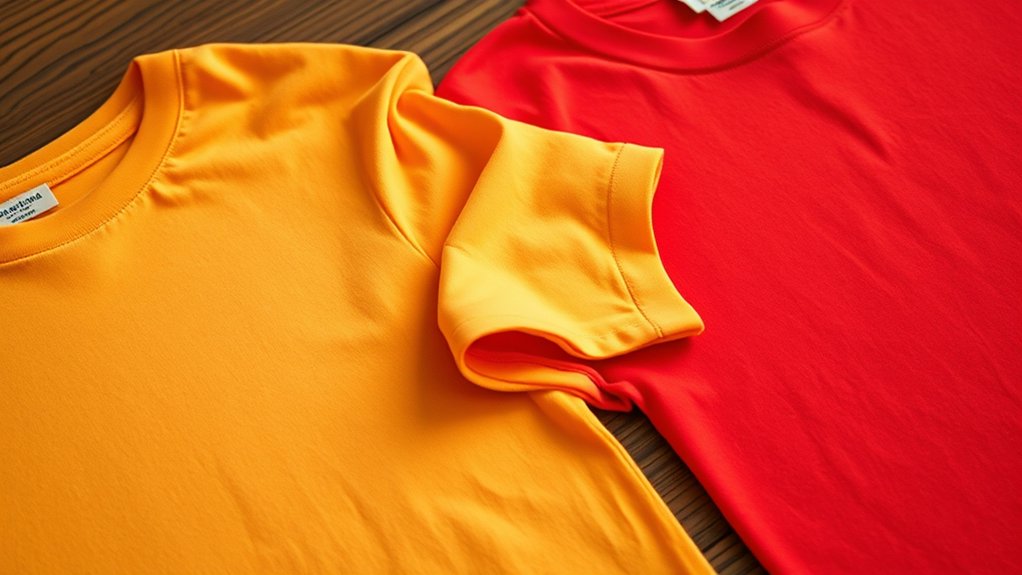

Puff print vs screen print is a common comparison when choosing printing techniques for apparel.
If you want a raised, textured look with a soft, voluminous feel, puff print delivers vibrant 3D designs best on thicker fabrics but may crack over time.
Screen printing offers flat, precise, and durable prints suitable for detailed, multi-color graphics on various fabrics.
Puff print costs more upfront and demands careful care, while screen printing scales efficiently for bulk orders.
Choosing depends on your design’s texture, material, and longevity needs—explore further to find the perfect fit.
Key Takeaways
- Puff print creates a raised, three-dimensional texture, while screen print produces a flat, smooth finish on fabric.
- Screen printing offers greater detail, color range, and precision compared to puff printing’s simpler, bold designs.
- Puff prints are less durable and prone to cracking, whereas screen prints generally withstand washing and wear better.
- Puff printing costs more initially due to specialized inks and curing, while screen printing is more cost-efficient for bulk runs.
- Puff print suits thicker fabrics for tactile effects; screen print is versatile across fabric types and material textures.
What Is Puff Print and How Does It Work
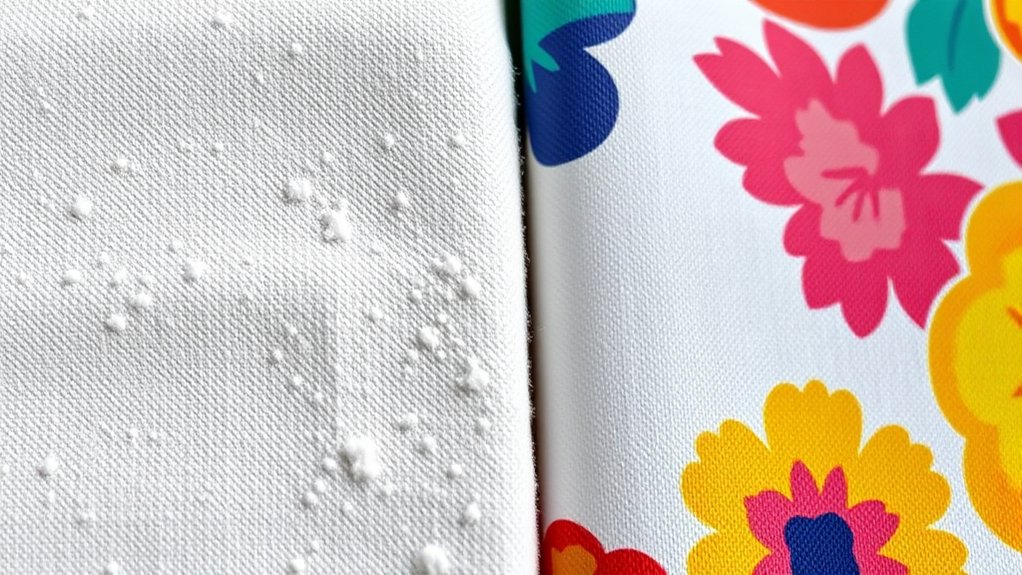
Puff print is a specialized screen printing technique that creates a raised, three-dimensional effect on fabric. When you apply puff print techniques, you use a heat-sensitive additive mixed with ink.
Once printed onto the fabric, heat activates the additive, causing the ink to expand and form a puffy texture. This tactile dimension adds depth and visual interest to designs that standard flat prints lack.
You’ll find puff print applications in fashion, sportswear, and promotional items where texture enhances both aesthetics and brand impact. The technique demands precise control over ink viscosity, screen mesh, and curing temperature to guarantee consistent puff expansion without cracking.
What Is Screen Print and How Does It Work
You start screen printing by stretching a mesh screen tightly over a frame and blocking out areas where ink shouldn’t pass. Then, you apply ink over the screen and use a squeegee to press it through the mesh onto your material below.
This process requires specific tools like screens, inks, squeegees, and a substrate to create sharp, vibrant designs.
Screen Print Basics
Although screen printing has been around for decades, it remains one of the most effective methods for transferring designs onto fabric. You start by preparing a mesh screen coated with a light-sensitive emulsion.
Using screen printing techniques, you expose the screen to light with your design, hardening the emulsion except where your image blocks it. When you rinse the screen, the unexposed areas wash away, creating a stencil.
You then place the screen on your fabric, apply ink types like plastisol or water-based, and use a squeegee to push ink through the mesh openings. This process deposits precise layers of ink onto the fabric, producing vibrant, durable prints.
Screen printing’s versatility and sharp detail make it ideal for bold, long-lasting designs.
Printing Process Steps
When preparing to screen print, the process begins by creating a stencil on a mesh screen that controls where ink passes through. This method relies on precise printing techniques and design considerations to guarantee sharp, vibrant results.
You’ll work through these steps:
Coat the screen with a light-sensitive emulsion.
Expose the screen to UV light with your design, hardening unexposed areas.
Rinse the screen to wash away unhardened emulsion, revealing the stencil.
Place the screen on your substrate and push ink through the open mesh areas.
Cure the ink to set the design permanently.
Each step demands accuracy to maintain detail and color fidelity, making screen printing ideal for bold, consistent graphics with excellent durability.
Materials And Equipment
Screen printing relies on a combination of specialized materials and equipment to transfer designs accurately and vividly onto various surfaces. You’ll work with different printing materials like mesh screens, squeegees, and inks designed for durability and sharpness.
Equipment types vary from manual presses for small runs to automatic machines for high-volume production. Understanding each component’s role guarantees precision in your prints.
| Equipment Type | Purpose |
|---|---|
| Mesh Screen | Holds stencil for ink transfer |
| Squeegee | Pushes ink through the screen |
| Printing Ink | Provides color and adherence |
| Exposure Unit | Creates stencil on screen |
| Printing Press | Holds screen and substrate steady |
Mastering these printing materials and equipment types gets you consistent, high-quality screen prints every time.
How Puff and Screen Prints Look and Feel Different
Texture plays a key role in distinguishing puff prints from screen prints. When you examine them, the texture comparison reveals distinct tactile and visual cues that define their visual appeal.
Puff prints rise above the fabric, offering a three-dimensional, soft, and cushioned feel. In contrast, screen prints lie flat, creating a smooth, sleek surface flush with the garment.
Consider these differences:
- Puff prints have a raised, voluminous texture
- Screen prints are thin and matte or glossy
- Puff printing adds depth and shadow effects
- Screen printing provides sharp, detailed lines
- Puff prints feel spongy; screen prints feel like part of the fabric
Understanding these texture and visual appeal contrasts helps you choose the ideal print style for your design needs.
Which Lasts Longer: Puff Print or Screen Print?
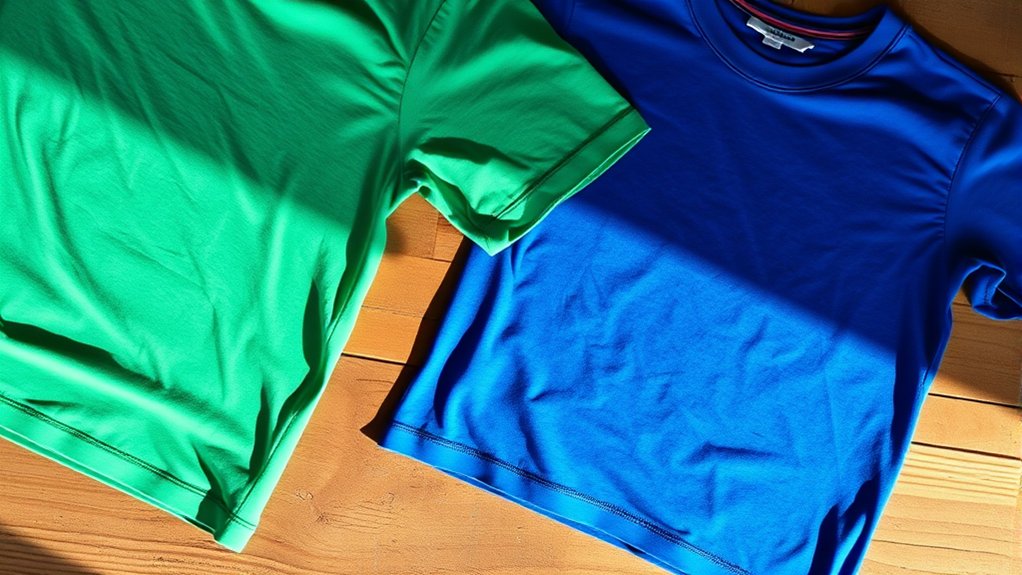
Although both puff and screen prints offer unique visual effects, their durability varies greatly depending on usage and care. When you compare the durability of puff print versus screen print, screen prints generally last longer.
Screen printing deposits ink directly onto fabric, creating a flat, resilient layer that withstands frequent washing and abrasion. Puff prints, with their raised, foam-like texture, are more prone to cracking or peeling over time due to the expansion process and its inherent fragility.
Longevity factors include fabric type, washing methods, and exposure to wear. If you prioritize lasting vibrancy and minimal texture degradation, screen prints outperform puff prints. However, proper care, like gentle washing and avoiding heat, can extend the life of both prints considerably, but puff prints require more cautious handling to maintain their raised effect.
Cost Comparison of Puff Print vs Screen Print
You’ll find that puff print demands higher initial setup costs due to specialized inks and curing processes. Screen printing, on the other hand, spreads expenses more evenly across long runs with reusable screens.
Understanding these cost structures helps you choose the right method for your budget and production volume.
Initial Setup Expenses
Initial setup expenses play an essential role in choosing between puff print and screen print methods. You’ll want to weigh your initial investment and budget considerations carefully before committing.
Puff print requires specialized puff ink and precise curing equipment, which can elevate upfront costs. Screen printing involves creating screens for each color, demanding more time and material at the start but often less expensive hardware.
Consider these factors for your initial setup:
- Cost of puff inks vs. standard screen inks
- Price of curing equipment for puff prints
- Expense of screen creation and materials
- Setup time and labor intensity
- Equipment durability and maintenance needs
Evaluating these will help you balance your budget and production goals effectively right from the start.
Long-Term Production Costs
When comparing long-term production costs, puff print often demands higher ongoing expenses due to specialized inks and extended curing times, which can slow throughput and increase energy use. If you handle bulk orders, these factors add up, making puff print less cost-effective over large volumes.
Screen printing, by contrast, excels in production scalability; its faster drying times and standard ink usage reduce per-unit costs as order size grows. While puff print offers unique texture and dimension, its complexity raises maintenance and material costs, impacting your bottom line.
If your focus is on efficient, high-volume runs, screen printing keeps expenses lower and turnaround times quicker, helping you maximize profits without sacrificing quality in bulk production scenarios.
Best Fabrics for Puff and Screen Printing
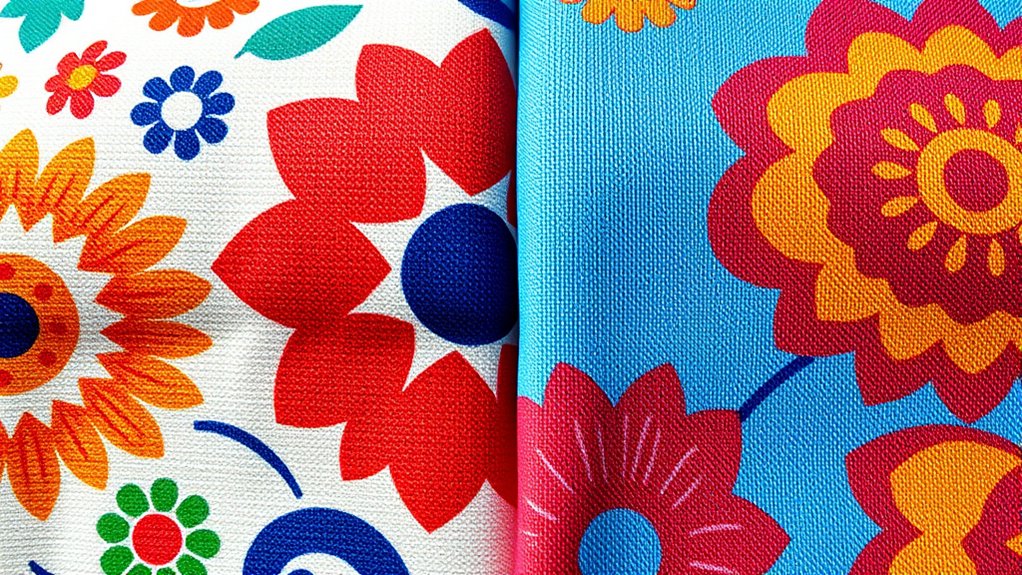
Although both puff and screen printing adapt to various fabrics, choosing the right material considerably impacts the final print’s texture and durability. You’ll want to balance fabric weight and fiber content to optimize ink adhesion and puff expansion.
Cotton blends excel in softness and absorbency, offering vivid colors and raised effects. Polyester fabrics, meanwhile, provide durability and quick drying, ideal for screen printing’s flat precision. Consider these fabrics:
- 100% cotton: best for vibrant, soft prints with puff’s 3D effect
- Cotton-polyester blends: balance breathability and durability
- Polyester: suits high-detail screen prints with sharp edges
- Tri-blends (cotton/polyester/rayon): offer texture variation and stretch
- Heavyweight fabrics: support puff printing’s raised foam without cracking
Choose wisely to enhance your print’s visual and tactile qualities.
When to Choose Puff Print or Screen Print for Your Project
Deciding between puff print and screen print depends on the visual impact and texture you want to achieve for your project. Choose puff applications if you want a raised, tactile effect that adds dimension and draws attention.
Puff print works great for bold designs, logos, or text that benefit from a 3D feel. On the other hand, screen print offers unmatched screen versatility, allowing you to reproduce intricate details, gradients, and a wide color range smoothly.
If your design requires precision, fine lines, or multiple colors, screen printing is your go-to method. Also, consider fabric compatibility: puff applications suit thicker fabrics better, while screen printing adapts well to various materials.
Ultimately, pick the method that aligns with your design’s texture, detail, and material needs.
How to Care for Puff and Screen Printed Apparel
Proper care preserves the vibrant look and texture of both puff and screen printed apparel. To keep your garments looking sharp, follow these essential care instructions and cleaning tips. Avoid harsh treatments that can damage the print’s integrity or texture.
Proper care keeps puff and screen printed apparel vibrant and textured, avoiding damage to prints.
Here’s what you should do:
- Turn garments inside out before washing to protect the print surface.
- Use cold water and a gentle cycle to minimize wear.
- Avoid bleach and strong detergents that degrade ink adhesion.
- Air dry or tumble dry on low heat to prevent cracking or peeling.
- Iron on the reverse side, never directly on the print.
Frequently Asked Questions
Can Puff Printing Be Combined With Other Printing Techniques?
Yes, you can combine puff printing with other printing techniques to create textured, layered designs. Puff printing adds dimension, enhancing your prints alongside flat methods like screen or digital printing for striking, tactile effects.
Is Puff Printing Environmentally Friendly?
Puff printing isn’t inherently eco friendly, but you can choose eco friendly materials and adopt sustainable practices to minimize impact.
Using water-based, biodegradable inks and energy-efficient curing boosts puff printing’s environmental profile considerably.
How Long Does the Puff Effect Take to Fully Expand?
Think of puff expansion duration like popcorn popping. Usually, it takes about 5-10 seconds during the puff printing process. You’ll see the design swell as heat activates the foam ink, creating that raised, textured effect instantly.
Are There Color Limitations With Puff Printing?
Yes, puff printing has color limitations compared to screen printing. You won’t get the same color vibrancy or design versatility, as puff inks can appear muted.
Puff printing is best suited for simpler, bold designs rather than intricate multicolor artwork.
Can Screen Printing Be Done on Non-Textile Surfaces?
Yes, you can use screen printing on various non-textile applications like glass, metal, and plastic. By selecting proper screen printing materials, you’ll achieve durable, vibrant results on these diverse surfaces with precision and quality.
Conclusion
When choosing between puff print and screen print, remember puff print adds a 3D texture that can increase design thickness by up to 25%, giving your apparel a bold, tactile feel.
Screen printing, meanwhile, offers sharper details and better durability, lasting through 50+ washes.
So, if you want a standout, textured look, puff print’s your go-to. For precision and longevity, screen print’s the smarter choice.
Either way, knowing these differences helps you nail your project’s style and lifespan. Understanding puff print vs screen print ensures you pick the best method for your design needs.