
Print on Demand Vs Screen Printing each have their unique advantages depending on your project needs.
You’ll find print on demand perfect if you want vivid, photo-quality designs without upfront costs, ideal for small batches or testing ideas swiftly.
This method allows you to quickly bring your concepts to life with minimal risk.
Screen printing shines for bold, vibrant colors and durability, especially when ordering large volumes.
It offers lower per-item costs despite higher setup time, making it a cost-effective choice for bulk orders.
Each method offers unique benefits tailored to your needs and budget.
Keep exploring to uncover which option truly fits your vision and project goals.
Key Takeaways
- Print on demand prints designs only when ordered, eliminating inventory, while screen printing requires upfront stencil setup and inventory.
- Print on demand excels in detailed, full-color designs; screen printing is best for bold, solid colors with consistent vibrancy.
- Screen printing is cost-effective for large volumes due to lower per-item costs, whereas print on demand suits small batches with no upfront costs.
- Print on demand offers faster turnaround times, while screen printing requires longer setup and production, ideal for planned bulk orders.
- Target audience and design complexity influence choice: print on demand suits diverse, small-scale sales; screen printing appeals to quality-focused, high-volume needs.
What Is Print On Demand?
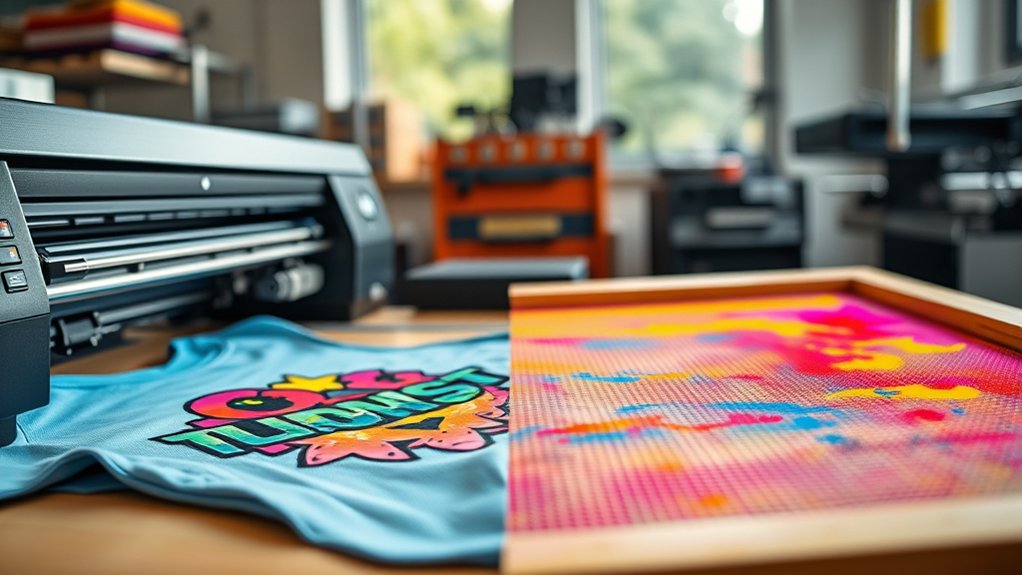
Print on Demand transforms your creative ideas into tangible products without the hassle of inventory. You simply upload your design, choose your product, and the system prints it only when an order comes in. This means you don’t tie up money in stock or worry about unsold items.
What’s impressive is the sharp print quality you get; vivid colors and crisp details bring your art to life on everything from shirts to mugs. Production speed is a game-changer here. Items are typically printed and shipped within days, not weeks.
This rapid turnaround lets you respond quickly to trends or special requests. With print on demand, you maintain creative control while enjoying a streamlined, efficient process that adapts to your needs.
How Screen Printing Works
You start by creating a stencil that blocks out parts of the screen, shaping the design you want to print. Then, you push ink through the open areas of the screen with a squeegee, transferring your design onto the fabric below.
This precise dance between stencil and ink brings your artwork vividly to life.
Stencil Preparation Process
Creating a stencil lies at the heart of the screen printing process, transforming your design into a tangible guide for ink application. You start by coating a fine mesh screen with a light-sensitive emulsion, then expose it to UV light through a film positive of your design.
This hardens the emulsion except where the design blocks the light, creating your stencil. Choosing the right stencil materials, usually polyester or nylon mesh, and mastering stencil techniques like hand-cut or photo emulsion determines your print’s sharpness and durability.
| Stencil Materials | Stencil Techniques |
|---|---|
| Polyester Mesh | Photo Emulsion |
| Nylon Mesh | Hand-Cut Stencils |
| Stainless Steel | Capillary Film |
Your stencil shapes how your ink flows, so precision here is key before moving to ink application.
Ink Application Technique
Three essential tools come together in the ink application stage: the screen, the squeegee, and the ink itself. You position the screen over your fabric, then drag the squeegee firmly across its surface, pushing ink through the stencil’s open mesh.
This controlled pressure guarantees precise ink absorption methods, allowing the ink to settle evenly into the fibers. As you work, you’re not just printing; you’re embedding the design, creating a bond that directly impacts print longevity factors.
The thicker the ink layer and the better its penetration, the more resistant your design will be to fading and cracking. This tactile, hands-on process lets you see the design take shape stroke by stroke, giving screen printing its signature durability and vibrancy.
Design And Color Options For Each Method
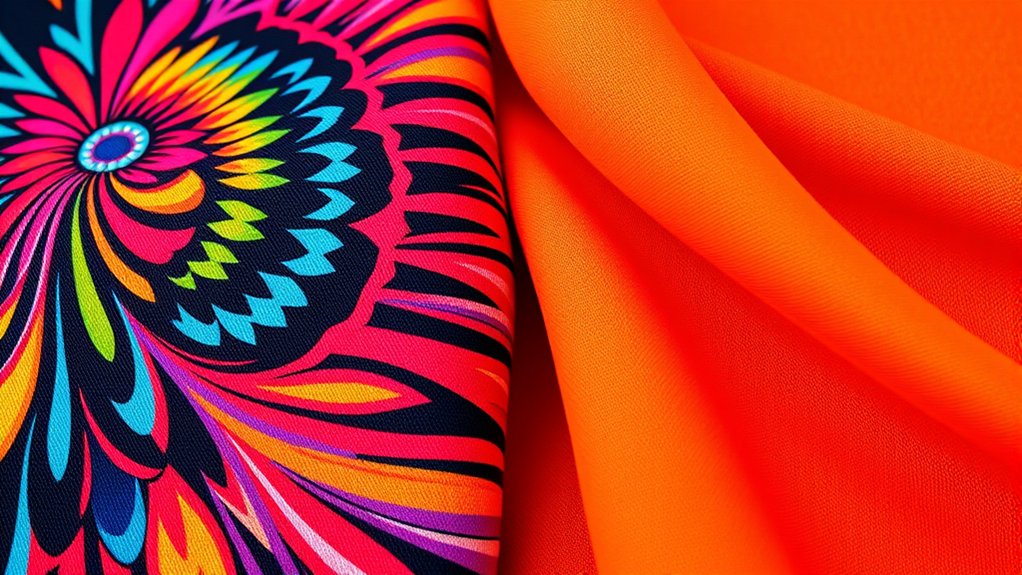
You’ll notice print on demand lets you splash full-color, intricate designs across your fabric with ease, capturing every tiny detail. Screen printing, meanwhile, shines when you want bold, vibrant colors but keeps things simpler due to its layering limits.
Let’s explore how these differences shape your creative choices.
Color Range Comparison
Although both print on demand and screen printing offer vibrant design possibilities, their color ranges differ considerably in scope and flexibility. With print on demand, you get a near-infinite palette, allowing rich, photo-quality color saturation that captures every shade and gradient. It’s perfect if you want detailed images with smooth shifts.
However, color consistency can vary slightly between batches due to digital printer calibration. Screen printing, on the other hand, excels in delivering bold, solid colors with unmatched color consistency across large runs. It uses specific ink colors, which can limit the range but guarantees vibrant, long-lasting hues every time.
Design Complexity Limits
When your design demands intricate details and a wide spectrum of colors, print on demand shines by effortlessly capturing every fine line and subtle shade. It handles complexity factors like gradients and photographic elements with ease, offering virtually no design limitations.
In contrast, screen printing thrives on bold, simple graphics but struggles with intricate patterns. Each color requires its own screen, so as your design’s color count and detail increase, production complexity and cost rises considerably. You’ll face design limitations when trying to replicate delicate shading or tiny text with screen printing.
Comparing Costs Of Print On Demand And Screen Printing
Comparing the costs of print on demand and screen printing reveals distinct financial landscapes that can shape your decision. With print on demand, you pay per item, so your upfront investment stays low. This is perfect if you’re testing designs or selling in small batches.
Screen printing, by contrast, demands a higher initial outlay for setup and screens, but its pricing strategies reward volume: the more you print, the lower your cost per shirt.
Your cost analysis hinges on order size and frequency. Print on demand offers flexibility and minimal risk, while screen printing shines when you commit to bulk runs, slashing expenses dramatically. Consider how these pricing strategies align with your business goals to choose the method that balances budget and scale.
Quality And Durability: Print On Demand Vs. Screen Printing
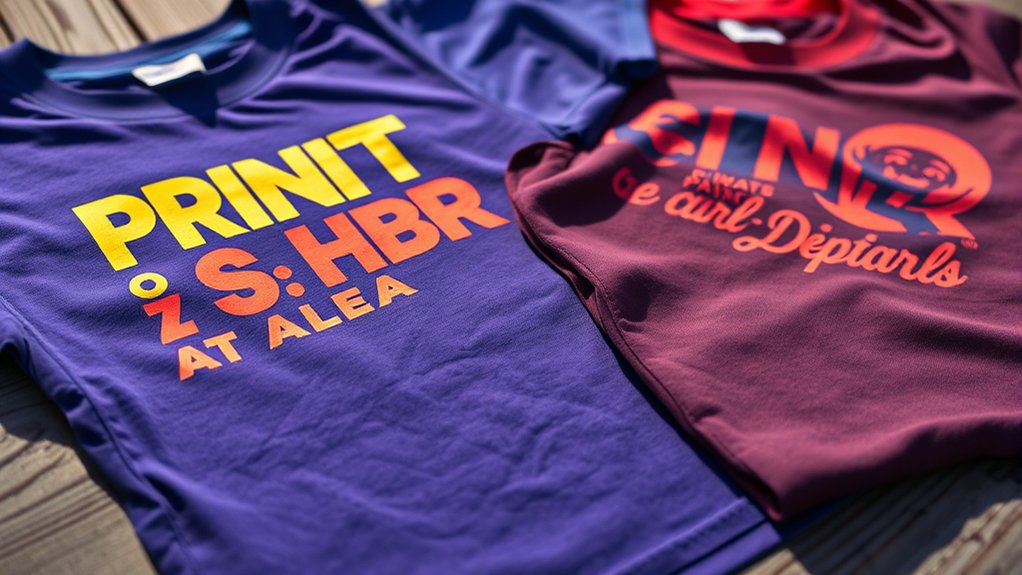
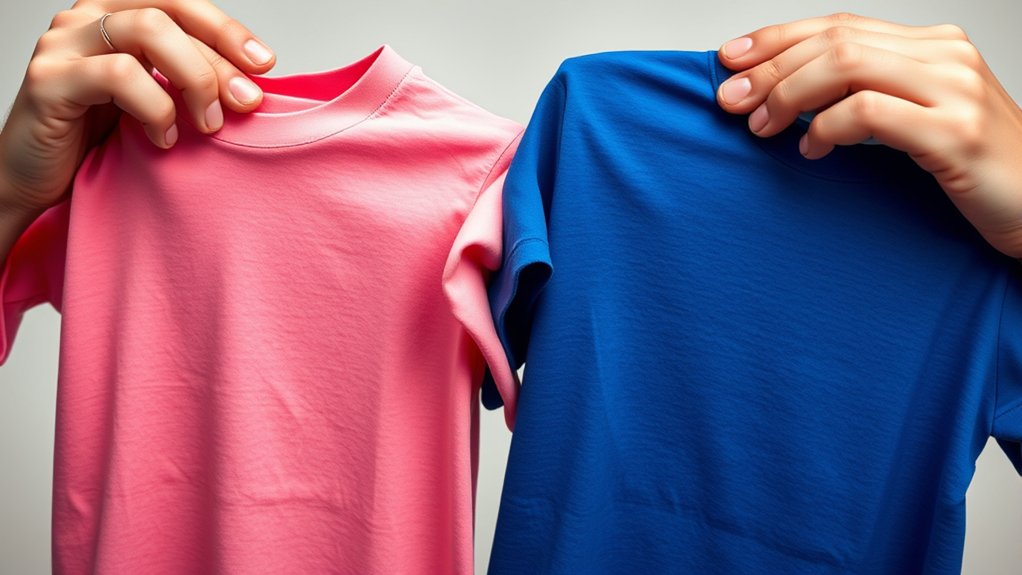
Cost plays a big role in choosing between print on demand and screen printing, but the look and feel of your design can make an even bigger impact on your customers. When you conduct a quality assessment, screen printing often delivers vibrant colors and thick ink layers that withstand repeated washes.
Its durability comparison usually favors screen printing, especially for bulk orders, since the inks bond deeply with fabric fibers. On the other hand, print on demand offers sharp, photo-quality prints with finer details but may show fading or cracking sooner under heavy use.
If you want longevity and a tactile texture that pops, screen printing is your go-to. However, if precision and flexibility matter more, print on demand stands out. Understanding these nuances helps you choose the best fit for your brand’s visual identity.
Turnaround Times For Each Printing Method
Although both print on demand and screen printing deliver quality results, their turnaround times differ considerably and can impact your project schedule. Print on demand boasts rapid production speed, often printing and shipping your order within days.
Print on demand offers fast turnaround, delivering quality prints often within just a few days.
This swift order fulfillment suits tight deadlines, letting you see your designs come alive almost instantly. On the other hand, screen printing requires more setup time. Creating screens and adjusting colors adds hours or days before actual printing begins.
While it takes longer upfront, this method excels at handling bulk orders efficiently once production starts. So, if you need quick, small-batch prints, print on demand speeds things up.
But if you’re planning larger runs and can wait a bit, screen printing’s turnaround aligns with streamlined, high-volume order fulfillment.
Best Use Cases For Print On Demand And Screen Printing
When you’re deciding between print on demand and screen printing, the best choice often hinges on your project’s scale and timeline. Print on demand shines when you’re targeting niche markets or testing fresh ideas. Its flexibility means you can launch custom merchandise without stocking inventory.
It’s perfect for seasonal products that demand quick turnover and minimal risk. On the other hand, screen printing excels with larger orders where vibrant, durable prints matter most. If you’re managing inventory for popular items, this method delivers cost-effective quality and consistency.
How To Choose Between Print On Demand And Screen Printing
Picking between print on demand and screen printing comes down to understanding your specific needs and goals. First, consider your target audience. If you’re testing designs or catering to diverse tastes, print on demand offers flexibility and no upfront inventory.
However, if your audience expects vibrant, durable prints and you’re producing in high volume, screen printing shines with its cost-efficiency and quality. Next, evaluate your production volume: small batches lean toward print on demand for its on-demand nature; larger runs favor screen printing’s scalability and lower cost per unit.
Visualize your project’s timeline and budget. Want quick turnaround with varied designs? Print on demand is your go-to. Need consistency and bold colors for mass distribution? Screen printing fits best. Match method to mission, and your prints will truly pop.
Frequently Asked Questions
Can Print on Demand Handle Oversized Designs?
You can handle oversized designs with print on demand, but watch for oversized design limitations that might affect print quality. Compared to screen printing, colors may fade slightly, yet you’ll enjoy more flexibility and faster turnaround times.
Are There Environmental Impacts of Each Printing Method?
You hold a fragile leaf symbolizing nature’s breath; both methods come with sustainability concerns. Screen printing churns chemical waste, while print on demand eases waste management but strains resources.
This urges you to choose wisely for Earth’s future.
Which Method Is Better for Small Businesses?
You’ll find print on demand offers better cost efficiency and faster production speed for small businesses, letting you test designs without bulk orders. It’s perfect for staying agile, saving money, and delighting customers quickly and creatively.
Can Screen Printing Be Done on Unusual Materials?
Yes, screen printing’s versatility lets you imprint on unusual material options like wood, metal, and glass. You’ll access vibrant, durable designs that defy fabric limits, turning any surface into a bold, tactile canvas.
Is Color Fading Faster in Print on Demand?
Yes, you’ll notice color fading faster in print on demand because its color durability is generally lower. Although print quality looks vibrant initially, it doesn’t hold up as long compared to more durable, traditional methods.
Conclusion
Imagine you’re launching a small apparel line and need quick, vibrant designs—you’ll love print on demand’s flexibility and speed. This method allows for easy customization without the hassle of large inventory. It’s perfect for unique, limited-edition pieces.
But if you’re ordering hundreds of matching tees for an event, screen printing’s durability and cost-effectiveness will win you over. Screen printing excels in producing consistent, high-quality prints in bulk. It’s a great choice when you want long-lasting designs and a lower cost per unit.
By weighing your project’s size, budget, and design needs, you’ll easily pick the perfect method. Each has its strengths, so choose smart and watch your ideas come to life exactly how you envision with print on demand vs screen printing.