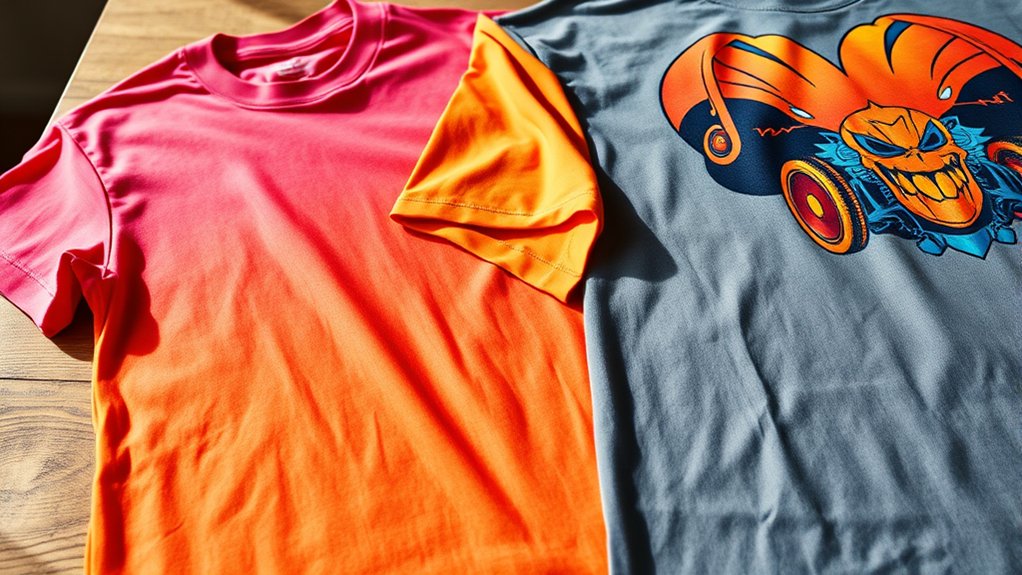

If you want sharp, colorful designs with quick setup, plastisol transfers give you vibrant details and on-demand flexibility—perfect for small runs or tricky artwork.
Plastisol transfers vs screen printing is a common debate when choosing the best method for your project.
But if you’re aiming for bold, durable prints that feel soft and breathe easy on fabric, screen printing wins in bulk jobs with its handcrafted vibe.
Transfers pop with a glossy finish; screen prints settle in with a matte, comfy blend.
Curious about which fits your project best? You’re about to find out.
Key Takeaways
- Plastisol transfers offer sharp, colorful designs with a slightly raised texture, ideal for small runs and detailed customization.
- Screen printing provides durable, bold prints with a softer, breathable feel, best suited for large bulk orders and simple designs.
- Transfers have moderate setup costs and higher per-unit prices for small batches, while screen printing has higher initial costs but lower costs per unit in bulk.
- Transfers enable faster turnaround times and on-demand application, whereas screen printing requires stencil setup but excels in efficient mass production.
- Plastisol transfers work well on various fabric types and intricate designs, while screen printing is preferred for vibrant, long-lasting prints on compatible fabrics.
Plastisol Transfers Vs Screen Printing: How to Choose the Right Method
How do you decide between plastisol transfers and screen printing for your project? Imagine your design’s journey—from vivid concept to crisp, wearable art. With plastisol transfers, you gain remarkable design flexibility, allowing intricate details and vibrant colors without worrying about ink drying too fast.
On the other hand, screen printing shines through its traditional application techniques, offering durability and a tactile feel directly on fabric. You’ll want to contemplate the texture you envision and the fabric type, as each method interacts differently.
If you’re after quick production with consistent results on various materials, plastisol transfers could be your go-to. But if your project demands bold, long-lasting prints with a handcrafted touch, screen printing might just be the perfect fit. You’re balancing creativity with practicality. Choose wisely.
What Are Plastisol Transfers?
Plastisol transfers bring your designs to life through a clever process that lets you print vibrant images onto a special film before heat-pressing them onto fabric. This method offers a benefits overview that includes durability, color vibrancy, and versatility in application techniques.
When you use plastisol transfers, you:
- Print detailed artwork onto a clear film using plastisol inks.
- Cure the ink to create a flexible, rubbery print.
- Position the transfer on your garment.
- Heat-press it, bonding the design seamlessly to the fabric.
This approach lets you achieve sharp, colorful prints with a soft hand feel, perfect for smaller runs or complex designs. You get the freedom to apply transfers on-demand, making customization fast and efficient without sacrificing quality or longevity.
How Does Screen Printing Work?
Although screen printing has been around for decades, it still captivates artists and businesses with its hands-on, tactile process. You start by stretching a fine mesh screen tightly over a frame. Using various screen printing techniques, you create a stencil that blocks ink in specific areas.
When you press ink types, like plastisol or water-based, over the screen, it passes through the open mesh onto your fabric or surface below. Each color requires a separate screen, so you carefully align and layer them for vivid, sharp designs.
The magic lies in how ink adheres differently depending on the type you choose, giving you control over texture and finish. This traditional craft invites you to engage directly with every step, making each print uniquely yours.
How Do Transfers and Screen Printing Compare in Look and Feel?
When you run your fingers over a plastisol transfer, you’ll notice a slightly raised texture that contrasts with the smooth integration of ink in screen printing. Transfers often sit on top of the fabric, which can affect how breathable and flexible the garment feels.
Understanding these differences in durability and comfort will help you decide which method suits your style and wear.
Visual Texture Differences
Texture shapes how you experience a design, both visually and to the touch. When comparing plastisol transfers and screen printing, you’ll notice distinct visual appeal and texture variety that influence your perception.
- Plastisol Transfers offer a slightly raised, glossy finish that catches light, giving designs a vibrant, smooth feel.
- Screen Printing produces a flatter, matte surface where ink integrates with fabric, creating subtle texture contrasts.
- The edge definition in transfers tends to be sharper, enhancing crispness, while screen printing edges can have a softer, blended look.
- Transfers often showcase consistent texture across complex designs, whereas screen printing can reveal ink thickness variations, adding tactile interest.
Durability and Comfort
Since you want your design to last and feel great on your skin, understanding the durability and comfort of plastisol transfers versus screen printing is key. Plastisol transfers sit as a slightly raised layer, offering vibrant colors but sometimes compromising comfort levels, especially if the print feels thick or stiff.
On the other hand, screen printing embeds ink directly into the fabric, creating a softer touch that breathes better over time. Durability factors vary: plastisol transfers resist cracking and fading well but can peel after repeated washes, while screen printing tends to fade gradually but maintains fabric flexibility longer.
When you choose, consider if ultimate softness or long-term resilience matters more. Each method paints a different tactile story, shaping how your design lives and feels through wear and wash.
Which Method Is More Durable?
Although both plastisol transfers and screen printing offer vibrant designs, you’ll notice significant differences in how each holds up over time. In a durability comparison, wear resistance is key. Here’s what you should consider:
- Screen printing inks penetrate fabric fibers, making designs more resistant to fading and cracking.
- Plastisol transfers sit atop fabric, which can lead to peeling after repeated washes.
- Screen printing generally withstands abrasions better, keeping colors sharp longer.
- Plastisol transfers provide consistent detail but may lose flexibility, affecting durability on stretch fabrics.
How Much Do Transfers and Screen Printing Cost?
You’ll notice the price tag shifts depending on setup costs and how many shirts you order. Transfers might have a smaller initial expense, but screen printing often shines with bulk order discounts.
Let’s break down how each method stacks up dollar for dollar.
Initial Setup Expenses
When you weigh the costs of plastisol transfers against screen printing, the initial setup expenses paint a vivid picture of where your investment begins. Understanding your initial investment considerations helps you chart the most cost-effective path.
Plastisol transfers require specialized heat presses and transfer paper, while screen printing demands screens, squeegees, and a press setup. Here’s a snapshot:
- Heat press for transfers: moderate cost, compact footprint.
- Transfer paper and inks: ongoing, but setup-friendly.
- Screen printing frames and mesh: higher upfront cost, intricate prep.
- Multi-color press and exposure unit: substantial investment, space-heavy.
Your setup equipment requirements directly influence your budget and workspace. So, think about your production scale and space before diving in. The initial outlay sets the tone for your printing journey.
Per-Unit Production Costs
After investing in your setup, the spotlight shifts to what each print actually costs you. When you weigh plastisol transfers against screen printing, production volume dramatically influences your per-unit price.
With screen printing, the initial setup eats into your budget, but as volume climbs, the cost per shirt drops sharply, making it ideal for large runs. Plastisol transfers lean on pricing strategies tied to complexity and materials, often holding steadier costs regardless of quantity.
You’ll notice transfers cost more per unit in small batches but save time and labor, balancing expenses differently than screen printing. So, your choice boils down to how many prints you need and how each method’s pricing strategies align with your production volume and budget goals.
Bulk Order Discounts
Although upfront costs might seem intimidating, bulk order discounts can transform the economics of both plastisol transfers and screen printing. When you explore bulk order pricing, discount strategies often reveal surprising savings.
Here’s how you can maximize value:
- Volume thresholds: The more units you order, the steeper the price drop per item.
- Setup fee amortization: Spreading setup costs over a large batch slashes your effective per-unit expense.
- Material efficiency: Bulk runs optimize ink and transfer sheet usage, cutting waste.
- Negotiation leverage: Larger orders give you bargaining power to access exclusive discounts.
When Should You Use Plastisol Transfers or Screen Printing?
Deciding between plastisol transfers and screen printing hinges on the specific needs of your project and the look you want to achieve. For application scenarios where you need flexibility, like customizing individual garments or working with multiple fabric types, plastisol transfers shine. They let you apply intricate designs without worrying about setup costs or fabric damage.
On the other hand, if your design considerations include vibrant, durable prints on bulk orders, screen printing offers rich colors and long-lasting quality. Think about the texture you want too: screen printing embeds ink into fabric creating a tactile feel, while plastisol transfers sit atop the material, offering a smooth, slightly raised finish. Choosing wisely means matching your design’s complexity, fabric, and quantity to the method that complements your creative vision best.
How Do Turnaround Times Differ?
When time is tight, understanding how turnaround times vary between plastisol transfers and screen printing can make all the difference. Plastisol transfers often offer quicker turnaround speed due to pre-made designs that you can apply on demand, boosting production efficiency.
Knowing the turnaround differences between plastisol transfers and screen printing can significantly impact your project timing.
Screen printing requires setup time for each color, which adds minutes or hours depending on complexity. Here’s how they compare:
- Plastisol transfers allow batch printing of designs before application, speeding up final production.
- Screen printing demands stencil preparation, slowing initial setup but accelerating mass runs.
- For small orders, plastisol transfers cut wait time drastically.
- Large orders favor screen printing’s consistent production efficiency over time.
Choose based on your deadline and order size to optimize your workflow and delivery expectations.
Frequently Asked Questions
Can Plastisol Transfers Be Applied at Home Without Professional Equipment?
Yes, you can easily master home application of plastisol transfers using simple DIY techniques like a household iron or heat press substitute. Just apply steady pressure and heat, and watch your design vividly adhere to fabric like magic.
What Types of Fabrics Are Incompatible With Screen Printing?
You’ll find fabric types like nylon, leather, and some stretchy blends challenge screen printing’s limits. These materials resist ink absorption, causing printing limitations that blur or crack designs, so choose your fabric wisely for vibrant, lasting results.
Are Plastisol Transfers Safe for Children’s Clothing?
Worried about your child’s sensitive skin? Plastisol transfers meet strict safety standards, ensuring they’re gentle and non-toxic.
You can trust they’ll stay vibrant and soft, keeping your little one comfy and stylish all day.
How Do Environmental Factors Affect the Curing of Plastisol Inks?
You’ll see curing temperature and humidity levels shape your plastisol ink’s finish; too low heat or high moisture can leave it tacky. Perfect conditions lock in vibrant, durable prints that resist cracking and fading beautifully.
Can Screen Printing Be Combined With Other Printing Techniques?
Yes, you can blend screen printing with other techniques, using ink mixing to create vivid effects. Hybrid methods let you layer textures and colors, crafting unique, eye-catching designs that jump off the fabric with depth and vibrancy.
Conclusion
Choosing between plastisol transfers and screen printing is like picking between a quick sketch and a detailed painting. Transfers give you speed and flexibility, perfect for on-the-fly creativity, while screen printing offers rich, lasting textures that stand the test of time.
You’re balancing instant convenience against enduring quality—both vibrant, both valuable. Whether you want fast flair or classic depth, your choice paints the story your design deserves.
In the end, understanding the strengths of plastisol transfers vs screen printing helps you select the best method to bring your artwork to life.