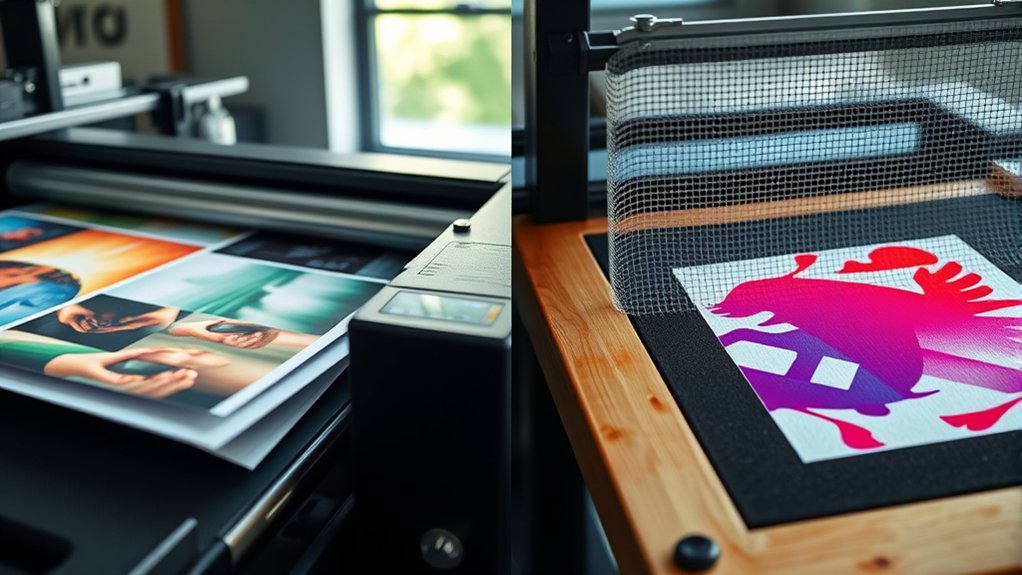

Offset vs silk screen printing highlights two distinct methods suited for different needs and materials.
Offset printing excels in sharp, high-volume jobs requiring precise color and fine detail. It uses plates and a rubber blanket to deliver consistent, vibrant results on smooth surfaces. This method is especially cost-effective for large print runs.
Silk screen printing, by contrast, applies thicker ink layers through a mesh stencil. It is ideal for bold colors, textured effects, and versatility across varied materials like textiles.
Silk screen printing offers durability and creative flexibility, making it perfect for smaller, artistic projects.
Understanding these differences can help you choose the best printing technique for your specific requirements.
Explore deeper insights on when each method truly shines.
Key Takeaways
- Offset printing uses plates and rubber blankets for high-resolution, precise color prints, ideal for large-volume jobs with complex images.
- Silk screen printing applies thick ink layers through mesh stencils, offering vibrant colors and texture, suitable for textiles and varied materials.
- Offset printing has higher initial setup costs but lower per-unit costs at large volumes, making it cost-efficient for bulk production.
- Silk screen printing excels in durability and color opacity on fabrics and promotional items, with flexibility across different substrates.
- Choose offset for fine detail and color accuracy; select silk screen for bold textures, vibrant solids, and creative effects on diverse surfaces.
How Offset Printing Works and Why It’s Unique
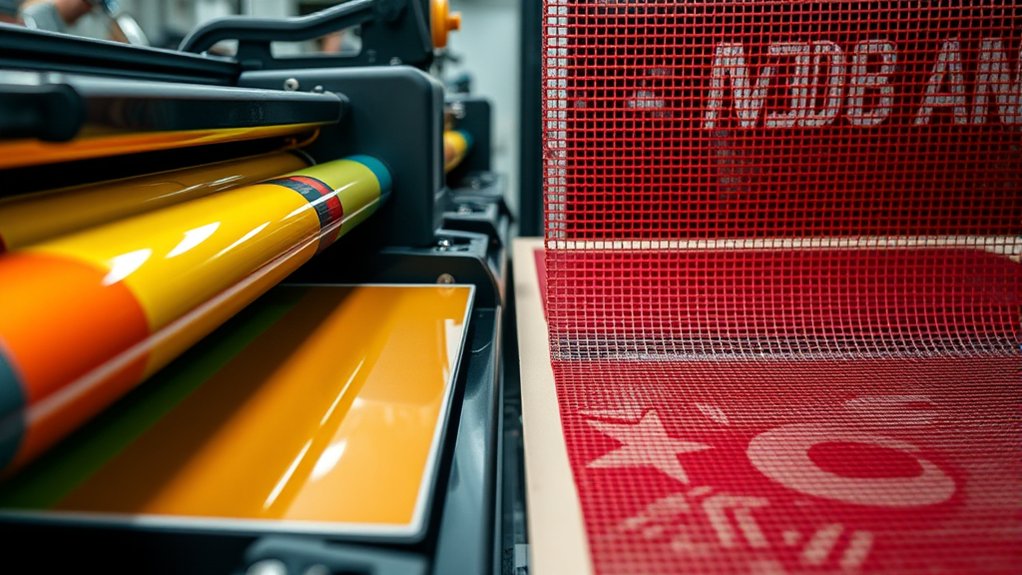
Although offset printing involves multiple complex steps, its core process relies on transferring an inked image from a plate to a rubber blanket and then onto the printing surface. You begin with precise plate creation, where an image is chemically etched onto a metal plate, ensuring areas to receive ink are hydrophobic while non-image areas repel it.
During printing, ink transfer occurs as the plate first applies ink to the rubber blanket. This intermediary step prevents direct contact between the plate and surface, preserving plate integrity and improving print quality. The rubber blanket adapts to various surfaces, enabling consistent, high-resolution reproductions on paper or other materials.
This indirect ink transfer method differentiates offset printing, offering superior sharpness, efficiency in large runs, and durability unmatched by other techniques.
How Silk Screen Printing Works and Why It’s Unique
Unlike offset printing’s indirect ink transfer via a rubber blanket, silk screen printing applies ink directly onto the printing surface through a fine mesh stencil. You prepare a screen coated with a light-sensitive emulsion, then expose it to light with a design film positive, hardening the emulsion except where you want ink to pass.
Using a squeegee, you push ink through the open mesh areas onto substrates like textiles, plastics, or metal. This direct application allows for thick, vibrant ink deposits impossible with other methods.
Silk screen techniques excel in unique applications requiring durability, opacity, and texture, including promotional items, signage, and specialty apparel. The process’s versatility and ability to print on various materials set it apart, making it indispensable when precision and tactile quality matter.
Comparing Print Quality: Offset Vs Silk Screen Printing
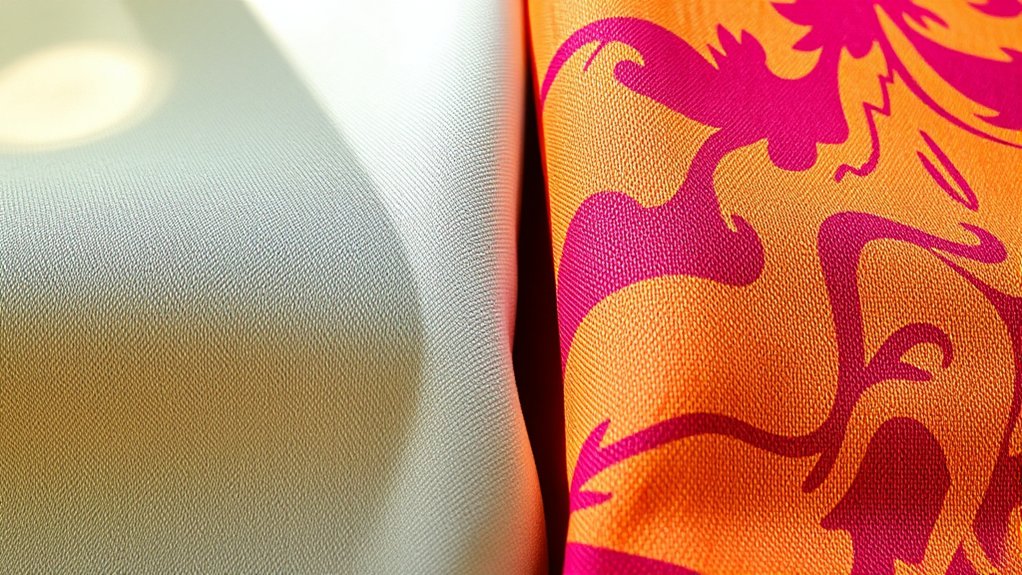
You’ll notice offset printing delivers superior color accuracy and finer detail due to its high-resolution plates and precise ink control.
In contrast, silk screen printing offers a distinct texture and finish by layering thicker inks, which affects both resolution and tactile quality. Understanding these differences helps you choose the right method based on your project’s visual and material requirements.
Color Accuracy Differences
The color accuracy in offset and silk screen printing depends heavily on the techniques and materials used in each process. When you focus on color matching and color vibrancy, offset printing excels with its precise CMYK color separation, producing consistent and true-to-design hues.
Silk screen printing, however, delivers superior vibrancy through thicker ink layers but may face challenges in exact color replication.
| Aspect | Offset Printing | Silk Screen Printing |
|---|---|---|
| Color Matching | High precision, CMYK process | Limited by ink mixing |
| Color Vibrancy | Moderate, relies on paper type | High due to thick ink deposits |
| Consistency | Excellent for large runs | Variable, depends on setup |
Choose offset for accuracy; silk screen for vividness.
Detail and Resolution
Although both offset and silk screen printing produce high-quality results, they differ considerably in detail and resolution capabilities. Offset printing excels in resolution capabilities, delivering crisp, fine lines and intricate detail preservation thanks to its use of metal plates and precise ink application.
Silk screen printing, while robust, tends to have lower resolution due to the mesh screen’s limitations, making it less suited for ultra-fine details.
When you need:
- Razor-sharp text and complex graphics
- High fidelity in photographic reproductions
- Accurate rendering of subtle gradients
- Consistent fine detail across large print runs
Offset printing stands out. Silk screen, meanwhile, shines with bold, vibrant designs but struggles with microscopic detail preservation. Your choice hinges on whether resolution or texture takes priority.
Texture and Finish
Beyond detail and resolution, how a print feels and looks on a tactile level can define the final product’s impact. When choosing between offset and silk screen printing, you must consider texture variety and finish options.
Offset printing produces a smooth, consistent surface ideal for detailed images, with finish options like matte, gloss, or satin. Silk screen printing offers a more tactile, raised texture due to thicker ink layers, enhancing visual depth and durability.
| Printing Method | Texture Variety | Finish Options |
|---|---|---|
| Offset | Smooth, flat | Matte, gloss, satin |
| Silk Screen | Raised, textured | Glossy, matte, specialty inks |
| Use Case | Fine detail, photos | Bold graphics, tactile feel |
| Ink Thickness | Thin layers | Thick, palpable layers |
| Durability | Moderate | High, resistant to wear |
Best Printing Method for Large Runs: Offset or Silk Screen?
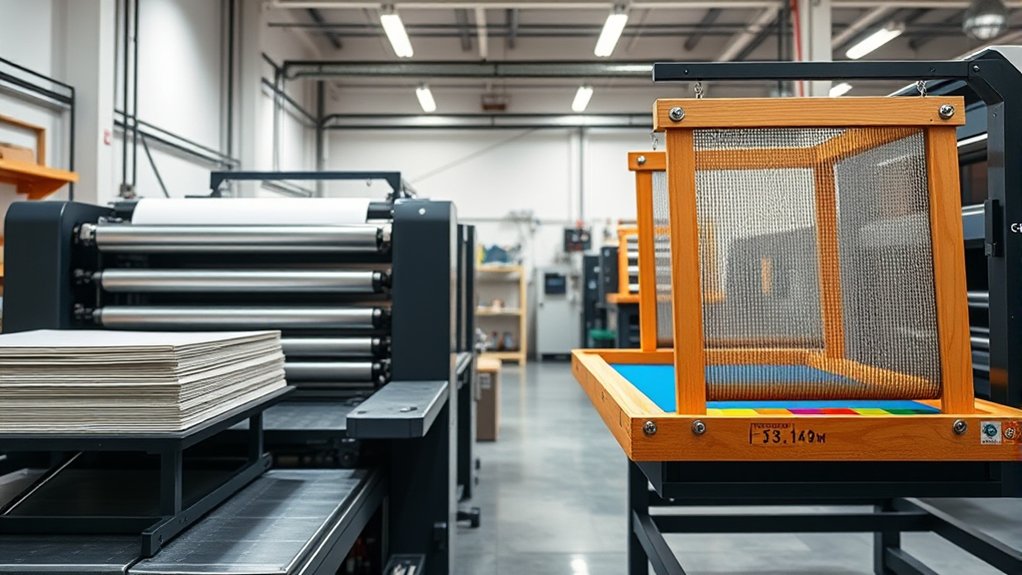
When handling large print runs, you need to weigh cost efficiency against print quality differences between offset and silk screen printing. Offset excels in delivering consistent, high-resolution images at a lower cost per unit as volume increases.
However, silk screen printing offers superior durability and vibrant ink density, which might justify its higher expense depending on your project’s requirements.
Cost Efficiency Comparison
Since large print runs demand both speed and cost control, choosing the right printing method greatly impacts your budget.
Offset printing typically offers superior cost efficiency for high volumes due to its rapid setup and lower per-unit cost after initial plate creation.
You’ll benefit from substantial long term savings as the fixed costs spread over large quantities.
Silk screen printing, while flexible for special materials, incurs higher labor and setup expenses that grow with volume, making it less economical for extensive runs.
Consider these budget considerations carefully:
- Initial setup cost differences
- Per-unit cost reduction in offset with volume
- Labor intensity affecting silk screen expenses
- Potential waste and material costs impacting total budget
Selecting offset printing maximizes your cost efficiency on large print runs.
Print Quality Differences
Cost considerations play a significant role in choosing between offset and silk screen printing, but print quality often determines the final decision for large runs. When you evaluate print longevity, silk screen printing excels due to its thicker ink layers, resulting in superior ink durability and resistance to fading or abrasion.
Offset printing, however, delivers exceptional detail and color accuracy, making it ideal for complex images and fine text. If your project demands consistent high-resolution prints with subtle gradients, offset is your best bet.
Conversely, for robust prints on varied substrates where longevity under harsh conditions is critical, silk screen outperforms. Ultimately, you’ll weigh ink durability against image precision. Offset offers refined visuals, while silk screen guarantees enduring print quality over extended use.
How Color and Material Affect Each Printing Type
Although both offset and silk screen printing excel in different applications, you’ll find that the choice of color and material greatly influences their effectiveness. Color impact is vital: offset printing delivers precise, vibrant colors on smooth, coated paper, while silk screen printing thrives on bold, solid colors, especially on textiles and rough surfaces.
Color and material choices are key to offset and silk screen printing’s vibrant, durable results.
Material selection dictates technique suitability; offset is ideal for paper-based substrates, whereas silk screen adapts to diverse materials, including fabric, plastic, and metal. Understanding these nuances guarantees quality output.
- Experience rich, detailed hues with offset on paper.
- Feel the durability of vivid silk screen inks on fabric.
- Avoid color fading by matching ink to material properties.
- Achieve tactile depth through material-specific print methods.
Cost Differences Between Offset and Silk Screen Printing
When deciding between offset and silk screen printing, you’ll find that the initial setup expenses and per-unit costs differ markedly due to their distinct production processes. Offset printing demands higher setup costs because of plate creation, but it offers lower unit costs for large runs.
Silk screen printing has moderate setup fees related to stencil preparation, with costs increasing per color used. Your budget considerations should weigh these price variations against order volume and complexity.
| Printing Method | Setup Costs | Per-Unit Cost |
|---|---|---|
| Offset Printing | High (plate creation) | Low (large runs) |
| Silk Screen | Moderate (stencils) | Higher (per color) |
| Cost Efficiency | Best for high volume | Best for low volume |
When to Choose Offset Printing Over Silk Screen
If your project involves large print runs requiring consistent, high-quality output, offset printing stands out as the superior choice. You should opt for offset printing when your design considerations include complex color gradients or fine details that demand precision.
Additionally, if your project timelines allow for the setup phase but prioritize speed during production, offset printing will save you time in the long run. It’s also ideal when you need to maintain exact color matching across thousands of copies.
Offset printing is ideal for projects prioritizing setup time upfront and fast, consistent production.
Consider offset printing if you want to:
- Achieve razor-sharp image clarity
- Maintain uniformity throughout extensive batches
- Meet tight deadlines without sacrificing quality
- Leverage cost-efficiency in high-volume runs
Choosing offset over silk screen depends on balancing your design needs and production schedule effectively.
Best Projects and Uses for Silk Screen Printing
Offset printing excels in high-volume, detail-rich projects, but silk screen printing offers distinct advantages for different applications. When you focus on t shirt designs, silk screen printing provides vibrant colors and durability, ideal for fabric applications that demand longevity.
It’s perfect for art prints and creative projects where color opacity and texture impact the final aesthetic. You’ll find silk screening excels in producing limited editions, allowing precise control over ink application.
For promotional materials and event giveaways, its cost-effectiveness in small to medium runs shines. Custom merchandise benefits from silk screen printing’s flexibility across diverse substrates.
The technique’s capacity to layer inks enhances design depth, making it indispensable for projects requiring tactile or bold visual effects, which offset printing can’t replicate as effectively.
Frequently Asked Questions
Can Offset Printing Be Used on Fabric Materials?
Offset printing can be used on fabric, but fabric compatibility is limited due to ink absorption and texture issues. You’ll often need specialized coatings or treatments to guarantee proper adhesion and image quality on textile surfaces.
Is Silk Screen Printing Eco-Friendly?
Like planting seeds in fertile soil, silk screen printing uses eco-friendly inks and sustainable practices, reducing harmful waste and energy consumption. You can create durable, vibrant designs while respecting the planet’s delicate balance.
How Long Does the Setup Process Take for Each Printing Type?
You’ll find offset printing’s setup efficiency takes longer, around several hours, but it guarantees superior print quality for large runs.
Silk screen printing’s setup is quicker, often under an hour, yet print quality varies by complexity.
Can Both Methods Print on Curved Surfaces?
Over 70% of printing jobs involve curved surfaces. You’ll find silk screen printing excels on curved surfaces due to its versatility, while offset printing struggles. This makes silk screen a preferred choice among advanced printing techniques for 3D items.
What Are the Maintenance Requirements for Printing Equipment?
You’ll need regular equipment upkeep like cleaning and lubricating parts to prevent wear. Maintenance costs vary, but neglecting this leads to expensive repairs and downtime.
Schedule routine inspections and replace consumables timely to guarantee peak performance.
Conclusion
When deciding between offset and silk screen printing, remember: each method paints a different story. Offset printing excels in sharp, high-volume runs with intricate details, while silk screen thrives on vibrant colors and durable prints across varied materials.
You won’t find a one-size-fits-all here—your choice hinges on project scale, color complexity, and substrate.
So, weigh your needs carefully; the perfect print isn’t just made, it’s engineered through understanding offset vs silk screen printing.