
If you want precise detail and tonal variation, lithographs offer superior image clarity due to their chemical plate process and fine ink application.
Lithograph vs screen print comparisons reveal that screen prints produce vibrant, bold color areas with textured finishes but less tonal depth.
Lithography suits large runs and fine lines, while screen printing excels in limited editions with graphic designs.
Cost, production time, and durability also differ based on ink type and substrate.
Uncover how these factors influence the best choice for your project’s needs.
Key Takeaways
- Lithographs use chemical plates for fine detail and tonal gradations, while screen prints apply ink through stencils for bold, flat colors.
- Lithography offers higher resolution and sharper imagery, ideal for intricate designs; screen printing excels in vibrant, graphic color blocking.
- Screen printing has lower setup costs and suits small batches; lithographs require more prep but enable fast, consistent large-volume runs.
- Lithographs use oil-based inks on acid-free paper for longevity; screen prints use thick inks offering abrasion resistance but need careful handling.
- Choice depends on project detail, color needs, budget, volume, and desired texture, with hybrid methods available for mixed effects.
Lithograph Printing Process
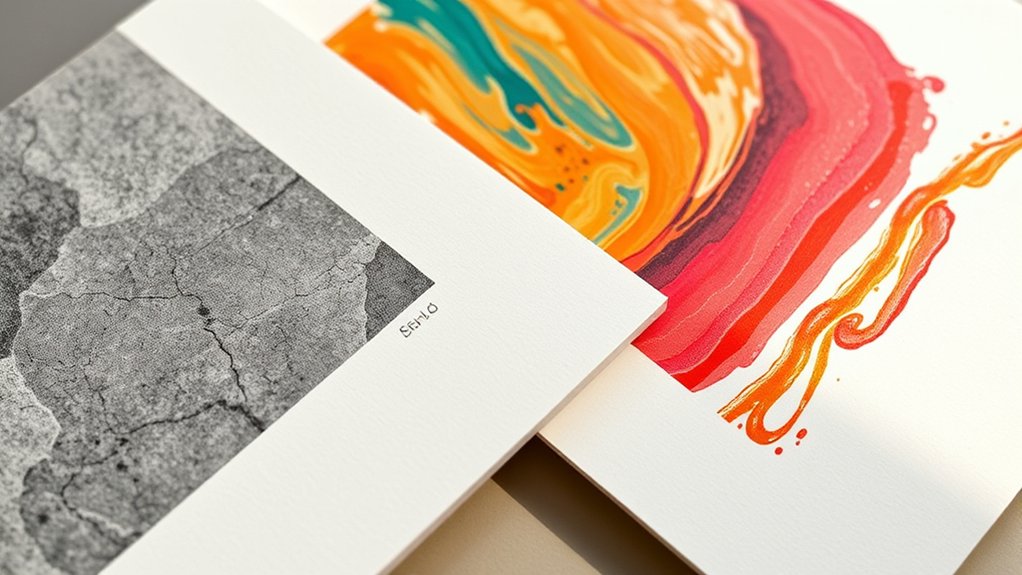
The lithograph printing process relies on the principle that oil and water repel each other. When you work with lithograph materials, you start by drawing an image with greasy ink or crayon onto a flat limestone or metal plate.
This technique, developed in the late 18th century, revolutionized printmaking by allowing artists to produce multiple copies with fine detail. After the drawing, you treat the plate with a chemical solution that guarantees the greasy areas attract ink while non-image areas hold water and repel it.
During printing, you dampen the plate with water; the ink adheres only to the greasy design. This precise interaction between oil and water defines the lithograph printing process and highlights its unique place in lithograph history.
Screen Print Technique and Effects
When you work with screen printing, you’ll apply ink by forcing it through a fine mesh stencil using a squeegee, controlling thickness and opacity precisely. This method allows you to create varied textures, from smooth, flat layers to raised, tactile surfaces, depending on ink viscosity and layering.
Understanding these variables lets you manipulate both the finish and visual depth, producing distinct effects not achievable with lithography.
Ink Application Methods
Although screen printing might seem straightforward, its ink application method requires precise control over mesh tension, squeegee angle, and ink viscosity to achieve consistent results. You must carefully calibrate mesh tension to regulate ink flow, ensuring sharp edges and uniform coverage.
The squeegee angle directly influences ink deposition; a steeper angle deposits more ink, while a shallower angle offers finer control. Ink viscosity affects how ink passes through the mesh, demanding adjustments based on substrate and desired opacity.
When applying multiple colors, you’ll rely on ink layering techniques to build depth without bleeding, requiring exact registration alignment. Additionally, color mixing methods in screen printing involve blending inks either pre-press or on-press, demanding meticulous precision to maintain color consistency across prints.
Mastery of these variables is essential for professional-quality screen prints.
Texture and Finish Effects
Controlling ink application variables sets the stage for achieving distinct texture and finish effects in screen printing. You can manipulate mesh count, ink viscosity, and squeegee pressure to create precise texture variations.
For instance, a lower mesh count allows more ink deposit, resulting in raised textures, while a higher mesh count yields finer detail with a smoother finish. Additionally, finish techniques such as matte, gloss, or satin coatings are achievable by selecting appropriate ink formulations or post-print treatments.
You can also experiment with layering inks to build dimensionality or use additives like gel mediums to adjust tactile qualities. By mastering these parameters, you guarantee consistent reproduction of desired textures and finishes, enhancing the visual and physical impact of your screen prints with technical accuracy and control.
Comparing Image Quality in Lithographs vs Screen Prints
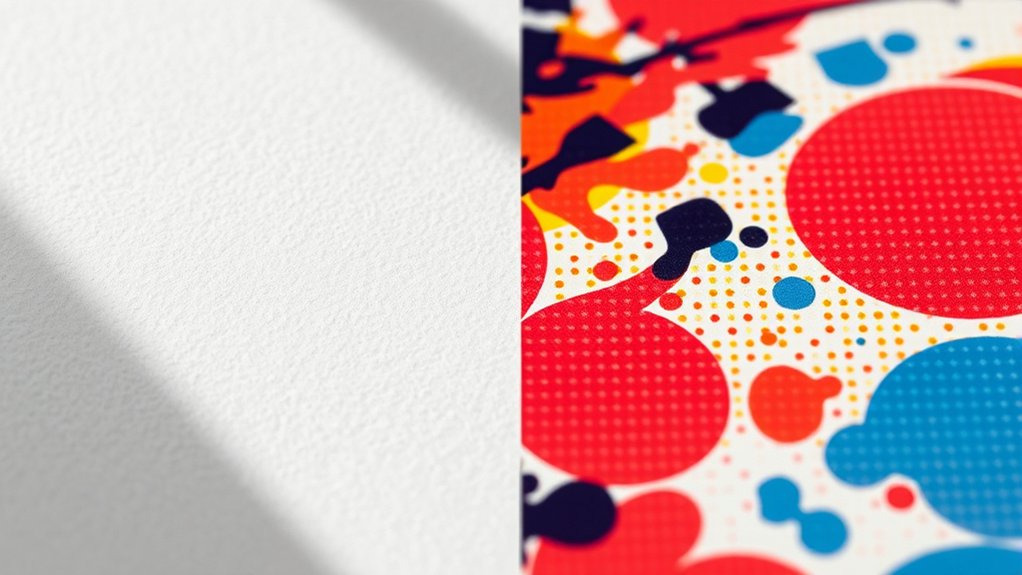
Since image quality often determines the suitability of a printmaking technique for specific projects, understanding the differences between lithographs and screen prints is essential. Lithographs excel in image clarity due to their ability to capture fine tonal gradations and subtle shading, thanks to the chemical process that treats the stone or plate.
This method supports higher print resolution, rendering detailed line work and smooth shifts with precision. Screen prints, however, rely on stencils and mesh screens, which can limit resolution and produce bolder, flatter color areas with less tonal variation. While screen prints offer vibrant, saturated colors, they typically sacrifice the nuanced detail and sharpness lithographs provide.
When evaluating image quality, you’ll find lithographs superior for intricate, high-resolution imagery, whereas screen prints perform better for graphic, color-driven designs.
Best Printing Methods for Different Art Styles
When your artwork features detailed line work, lithographs excel by capturing fine nuances with precision. For bold color blocking, screen prints deliver vibrant, solid areas of color with consistent opacity.
Consider texture and finish carefully, as screen printing offers tactile depth while lithography provides smooth, subtle gradients.
Detailed Line Work
Although both lithography and screen printing offer unique advantages, detailed line work demands a printing method that preserves fine precision and sharpness. When you handle intricate designs and detailed textures, lithography excels by capturing subtle gradations and delicate lines.
Screen printing can struggle with this level of detail due to mesh limitations.
| Printing Method | Line Detail Precision | Suitable For |
|---|---|---|
| Lithography | Extremely High | Detailed textures, fine lines |
| Screen Printing | Moderate | Bold lines, less intricate |
| Hybrid | Variable | Mixed detail and texture |
You should choose lithography if your artwork relies heavily on intricate designs, ensuring every line remains crisp without bleeding or distortion.
Bold Color Blocking
Bold color blocking demands a printing method that delivers vibrant, solid areas of color with consistent opacity and sharp edges. Screen printing excels here, as its thick ink layers guarantee maximum color saturation and uniform coverage across large blocks.
This technique preserves the integrity of bold shapes, enhancing visual impact without color bleeding or fading. Lithography, while capable of subtle gradations, struggles to maintain the intense, flat color fields essential to color blocking’s aesthetic.
When you need crisp delineation between hues and powerful, saturated tones, screen printing provides superior control over ink density and edge definition. Choosing the right method is vital to preserving your design’s boldness, making certain each color section remains vivid and sharply defined for maximum visual impact.
Texture And Finish
Texture and finish greatly influence the final appearance and tactile quality of printed artwork, making the choice of printing method essential for different art styles. When you opt for lithography, you gain access to a subtle texture variety, as the process allows for smooth gradients and fine details, resulting in a matte or satin finish that complements delicate and realistic styles.
In contrast, screen printing offers more pronounced texture variety due to the thicker ink layers it deposits, creating a tactile, raised surface. This method suits bold, graphic art with vibrant colors and can deliver diverse finish options, including glossy, matte, or even metallic effects.
Understanding these differences helps you select the ideal printing technique to enhance your artwork’s texture and finish, ensuring the final piece aligns with your creative vision.
Cost and Production Time: Lithographs vs Screen Prints
When comparing lithographs and screen prints, you’ll find that cost and production time vary considerably due to their distinct processes. In a cost analysis, lithographs generally require higher initial setup expenses because of the need for stone or metal plates and chemical preparation.
However, once plates are made, lithographs allow for rapid reproduction with consistent quality, optimizing production efficiency for large runs. Screen prints, conversely, demand significant manual labor during stencil creation and color layering, increasing time per unit.
Yet, screen printing offers flexibility for smaller batches with lower upfront costs. If you prioritize speed and scale, lithographs typically excel, but screen prints can be more cost-effective for limited editions. Understanding these variables helps you choose the method that aligns with your budget and timeline requirements.
Durability and Longevity of Lithographs and Screen Prints
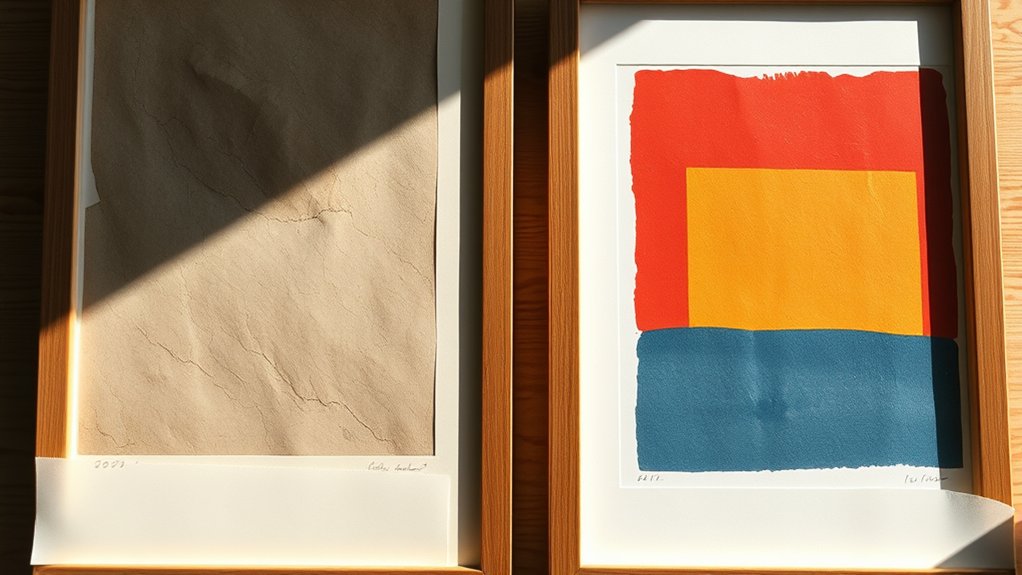
Although both lithographs and screen prints can produce high-quality artwork, their durability and longevity differ considerably due to the materials and techniques involved. When evaluating print lifespan, lithographs typically use oil-based inks on fine, acid-free paper, which resists material degradation under controlled environmental conditions.
In contrast, screen prints employ thicker layers of plastisol or water-based inks on various substrates, enhancing resistance to abrasion and UV exposure. However, screen prints may be more susceptible to cracking over time if flexed or improperly stored.
Your choice impacts the artwork’s longevity: lithographs excel in archival stability when kept in ideal environments, while screen prints offer durable surfaces but require careful handling to prevent surface degradation. Understanding these differences helps you predict how each print will age and maintain visual integrity.
How to Choose Lithograph vs Screen Print for Your Project
Because each printing method offers distinct advantages and limitations, selecting between a lithograph and a screen print depends on your project’s specific requirements, including desired detail, color range, production volume, and budget. To align with your project goals and target audience, consider these factors:
- Detail and Color Complexity: Choose lithography for intricate designs and subtle gradients; opt for screen printing when using bold, solid colors.
- Production Volume: Screen printing suits large runs with consistent quality; lithographs are ideal for limited editions or fine art prints.
- Cost Efficiency: Screen printing generally reduces per-unit costs at scale, while lithography involves higher setup costs but excels in reproducing fine detail.
Frequently Asked Questions
Can Lithographs and Screen Prints Be Combined in One Artwork?
Yes, you can combine lithographs and screen prints using hybrid techniques. You’ll achieve artistic fusion by layering lithographic detail with screen print’s bold colors.
This enhances texture and depth in your artwork with precise, controlled application methods.
What Are the Environmental Impacts of Lithograph Vs Screen Printing?
You’ll find lithographs generate less chemical waste, promoting better sustainability practices, while screen printing demands rigorous waste management due to ink and stencil disposal. Both require careful material handling to minimize environmental impact effectively.
How Do Collectors Value Lithographs Compared to Screen Prints?
You’ll find collector preferences often favor lithographs due to their print authenticity and traditional techniques. However, screen prints gain value when limited editions with artist signatures emphasize rarity and vibrant color precision, impacting desirability distinctly.
Are Special Frames Needed for Lithographs or Screen Prints?
Frames are the silent guardians of your art; choosing UV-protective, acid-free mat board frames is essential for print preservation.
Both lithographs and screen prints benefit from these frame types to prevent fading and physical damage over time.
Which Printing Method Is Better for Limited Edition Prints?
You’ll find lithographs better for limited editions due to superior print quality and fine detail retention. Screen prints suit larger runs but may lack lithography’s precision and subtle tonal gradations, impacting limited edition value.
Conclusion
So, if you’re aiming for art that screams “I’m classic and timeless,” go lithograph; it’s the Renaissance man of printing. But if you prefer bold, vibrant chaos that refuses to stay within lines, screen print’s your rebellious teenager.
Either way, you’ll spend time, money, and patience—because mastering these isn’t a stroll in the park. Choose wisely, or just flip a coin and embrace the printing adventure’s delightful unpredictability.
When it comes down to Lithograph vs Screen Print, understanding their unique vibes will help you pick the perfect style for your creative journey.