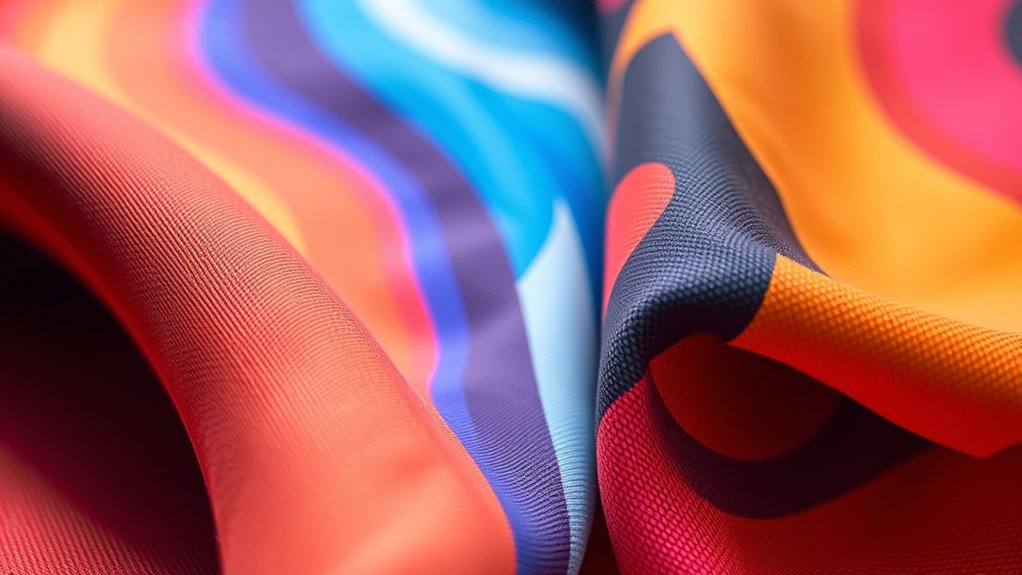

Ink print vs screen print is a key consideration when choosing the best printing method for your project.
If you need vibrant, intricate designs with multiple colors, ink printing is your go-to due to its precision and color range.
However, for bold, simple graphics and superior durability, especially on cotton fabrics, screen printing excels.
Ink prints feel softer but may fade faster, while screen prints withstand wear longer.
Setup costs favor ink printing for small runs, but screen printing is cost-effective at scale.
Understanding these factors helps you pick the right method for your project’s needs and goals.
Key Takeaways
- Ink print applies ink droplets directly, enabling high precision and complex, colorful designs with fine details.
- Screen print uses stencils and mesh, best suited for bold, simple designs with fewer colors and strong durability.
- Ink prints offer softer feel but may fade faster; screen prints provide longer-lasting color retention and wearability.
- Ink printing has lower setup costs, ideal for small batches, while screen printing is cost-effective for large volume orders.
- Ink printing is generally more eco-friendly with less waste, whereas screen printing can use eco inks but involves higher chemical and water use.
How Do Ink Print and Screen Print Differ?
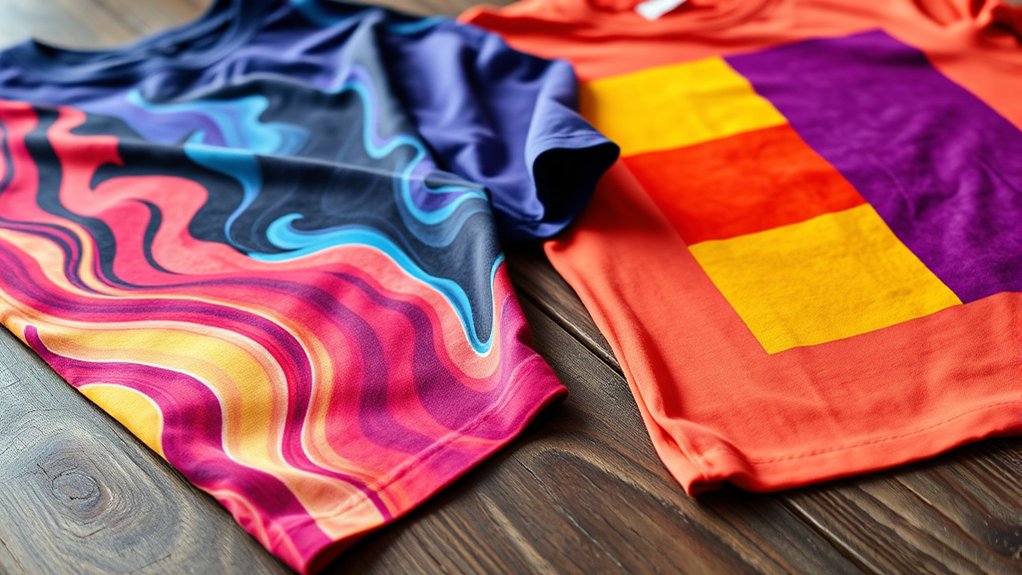
While both ink print and screen print serve to transfer designs onto surfaces, they differ fundamentally in their methods and applications. Ink print, often associated with digital printing, applies ink droplets directly onto the substrate, granting you high design flexibility.
This method excels in printing precision, especially for intricate details and gradients, as it precisely controls ink placement pixel by pixel. Conversely, screen printing uses stencils and mesh screens to push ink through selective areas.
While it offers durability and vibrant color saturation, it limits design flexibility due to stencil creation and color layering. You’ll find screen printing ideal for bold, simple designs with fewer colors, whereas ink print accommodates complex, variable imagery requiring fine detail and subtle shading, highlighting their distinct operational approaches and performance outcomes.
Which Printing Method Is Best for Complex, Colorful Designs?
When choosing a printing method for complex, colorful designs, you need a technique that handles fine details and multiple hues with accuracy. Ink printing excels here, offering superior color vibrancy and the ability to reproduce intricate gradients and subtle shading without layering constraints.
Its digital process allows precise control over design complexity, ensuring every element appears crisp and true to the original. Screen printing, while excellent for bold, solid colors, struggles with extremely detailed or multi-colored images due to the necessity of separate screens for each color. This can limit fidelity in highly complex designs and reduce color vibrancy.
Consequently, if your project demands intricate detail and a wide color spectrum, ink printing is the more effective choice to achieve visually stunning results.
How Durable Are Ink Print and Screen Print on Apparel?
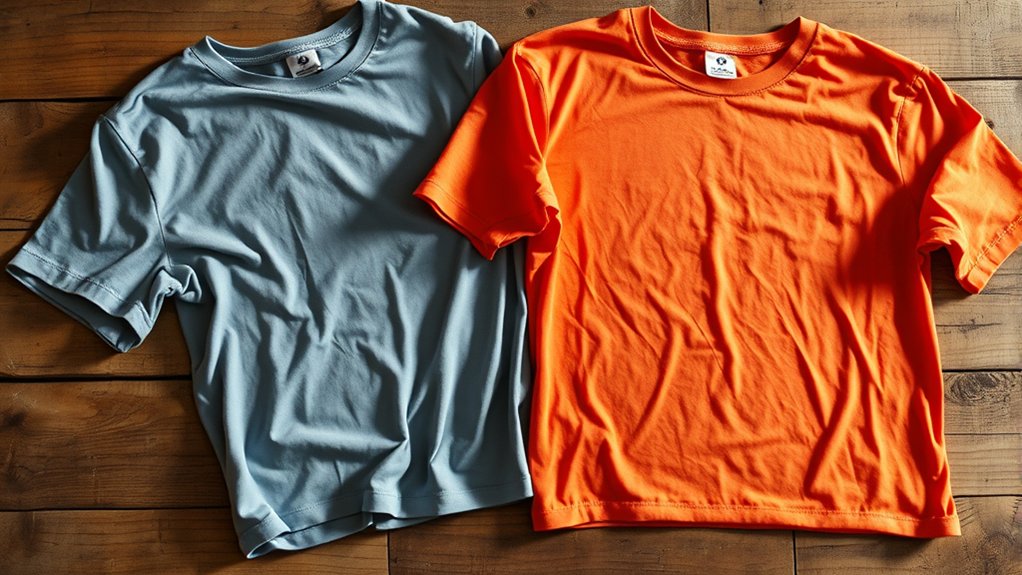
You need to evaluate how ink print and screen print differ in durability when applied to apparel. Ink prints tend to have a softer feel but may fade faster with repeated washing. Screen prints offer superior wearability and longer-lasting color retention.
Understanding these longevity factors helps you choose the best method for your garment’s intended use.
Longevity of Ink Print
Because apparel undergoes frequent washing and wear, the durability of ink print is a critical factor in selecting the right printing method. Ink print materials, such as plastisol, water-based, and discharge inks, differ markedly in longevity.
Plastisol inks form a thick, flexible layer that resists cracking and fading, while water-based inks penetrate fabric fibers, offering a softer feel but varying durability depending on fabric type.
Advanced ink print techniques, including curing temperature and ink layering, directly impact adhesion and colorfastness. Improper curing weakens ink bonds, leading to premature wear.
You need to take into account ink formulation compatibility with fabric and washing conditions to maximize lifespan. By understanding these technical nuances, you can guarantee your ink prints maintain vibrancy and structural integrity over extended use, making ink print a reliable option for durable apparel customization.
Screen Print Wearability
Understanding the longevity of ink prints sets the stage for evaluating screen print wearability, where durability depends on factors like ink type, mesh count, and curing process. You’ll find that wearability factors such as cracking, fading, and adhesion vary considerably.
Comfort levels also rely on ink thickness and placement. Here’s a quick breakdown:
| Wearability Factor | Impact on Durability | Effect on Comfort Levels |
|---|---|---|
| Ink Type | High resistance to wash | Moderate to low breathability |
| Mesh Count | Defines print resolution | Influences ink deposit thickness |
| Curing Process | Guarantees ink fixation | Prevents stiffness or cracking |
| Print Thickness | Higher durability | Can reduce fabric softness |
How Does Order Size Affect Printing Costs?
When you place larger orders, the cost per unit typically decreases due to the distribution of fixed setup fees across more items. Setup fees for screen printing, in particular, can be significant, so spreading them out in bulk orders makes the process more cost-effective.
Understanding these pricing dynamics helps you optimize your budget whether you choose ink print or screen print methods.
Cost Per Unit
Order size directly impacts the cost per unit in both ink and screen printing methods. When you increase your order quantity, unit pricing typically decreases due to the distribution of fixed production costs over a larger volume.
In screen printing, significant setup efforts such as screen preparation mean higher initial expenses. These get amortized more effectively as order size grows, reducing cost per unit.
Ink printing, with less intensive setup, has more consistent unit pricing but may not benefit as dramatically from larger runs. Understanding how production costs allocate per unit enables you to make informed decisions, optimizing your budget.
Setup Fees Impact
Because setup fees represent a fixed cost, they greatly influence the overall printing expense, especially in smaller runs. When you place an order, setup efficiency determines how quickly and accurately printers prepare screens or plates, directly impacting your initial cost.
In ink printing, setup often involves fewer steps, reducing overhead, while screen printing requires meticulous alignment and screen preparation, increasing setup time and fees. Conducting a thorough cost analysis helps you understand how these fixed fees distribute over your order size.
Smaller orders bear a higher per-unit setup cost, whereas larger orders dilute this expense. By evaluating setup efficiency alongside order quantity, you can optimize your budget and decide which printing method best suits your project’s scale and financial constraints.
Bulk Order Discounts
As you increase the quantity of prints, printers often apply bulk order discounts that greatly reduce the per-unit cost. Understanding discount thresholds is essential to maximizing bulk order benefits.
Printers set specific volume levels where costs drop considerably, reflecting economies of scale and reduced setup fee allocation. You’ll find that both ink print and screen print processes have distinct discount patterns based on complexity and materials.
| Order Size | Ink Print Cost/Unit | Screen Print Cost/Unit |
|---|---|---|
| 1-49 | $5.00 | $7.00 |
| 50-199 | $3.50 | $4.50 |
| 200+ | $2.25 | $3.00 |
Which Fabrics Work Best With Ink and Screen Printing?
Which fabrics deliver the best results for ink and screen printing? Natural fibers like cotton dominate because their porous structure absorbs ink efficiently, producing crisp, vibrant designs. For ink printing, 100% cotton and cotton blends with high cotton content provide superior ink adhesion and color retention.
Screen printing also excels on these fabric types due to the thick ink layers bonding well with the fibers. Synthetic fabrics like polyester require special inks, such as sublimation for ink printing and discharge or plastisol inks for screen printing, to guarantee durability and color accuracy.
Blends, especially poly-cotton, demand tailored printing techniques to balance ink absorption and fabric texture. Ultimately, selecting the right fabric types aligned with your chosen printing technique assures ideal print quality and longevity.
Which Printing Method Is Faster to Set Up and Produce?
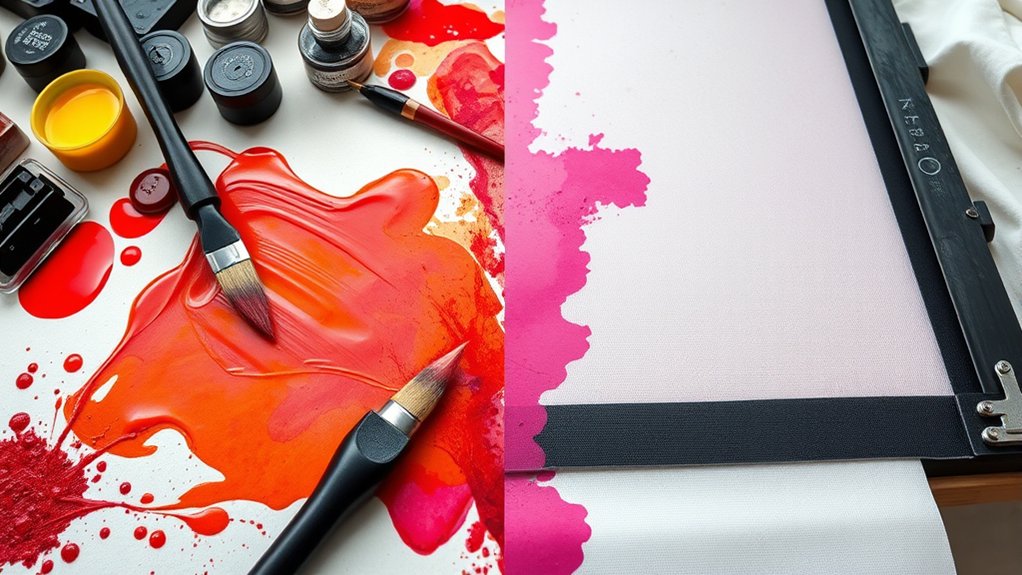
While both ink print and screen print offer distinct advantages, you’ll find that ink printing generally requires less setup time, especially for small batches or complex, multi-colored designs. Ink printing excels in setup efficiency and rapid production speed because it eliminates the need for stencil creation. Screen printing, however, demands significant preparation but benefits from fast replication once set up.
| Aspect | Ink Printing |
|---|---|
| Setup Efficiency | High no screens needed |
| Production Speed | Fast for short runs |
| Color Complexity | Handles multi-color easily |
| Initial Setup Time | Minimal |
| Scalability | Best for low to medium runs |
Screen printing setup is slower but optimizes mass production speed after setup, suitable for large runs.
Ink vs Screen Printing: Which Is More Eco-Friendly?
Considering setup efficiency and production speed is important, but understanding the environmental impact of ink and screen printing can guide more responsible choices. Ink printing generally uses eco friendly inks formulated with sustainable materials, reducing volatile organic compounds (VOCs) and hazardous waste.
Digital inkjet printers apply ink precisely, minimizing excess and waste. In contrast, screen printing involves multiple steps, including screen preparation and ink mixing, which can generate more chemical runoff and water usage.
However, screen printing can also utilize eco friendly inks and sustainable materials if managed properly. Your choice hinges on evaluating the entire lifecycle: ink formulation, energy consumption, waste generation, and recyclability.
How to Choose Between Ink Print and Screen Print for Your Project
How do you determine the best printing method for your project’s specific needs? Start by analyzing your project goals: quantity, budget, and desired finish. Ink print excels in detailed, multi-color designs with gradients, perfect for small runs or prototypes.
Screen print, however, offers durability and cost-efficiency for large batches with simpler color schemes. Next, assess design considerations; intricate artwork with fine lines fares better with ink print’s precision, while bold, solid colors suit screen printing.
Also, consider fabric type and ink compatibility. Screen printing handles thicker textiles well, whereas ink printing adapts to various surfaces. Balancing these factors guarantees you select a method that optimizes quality, cost, and timeline.
Making an informed choice aligns your printing process with your project’s unique requirements.
Frequently Asked Questions
Can Ink Print or Screen Print Be Used on Non-Fabric Materials?
You can use both ink applications on non-fabric materials, but material compatibility is essential. Screen printing works well on rigid surfaces, while ink print suits smooth, flat substrates, ensuring durability and precision for each specific material type.
Are There Any Health Risks Associated With Ink or Screen Printing?
You should know ink toxicity varies; improper handling during printing poses health risks. Always follow printing safety protocols, use proper ventilation, and wear protective gear to minimize exposure to harmful chemicals in both ink and screen printing processes.
How Do Ink and Screen Printing Compare in Terms of Color Vibrancy?
You’ll find screen printing delivers color saturation so intense it’s like wearing a rainbow’s soul, thanks to its layering technique. Ink printing, though precise, often lacks this depth because of different printing techniques and ink absorption.
Can Screen Printing Be Combined With Other Printing Techniques?
Yes, you can combine screen printing techniques with other methods using hybrid printing methods. This approach enhances detail, texture, and color range, allowing you to achieve complex, high-quality designs that leverage each technique’s strengths effectively.
What Maintenance Is Required for Screen Printing Equipment?
Like tuning a fine instrument, you’ll perform regular screen cleaning and equipment calibration to guarantee print precision. Consistent maintenance prevents clogging, preserves mesh integrity, and assures sharp, accurate prints every time you operate the screen printing setup.
Conclusion
Choosing between ink print and screen print is like selecting the right tool for a precision job. Just as a surgeon picks a scalpel over a saw for delicate work, you’ll want ink printing for intricate, colorful designs and screen printing for durability and large runs.
By matching your project’s complexity, fabric, and order size to the method, you guarantee quality and cost-efficiency.
Because in printing, precision isn’t just preferred, it’s essential—making the choice between ink print vs screen print crucial for the best results.