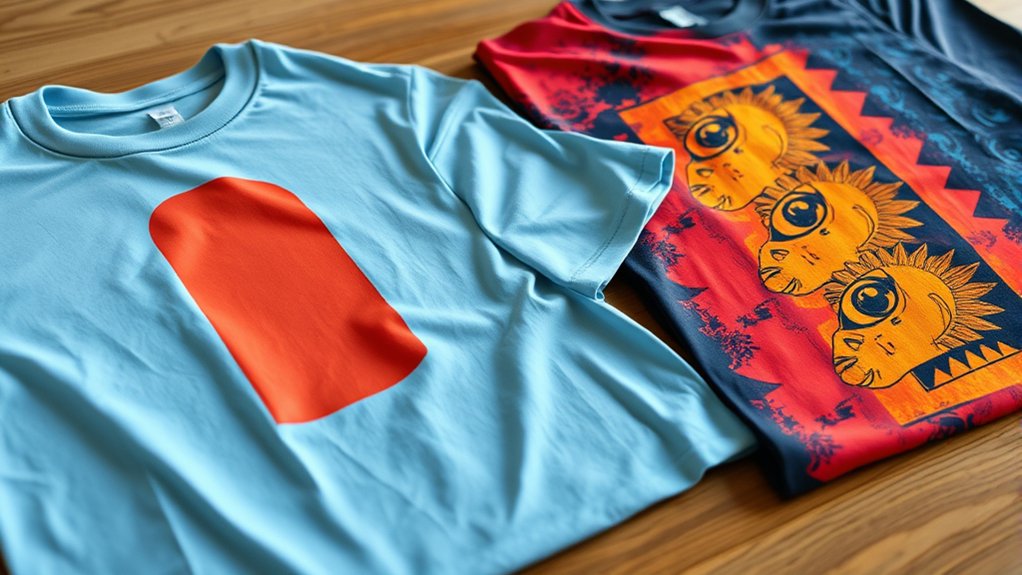

HTV vs screen printing is a common consideration when choosing the best method for custom apparel.
If you need sharp, detailed designs and small runs, HTV offers quick setup with vibrant colors, especially on dark fabrics, using heat and pressure to apply vinyl cuts.
For large orders, screen printing is more cost-effective, ideal for bold designs, and offers durable prints with ink stenciled onto fabric.
HTV suits diverse fabrics, while screen printing excels on cotton blends.
Understanding these trade-offs helps you pick the best method for your project’s size, design complexity, and budget.
Key Takeaways
- HTV is best for small orders with intricate, multi-color designs, offering quick setup and vibrant colors on dark fabrics.
- Screen printing suits large orders, providing cost efficiency per unit and consistent results with bold colors on light fabrics.
- HTV requires lower upfront costs and allows flexible customization, while screen printing demands higher setup costs but lowers costs in bulk.
- Screen printing typically offers greater durability, especially with thick ink layers, whereas HTV adhesion can weaken with stretching and abrasion.
- HTV works on various fabric types including non-traditional ones; screen printing is optimal for cotton and blends with careful fabric choice.
How Do HTV and Screen Printing Actually Work?
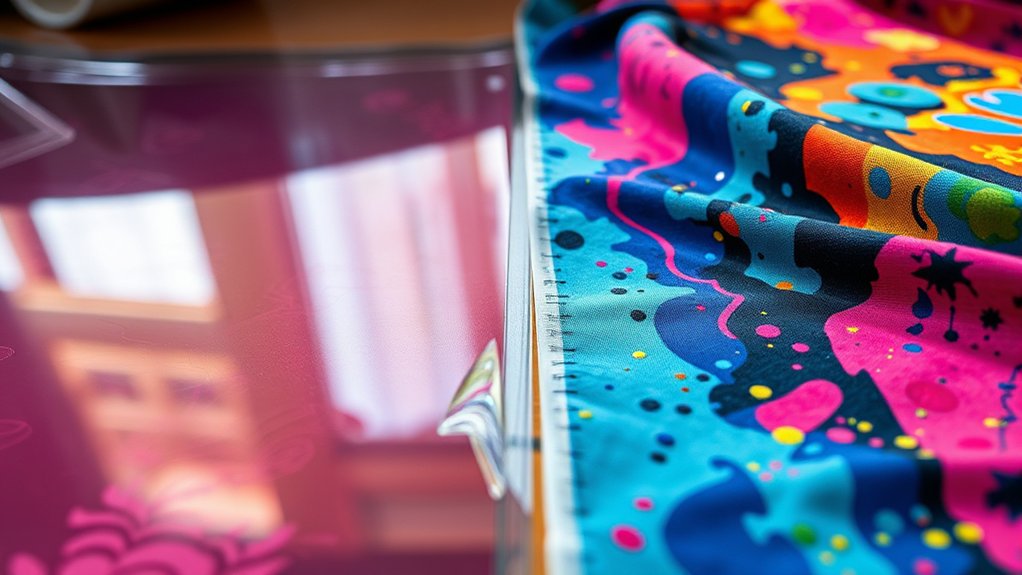
Although both HTV and screen printing create custom designs on fabric, they operate through distinct processes. HTV uses application techniques involving heat and pressure to transfer a vinyl design onto fabric. You’ll first cut the design from a vinyl sheet, weed out excess material, then position it on the fabric.
A heat press applies controlled heat and pressure, activating adhesive on the vinyl’s underside to bond it securely.
Screen printing employs transfer methods using stencils and ink. You create a screen for each color, push ink through the mesh onto the fabric, and cure it with heat. This method deposits ink directly onto fibers, producing durable, vibrant prints.
Each technique demands precise control over materials and equipment to guarantee ideal design transfer and fabric compatibility.
Which Method Is Better for Small or Large Orders?
When deciding between HTV and screen printing for your order size, consider how each method scales in cost, setup time, and production speed. HTV excels with small orders due to minimal setup and flexibility. Screen printing shines for large orders because its initial setup cost spreads out, reducing per-unit cost.
| Factor | HTV | Screen Printing |
|---|---|---|
| Setup Time | Low | High |
| Cost per Unit | Higher for large orders | Lower for large orders |
| Production Speed | Slower for large orders | Faster for large orders |
| Ideal Order Size | Small orders | Large orders |
| Customization | High | Moderate |
Choose HTV for quick, small batches. Opt for screen printing when scaling up to large orders efficiently.
What Colors and Designs Work Best With HTV and Screen Printing?
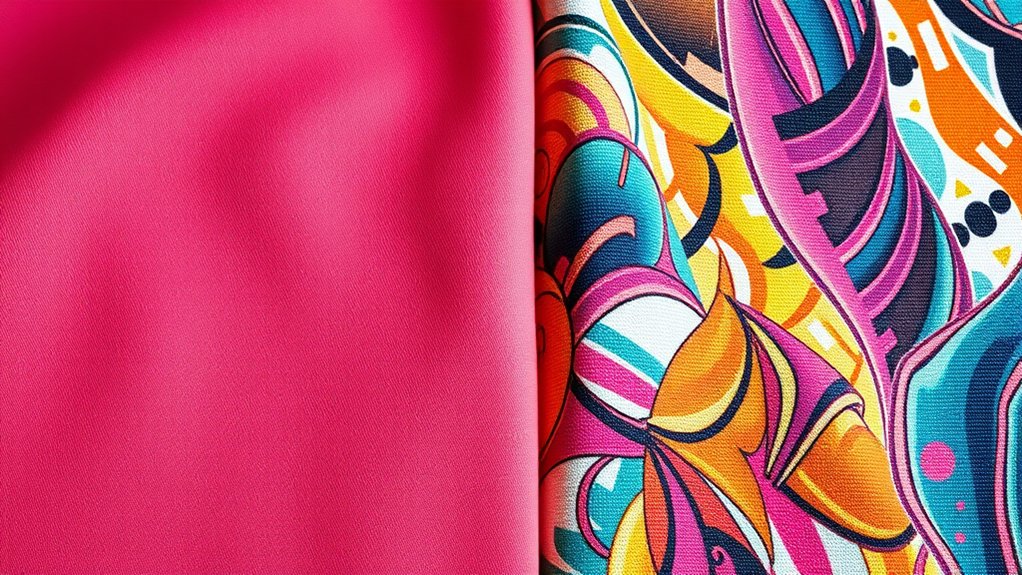
You’ll notice HTV offers sharper color vibrancy on darker fabrics, while screen printing excels with bold, flat colors on lighter backgrounds.
Complex, multi-layered designs suit HTV’s precision cutting, whereas screen printing handles large, simple patterns more efficiently. Understanding these distinctions helps you choose the best method for your project’s color and design needs.
Color Vibrancy Comparison
Because HTV uses solid vinyl layers, it delivers sharp, vibrant colors that pop on both light and dark fabrics, making it ideal for bold, simple designs with limited color palettes. Conducting a color saturation analysis reveals HTV’s ability to maintain consistent pigment density, ensuring high visibility and contrast.
In contrast, screen printing relies on pigment quality evaluation to optimize ink formulation and layering, which can achieve richer gradients and subtle color blends on light fabrics. However, screen printing’s vibrancy may diminish on darker textiles without additional underbase layers.
You’ll find HTV excels in color consistency and durability, especially for high-saturation hues, while screen printing offers greater flexibility for complex color shifts but may require more precise color management to maintain vibrancy across different fabric colors.
Design Complexity Suitability
Although HTV delivers excellent results with bold, limited-color designs, it struggles with intricate patterns or fine details due to the layering and cutting process. Screen printing, by contrast, excels in reproducing complex visuals with superior design scalability.
When deciding which method suits your project, consider these factors:
- HTV works best for simple, solid-color logos or text with minimal layering.
- Screen printing handles intricate patterns and gradients with precision and consistency.
- For high design scalability, screen printing adapts better to large runs and varying color complexities.
- HTV’s cutting limitations restrict the use of very fine details or delicate line work.
Choose HTV for straightforward designs and screen printing when your artwork demands detailed, scalable complexity.
How Much Does HTV vs Screen Printing Cost?
Cost analysis plays an essential role when choosing between HTV and screen printing for your projects. In a cost comparison, HTV typically has lower upfront expenses since it requires minimal setup, primarily a heat press and vinyl materials. Pricing factors for HTV include vinyl type, design size, and quantity, making it more economical for small runs or personalized items.
Conversely, screen printing demands higher initial costs due to screen preparation and setup, but its per-unit cost decreases considerably with larger orders, optimizing cost efficiency for bulk production. Additional pricing factors for screen printing include ink colors, mesh count, and substrate type.
Ultimately, your choice depends on project scale and budget, as HTV suits low-volume, intricate designs while screen printing excels in high-volume, cost-effective runs.
How Long Will Your HTV or Screen Printed Design Last?
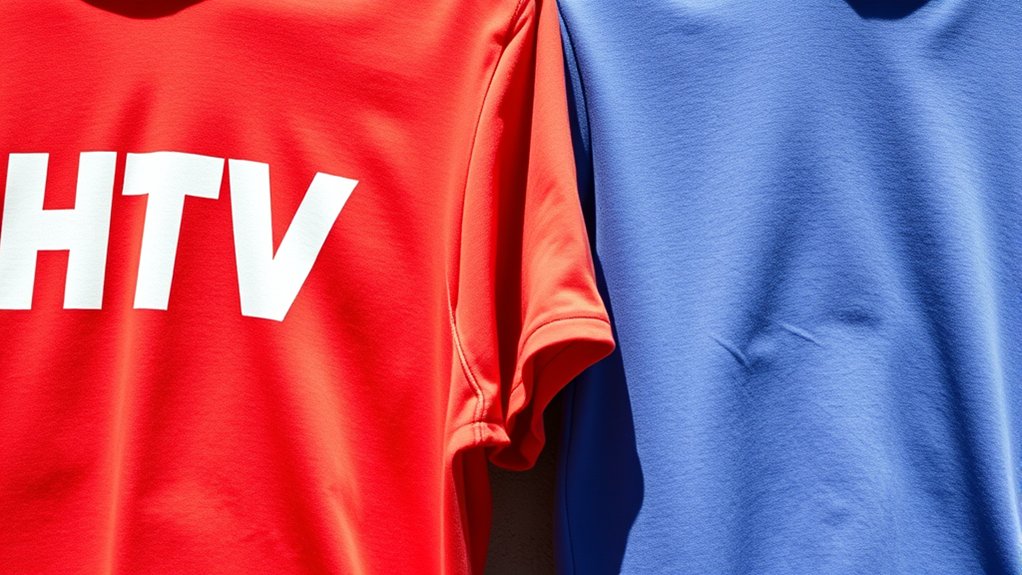
You’ll want to compare durability factors like adhesion and flexibility when evaluating HTV versus screen printing. Keep in mind that washing methods and frequency considerably affect the lifespan of both designs.
Additionally, the type of material and how you use the garment play essential roles in design longevity.
Durability Factors Comparison
When comparing the durability of HTV and screen printing, several factors influence how long your design will last under regular use and washing conditions. Durability testing reveals differences in longevity comparison, impacted by:
- Material Composition: HTV uses polyurethane or vinyl films, while screen printing relies on plastisol or water-based inks, affecting wear resistance.
- Adhesion Quality: The bonding strength between HTV and fabric or ink penetration in screen printing determines resistance to peeling or cracking.
- Thickness of Application: Thicker screen prints often endure longer than thin HTV layers, which might degrade faster under stress.
- Environmental Exposure: UV light, abrasion, and moisture affect both methods differently, altering design lifespan.
Understanding these factors helps you select the method best suited for your desired durability performance.
Washing Impact On Longevity
Although both HTV and screen printing offer durable design options, washing methods greatly influence their longevity. You must apply proper washing techniques and fabric care to maximize the lifespan of your designs.
HTV is sensitive to high heat and harsh detergents, which can cause cracking or peeling. Screen printed designs generally tolerate washing better but can fade with aggressive cycles or bleach exposure.
| Washing Technique | HTV Impact | Screen Printing Impact |
|---|---|---|
| Cold water, gentle cycle | Prolongs adhesion | Maintains print vibrancy |
| Warm water, mild detergent | Slight risk of peeling | Moderate fading |
| Hot water, strong detergent | Accelerates cracking | Increased print degradation |
| Bleach or harsh chemicals | Rapid deterioration | Significant fading and damage |
Adhering to recommended fabric care guarantees your design lasts longer.
Material And Usage Effects
Since material type and usage frequency directly affect design durability, understanding their roles helps you estimate how long your HTV or screen printed graphics will last. HTV materials vary in thickness and adhesive quality, influencing how well they adhere and resist wear. Screen printing substrates, such as cotton or polyester, impact ink absorption and longevity.
Consider these factors:
- HTV materials often last 20-30 washes if applied correctly on compatible fabrics.
- Screen printing substrates affect ink durability. Polyester holds ink longer than cotton.
- Frequent stretching and abrasion reduce HTV adhesion and screen print vibrancy.
- Environmental exposure (sunlight, moisture) accelerates degradation for both methods.
Choosing the Best Printing Method for Your Project
How do you determine which printing method suits your project best? Evaluate your design complexity, fabric type, and production volume. HTV advantages include vibrant colors and suitability for small runs or intricate designs.
Screen printing benefits excel in durability and cost-efficiency for large batches.
| Factor | HTV | Screen Printing |
|---|---|---|
| Design Detail | Ideal for intricate, multi-color | Best for simple, bold designs |
| Fabric Compatibility | Works well on various fabrics | Prefers cotton, polyester blends |
| Production Volume | Cost-effective for small runs | Efficient for large quantities |
Choose HTV for customization and flexibility. Opt for screen printing if durability and scalability matter most. Your project’s specifics guide the best choice.
Frequently Asked Questions
Can HTV Be Used on Materials Other Than Fabric?
Yes, you can use HTV applications on materials beyond fabric, like leather, wood, and certain plastics. Just verify the HTV materials are compatible and the surface can withstand heat pressing for proper adhesion and durability.
Is Screen Printing Safe for the Environment?
Think of screen printing like a garden: using eco friendly materials reduces its environmental impact, but traditional inks often contain harmful chemicals.
You can minimize damage by choosing water-based inks and sustainable practices, making it safer for the environment.
How Do Washing Instructions Differ for HTV and Screen Prints?
You should wash HTV garments inside out on cold, avoiding bleach to maintain washing durability.
Screen prints tolerate warmer water but also benefit from inside-out washing and gentle cycles to extend print life per care instructions.
Can HTV Designs Be Layered With Multiple Colors?
Yes, you can layer HTV designs using advanced layering techniques. Carefully align each layer, considering heat press temperature and time to avoid distortion.
This allows vibrant color combinations and complex multi-color designs with sharp, durable results.
Which Method Is Better for Intricate, Detailed Artwork?
Think of intricate designs as delicate lace. Screen printing captures detailed artwork with precision and subtle shading. You’ll find it better suited than HTV for fine lines and complex color gradients in your projects.
Conclusion
Choosing between HTV and screen printing is like picking the right tool in a craftsman’s kit—each shines under different conditions. HTV offers vibrant flexibility for small runs and intricate designs, while screen printing excels in cost-efficiency and durability for large batches.
By weighing factors like order size, design complexity, and budget, you’ll guarantee your project not only looks sharp but stands the test of time. Understanding the strengths of HTV vs screen printing will help you deliver professional results every step of the way.