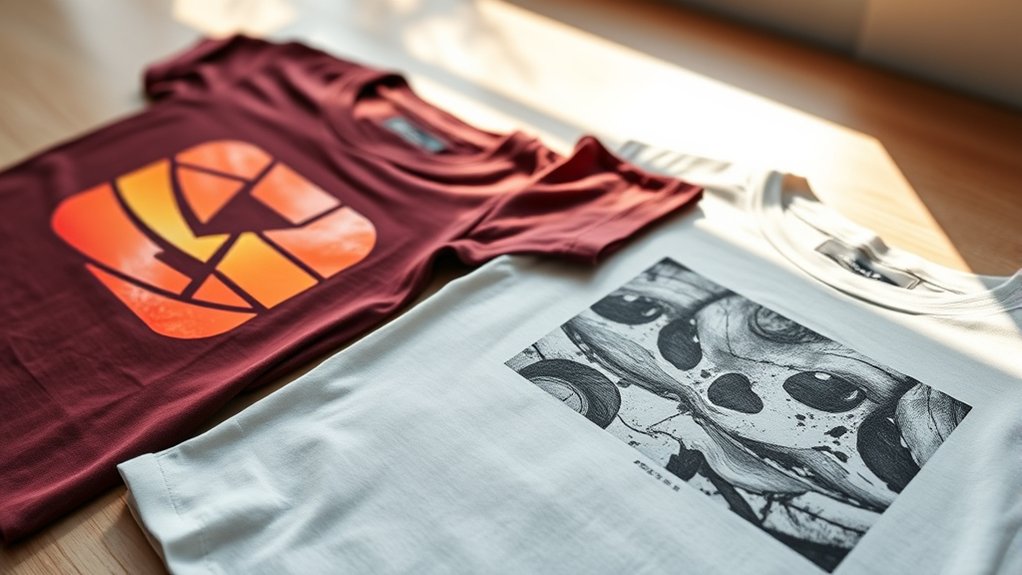

When choosing between heat sealed vs screen printed designs, it’s important to understand the differences in technique and application.
Heat sealing bonds adhesive layers using heat and pressure, resulting in durable, smooth prints. This method is ideal for simple graphics and activewear, offering a lightweight feel.
Screen printing, on the other hand, pushes ink through mesh stencils, allowing for complex, colorful designs with fine detail. However, screen printed designs often feel heavier and may fade faster over time.
Heat sealing suits quick, small runs due to its faster setup, while screen printing excels in large volume production despite longer preparation.
Exploring these methods will help you determine which one best fits your project’s needs.
Key Takeaways
- Heat sealing bonds thermoplastic designs to fabric with heat and pressure, creating a smooth, raised layer ideal for simple graphics.
- Screen printing pushes ink through a mesh stencil, integrating pigment into fabric, supporting complex, detailed, and multi-color designs.
- Heat sealed prints are more durable, resisting cracking and fading, while screen prints may degrade faster with repeated washing.
- Heat sealing produces a flexible, lightweight texture suited for activewear; screen printing creates a tactile, heavier feel on fabric.
- Heat sealing offers lower costs and faster production for small runs; screen printing suits larger volumes despite higher setup and curing times.
How Heat Sealing and Screen Printing Work
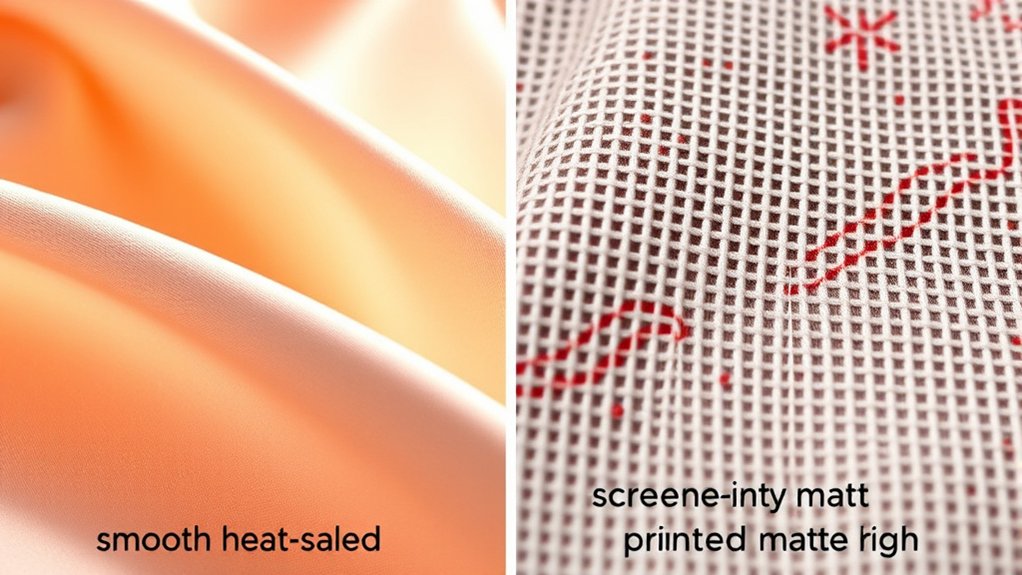
While both heat sealing and screen printing serve to apply designs onto fabrics, they operate through fundamentally different processes that affect durability and appearance. Heat sealing uses heat and pressure to bond a thermoplastic material, such as vinyl or specialized film, onto the fabric surface.
You’ll place the design material on the garment, then apply controlled heat and pressure via a heat press, causing the adhesive to activate and create a permanent bond. In contrast, screen printing involves forcing ink through a mesh stencil directly onto the fabric.
You’ll prepare a screen with a design, then use a squeegee to push ink through open areas, depositing pigment onto fibers. Heat sealing creates a raised, smooth layer, while screen printing integrates ink into fabric texture.
Design Complexity: Which Method Handles It Better?
Because design complexity directly impacts production quality and efficiency, choosing the right application method is essential. When you evaluate heat sealing and screen printing, consider how each handles design flexibility and intricate patterns.
Heat sealing excels with simpler, bold designs but struggles with fine detail. Screen printing, however, accommodates high design complexity, reproducing intricate patterns with precision.
| Feature | Heat Sealing | Screen Printing |
|---|---|---|
| Design Flexibility | Limited to simple shapes | High, supports complex detail |
| Intricate Patterns | Poor reproduction | Excellent reproduction |
| Color Gradients | Not feasible | Possible with advanced setup |
You should select screen printing for designs requiring precision and complexity, while heat sealing suits basic applications.
Durability and Feel: Heat Seal Vs Screen Print
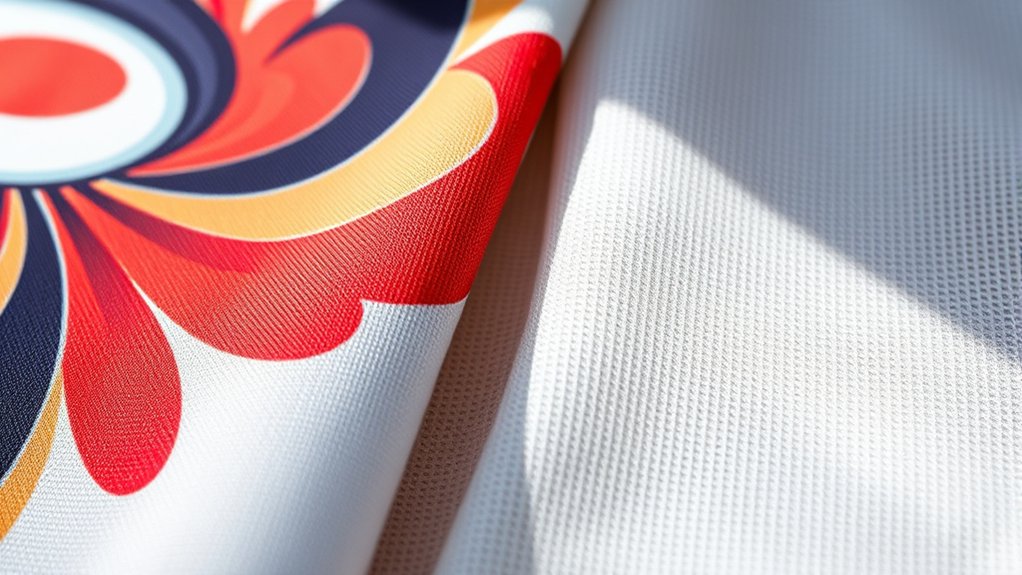
Durability plays an essential role in determining the best application method for your project, especially when you consider the feel of the finished product. When analyzing the longevity comparison, heat seal prints typically exhibit superior resistance to cracking and fading due to their heat-fused adhesive layer, which bonds firmly with the fabric.
Screen prints, while robust, may degrade faster under repeated washing because of their thicker ink layers. Regarding texture differences, heat seal applications result in a smooth, almost seamless surface that maintains fabric flexibility, ideal for activewear.
Screen printing creates a more tactile, raised texture that some prefer for its boldness but may feel heavier and stiffer. Your decision should weigh these durability and tactile factors based on your product’s intended use and wearer comfort.
Cost and Production Speed Compared
A critical factor to evaluate when choosing between heat sealed and screen printed methods is the balance of cost and production speed. Heat sealing often reduces production costs for small runs due to minimal setup, while screen printing demands higher initial setup costs but benefits from economies of scale.
Turnaround time varies greatly; heat sealing offers rapid completion, ideal for tight deadlines, whereas screen printing requires longer curing and drying periods. Consider these points:
- Heat sealed prints have lower upfront costs but higher per-unit expense for large batches.
- Screen printing’s higher setup costs are offset by faster throughput in volume production.
- Production costs and turnaround time must align with your project’s scale and urgency.
You’ll optimize efficiency by matching the method to your specific cost and speed requirements.
Picking the Best Printing Method for Your Fabric and Project
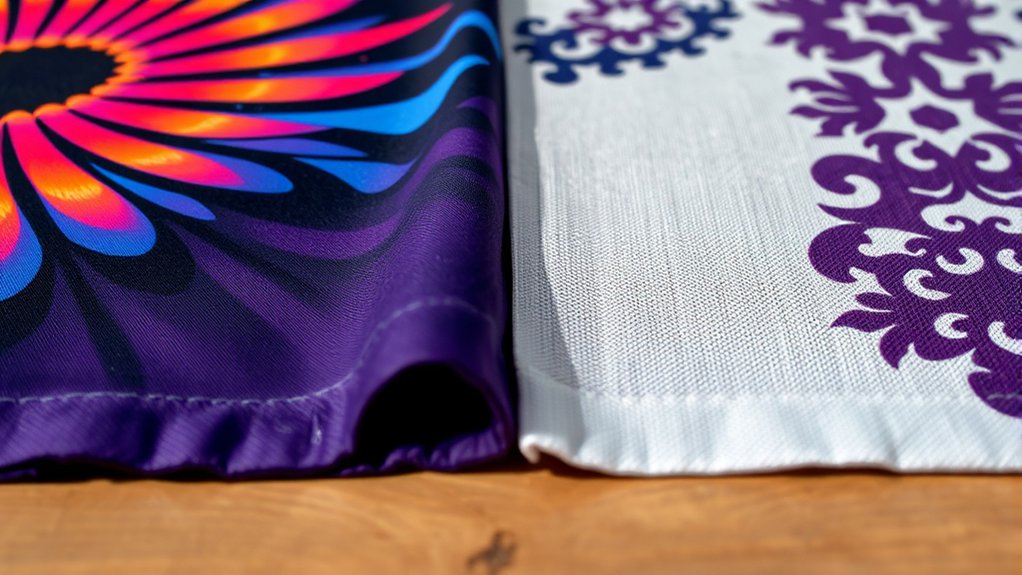
When selecting the best printing method for your fabric and project, you must consider the material’s properties and the intended use of the final product. Heat sealing excels with synthetic fabrics like polyester, guaranteeing strong adhesion and durability, but offers limited design flexibility due to layering constraints.
Screen printing provides greater design flexibility, accommodating complex, multi-color artwork with precise detail, yet requires fabric compatibility. Natural fibers like cotton respond best to its inks.
Assess your project’s requirements: if you need vibrant, intricate designs on cotton, screen printing is ideal. For moisture-wicking or performance fabrics, heat sealing guarantees longevity without compromising fabric integrity.
Ultimately, matching fabric compatibility with your design goals and production scale will guide you to the most effective and efficient printing method.
Frequently Asked Questions
Can Heat Sealing Be Used on All Fabric Types?
You can’t use heat sealing on all fabric types because fabric compatibility is essential; some materials can’t withstand the heat transfer process without damage.
Always check fabric specifications to guarantee safe, effective heat sealing results.
Is Screen Printing Safe for Children’s Clothing?
You’d think screen printing safety for children’s apparel is rocket science, but it’s straightforward! When using non-toxic, water-based inks and proper curing methods, screen printing guarantees safe, durable designs perfect for kids’ sensitive skin and active play.
How Do Environmental Factors Affect Heat Seal and Screen Print?
Environmental factors affect both methods; you’ll find heat seal’s temperature sensitivity essential, as excessive heat can degrade prints.
Screen printed items typically have a lower environmental impact, but moisture and UV exposure can gradually deteriorate ink quality.
Can Heat Seal Designs Be Layered With Screen Printing?
Yes, you can layer heat seal designs with screen printing by carefully selecting compatible materials and inks. Mastering layering techniques guarantees strong adhesion and vibrant results.
This optimizes design compatibility while maintaining durability and visual clarity in your final product.
What Equipment Is Needed for Home-Based Heat Sealing?
You’ll need a reliable heat press, transfer paper, and a computer to create your designs. Precision controls on the heat press guarantee consistent temperature and pressure, making your heat sealing process as smooth as clockwork every time.
Conclusion
When choosing between heat sealing and screen printing, you’ll find each method shines in different areas. Heat sealing offers sleek durability and quick production, while screen printing excels with complex designs and a soft feel. Think of it as selecting the right tool from a craftsman’s box—precision matters.
By matching your fabric type and project needs to the method’s strengths, you’ll guarantee a flawless finish that stands the test of time. Ultimately, understanding the differences between heat sealed vs screen printed techniques will help you make the best choice for your design’s success.