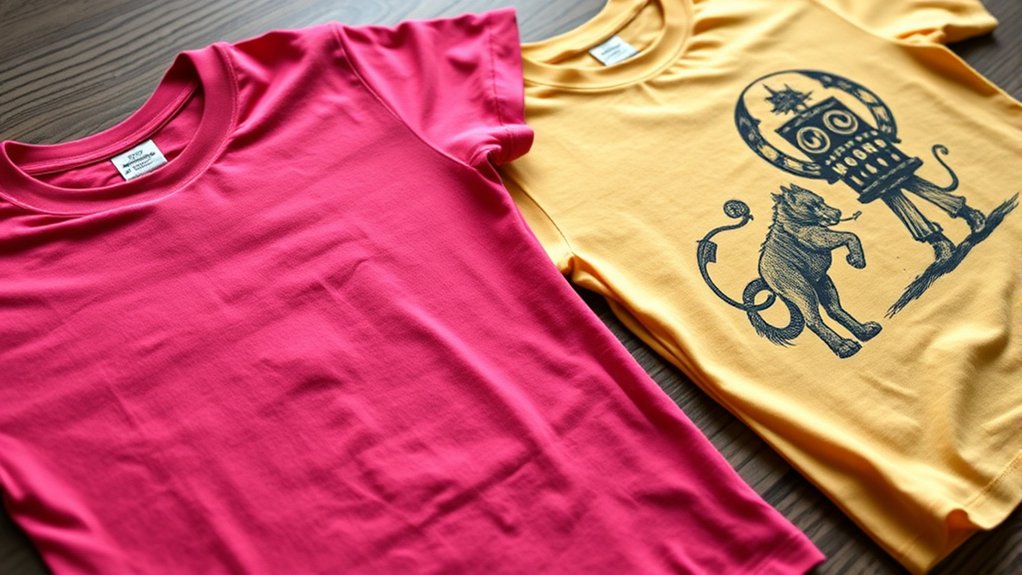

When choosing between heat seal and screen print, consider your design and fabric carefully.
Heat seal uses heat and pressure to bond sharp, glossy vinyl to synthetic fabrics. This method is ideal for small batches and produces durable, precise logos.
Screen printing presses vibrant ink through stencils onto natural fibers. It’s perfect for bold, textured images and works well with large orders.
Each technique offers unique qualities in feel, color, and cost.
Keep exploring both options, and you’ll discover which method fits your project best.
Key Takeaways
- Heat seal uses vinyl or transfer paper with heat and pressure for smooth, precise designs; screen print pushes ink through mesh for textured, bold images.
- Heat seal suits small batches and custom work quickly; screen printing excels in cost-efficiency and vibrancy for large-volume runs.
- Screen printing delivers sharper edges and richer color palettes, while heat seal is better for simpler, bold shapes with a raised texture.
- Heat seal prints offer superior durability and fade resistance after washing compared to screen prints, which may crack or flake over time.
- Heat seal is cost-effective for synthetic fabrics and low startup costs; screen printing is ideal for natural fibers and bulk production savings.
Heat Seal Vs Screen Print: How They Work
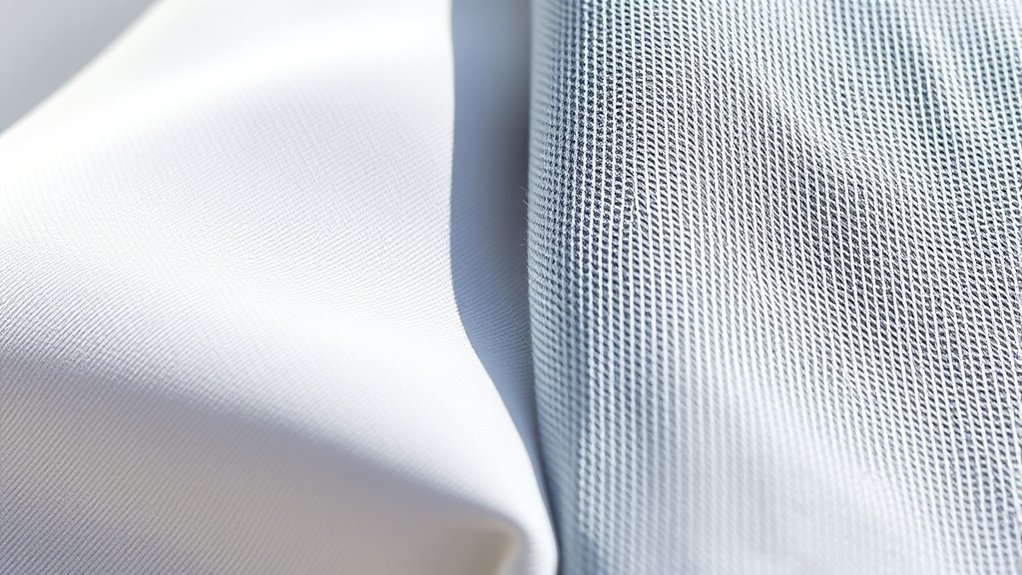
While both heat seal and screen print deliver vibrant designs, they use completely different methods to get there. With heat seal techniques, you apply a design—often a vinyl or transfer paper—onto fabric using intense heat and pressure. This process bonds the design directly to the material, creating a smooth, durable finish that feels almost part of the fabric itself.
On the other hand, screen print methods rely on pushing ink through a mesh screen stencil onto the surface beneath. Each color requires its own screen, layering inks to build up a bold, textured image. You’ll notice heat seals often boast sharp, glossy details, while screen prints offer a rich, tactile depth.
Both bring your design to life, but through strikingly different artistry beneath the surface.
Heat Seal Vs Screen Print: Best Uses
When you want crisp, detailed designs on smaller batches or sportswear, heat seal shines by delivering sharp, durable images quickly. Its best application scenarios include personalized gear, team uniforms, and custom logos, making it perfect for a target audience that values speed and precision.
On the other hand, screen printing excels in larger runs, where vibrant colors and bold designs dominate. It suits brands focused on mass production, promotional events, or fashion lines seeking rich textures and longevity.
Knowing your target audience and project scale guides your choice: heat seal offers flexibility and intricate detail for limited runs, while screen print handles volume and color depth with ease. By matching application scenarios with your needs, you guarantee your design looks flawless and fits your purpose perfectly.
Heat Seal Vs Screen Print: Print Quality Comparison
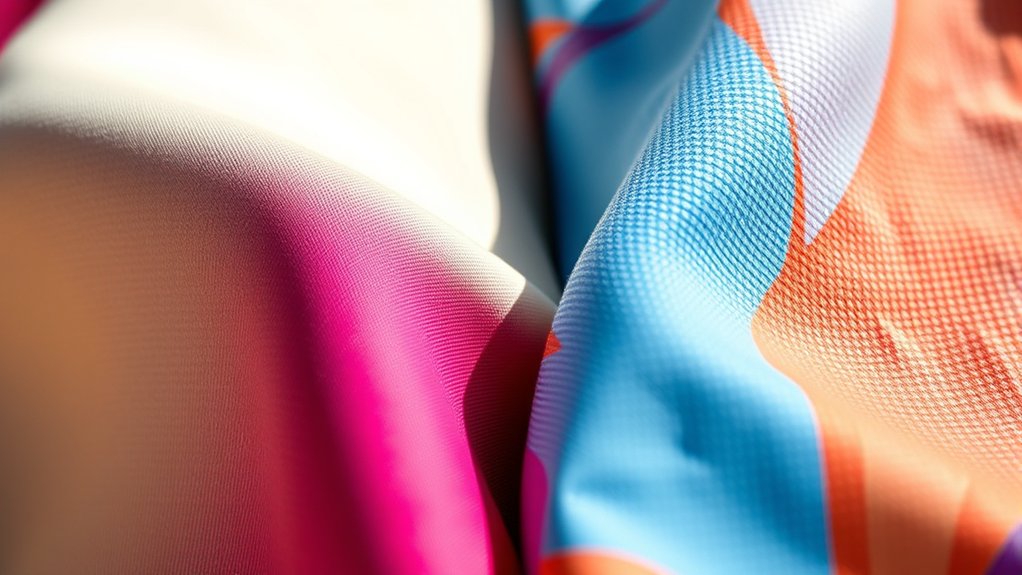
Although both heat seal and screen print can produce striking designs, you’ll notice distinct differences in print quality that affect the final look and feel. When comparing them, consider these key factors:
- Print Clarity: Screen printing offers razor-sharp edges and vibrant solid colors, perfect for bold graphics. Heat seal tends to blur fine details slightly, as the design is transferred from a film.
- Texture Differences: Heat seal feels smooth and sits atop the fabric like a sticker, giving a slightly raised texture. Screen printing embeds ink into the fabric, resulting in a softer, more integrated feel.
- Color Depth: Screen print layers inks, creating rich, saturated hues. Heat seal uses pre-colored films, which can limit gradient effects but maintain consistent color.
Choosing between them depends on your design’s detail and desired tactile experience.
Heat Seal Vs Screen Print: Durability and Washability
You want your design to stay vibrant wash after wash, no matter the fabric it’s on. Heat seal and screen print each handle wear and fading differently, so understanding their durability is key.
Let’s explore which method holds up best when the laundry piles up.
Longevity Under Frequent Washes
Since your garments face countless wash cycles, the print’s ability to endure those challenges defines its true worth. When considering wash frequency and fabric care, heat seal and screen print differ significantly.
Heat seal prints bond tightly to fabric fibers, offering exceptional resistance to cracking or peeling, even after repeated washes. They also recover quickly from stretching, maintaining design integrity, and exhibit minimal fading when proper fabric care is followed.
Screen prints, while vibrant initially, may suffer gradual wear due to ink sitting atop the fabric rather than integrating with it. Frequent laundering can cause ink to weaken and flake, designs to soften but lose sharp edges, and increased sensitivity to harsh detergents and water temperature.
Ultimately, if you want prints that withstand frequent washes, heat seal tends to offer superior longevity under practical fabric care routines.
Resistance To Fading
Beyond withstanding wash cycles, how well a print resists fading shapes its lasting vibrancy and appeal. When you choose heat seal printing, you get excellent fading resistance because the design bonds tightly with the fabric, locking in colors that stay vivid longer.
This means your graphics won’t dull quickly under sunlight or repeated wear, ensuring long term performance. On the other hand, screen printing uses layers of ink that sit atop the fabric, which can gradually lose brightness as the pigments break down.
If you want prints that hold their punch and pop for years, heat seal often outshines screen print in fading resistance. So, when durability matters, think beyond the wash. Focus on how your print keeps its color alive over time.
Impact Of Fabric Type
While fabric type might seem like a small detail, it plays a huge role in how heat seal and screen print designs hold up through wear and wash. Your fabric’s composition and texture impact how well the design bonds and endures. Here’s what you need to evaluate:
- Natural Fibers: Cotton’s softness welcomes screen printing’s ink, but heat seals might struggle to stick firmly, risking peeling.
- Synthetic Fabrics: Polyester’s smooth surface favors heat seals, allowing crisp, durable designs, while screen prints may fade faster.
- Blends and Textures: Mixed fabrics or textured weaves can disrupt ink absorption and heat transfer, affecting longevity differently for each method.
Heat Seal Vs Screen Print: Design Flexibility
You want your design to pop with vibrant colors and intricate details, right? Heat seal offers bold, solid hues but can struggle with complex patterns, while screen printing lets you play with a broader color palette and fine lines.
Let’s see which method suits your creative vision best.
Color Range Options
Although both heat seal and screen print methods offer vibrant results, their color range options differ greatly, shaping your design possibilities. When choosing between them, consider these factors:
- Color Vibrancy: Screen printing delivers rich, intense hues, especially on darker fabrics, while heat seal offers bright colors but can sometimes appear less saturated.
- Color Limitations: Heat seal struggles with subtle gradients or complex multi-color designs, whereas screen print handles multiple colors and gradients more seamlessly.
- Custom Colors: Screen printing allows precise color matching through Pantone inks, giving you a broader palette, while heat seal relies on pre-made films, limiting your custom color choices.
Understanding these differences guarantees your design pops exactly how you envision it, balancing boldness with color accuracy.
Design Complexity Capabilities
Because your design’s complexity can make or break the final look, understanding how heat seal and screen print handle intricate details is key. Heat seal excels with bold shapes and solid colors but faces design limitations when capturing fine lines or tiny text. Intricate designs with delicate gradients or subtle shading may lose clarity under heat seal’s pressure and temperature.
Screen printing, on the other hand, shines with complex patterns and multiple layers, faithfully rendering detailed artwork with sharp edges and vibrant color separations. However, it demands careful setup and may struggle with extremely fine details on certain fabrics. When your project calls for precision and complexity, weigh these factors. Screen print offers superior flexibility for intricate designs, while heat seal suits simpler, bold visuals without compromising quality.
Heat Seal Vs Screen Print: Production Speed and Order Size
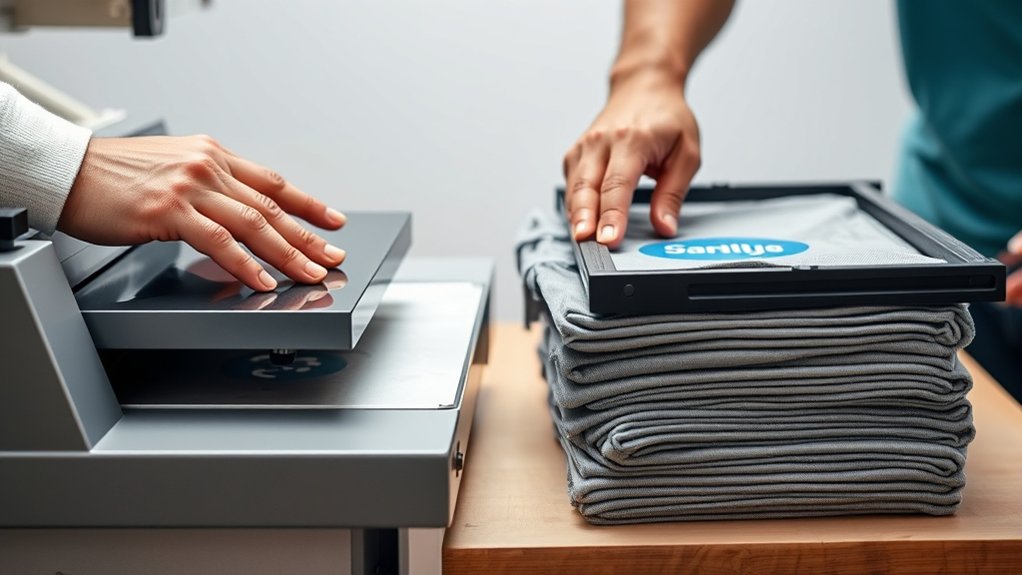
When deadlines loom and order sizes vary, choosing between heat seal and screen print can make all the difference. You want a method that fits your production timeline and matches order scalability without sacrificing quality.
- Heat seal moves fast for small to medium batches. Its quick setup means you can meet tight deadlines effortlessly.
- Screen print shines in large orders; once screens are ready, it churns out prints rapidly, making it ideal when scaling up.
- For fluctuating order sizes, heat seal offers flexibility, while screen print demands a minimum volume to be cost-effective and timely.
Heat Seal Vs Screen Print: Cost Comparison
Two key factors often steer your choice between heat seal and screen print: upfront costs and per-unit expenses. Heat seal usually demands lower startup costs, such as simple equipment and minimal setup, making it friendly for small batches or custom jobs. Screen printing, however, involves higher initial investment due to screens and setup time, but its pricing strategy shines with large runs, driving per-unit costs down considerably.
Cost factors like the complexity of the design and color count also sway your budget. Heat seal handles intricate, multi-color designs without extra charges, while screen print’s pricing scales with each additional color. Understanding these pricing strategies helps you balance quality with cost-effectiveness, ensuring you pick the method that fits your project’s size and budget perfectly.
How to Choose Between Heat Seal and Screen Print
Wondering which method suits your project best? Choosing between heat seal and screen print hinges on your design preferences and production techniques. Here’s how to decide:
- Design Complexity: If your artwork features fine details or gradients, screen printing captures them vividly. Heat seal favors bold, simpler shapes.
- Material & Durability: Heat seal bonds well on synthetic fabrics, offering a smooth, flexible finish. Screen print excels on natural fibers, delivering long-lasting vibrancy.
- Production Volume: For large runs, screen printing cuts costs and speeds up output. Heat seal suits small batches or personalized items due to quicker setup.
Frequently Asked Questions
Can Heat Seal and Screen Print Be Combined on One Garment?
Yes, you can combine heat seal and screen print on one garment. This combo technique boosts design flexibility, letting you layer vibrant prints with textured, durable elements for eye-catching, customized apparel that truly stands out.
Are There Environmental Concerns With Either Printing Method?
You’ll see heat seal’s like a quick flame, with less ink waste but uses plastics, challenging sustainability practices. Screen print’s messy ocean of ink demands keen waste management. Both need care to keep eco footprints light.
How Do Heat Seal and Screen Print Affect Garment Breathability?
You’ll notice heat seal’s thicker layers reduce breathability impact, trapping moisture and limiting moisture control.
Screen print, with thinner ink layers, lets your skin breathe better, managing moisture naturally for more comfort during wear.
Can Both Methods Be Used on Non-Fabric Materials?
You can use heat seal applications on non-fabric materials like plastics and leather, thanks to their adhesive backing. Screen print versatility shines on rigid surfaces such as metal or glass, letting you create vibrant, lasting designs anywhere.
What Equipment Is Needed for DIY Heat Seal or Screen Printing?
You’ll need a heat press to apply designs with smooth precision, and a vinyl cutter to craft intricate shapes. For screen printing, grab screens, squeegees, and ink. Both setups let you release your creativity hands-on!
Conclusion
When choosing between heat seal and screen print, consider what matters most to you: do you want vibrant designs or sleek finishes? Are you after quick turnaround or long-lasting durability? Will you print bold, complex artwork or simple, classic logos?
Both methods offer unique strengths—heat seal brings flexibility and speed, while screen print delivers rich color and toughness.
Know your needs, weigh your options, and pick the process that fits your vision perfectly. In the end, understanding the differences between heat seal vs screen print will help you make the best choice for your project.