
Heat print vs screen print is a common consideration when choosing the best method for your design needs.
You’ll notice heat printing gives you sharp, detailed designs with vibrant, gradient colors, perfect for small runs and intricate artwork.
Screen printing, on the other hand, delivers bold, durable prints with thick ink layers ideal for large volumes and solid colors.
Heat printing suits delicate fabrics and multi-color designs, while screen printing excels in wash resistance and opacity.
Choosing the right method depends on your project’s size, detail, and durability needs—explore further to find the best fit for your printing goals.
Key Takeaways
- Heat printing uses heat and adhesive vinyl for sharp, detailed, multi-color designs ideal for small batches and photo-realistic images.
- Screen printing applies ink through stencils, offering vibrant, thick color layers with excellent wash durability, best suited for large-volume runs.
- Heat printing has lower setup costs with consistent pricing, while screen printing requires costly stencil preparation but lowers per-unit cost in bulk.
- Screen printing excels in solid color accuracy and durability, whereas heat printing provides greater design flexibility and intricate detail without extra cost.
- Choose heat printing for quick, detailed, and small orders; opt for screen printing for bold, durable designs in high-quantity productions.
Heat Printing Process Overview
Although heat printing might seem straightforward, it relies on precise temperature control and pressure to transfer designs onto materials. You start by placing a vinyl design onto your fabric or surface. Then, you use a heat press machine to apply consistent heat and pressure, activating the adhesive on the vinyl.
This heat transfer process melts the adhesive slightly, bonding the vinyl firmly to the substrate’s fibers. You’ll need to monitor temperature settings closely, typically between 300°F to 350°F, and apply pressure for 10 to 15 seconds. Vinyl application demands accuracy; too much heat can cause warping, too little prevents proper adhesion.
Once cooled, the vinyl sets into place, creating crisp, durable designs. This method excels in delivering vibrant colors and sharp edges without ink saturation or drying times.
Screen Printing Process Overview
You’ll start by preparing the mesh screen, ensuring the stencil is sharp and clean for precise ink transfer. Then, you’ll apply ink evenly using specialized squeegees to push it through the screen onto the substrate.
Finally, curing and drying methods lock the design in place, guaranteeing durability and vibrancy.
Ink Application Techniques
When you apply ink in screen printing, you push it through a fine mesh stencil directly onto the substrate, creating sharp, vibrant designs. This ink application relies on precise transfer techniques to guarantee consistent coverage and color fidelity.
You’ll typically follow these steps:
- Flood Stroke: Spread ink evenly across the screen’s surface to fill the stencil openings.
- Squeegee Stroke: Press and drag the squeegee at a controlled angle, forcing ink through the mesh onto the material beneath.
- Flash Cure or Dry: Quickly cure the ink to prevent smudging and prepare for additional layers if needed.
Mastering these transfer techniques lets you achieve detailed, high-quality prints with excellent durability. Each step demands steady control and timing to optimize ink deposition and overall print clarity.
Mesh Screen Preparation
Before you begin printing, preparing the mesh screen is critical to guarantee a clean, sharp design transfer. Start by selecting the appropriate mesh type based on your design’s detail and ink viscosity. Higher mesh counts suit fine details, while lower counts handle thicker inks better.
Next, inspect the screen for any damage or debris, then clean it thoroughly to guarantee maximum adhesion. Proper screen tension is equally essential; too loose, and the design will blur; too tight, and the screen risks damage.
Use a tension meter to achieve uniform tension across the frame, typically between 20-30 Newtons per centimeter for most applications. Once tensioned, coat the screen with a suitable emulsion evenly, allowing it to dry in a dust-free environment. This precise preparation guarantees crisp prints and consistent ink deposition.
Curing And Drying Methods
Although the printing stage transfers your design onto the substrate, curing and drying methods solidify and set the ink for durability and color vibrancy. Proper curing techniques guarantee the ink bonds perfectly, preventing smudging or fading.
You’ll want to master these three critical steps:
- Flash Drying: Quickly removes surface moisture to reduce drying time, preparing the print for full curing.
- Heat Curing: Applies controlled heat (typically 320°F to 330°F) to penetrate and harden the ink, locking in color and texture.
- Air Drying: Suitable for water-based inks, this slower method allows the ink to set naturally but requires extended drying time.
Selecting the right curing technique depends on ink type and fabric, but flawless curing ensures your screen print stands the test of time.
Comparing Durability: Heat Printing Vs Screen Printing
Since durability often determines the lifespan of your printed designs, understanding how heat printing and screen printing hold up under stress is essential. Durability factors like adhesion, wash resistance, and crack formation impact longevity analysis.
Heat printing bonds ink via heat and pressure, offering strong adhesion but can fade faster with frequent washing. Screen printing deposits thicker ink layers, enhancing resistance to wear and tear but may crack if improperly cured.
| Durability Factor | Heat Printing | Screen Printing |
|---|---|---|
| Adhesion | Strong, heat-activated bonding | High, thick ink layers |
| Wash Resistance | Moderate, fades over time | High, withstands frequent wash |
| Crack Formation | Low if properly applied | Possible if ink is thick |
| Longevity | Short to medium | Medium to long |
Choose based on your design’s use and lifespan needs.
Color Vibrancy And Detail: Which Method Performs Better?
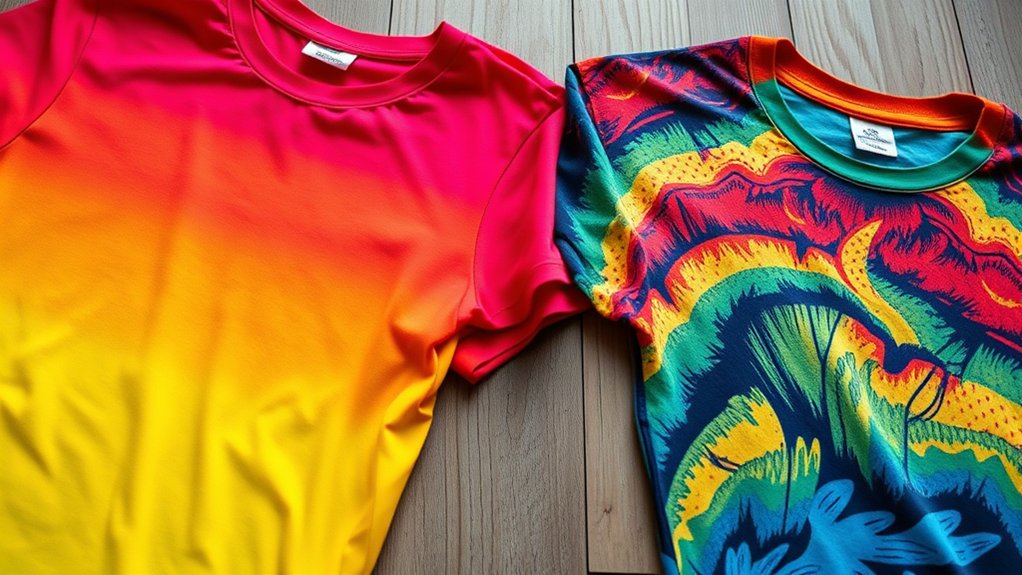
You’ll notice heat printing often delivers sharper detail resolution thanks to its digital precision, while screen printing excels in color accuracy with vibrant, solid hues.
When comparing the two, pay close attention to how each method handles fine lines and gradients. Understanding these differences helps you choose the best technique for your design’s visual impact.
Color Accuracy Comparison
When evaluating color vibrancy and detail, you’ll notice that heat printing and screen printing each bring distinct strengths to the table. For color accuracy, consider these points:
- Color Matching Precision: Screen printing excels with spot colors, offering superior color matching for solid tones. Heat printing relies on CMYK blending, which may introduce subtle shifts.
- Design Limitations: Heat printing handles complex gradients and photo-realistic images better but struggles with pure, flat colors compared to screen printing’s consistent output.
- Substrate Interaction: Screen printing deposits thicker ink layers, enhancing color depth and accuracy on various fabrics. Heat printing’s dye sublimation bonds ink directly, ensuring vibrant colors on polyester but limiting fabric choices.
Understanding these differences helps you choose the best method for your project’s color fidelity and design needs.
Detail Resolution Differences
Beyond color accuracy, the level of detail and resolution each printing method achieves greatly impacts the final visual quality. When you evaluate heat printing, you’ll notice it excels in resolution levels, delivering sharp edges and fine lines with impressive detail clarity.
This precision allows complex designs and gradients to appear more vivid and true to the original. Conversely, screen printing offers robust color vibrancy but often sacrifices some detail clarity due to its reliance on mesh screens, which limits resolution levels.
Fine details can appear slightly blurred or less defined compared to heat printing. So, if your priority is capturing intricate design elements with high resolution, heat printing outperforms screen printing. However, for bold, simple graphics, screen printing remains a strong, vibrant choice.
Cost Comparison: Heat Printing Vs Screen Printing
Comparing the costs of heat printing and screen printing reveals distinct financial implications based on order size and design complexity. When managing budget considerations, you’ll want to weigh these factors for ideal cost efficiency:
- Setup Costs: Screen printing demands higher initial setup, including stencil preparation, which can escalate expenses for small runs. Heat printing’s setup is minimal, making it cost-effective for limited quantities.
- Per-Unit Cost: For large orders, screen printing lowers the per-unit cost considerably due to economies of scale, while heat printing remains relatively constant, potentially increasing costs on bulk orders.
- Design Complexity: Heat printing handles multi-color, intricate designs without added cost, whereas screen printing charges increase with each color layer applied.
Understanding these elements helps you align your printing choice with your financial goals and design needs accurately.
Best Uses For Heat Printing
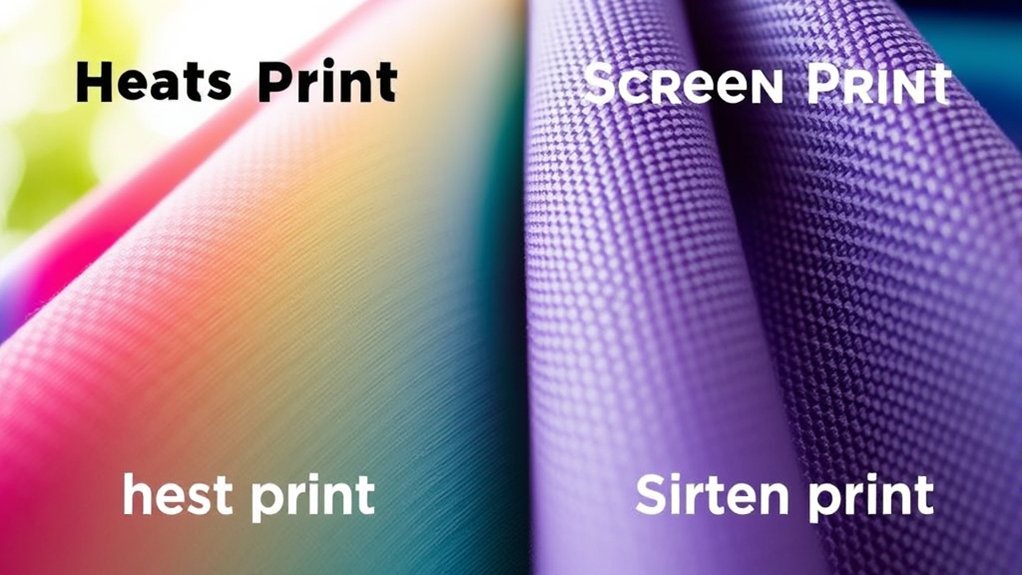
Although heat printing excels with small batches and detailed designs, it truly shines in applications requiring vibrant, multi-color graphics on diverse materials. You’ll find it perfect for creating custom apparel like sports jerseys or personalized T-shirts, where intricate logos and color gradients matter.
Heat printing also works well on promotional items such as tote bags, hats, and mousepads, allowing you to transfer full-color images with sharp clarity. Its precise heat and pressure method guarantees consistent adhesion on polyester, cotton blends, and synthetic fabrics.
Because it doesn’t require screens, you can quickly adjust designs without extra setup costs, making it ideal for limited runs or seasonal campaigns. When you prioritize flexibility and detailed imagery, heat printing delivers exceptional quality on a variety of custom products.
Best Uses For Screen Printing
Screen printing shines when you need bold, durable designs on large orders. It’s perfect for producing vivid t shirt designs and promotional materials that stand up to repeated wear and washing. Here’s when you should choose screen printing:
Screen printing is ideal for bold, durable designs that endure wear, perfect for large runs of vivid t shirts and promos.
- High-volume runs: The setup cost pays off when you print hundreds of items with consistent quality.
- Vibrant color layers: Screen printing allows thick ink layers that create bright, opaque colors, ideal for eye-catching logos.
- Durability needs: The ink bonds tightly to fabric, ensuring your design won’t crack or fade quickly, perfect for promotional materials meant to last.
Use screen printing when you want sharp, lasting prints on large batches of apparel or merchandise. It’s the go-to method for professional-looking t shirt designs and impactful marketing gear.
Choosing Between Heat Printing And Screen Printing
How do you decide between heat printing and screen printing for your project? Focus on design flexibility and production speed. Heat printing excels in intricate, full-color designs with quick turnaround, while screen printing offers vibrant, durable prints for larger batches but requires more setup time.
| Factor | Heat Printing | Screen Printing |
|---|---|---|
| Design Flexibility | High-detail, full-color ready | Limited colors, bold designs |
| Production Speed | Fast for small runs | Efficient for large volumes |
| Durability | Moderate, good for delicate fabrics | Superior, ideal for heavy wear |
Choose heat printing for intricate, low-quantity orders and screen printing when you want robust prints on bulk items. Your project’s scope and fabric type will guide the best choice.
Frequently Asked Questions
Can Heat Printing Be Done on Dark Fabrics?
Yes, you can use heat transfer on dark fabrics. It offers vibrant color options that stand out well.
Just make certain you select the right transfer material to maintain brightness and durability during washing.
Is Screen Printing Eco-Friendly?
Yes, screen printing can be eco-friendly when you use sustainable materials like water-based inks and adopt eco-conscious practices such as recycling screens and minimizing waste. This approach helps you create vivid designs while reducing environmental impact.
How Long Does Each Printing Method Take?
Don’t worry about long waits; heat printing offers fast printing speed, perfect for low production volume.
Screen printing takes longer due to setup but excels in high production volume, delivering consistent, vivid results efficiently over time.
Can Heat Printing Handle Photographic Images Well?
You can achieve photographic clarity and impressive color vibrancy with heat printing, especially on polyester fabrics. It excels at detailed, multicolor images but may lack durability compared to traditional methods.
Choose based on your fabric and use.
What Machines Are Required for Home Screen Printing?
You’ll need essential screen printing equipment like a screen frame, squeegee, light source for exposure, and a printing press or sturdy surface.
Don’t forget home printing supplies like inks, emulsion, and a drying rack to keep prints crisp.
Conclusion
Imagine your design as a vibrant bird—heat printing gives it a sleek, smooth finish perfect for small, detailed flights, while screen printing offers bold, durable wings ready to soar through countless washes.
Choosing between them depends on your journey: quick, colorful runs or long-lasting adventures. By understanding their strengths, you’ll guarantee your artwork not only takes off but also stays vivid, no matter where you decide to fly.
When deciding which method suits your project best, remember that heat print vs screen print each bring unique benefits to the table, ensuring your design looks fantastic and lasts as long as you need.